
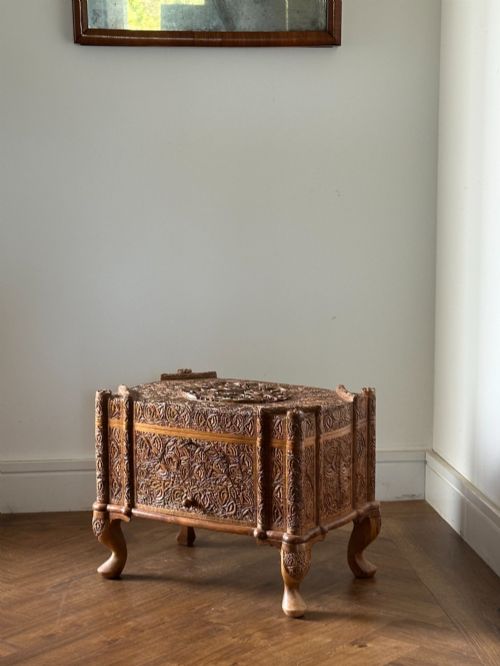
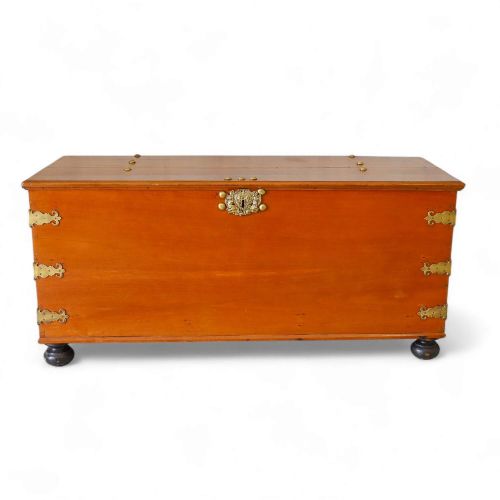
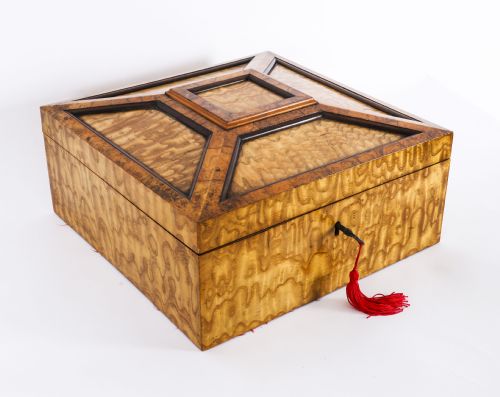
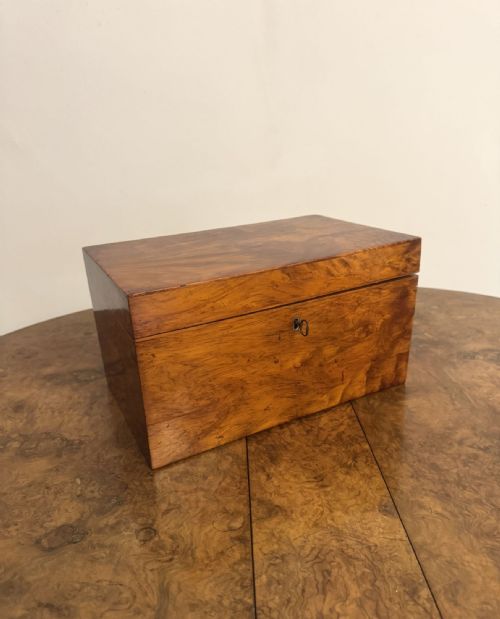



Large Walnut Chest
A large walnut chest brings warmth and substance to a room, offering generous storage through centuries of cabinetmaking tradition.
Large Walnut Chest
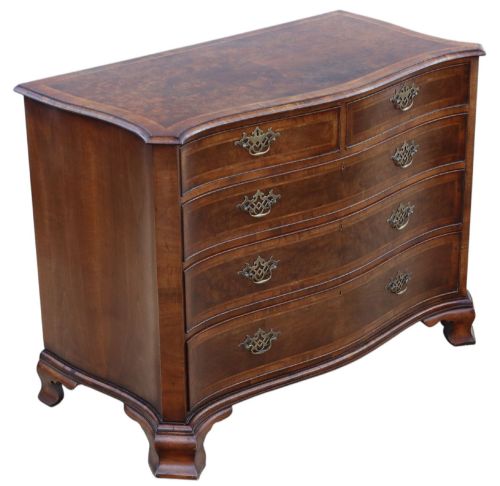
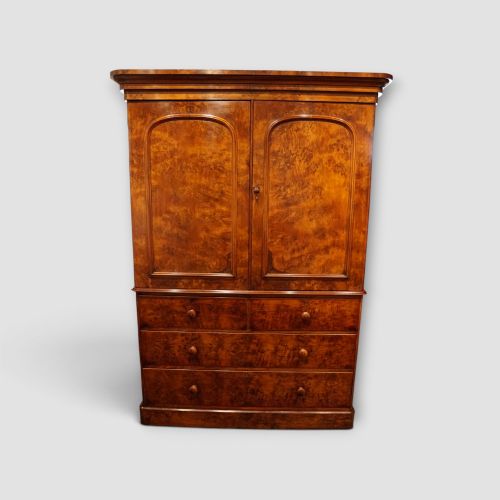
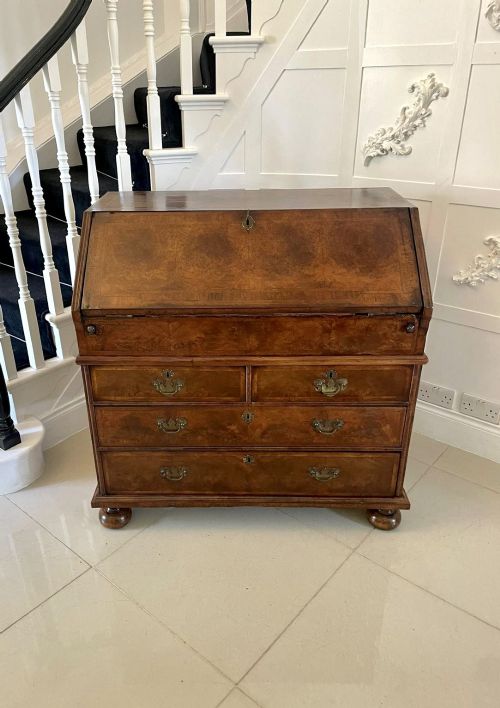
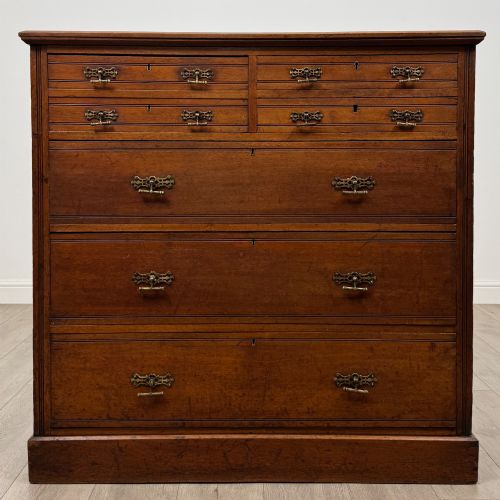
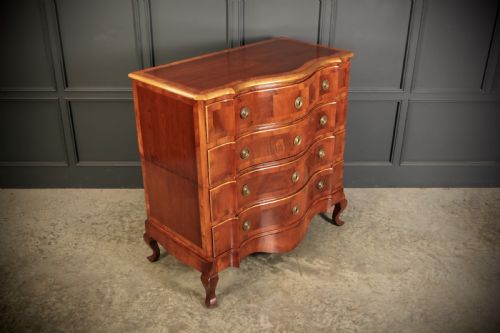
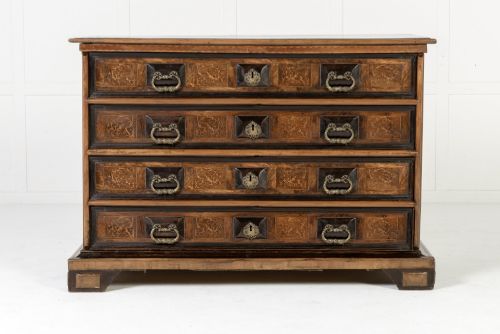
Forms vary significantly, encompassing serpentine commodes, tallboys, linen presses, and multi-drawer Scottish chests alongside regional variations like French bombe cabinets and colonial chests. These pieces often incorporate secondary timbers such as oak or maple, while maintaining walnut as the primary visual medium.
Materials and construction
Cabinetmakers utilised figured veneers like burr walnut, laid over solid construction timbers using detailed herringbone inlay or crossbanding to accentuate the grain patterns. Surface decoration frequently relied on contrasting natural grains rather than applied pigment, sometimes enhanced by marble tops or brass hardware.
Structural integrity depended on dovetailed drawer construction and robust framing, occasionally pairing walnut with native hardwoods, glass, or brass mounts. Finer examples integrated intricate marquetry or carved details suited to the prevailing style of the period, from William and Mary to Regency.
At least one nineteenth-century wardrobe combines satin walnut and maple to resemble a traditional military sentry box.
Assessing the execution
Quality rests in the selection of the veneer, where symmetrical matching of burr walnut figures distinguishes exceptional cabinetwork from utilitarian production. The crispness of inlaid banding and the precision of the drawer linings reveal the standard of the workshop.
Proportion and the handling of serpentine or bombe shapes dictate the visual success of the piece, alongside the retention of original brass hardware and surface finishes. Pieces bearing maker attribution or specific regional characteristics command distinct scholarly and collector interest.
Jas Shoolbred·Heals
The Large Walnut Chest Glossary
- Crossbanding
- A border technique where thin strips of veneer are laid perpendicular to the primary grain, creating a contrasting framing effect around drawer fronts.
- Burr walnut
- A highly figured timber harvested from tree growths, prized for its swirling patterns and used extensively in high-status cabinetmaking.
- Serpentine
- A curved shape featuring a convex centre flanked by concave ends, frequently utilised on eighteenth-century and Victorian commodes.
- Herringbone
- An intricate inlay pattern composed of small veneer segments arranged in a V-shaped zig-zag alignment, common on early pieces.
- Commode
- A low cabinet or chest of drawers, often standing on relatively tall legs, developed from French furniture traditions.
Large Walnut Chest: Frequently Asked Questions
How do I date a walnut chest?
Dating relies on examining construction methods, timber choices, and stylistic cues such as hardware and foot design. Early pieces often display hand-cut dovetails and native oak linings, whereas later Victorian examples utilise machine-sawn components.
Changes in proportion and veneer application further differentiate seventeenth-century items from Edwardian or later nineteenth-century interpretations.
Where should I place a large chest?
These substantial pieces require adequate wall space and a balanced room layout to accommodate their depth and visual weight. Hallways, bedrooms, and principal living areas provide suitable settings.
Protect the timber by avoiding direct sunlight and maintaining stable humidity levels away from active heat sources.
Are walnut chests difficult to maintain?
Maintenance requires minimal intervention, primarily involving periodic dusting with a soft, dry cloth and occasional application of appropriate furniture wax. Direct moisture and extreme temperature fluctuations must be avoided to protect the veneer.
Handling the drawers with care ensures the internal runners and traditional dovetailed joints remain stable over time.
What is the difference between a commode and a chest?
A commode typically refers to a decorative cabinet or chest of drawers featuring continental styling, often with serpentine or bombe profiles. Standard chests of drawers focus more directly on functional stacking storage.
Both forms utilise high-grade walnut veneers, but commodes frequently incorporate ormolu mounts and marble tops.