

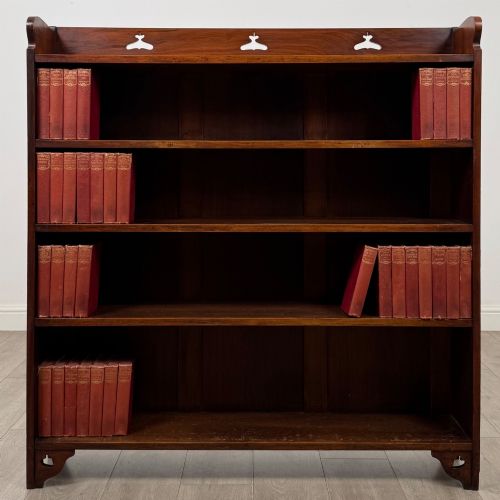
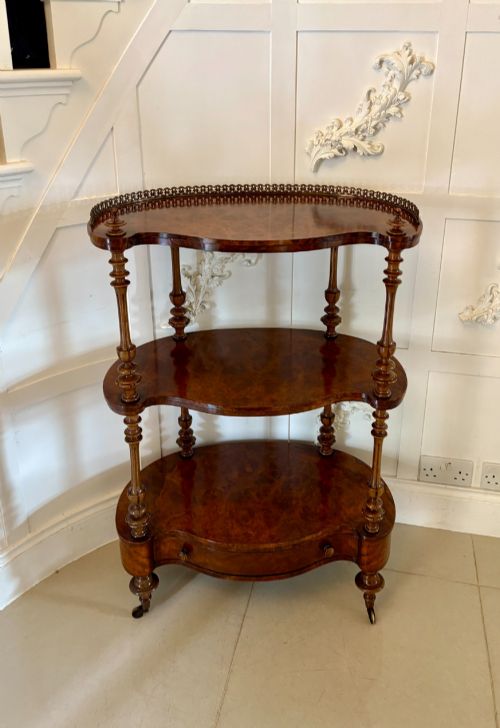
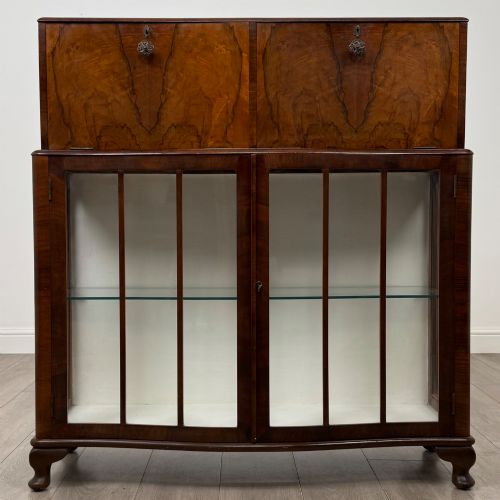
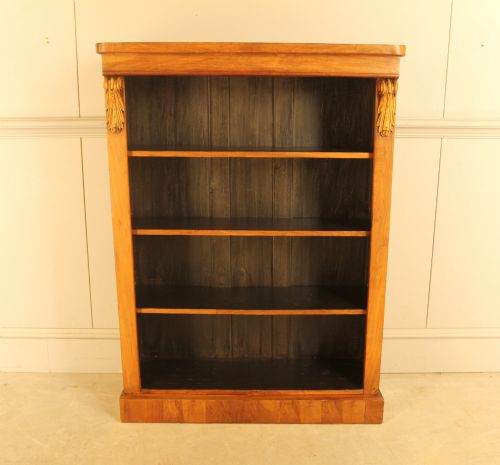
Antique Walnut Shelving
Antique walnut shelving brings warm timber tones and practical tiers to a room, ranging from compact wall cabinets to large library bookcases.
Antique Walnut Shelving
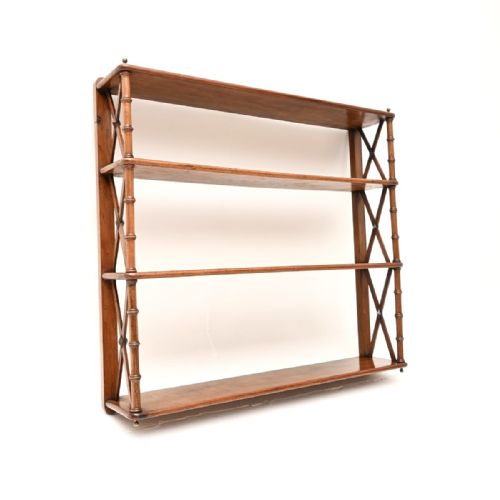
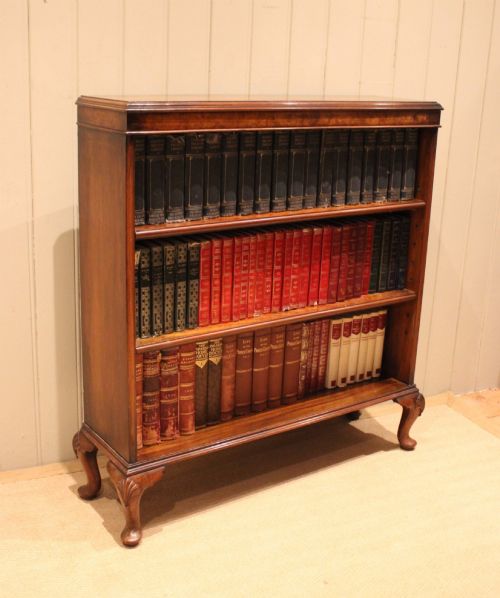
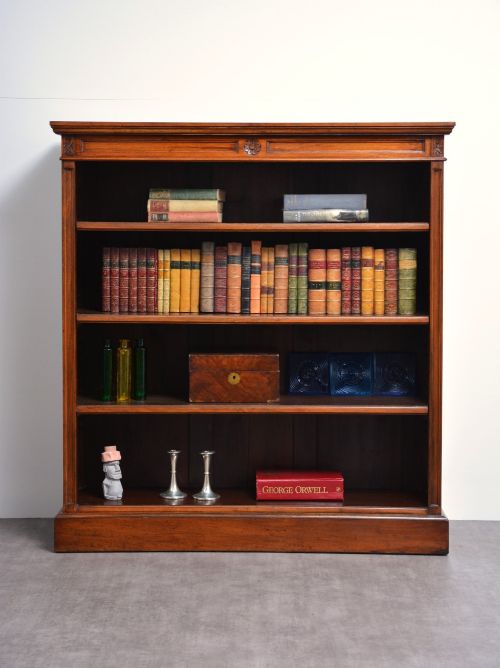
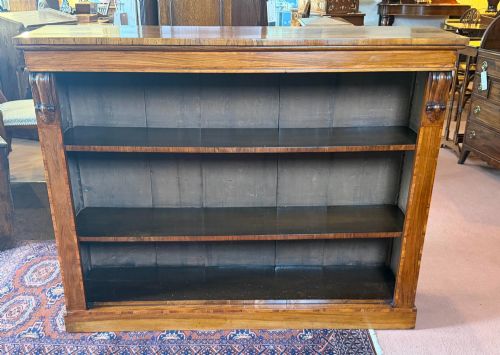
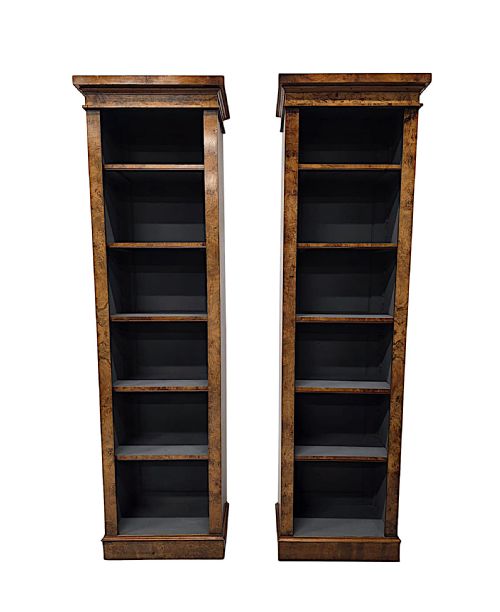
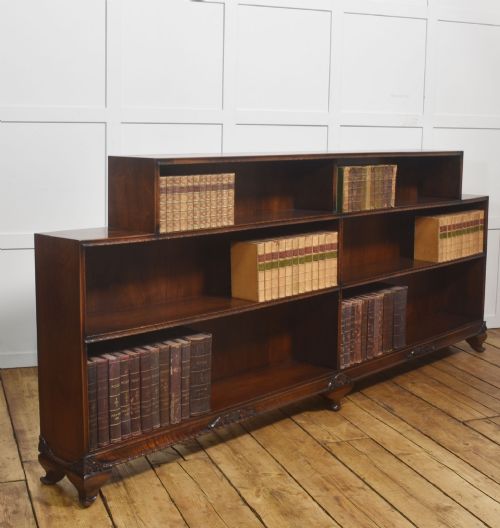
When you search for antique walnut shelving, you encounter a diverse range of fitted and freestanding pieces designed to hold books and display objects. The selection spans open bookcases, tiered whatnots, wall-mounted shelves, and glazed cabinets dating from the Georgian period through the Edwardian era.
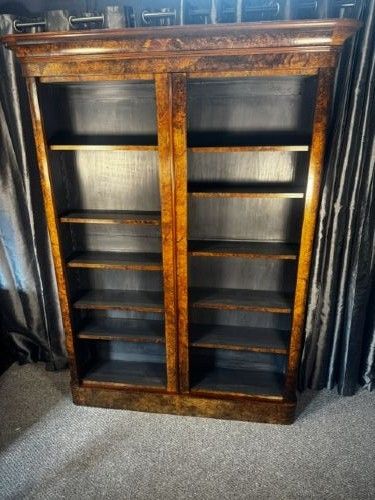
The pieces you meet most often on this page hail from the Victorian era, executed in plain or highly figured burr walnut. These items often feature adjustable shelving, glazed or mirrored doors, and decorative mounts in brass or ormolu.
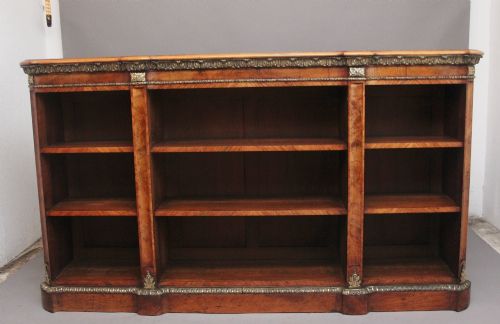
Forms vary considerably according to their original domestic function, moving from grand breakfront library bookcases to slender corner whatnots and hanging wall cabinets. Continental and French provincial examples also appear alongside British pieces, showing distinct regional turning and carving details.
Materials and construction methods
Cabinet makers utilised solid walnut alongside rich veneers and burr walnut overlays to achieve striking grain patterns across flat surfaces like shelves and door panels. Carcase construction frequently incorporated secondary timbers such as pine behind the decorative exterior surfaces.
Mounts and hardware cast in brass and ormolu add metallic contrast to the dark wood, while glass panels feature in glazed bookcases and display cabinets. Turned legs, carved corbels, and gilt metal details complete the construction of finer pieces from the nineteenth century.
Listings feature walnut shelving spanning the Georgian period, the Victorian era, and the Arts and Crafts movement.
Factors determining quality
The distinction between ordinary and exceptional pieces rests upon the selection of timber, particularly the liveliness and symmetry of the burr walnut veneer. Finer items display continuous grain matching across drawers and doors, executed by skilled hands.
Construction details also dictate grade, seen in the presence of solid timber interiors, smoothly operating adjustable shelf mechanisms, and finely chased ormolu mounts rather than plain brass stampings. The crispness of carved details and the structural integrity of tiered whatnots further separate standard items from masterwork examples.
Johnstone and Jeanes·Gillows·Maurice Adams
The Antique Walnut Shelving Glossary
- Whatnot
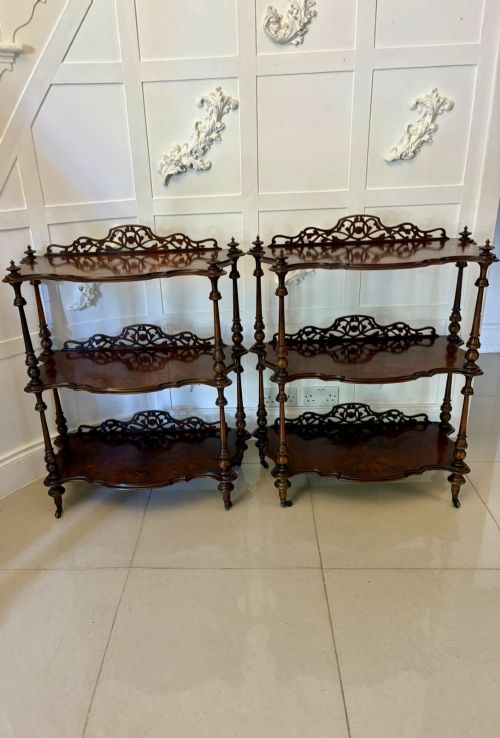
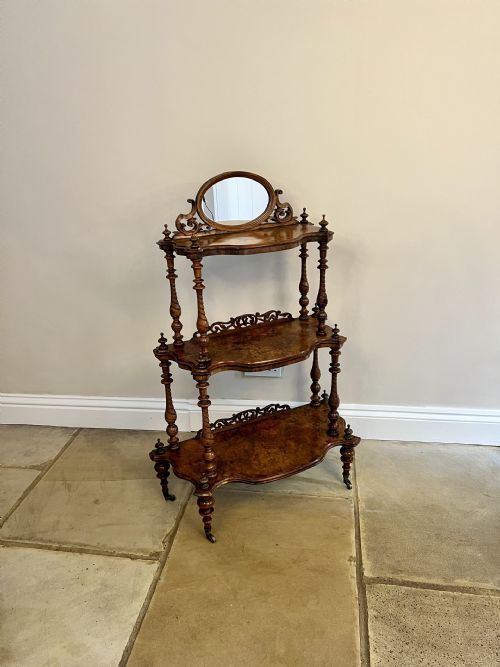
- A tiered set of open shelves supported by slender columns or turned legs, used for displaying ornaments. These items appear in corner and freestanding formats throughout the Victorian period.
- Ormolu
- Gilded bronze mounts applied to furniture for decorative effect, often seen flanking glass doors or ornamenting the corners of credenzas. This French technique adds metallic brilliance to dark walnut surfaces.
- Breakfront
- A piece of furniture whose central section projects forward from the flanking wings. This architectural arrangement creates depth and grandeur in large library bookcases.
- Etagere
- A French term for a freestanding piece of furniture with multiple open tiers for display. These items often showcase delicate turned legs and decorative woodwork.
Antique Walnut Shelving: Frequently Asked Questions
How do I adjust wooden shelves?
Most nineteenth-century bookcases utilise wooden ratchets or brass shelf studs inserted into vertical pilasters to hold the tiers at varying heights. Simply lift the shelf clear of its supports and reposition the pegs in the adjacent slots.
Take care when moving older shelving not to force tight boards, as shrinkage over decades can bind the timber within the carcase grooves.
Where should I place a wall cabinet?
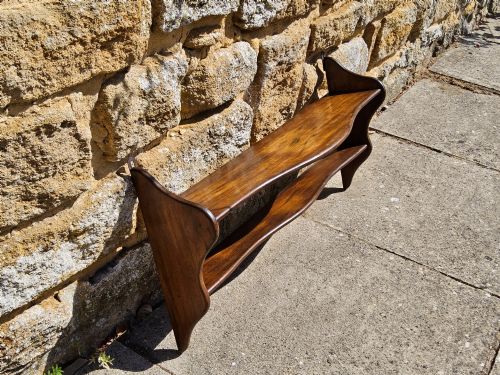
Wall-mounted cabinets and shelves require secure fixing to solid masonry or internal wall studs using appropriate brackets suited to the weight of dense walnut timber. Ensure the chosen wall space avoids direct sunlight to protect the polish and prevent timber warping.
These pieces work effectively above sideboards or desks where floor space remains limited, providing eye-level storage for small books and ceramics.
How do I care for burr walnut?
Maintain walnut furniture by dusting regularly with a soft, dry cloth and applying traditional beeswax sparingly to nourish the timber grain. Avoid modern silicone polishes, which build up a hazy film over the polished surface.
Keep pieces away from direct heat sources and maintain stable room humidity to prevent the delicate burr veneers from drying out or lifting.
How do I identify a Victorian whatnot?
A Victorian whatnot typically consists of three or more stacked platforms held together by turned uprights, designed specifically for displaying decorative objects rather than housing heavy books. They frequently appear in rectangular or triangular corner configurations.
Look for fine turning on the vertical supports and sturdy joints where the tiers meet the uprights to confirm period construction.