
Walnut Bookcase on Cupboard
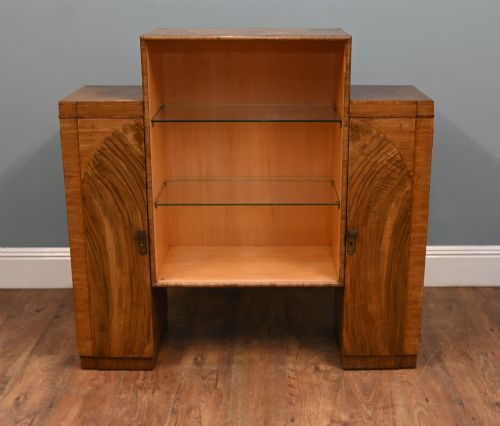
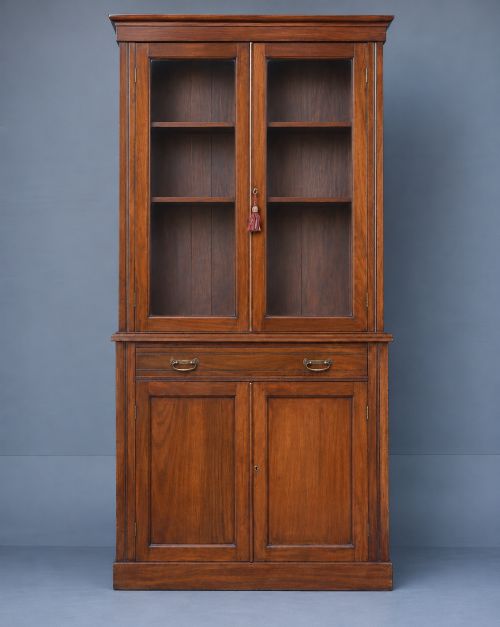
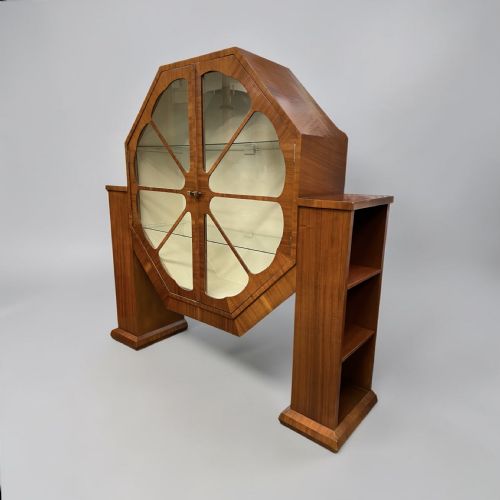
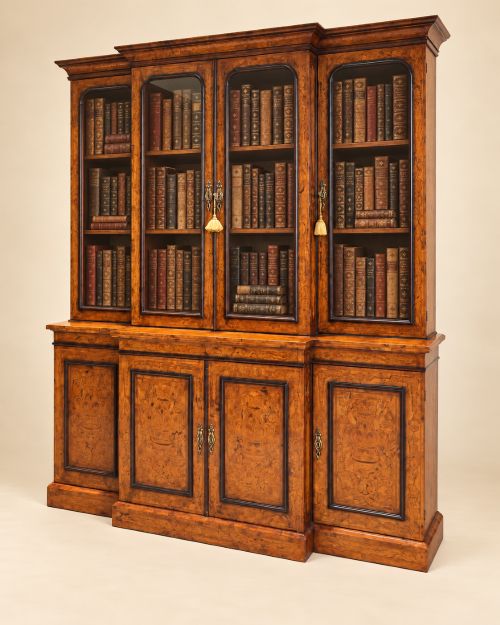
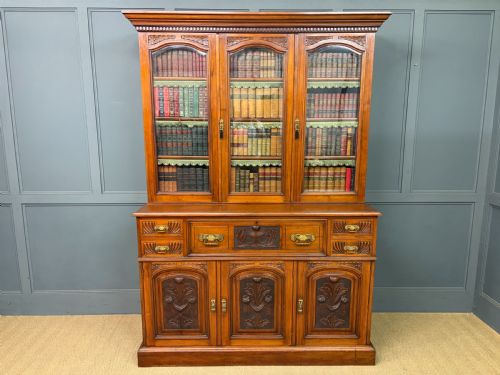
A walnut bookcase on cupboard brings architectural presence and generous storage together, pairing a glazed upper display with a closed lower cabinet.
Walnut Bookcase on Cupboard
Most examples encountered here originate from the Victorian and Edwardian eras, alongside pieces stretching back to the nineteenth century and forward to the nineteen-twenties. These versions bridge the gap between working libraries and formal display furniture.
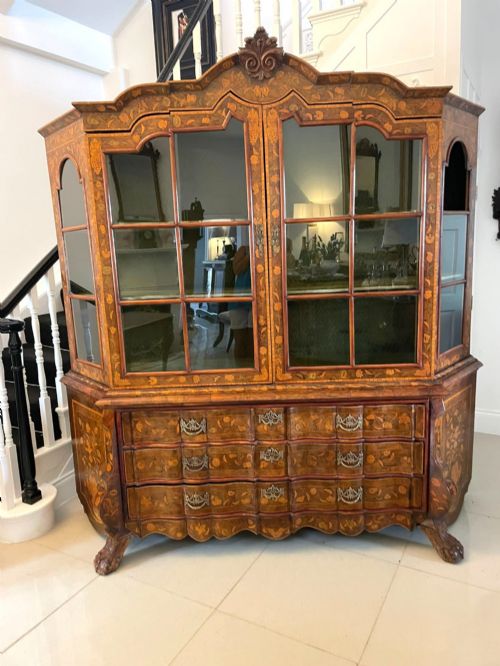
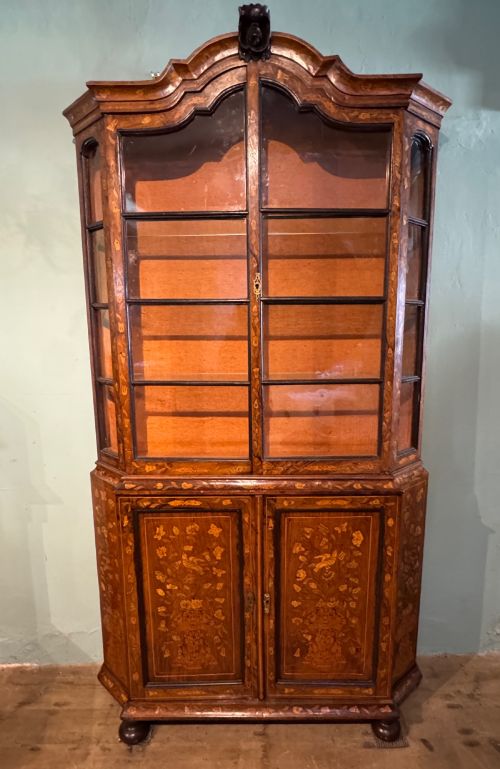
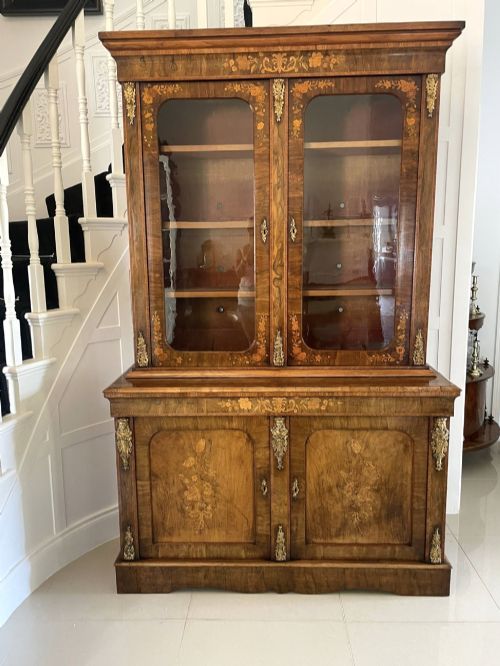
The phrase denotes a specific architectural verticality where wood and glass meet brass hardware and intricate marquetry. Buyers look for this form to anchor a room with substantial timber while keeping prized volumes or collections dust-free.
How they were made
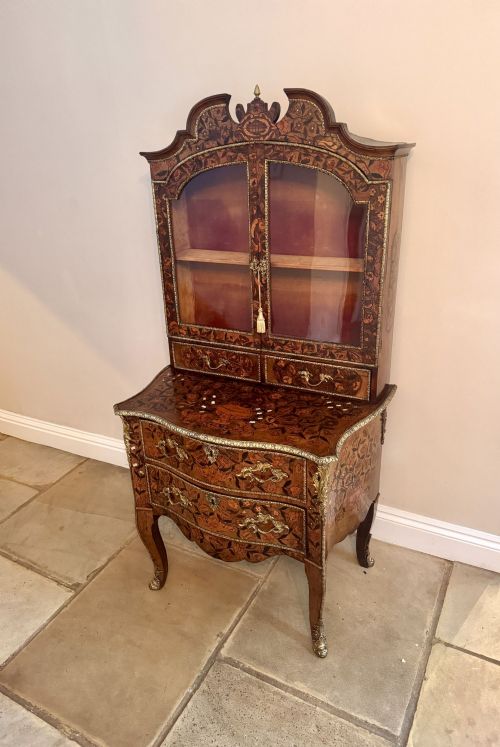
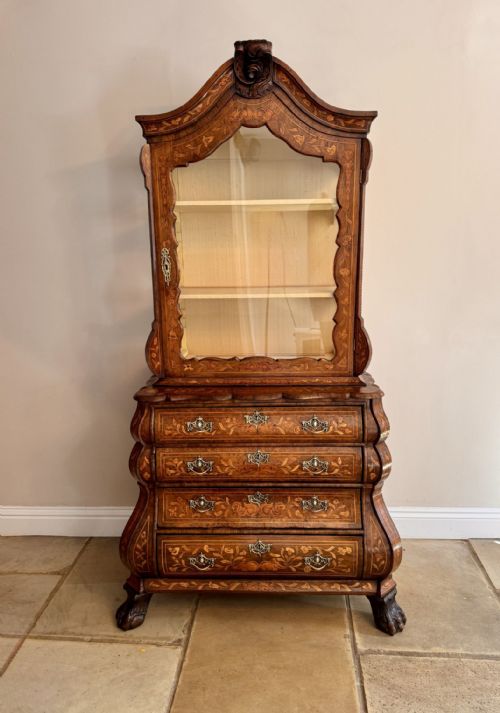
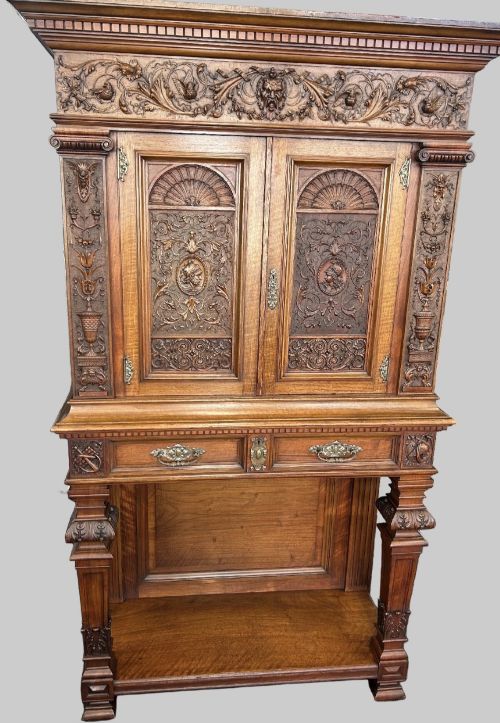
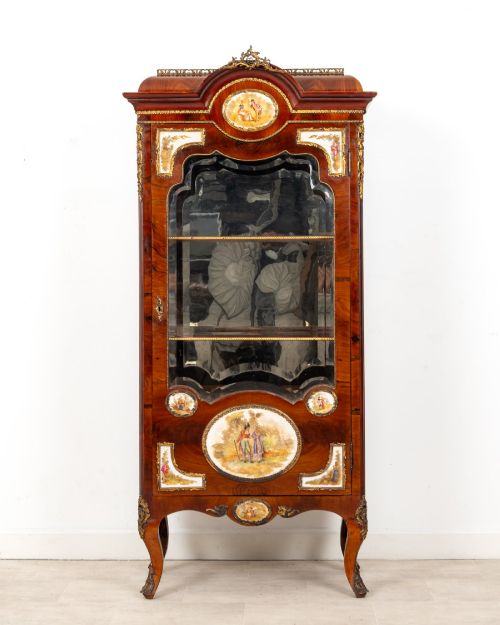
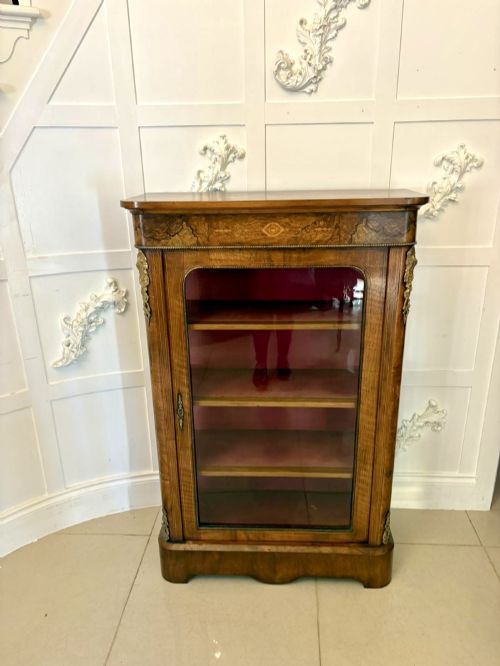
Cabinet makers utilised choice timbers such as burr walnut, figured walnut, and standard walnut veneers over stable secondary woods to achieve striking grain patterns across large flat surfaces. Marquetry inlay, brass mounts, and ormolu details frequently adorn the primary facades.
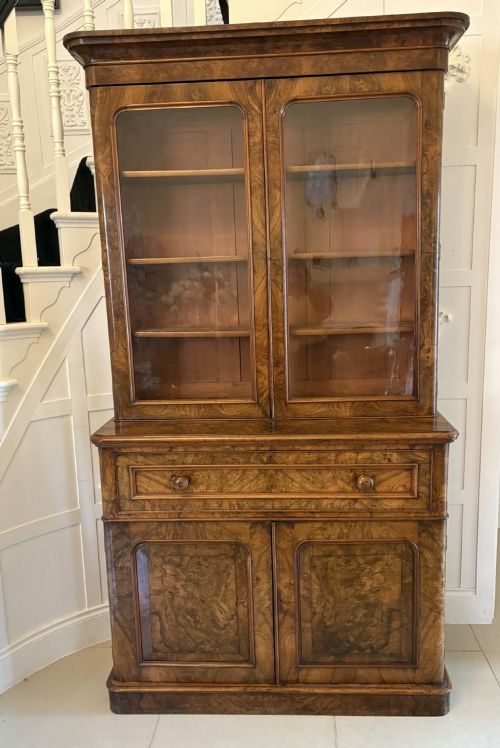
Glazing bars partition the glass panes of the upper display doors, requiring precise joinery to support the weight of the structure. Lower cupboard doors often incorporate panelled construction and internal shelving to distribute weight evenly.
Some nineteenth-century cabinet makers thoughtfully provided secret compartments within the cupboard base for storing private ledgers.
What varies in quality
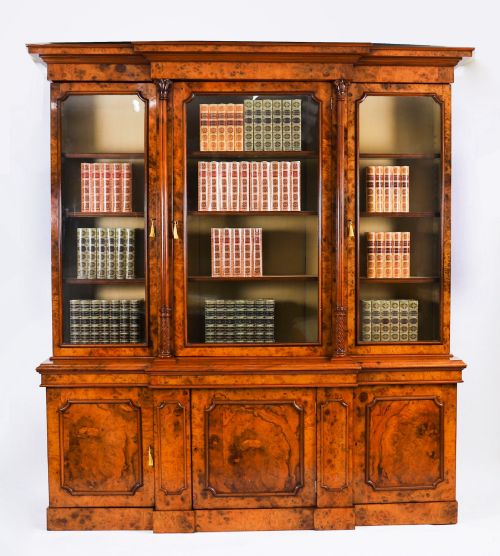
The visual appeal of a walnut bookcase on cupboard rests heavily on the selection and matching of veneers, where book-matched burr walnut creates symmetrical patterns across doors and drawers. Superior examples display consistent grain continuity and careful timber selection from top to bottom.
Hardware and mounts also signal distinction, moving from simple brass hinges to cast ormolu details and intricate marquetry work. The crispness of carved elements and the seamless integration of the upper and lower sections separate standard utility pieces from exceptional commissions.
Edwards & Sons·F.H. Marshall & Co Glasgow·Rurka
The Walnut Bookcase on Cupboard Glossary
- Burr walnut
- A highly figured timber harvested from walnut tree growths, prized for its swirling, organic grain patterns. It is typically sliced into thin veneers for cabinet doors.
- Marquetry
- The art of applying small pieces of wood veneer to a structure to form decorative patterns or pictures. This technique often employs contrasting timbers to create floral or geometric motifs.
- Ormolu
- Gilded bronze mounts applied to furniture for decorative effect, common on high-status nineteenth-century pieces. It provides a bright metallic contrast against dark walnut surfaces.
- Glazed door
- A wooden frame holding glass panes that allows visibility into an enclosed cabinet. These doors protect books and collectibles while keeping them on display.
- Breakfront
- A cabinet design where the central section projects forward from the flanking wings. This architectural layout adds depth and visual interest to large bookcases.
Walnut Bookcase on Cupboard: Frequently Asked Questions
What is a walnut bookcase on cupboard?
A walnut bookcase on cupboard is a tall, two-part piece of furniture featuring a glazed upper display section sitting upon a solid lower storage base. The combination offers both open visibility and concealed organisation.
These pieces served traditionally in studies, libraries, and morning rooms to house libraries and display valued possessions safely.
How do I style one in a modern home?
Place the bookcase against a neutral wall to let the warm tones and complex grain of the walnut timber stand out as a focal point. Use the upper glazed shelves for books or ceramics and reserve the lower cupboard for everyday clutter.
Ensure the room has sufficient height to accommodate the vertical scale of the cabinet without overwhelming the surrounding space.
How can I tell Victorian from Edwardian pieces?
Victorian examples often feature heavier carved details, darker warm walnut finishes, and elaborate ormolu mounts or marquetry. They reflect a taste for ornate, substantial craftsmanship.
Edwardian interpretations tend toward lighter figures of walnut and cleaner lines, occasionally showing influences from earlier revival styles like Queen Anne.
What kind of maintenance does walnut require?
Walnut benefits from stable room temperatures and protection from direct sunlight to prevent the timber and veneers from drying out or fading. Periodic dusting with a soft, dry cloth keeps the surface clean without stripping the finish.
Applying a suitable wax polish occasionally helps preserve the natural lustre of the figured grain and protects the wood.