



Narrow Glazed Display Cupboard
A narrow glazed display cupboard is a slender cabinet with glass panels designed to show ceramics and books in compact rooms.
Narrow Glazed Display Cupboard
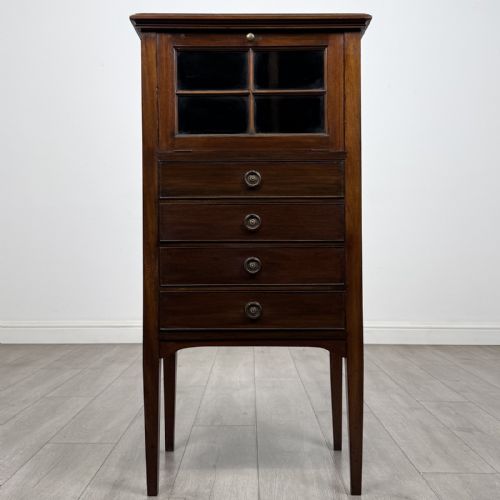
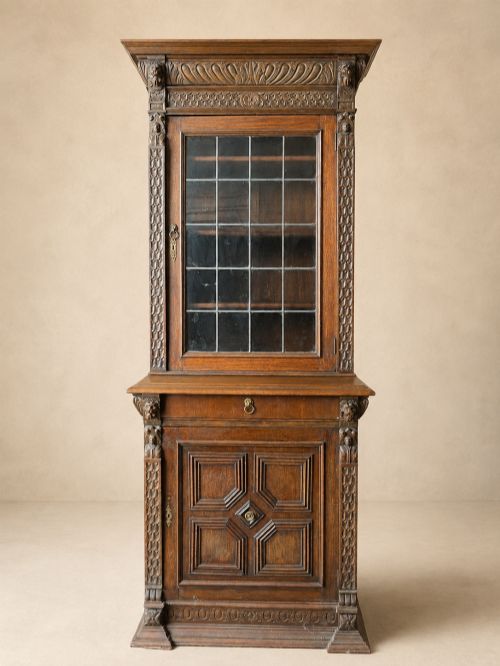
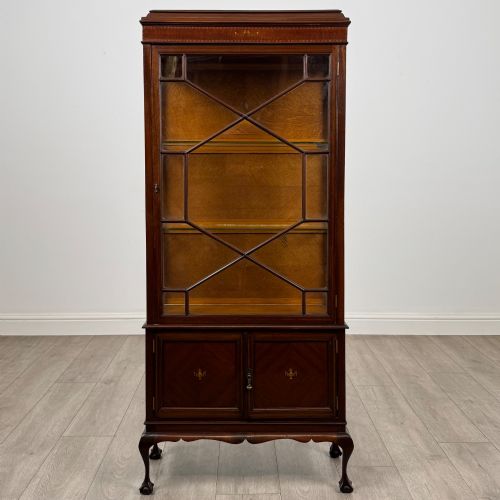
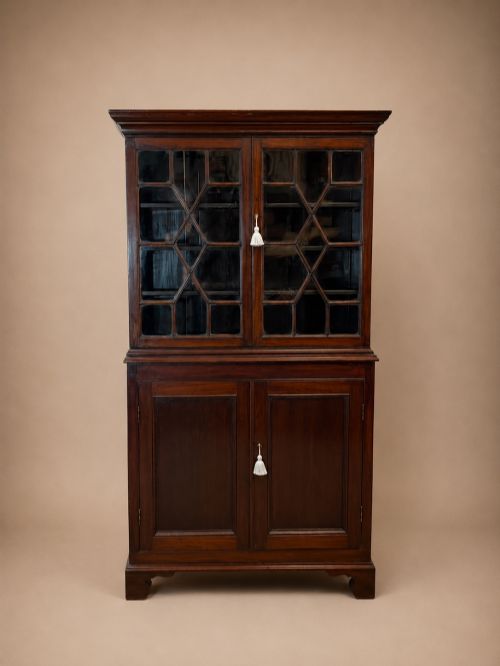
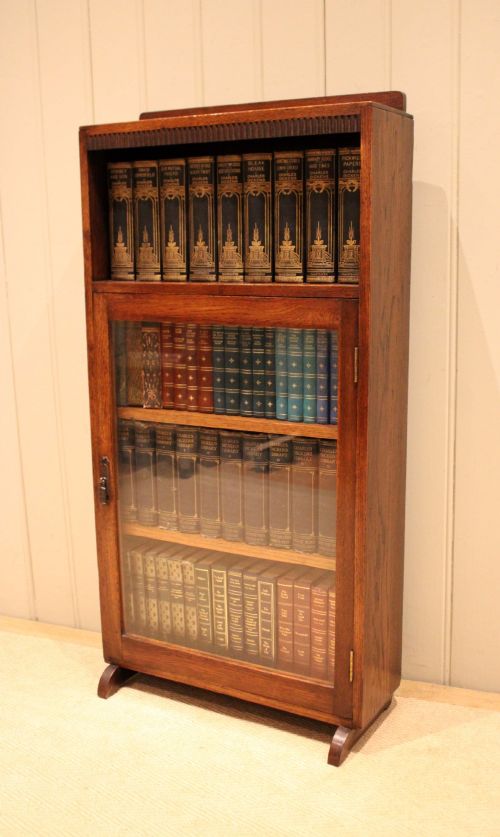
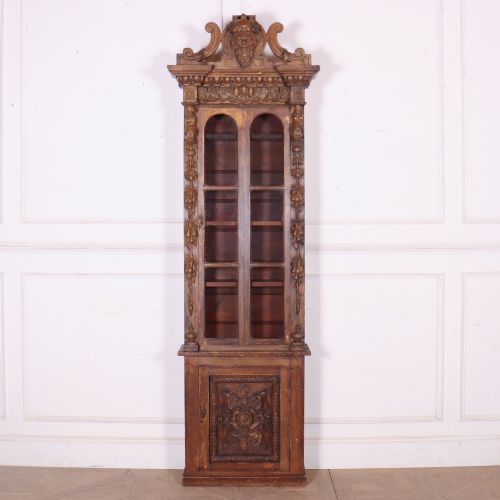
A narrow glazed display cupboard satisfies the need to exhibit collections without consuming valuable floor space in smaller rooms. These pieces appear frequently as tall pier cabinets, slim bookcases, and single-door display units designed for corners or tight wall spaces.
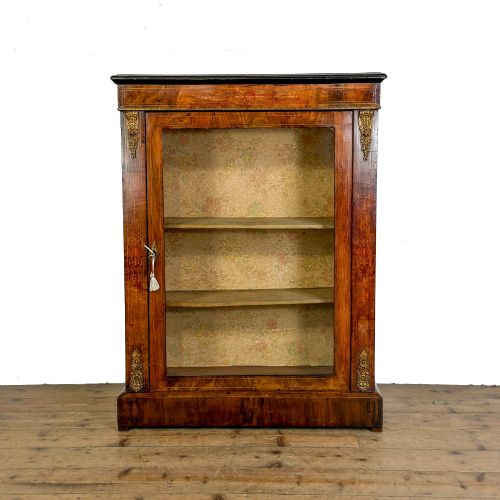
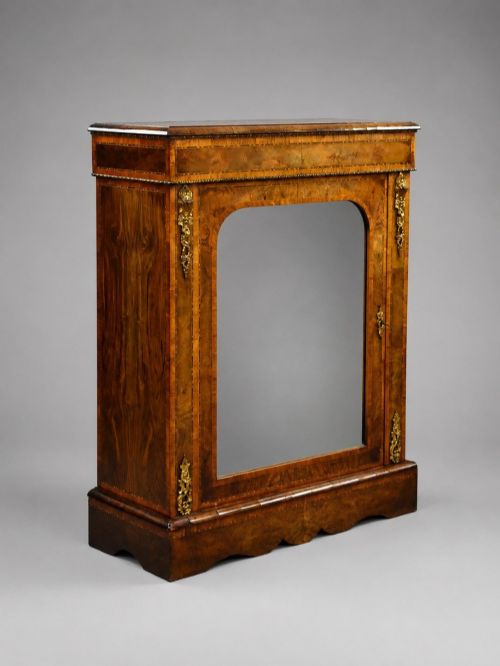
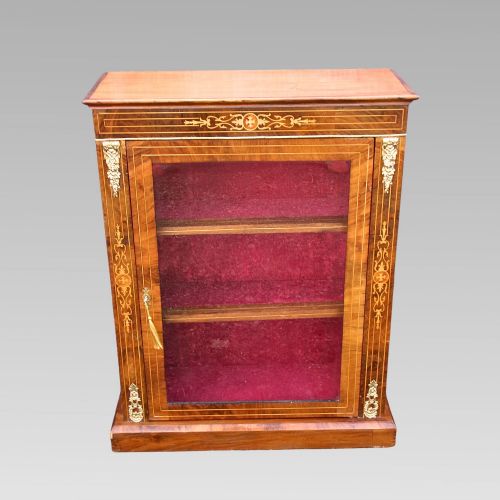
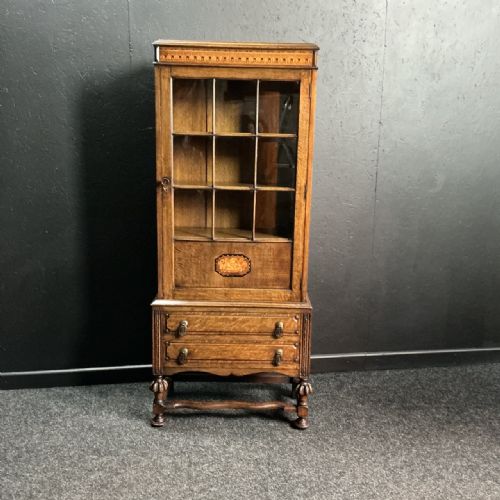
The materials and styles span the nineteenth and early twentieth centuries, drawing on Victorian and Edwardian aesthetics. Common forms include walnut pier cabinets with glass doors, tall mahogany bookcases, and inlaid satinwood or burr walnut display furniture.
How they were made
Cabinet makers utilised sturdy timbers such as mahogany, oak, and walnut as the structural foundation for these slender cases. Finer examples incorporated decorative veneers like burr walnut, alongside marquetry inlay and brass mounts to elevate the visual appeal.
Glazing techniques secured glass panes within timber frames or astragal bars, while specialised hardware such as ormolu details and brass locks completed the construction of doors designed to protect delicate contents.
Current listings demonstrate timber varieties ranging from standard mahogany and oak to figured burr walnut and satinwood.
What varies in quality
The grade of timber and veneer selection dictate much of the visual distinction between examples, with burr walnut and figured mahogany commanding higher regard than standard plain woods. Craftsmanship in marquetry inlay and the precision of the astragal glazing bars further separate standard utilitarian storage from elevated cabinet work.
The Narrow Glazed Display Cupboard Glossary
- Pier cabinet
- A low cabinet designed specifically to stand against the narrow wall space between windows. These Victorian pieces frequently feature glazed doors to display ceramics.
- Astragal
- A moulding used to hold glass panes within a frame. Fine astragal bars create delicate geometric patterns across the door of a bookcase.
- Marquetry
- The art of applying decorative pieces of veneer to a structure to form intricate designs. Floral or geometric marquetry frequently enhances walnut display furniture.
- Ormolu
- Gilded bronze used for decorative mounts and furniture hardware. It appears on finer nineteenth-century cabinets to accent corners and doors.
- Burr walnut
- Timber taken from a growth deformity on a walnut tree, producing highly figured wood grain. Cabinet makers prized this material for high-status veneer work.
Narrow Glazed Display Cupboard: Frequently Asked Questions
What fits inside a narrow glazed display cupboard?
These slender cabinets suit collections of small ceramics, glassware, and leather-bound books. The glass doors protect delicate objects from dust while keeping them visible.
Shelving depths are typically shallow, accommodating items scaled for compact rooms rather than large folios or bulky tableware.
How do I spot a Victorian pier cabinet?
Victorian pier cabinets are typically low, narrow pieces designed for wall spaces between windows. They often feature a single glazed door and rich timber veneers.
Many examples incorporate walnut, marquetry inlay, or brass mounts characteristic of nineteenth-century revival styles.
Are these cabinets suitable for small rooms?
Their slender footprints make them ideal for apartments or tight hallways where standard furniture overwhelms the floor plan. Height provides storage capacity without width.
Placing one against an empty wall draws the eye upward while offering practical enclosed display space.
What is the difference between a bookcase and a display cabinet?
Bookcases generally feature wooden shelving intended primarily for holding books, though many examples include glass doors. Display cabinets focus on visibility with extensive glass panels.
In older furniture, the two terms frequently overlap as makers built versatile slim cupboards for both books and ornaments.