


Antique Walnut Dining Seats
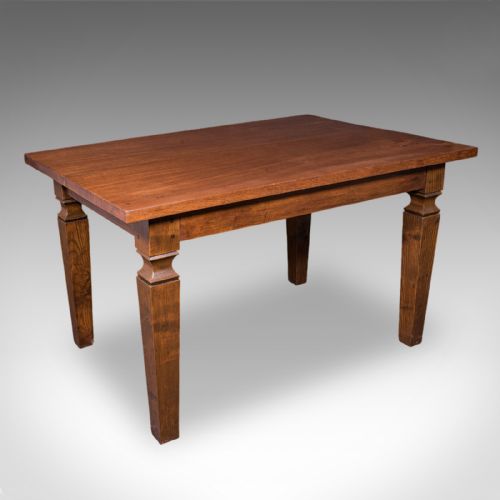
These antique walnut dining seats bring warmth and rich grain to a room, offering genuine period character for daily dining.
Antique Walnut Dining Seats
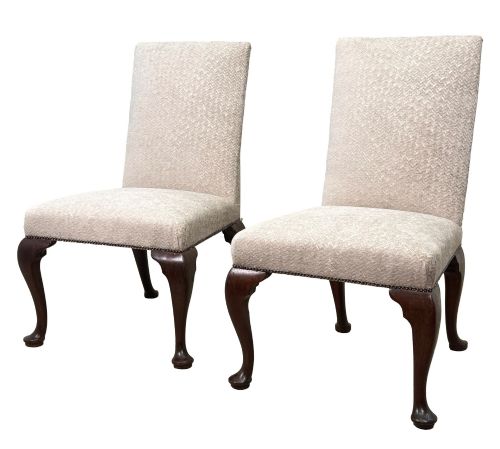
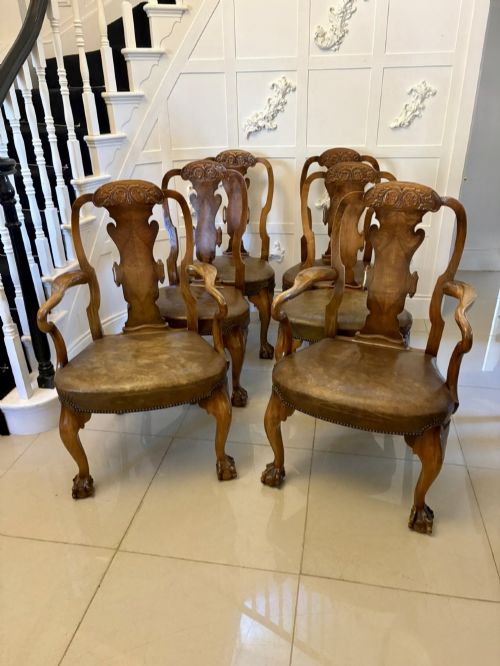
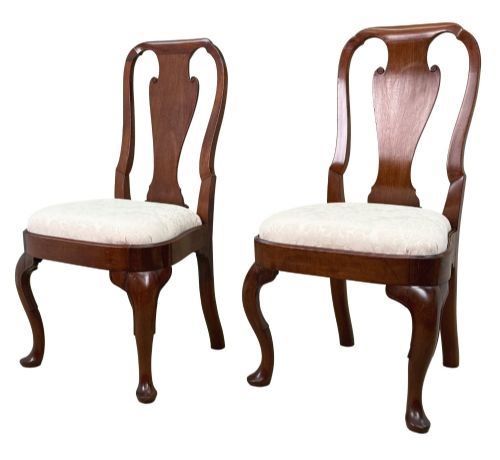
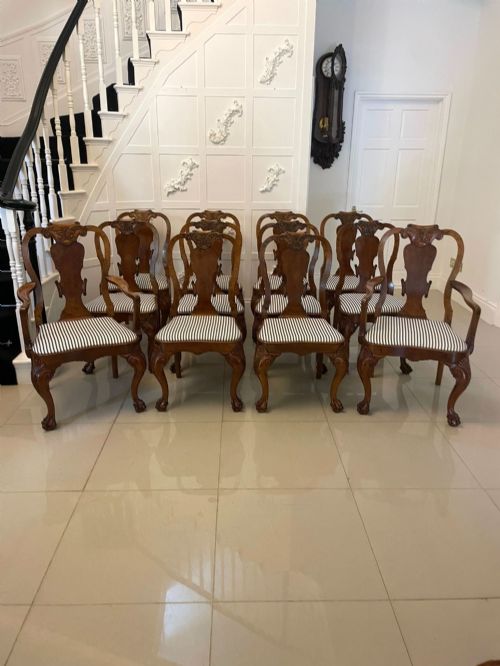
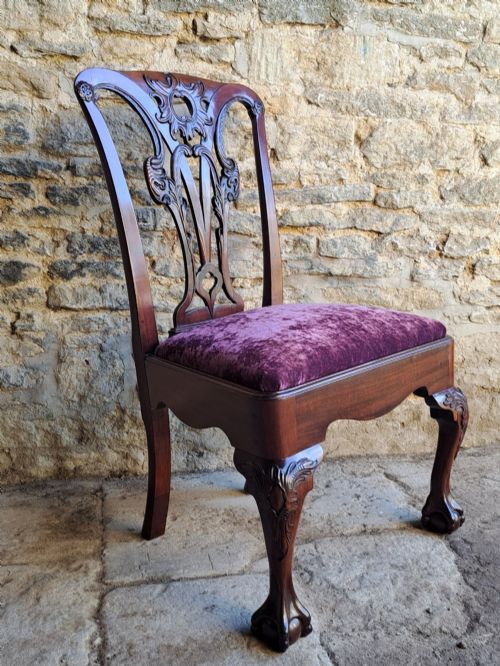
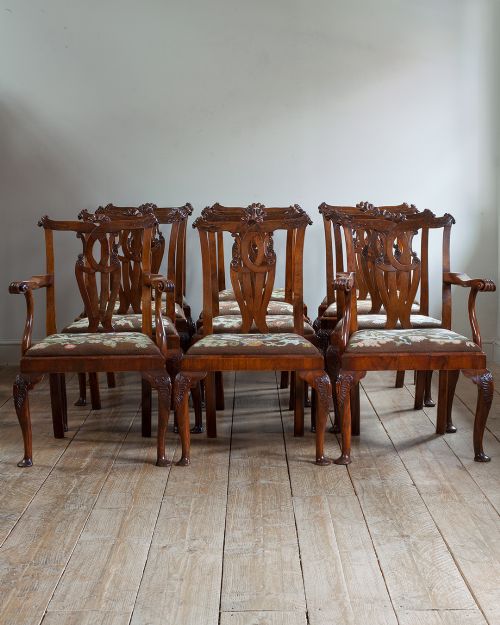
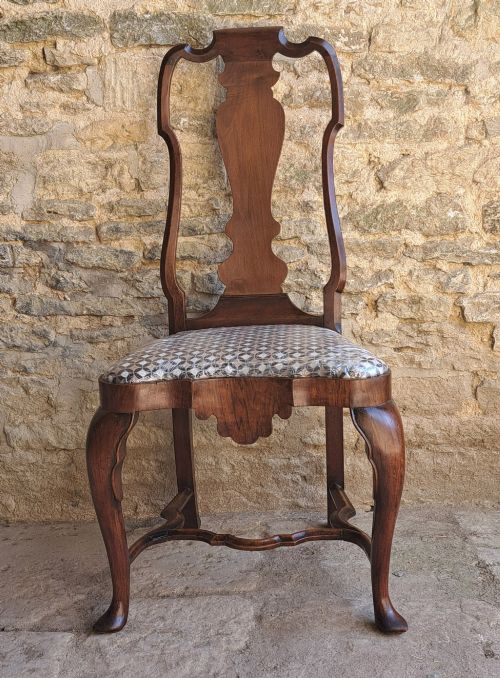
When you search for antique walnut dining seats, you are looking at timber-framed chairs built for the dining table across several distinct centuries. The selection ranges from early eighteenth-century Queen Anne and Georgian side chairs with shaped splats to substantial Victorian and Edwardian dining suites.
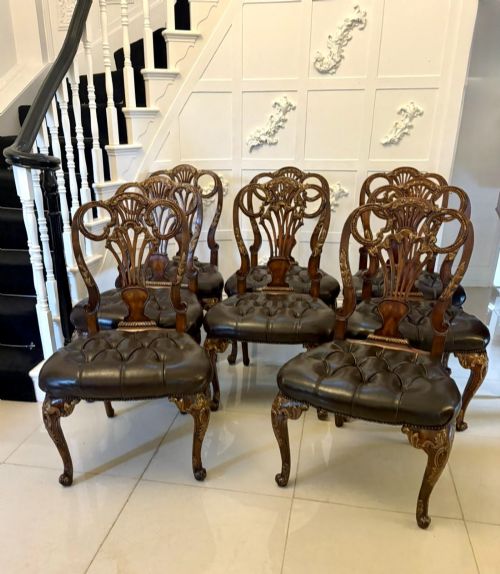
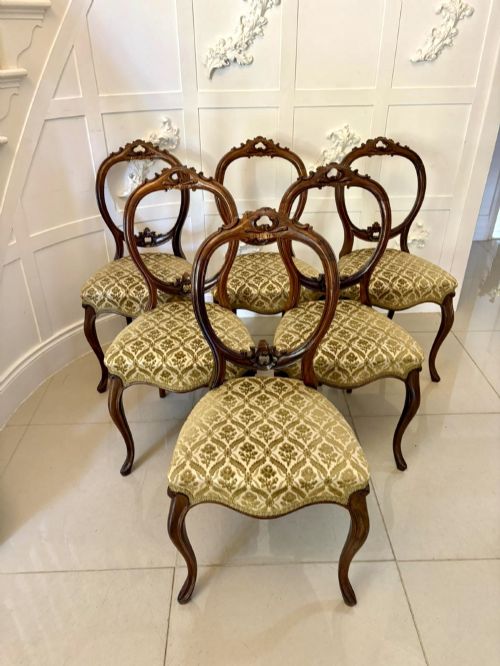
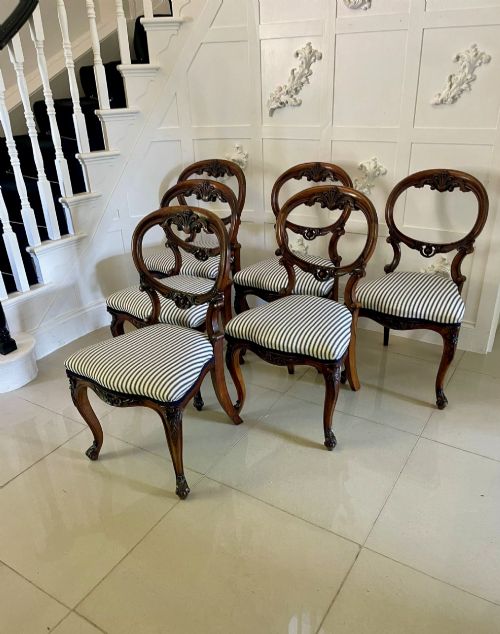
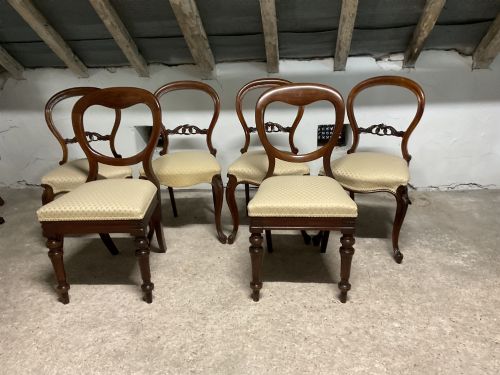
You will encounter single chairs, matched pairs, and larger sets spanning four to twelve pieces. Forms include balloon backs, carved Victorian frames, and revival styles that mirror earlier centuries.
Origins stretch across English, Irish, Italian, and French workshops, showing how different makers interpreted the timber over generations.
How they were made
Cabinet makers utilised solid walnut and burr walnut veneers, often selecting timber for rich figuring and deep natural colour. Frames frequently combined carved woodwork with traditional joinery such as mortise and tenon joints.
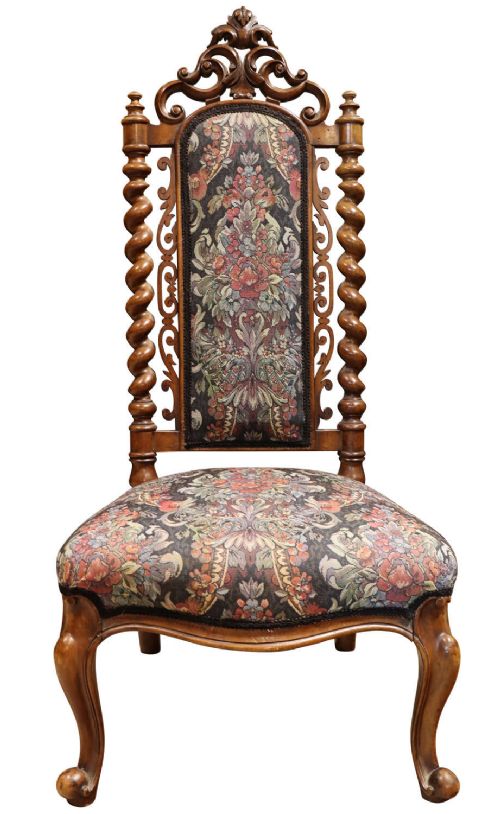
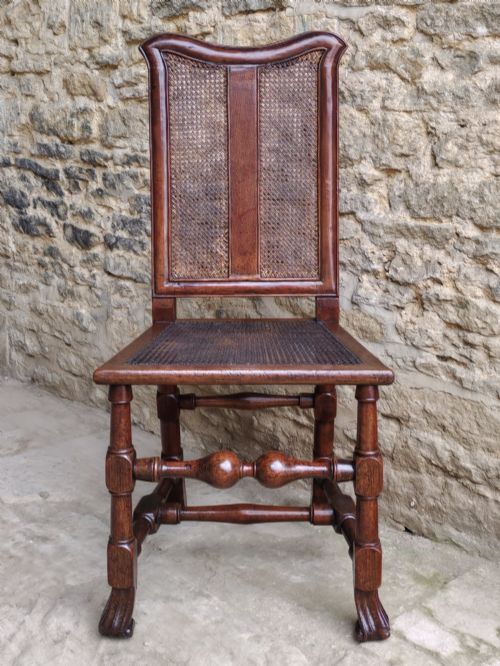
Upholstery materials evolved from drop-in rush or simple pads to lavish textiles, leather, velvet, and tapestry. Later revival pieces occasionally incorporated cane work and intricate marquetry inlay.
What varies in quality
The standard of carving and the crispness of detail dictate the upper tier of these chairs. Rigorous selection of burr walnut veneer and balanced grain patterns distinguish superior examples from simpler production.
The integrity of the frame construction and the fidelity of historical revival styles separate exceptional sets from ordinary utility seating. Cohesion across a large matching set elevates the overall standard significantly.
Charles Tozer·Lamb of Manchester·Waring & Gillow
The Antique Walnut Dining Seats Glossary
- Burr walnut
- Timber taken from the wart or growth on a walnut tree, yielding highly decorative swirling grain patterns. It was frequently utilised for veneering prominent surfaces on nineteenth-century furniture.
- Balloon back
- A rounded, curved chair back profile resembling the shape of a hot air balloon. This form became immensely popular during the Victorian era.
- Pierced splat
- The central vertical slat of a chair back that has been cut through to form an open design. Early eighteenth-century examples often utilised vase-shaped pierced splats.
- Drop-in seat
- A removable seat frame upholstered separately and dropped into a rebated opening in the chair rails. It allows for straightforward reupholstering without dismantling the main structure.
- Barley twist
- A turned wooden column resembling a spiralling rope or barley sugar stick. This decorative turning appears frequently on seventeenth-century revival and mid-nineteenth-century frames.
Antique Walnut Dining Seats: Frequently Asked Questions
How do I date an antique walnut chair?
Dating relies on observing structural characteristics, joinery methods, and stylistic cues such as leg shapes and back splats. Earlier eighteenth-century pieces often feature cabriole legs, while Victorian examples lean towards balloon backs and heavy carving.
Secondary woods used in the frame construction also offer clues to the period and regional origin. Comparing the specific walnut grain and finish against documented pieces helps narrow down the decade of manufacture.
Are walnut dining seats strong enough for daily use?
Walnut is a durable hardwood that served as the primary framing material for formal seating over centuries. Sound joinery and stable timber mean these chairs easily handle regular daily sitting.
Periodic checks of the glue joints and frame stability ensure the chairs remain secure. Avoiding placement near direct heat sources protects the timber and historic upholstery from drying out.
Can I mix different styles around a dining table?
Mixing single side chairs or smaller pairs creates an eclectic dining arrangement popular in historic homes. Matching timber tones, such as rich walnut hues, provides a unifying visual thread across diverse chair forms.
Ensuring seat heights remain consistent keeps the dining experience comfortable for guests. Pairing eighteenth-century styles with later revival pieces adds depth and personality to a room.