




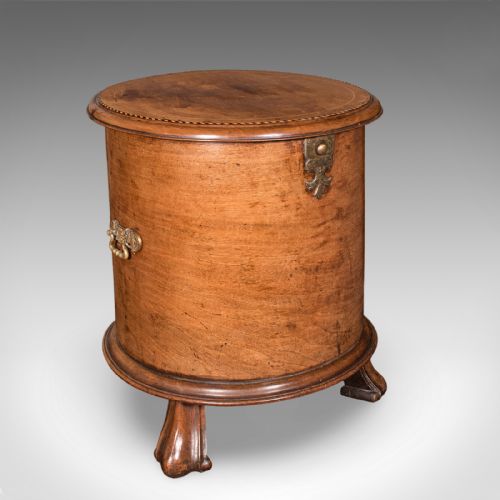


Antique Walnut Caddy
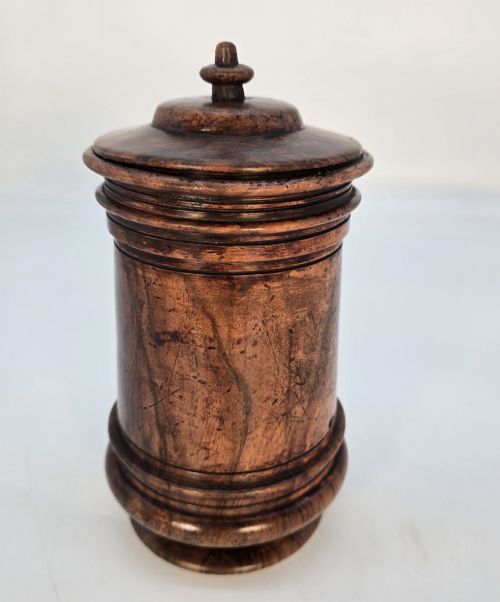
An antique walnut caddy holds dry leaf securely in compartmentalised interiors, offering tactile pleasure through dense grain patterns.
Antique Walnut Caddy
An antique walnut caddy is a lidded container originally designed for storing precious tea leaves under lock and key, spanning periods from the eighteenth century through the Victorian era.
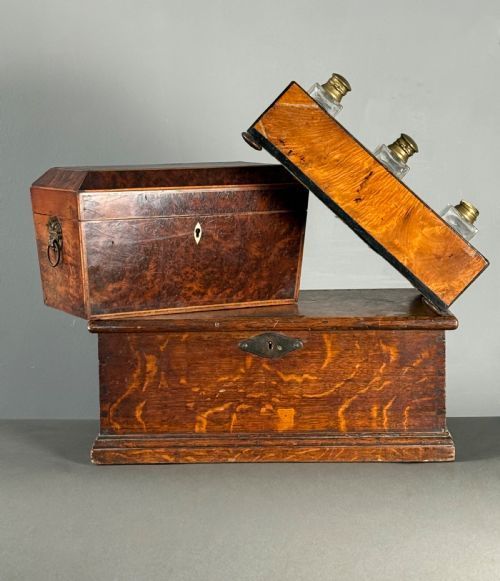
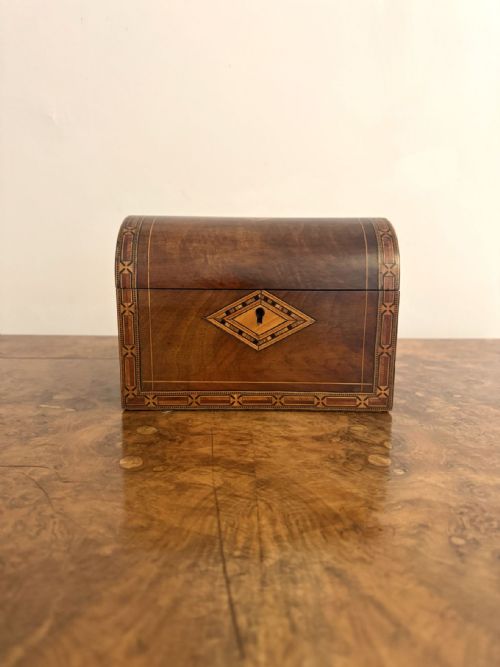
The version most commonly encountered on this page takes a rectangular or sarcophagus form, fashioned from rich timber veneers and housing internal lidded canisters for different leaf varieties.
Beyond tea storage, surviving examples frequently manifest as stationery boxes, sewing receptacles, or decorative desktop containers utilising the same dense hardwood.
How they were made
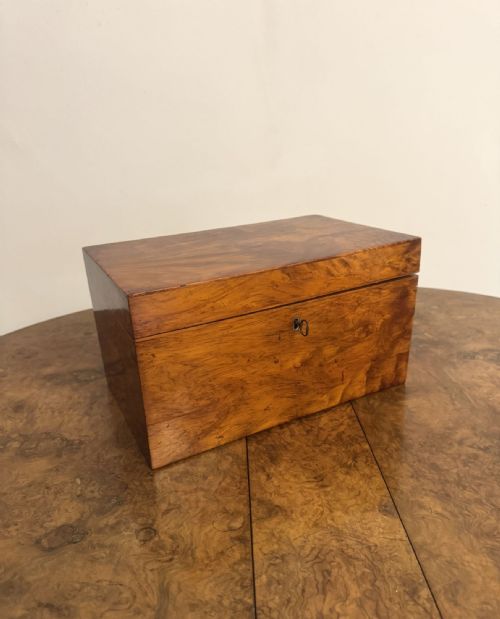
Cabinetmakers utilised solid walnut and figured burr veneers applied to softwood or hardwood carcases, harnessing the natural figuring of the timber for visual depth.
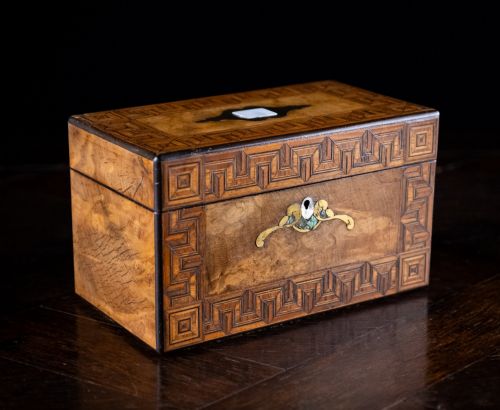
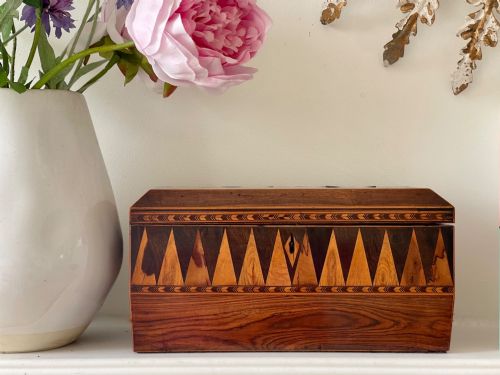
Decorative embellishments often involved intricate boxwood stringing, parquetry geometric patterns, or meticulous Tunbridge mosaic work alongside cast brass escutcheons and handles.
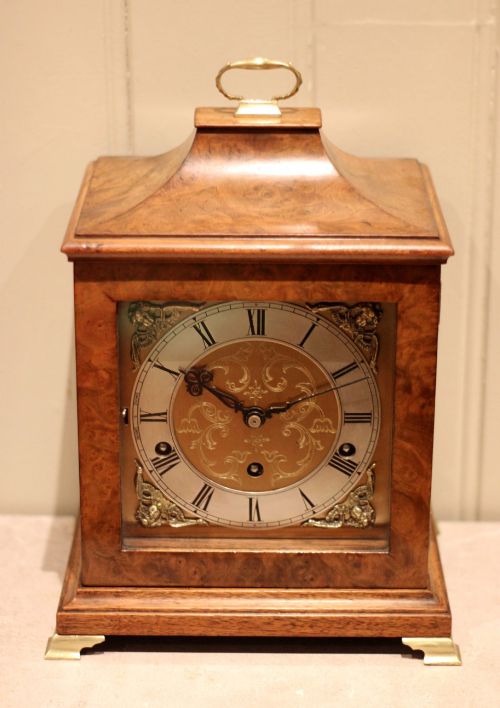
Listings feature walnut caddies spanning the Georgian, Regency, and Victorian periods, alongside related boxes and clocks.
What varies in quality
The quality of an antique walnut caddy rests upon the selection and matching of the burr veneer across the exterior surfaces, where symmetrical grain alignment signals superior workshop practice.
Internal complexity also dictates worth, distinguishing simple single-compartment boxes from elaborate multi-canister tea chests featuring fitted glass mixing bowls and working locks with original keys.
Mappin And Webb·Henry Hollamby·Lenzkirch·Pearce London
The Antique Walnut Caddy Glossary
- Burr walnut
- A prized timber harvested from the abnormal growth growths on walnut trees, yielding complex swirling grain patterns. It provides highly decorative surfaces for cabinet furniture.
- Caddy
- A small container or chest originally designed for holding dry tea leaves. The word derives from the Malay term kati, a unit of weight.
- Tunbridge ware
- A distinctive form of British woodwork characterised by mosaic patterns assembled from thousands of tiny tinted wood prisms. It frequently decorates nineteenth-century boxes.
- Escutcheon
- A protective plate surrounding a keyhole, usually fashioned from brass or mother-of-pearl. It prevents the surrounding timber from wearing away during use.
- Parquetry
- A geometric mosaic of wood pieces used for decorative surface inlay. It creates angular patterns across the lids and sides of luxury boxes.
Antique Walnut Caddy: Frequently Asked Questions
What is an antique walnut caddy?
An antique walnut caddy is a covered box created during the Georgian, Regency, or Victorian periods to store dried tea leaves safely. These vessels often feature internal compartments with individual lids to keep green and black teas separate.
Craftsmen built them using rich timber and elaborate veneers, making them attractive decorative objects for polite society drawing rooms long before tea became common household fare.
How do you tell periods apart?
Georgian caddies typically display simple geometric proportions with plain walnut or subtle banding, whereas Regency examples introduce sarcophagus shapes and brass paw feet. Victorian pieces lean toward heavy burr veneers, domed tops, and intricate Tunbridge or parquetry inlay.
Examining the internal construction, hinges, and lining papers helps confirm the era of manufacture and distinguishes original work from later revivals.
How were they used originally?
Tea was a costly commodity in the eighteenth and nineteenth centuries, so households kept leaves locked away to prevent theft by domestic staff. The mistress of the house typically carried the key and dispensed the leaves for each meal.
Inside the box, a small glass bowl often sat between the storage canisters for blending different leaf varieties before brewing.
How do you live with one today?
These boxes function well on side tables, desks, or dressing chests for holding modern small items like jewellery, keys, or stationery. Their compartmentalised interiors naturally organise clutter while adding historic warmth to a room.
Keeping them away from direct sunlight and sudden temperature changes protects the delicate wood veneers and prevents the timber from splitting.