
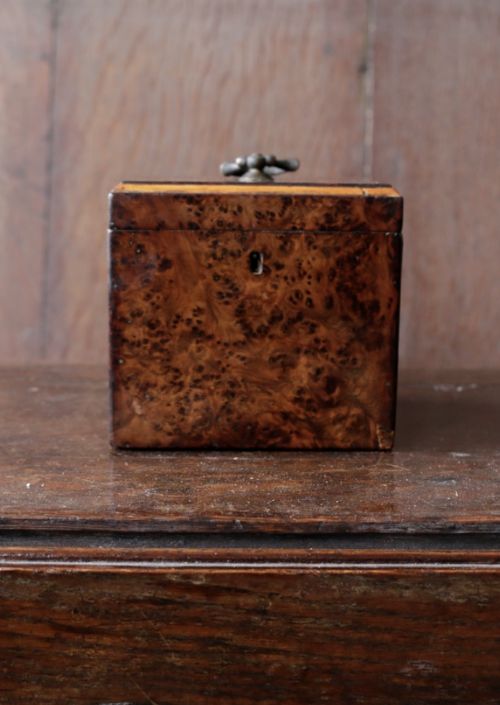


Antique Wooden Canister
An antique wooden canister offers a tangible link to domestic history, serving as a sturdy domestic vessel for dry goods like tea or tobacco.
Antique Wooden Canister
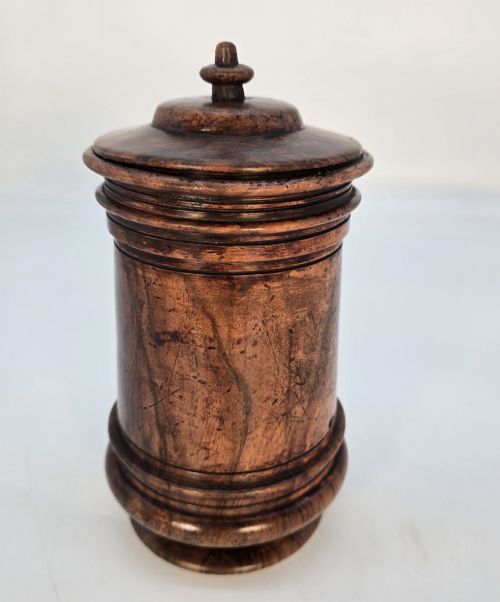
When you search for an antique wooden canister, you encounter a variety of receptacles designed for domestic storage, most frequently taking the form of tea caddies, tobacco jars, and spice towers.
The selections available range from 18th-century walnut and mahogany examples to Regency rosewood boxes and Victorian specimens.
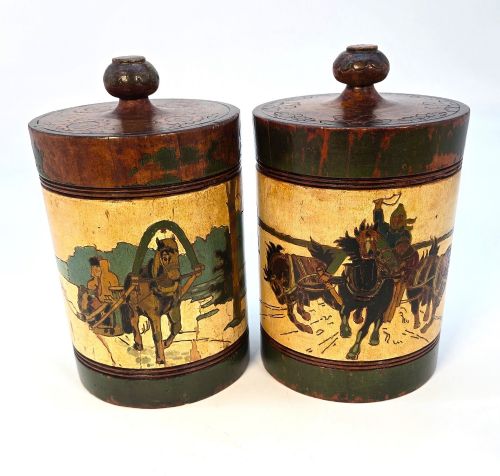
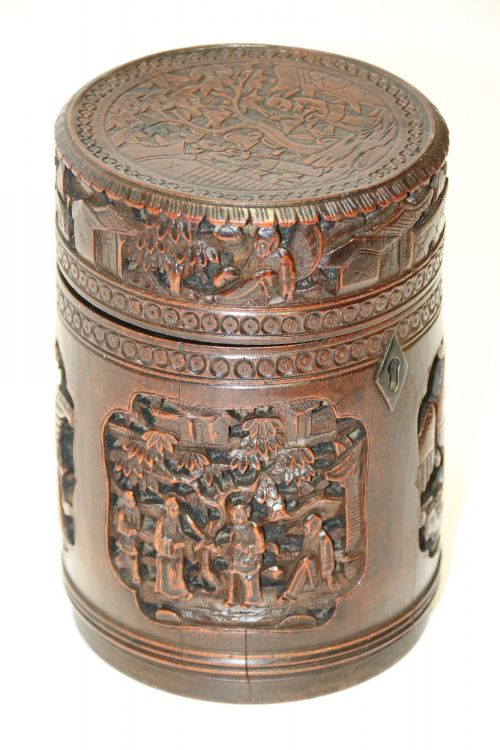
These vessels originate from diverse traditions, including English cabinet making, Chinese export workshops, and Russian folk art traditions.
Materials and construction methods
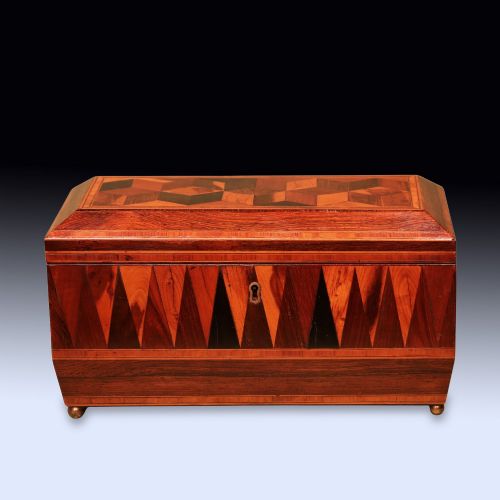
Cabinet makers utilised dense hardwoods such as mahogany, walnut, rosewood, and satinwood, often accentuating the surfaces with burr veneers and intricate parquetry or marquetry inlays.
Other examples utilise specialised woods like sycamore, yew, and bamboo, sometimes paired with secondary materials including brass hardware, bone escutcheons, and glass mixing bowls.
Surfaces received careful finishes, ranging from hand-painted decoration on specific regional pieces to polished French polish on formal Georgian and Regency boxes.
Listings feature 18th-century, Regency, and Victorian periods, constructed from woods like mahogany, rosewood, walnut, satinwood, and sycamore alongside brass and glass elements.
Evaluating the standard of workmanship
The finest pieces demonstrate precision in timber selection, matching grain patterns across lid and sides, whereas lesser examples rely on plain, unfigured boards.
Superior construction involves tight dovetail joints, intact internal foil linings or compartments, and original hardware rather than modern replacements.
Decorative ambition separates standard boxes from masterworks, with delicate shell inlays, stringing, and well-executed carving marking the upper tier of production.
Henry Hollamby·Gillows
The Antique Wooden Canister Glossary
- Tea caddy
- A small box or canister originally designed to store loose tea leaves under lock and key. These containers often contain internal foil-lined compartments.
- Treen
- Small handmade wooden objects for domestic use. This category covers turned spice towers, small jars, and primitive vessels.
- Parquetry
- Geometric mosaic woodwork formed by small pieces of wood fitted together. This technique decorates the exterior surfaces of many Regency boxes.
- Sarcophagus form
- A box design featuring a steep, sloping lid and a tapered body resembling a classical stone tomb. This shape appears frequently in Regency period tea containers.
- Teapoy
- A pedestal table fitted with a top compartment for storing tea. These larger pieces often include internal canisters.
Antique Wooden Canister: Frequently Asked Questions
What were antique wooden canisters used for?
These vessels served primarily to store valuable dry goods such as tea leaves, tobacco, and spices securely in domestic settings.
Because tea and tobacco commanded high prices during the Georgian and Regency periods, the containers featured locks to restrict access.
How do I date an antique wooden canister?
Dating relies on identifying the prevailing timber choices, hardware styles, and cabinet-making techniques characteristic of specific eras.
For example, 18th-century pieces often utilise walnut and early mahogany with simpler joinery, while Regency boxes frequently employ rosewood with sarcophagus proportions.
What is the difference between a tea caddy and a tobacco jar?
Tea caddies generally feature internal compartments, foil linings, and sometimes a central glass mixing bowl for combining different tea varieties.
Tobacco jars typically present a single, deeper cavity designed to preserve leaf moisture, often accompanied by a tight-fitting inner lid.
How should I care for wooden storage boxes?
Keep the wood away from direct sunlight and fluctuating radiator heat to prevent timber shrinkage and veneer splitting.
Apply a minimal amount of appropriate wax polish periodically to maintain the sheen of the historic surface without harming the finish.