
Antique Wall Relief Panel
When you search for an antique wall relief panel, you are looking for sculptural woodwork, metalwork and plaster carrying centuries of decorative narrative.
Antique Wall Relief Panel
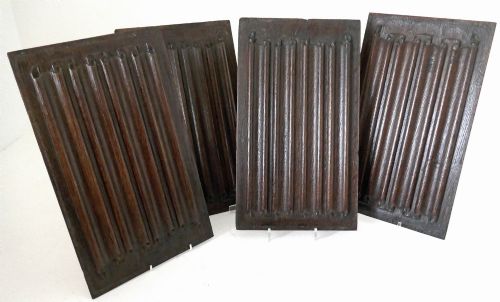
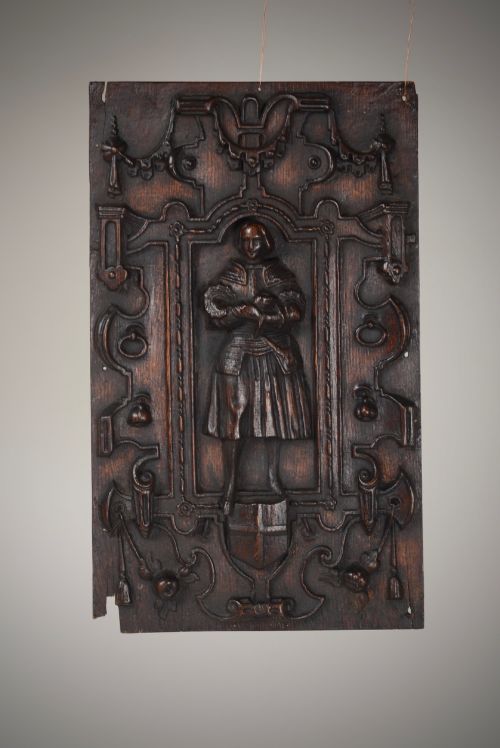
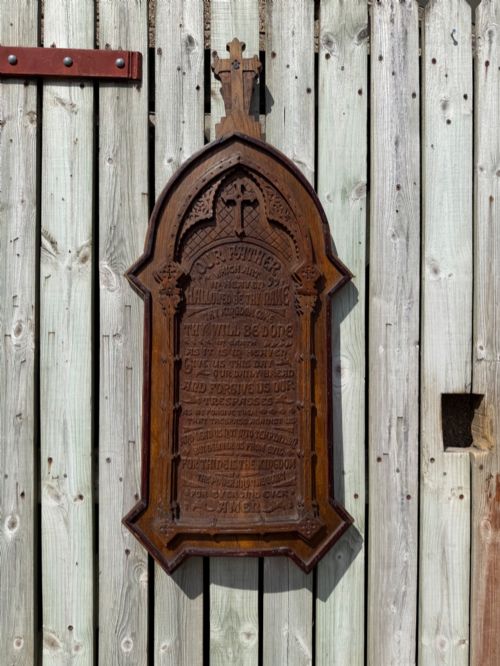
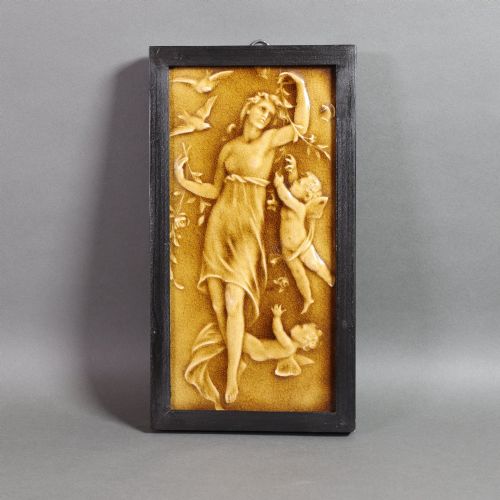
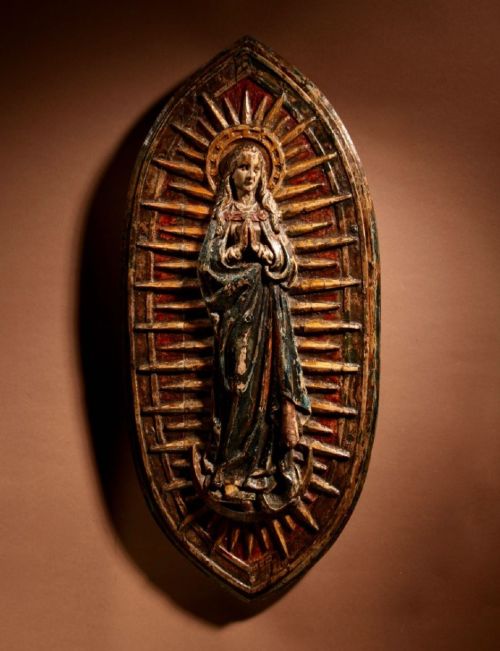
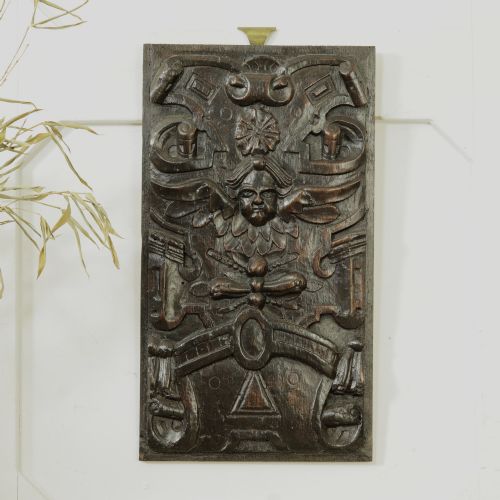
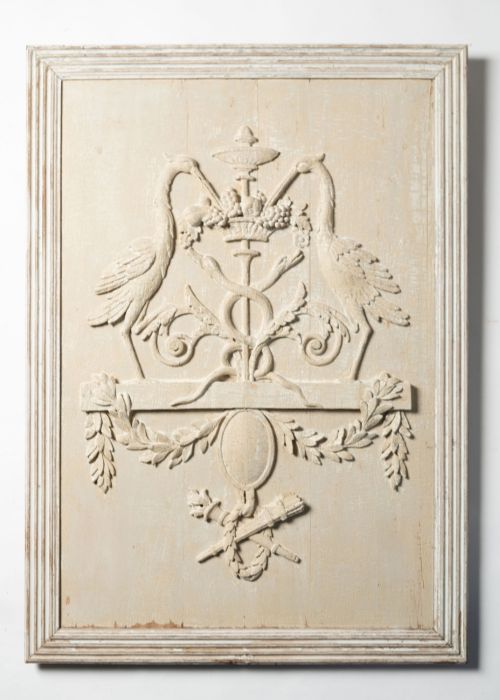
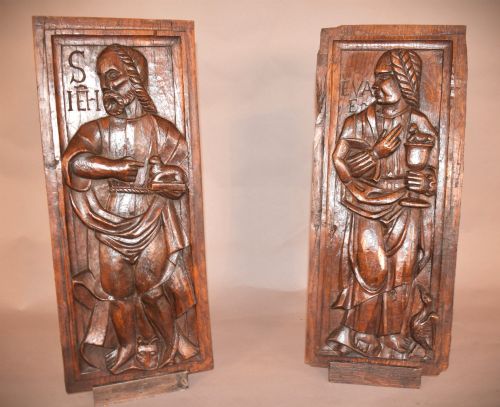
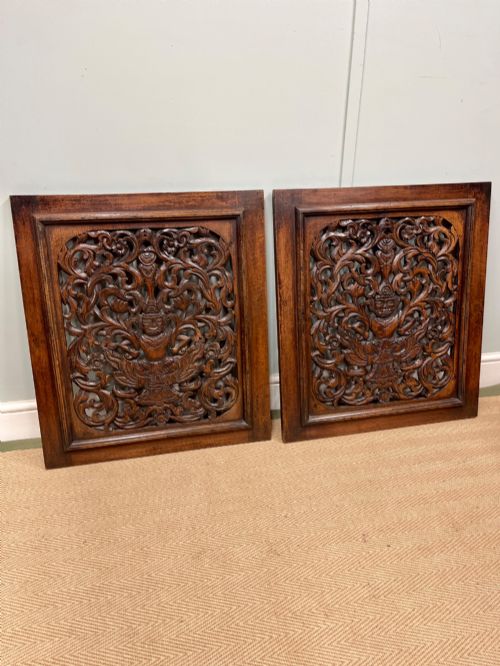
An antique wall relief panel brings architectural depth and figurative carving directly into a room, functioning as wall art, a plaque or a structural fragment. The pieces gathered under this heading span from medieval church fragments and Tudor linenfold timber to nineteenth century French school plaques and gilt bronze appliques.
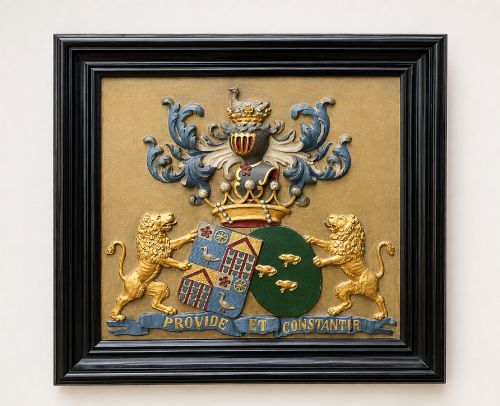
You will encounter oak and walnut most frequently in the earlier centuries, often carved with religious scenes, heraldry or foliage like the Green Man. Later pieces bring in polychrome plaster, limewood, bronze and gilt framing, reflecting styles from Gothic Revival to Arts and Crafts and the Baroque.
How these panels were made
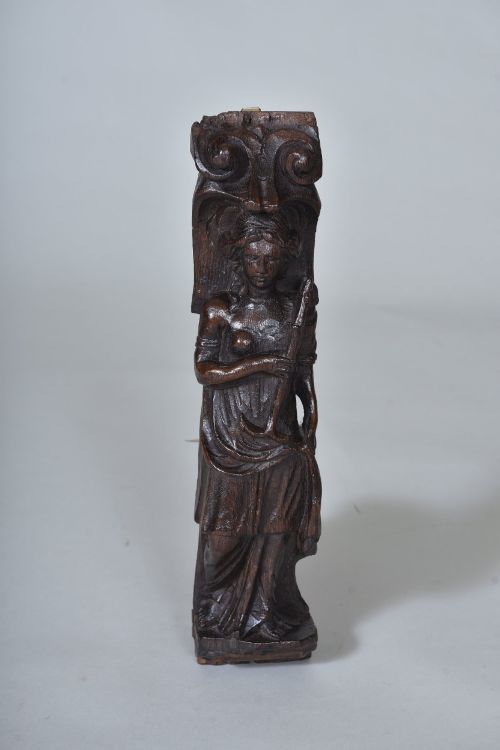
Woodcarving forms the backbone of these pieces, employing dense hardwoods such as oak, walnut, chestnut and fruitwood shaped with chisels and gouges to create varying depths of projection. Master carvers worked directly into the timber, sometimes adapting architectural salvage, cart fragments or former table tops into decorative wall plaques.
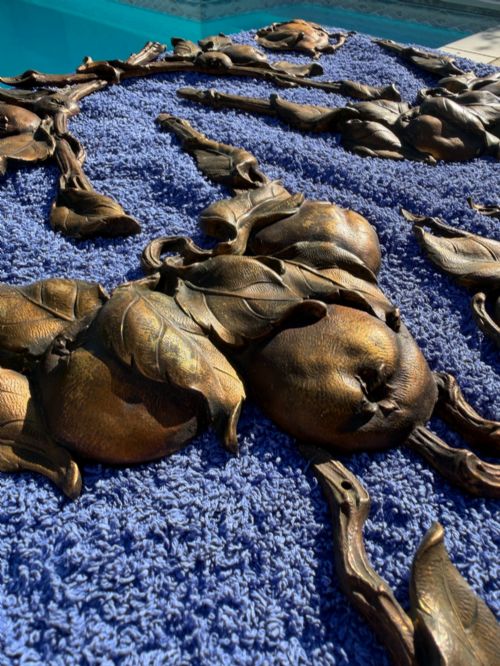
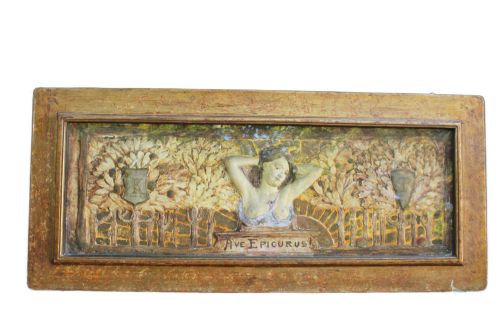
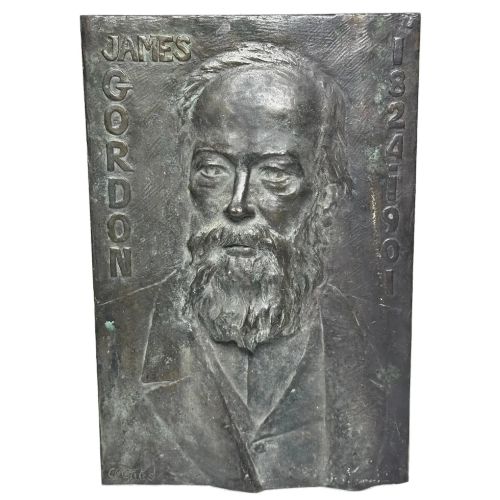
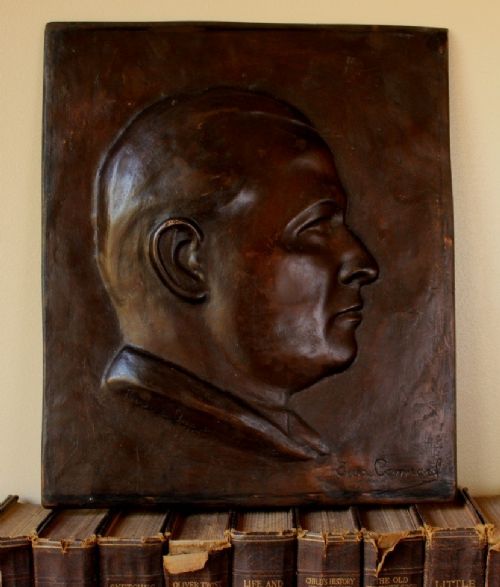
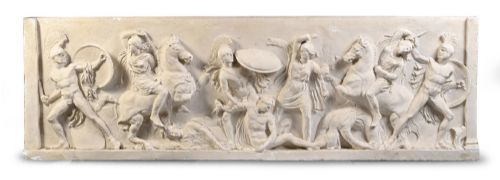
Metal and plaster works utilise casting and chasing techniques, seen in gilt bronze appliques, white metal reliefs and polychrome plaster plaques. Artisans finished many of these surfaces with gold leaf, paint or polychrome detailing to enhance the play of light across the sculpted figures.
Periods represented reach from the sixteenth century through the Victorian era and Arts and Crafts movement up to nineteen-twenty.
What separates the fine from the ordinary
The distinction lies in the sharpness of the chisel work and the anatomical confidence of the figures, whether depicting Joan of Arc, Neptune or a classical maiden. A superior panel maintains crisp undercut details in the drapery and hair even after centuries of handling, whereas lesser examples show softened edges and hurried mass production.
Provenance and material selection also elevate a piece. Solid, well-seasoned oak with deep linenfold linen folds or finely grained limewood trophy carvings command greater attention than generic decorative mouldings.
Poix Blin·Alice Gates·Van Rijckevorsel·Verheijen·Eugene Canneel·Thomas Chippendale
The Antique Wall Relief Panel Glossary
- Linenfold
- A style of wooden panelling carved to resemble folded lengths of cloth. It is particularly common on sixteenth-century English oak panels.
- Relief
- A sculptural technique where the sculpted elements remain attached to a solid background of the same material. High relief projects significantly from the plane.
- Polychrome
- Decorated in a variety of colours. This finish appears on plaster and wooden reliefs from the medieval period through to the Arts and Crafts movement.
- Applique
- An ornamental fitting applied to a larger surface. These are frequently cast in bronze or gilt metal to accent walls and furniture.
- Trumeau
- A decorative wall mirror or panel placed between windows. They often incorporate painted scenes or carved woodwork above the glass plate.
Antique Wall Relief Panel: Frequently Asked Questions
How do I hang a heavy wooden panel safely?
Heavy oak and bronze panels require robust wall fixings anchored directly into studs or masonry rather than plasterboard alone. Utilising concealed metal brackets or French cleats distributes the substantial weight evenly across the structure.
Ensure the hanging hardware matches the load capacity indicated by the dealer or maker. Professional installation is advisable for large architectural fragments and heavy trumeau mirrors.
Can these panels go in humid rooms?
Unsealed timber and gesso react strongly to fluctuations in moisture and temperature. Kitchens and bathrooms risk warping the wood or cracking the delicate plaster and gold leaf.
Keep panels in stable interior environments away from direct heat sources and strong sunlight. Regular dusting with a dry, soft cloth preserves the historic surface without introducing moisture.
How do I date a carved wooden panel?
Examine the tool marks left on the reverse and edges, as hand-adzed timber differs significantly from machine-cut nineteenth-century stock. The style of the carving, costume details on figures and the species of wood also offer strong chronological clues.
Oak dominates sixteenth and seventeenth-century English and continental work, while softer fruitwoods and exotic timbers appear more frequently in later decorative pieces.
Were these always meant for walls?
Many panels originated as architectural salvage, having once formed parts of altarpieces, church screens, temple pediments or furniture such as cupboards and tabletops. Later craftsmen often repurposed these fragments into standalone wall art.
This history of adaptation means a piece might combine structural framing from one era with a sculpted relief from another. Inspecting the joins reveals how the object evolved into its current wall-hanging format.