





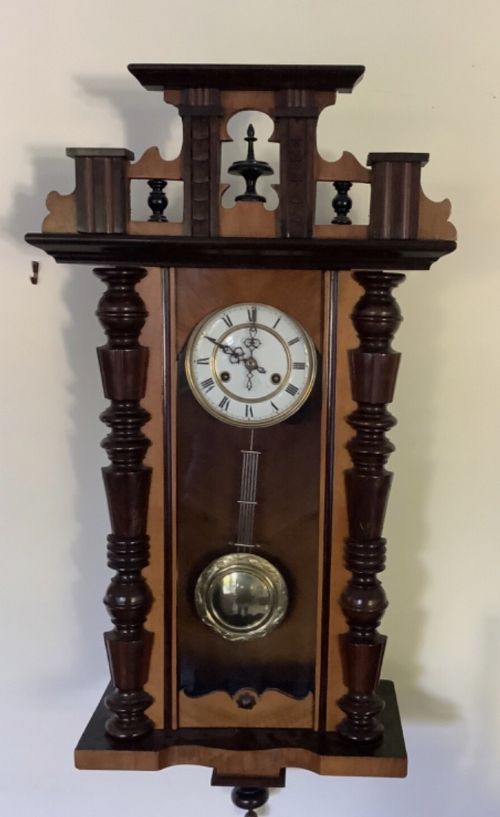

Antique Wall Regulator
An antique wall regulator brings precise timekeeping and striking architectural presence to a room, driven by weights or springs housed in timber cases.
Antique Wall Regulator
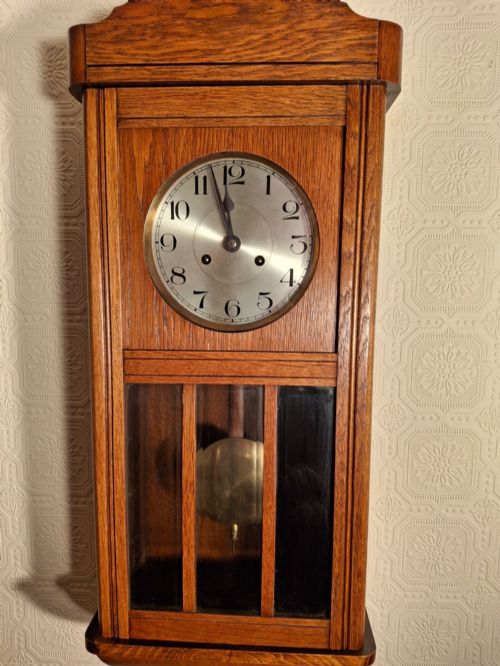
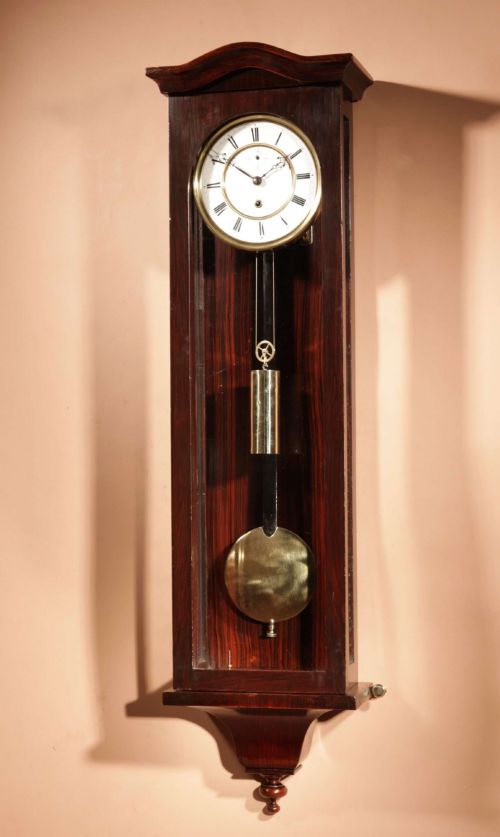
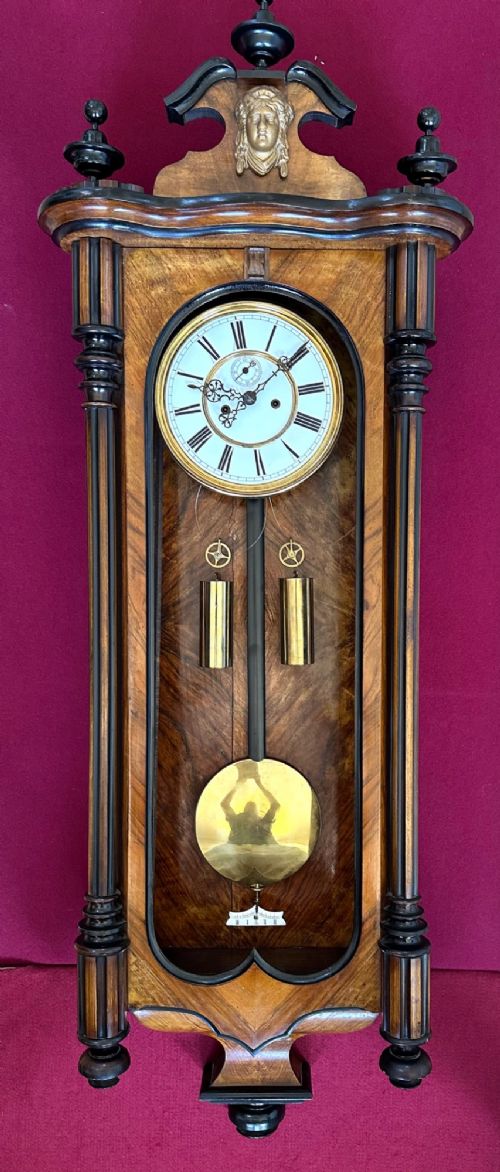
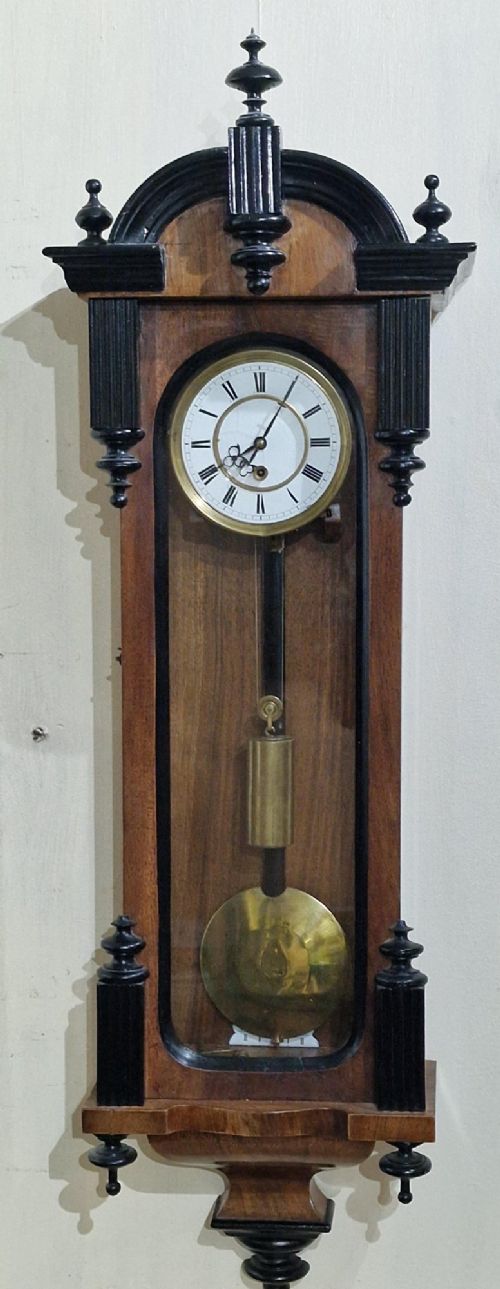
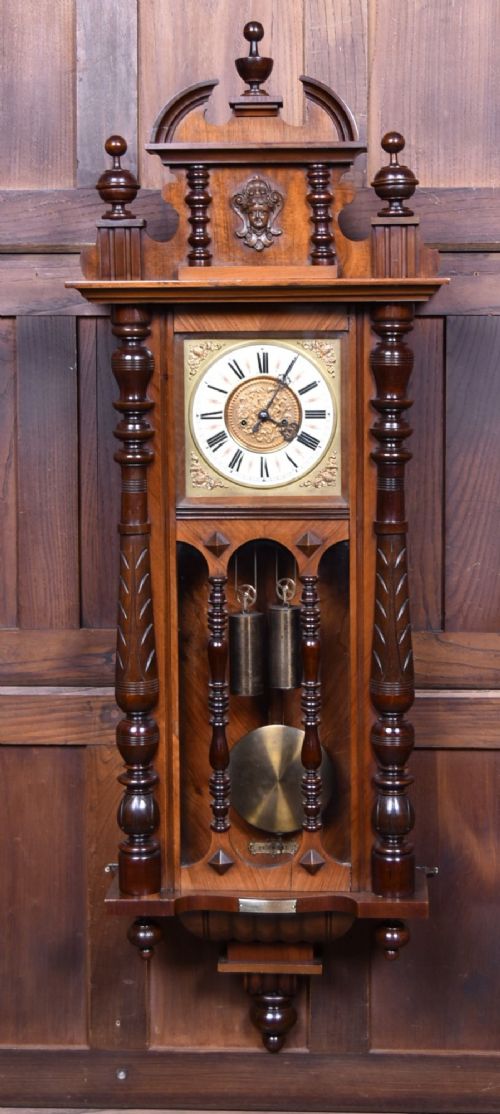
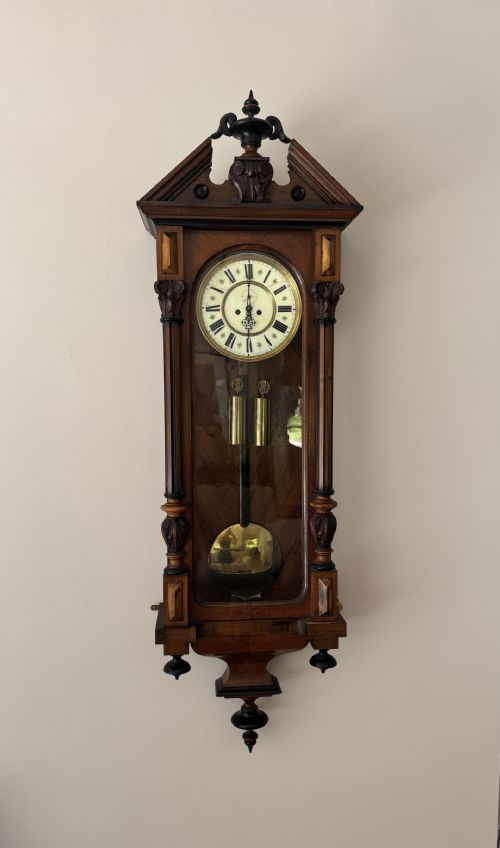
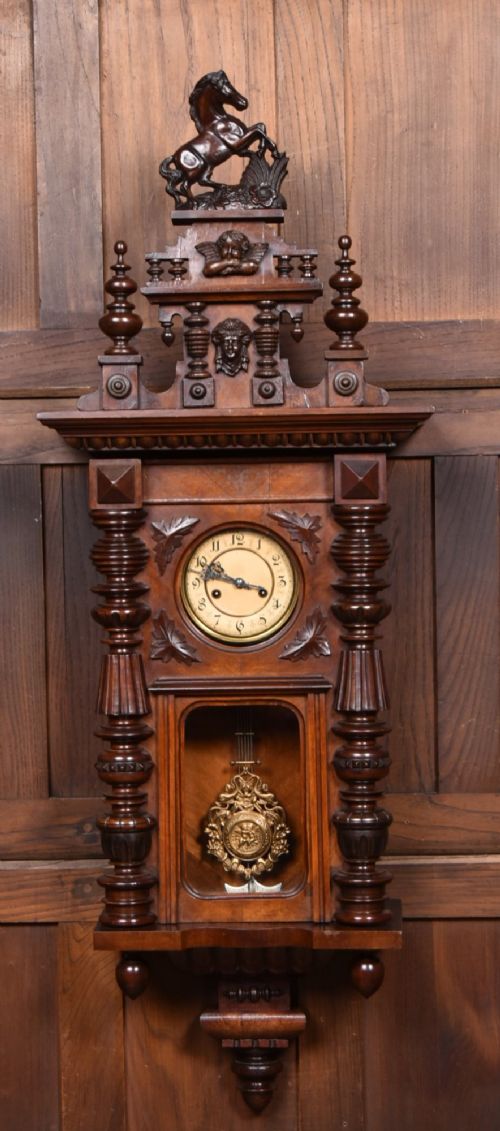
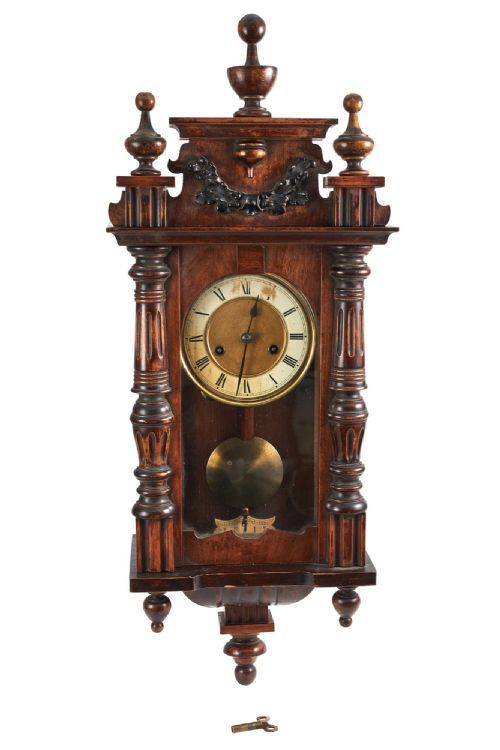
An antique wall regulator is a precision timekeeper designed to mount directly onto a wall, most commonly taking the form of a Vienna regulator or similar continental and English variations. Buyers searching for an antique wall regulator encounter clocks originating from the nineteenth century into the twentieth century, encompassing Victorian, Edwardian, and Art Deco periods.
The pieces listed on this page range from walnut and mahogany Vienna styles to carved oak, ebonised wood, and drop dial formats. Alongside standard timepieces, variants feature single, double, or triple brass weights, month duration movements, and striking mechanisms.
Origins span Austria, Germany, France, and England, showcasing cabinetwork in Biedermeier and Gothic influences alongside traditional Victorian forms.
Materials and construction methods
Cases are constructed predominantly from solid and veneered timbers including walnut, mahogany, burr walnut, oak, and ebonised wood, housing glass panels that protect the dial and swinging pendulum. Brass forms the weights, pendulums, and movement plates, while enamel is utilised for the clock faces.
Movements incorporate metal gear trains driven by brass weights or springs, sometimes configured for eight-day, month duration, or thirty-one day running times with striking capabilities.
Periods represented span from the mid-nineteenth century Victorian era through to mid-century Art Deco designs.
Distinguishing quality in movements and cases
Quality separates through the sophistication of the movement, such as month duration or triple weight systems compared to standard timepieces, alongside signed works by notable makers. Cabinet craftsmanship distinguishes the better examples through detailed carving, matched walnut veneers, and robust architectural proportions rather than plain secondary timber construction.
John Walker·Gustav Becker·Johann Baptist Beha·AG Lenzkirch·Ansonia·Girod·Odo
The Antique Wall Regulator Glossary
- Vienna Regulator
- A high-precision pendulum clock developed in Austria, celebrated for accurate timekeeping and elegant glazed cases. These clocks typically feature long wooden trunks and visible pendulums.
- Drop Dial
- A wall clock design featuring a circular dial above an extended wooden box that houses the pendulum. This form appears frequently in English and nineteenth-century examples.
- Fusee
- A conical pulley used in clock movements to equalize the driving force of the mainspring as it winds down. It ensures consistent energy delivery to the escapement for better accuracy.
- Grande Sonnerie
- A complex striking mechanism that chimes the hours and quarters automatically on every quarter hour. It represents an elevated level of horological complication.
- Two Train
- A movement featuring two separate gear trains, one dedicated to timekeeping and the second operating the striking mechanism. Such movements require two weights or spring barrels.
Antique Wall Regulator: Frequently Asked Questions
How do I wind an antique wall regulator?
Winding requires inserting a suitable key into the winding holes on the enamel dial and turning it gently until resistance is felt. Care must be taken not to overwind spring-driven models.
For weight-driven clocks, the weights are drawn back up using a crank or by pulling the chains, depending on the specific suspension system.
Where should I hang a wall regulator?
Select an interior wall that is stable and free from excessive vibrations, heavy foot traffic, or damp conditions. A secure fixing directly into masonry or wall studs is essential to support the weight of the timber case.
The clock must hang vertically plumb so the pendulum swings with an even beat.
How do I set the correct beat?
The beat is correct when the ticking sound of the escapement is perfectly even, producing a steady tick-tock rhythm. Adjusting the crutch wire or shifting the case slightly on the wall corrects an uneven limp.
Moving the pendulum too far to one side stops the motion, so adjustments require small increments.
What is the difference between Vienna and English regulators?
Vienna regulators emphasise long glass-doored walnut or mahogany cases that display the brass weights and pendulum clearly. They originate from Austrian and German workshops.
English regulators often utilise drop dial or trunk case formats with heavy brass fusee movements engineered for absolute chronometric precision.