





Antique Precision Regulator
An antique precision regulator is a meticulous timekeeper built for exactness, and these pieces offer unmatched mechanical mastery for serious horological collections.
Antique Precision Regulator
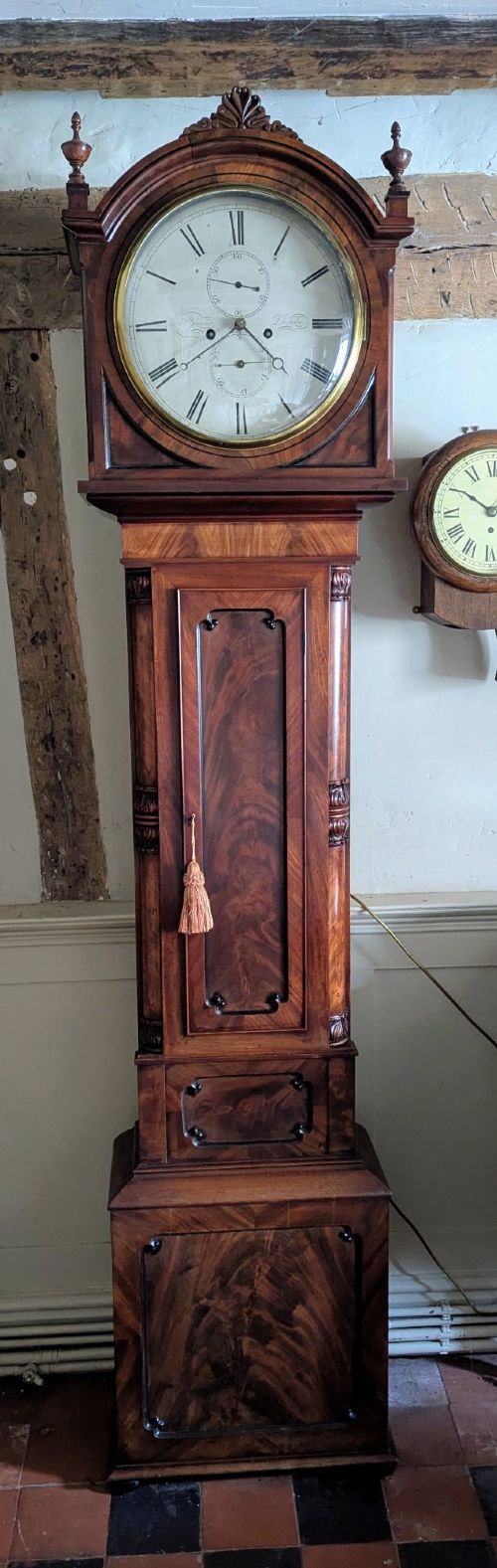
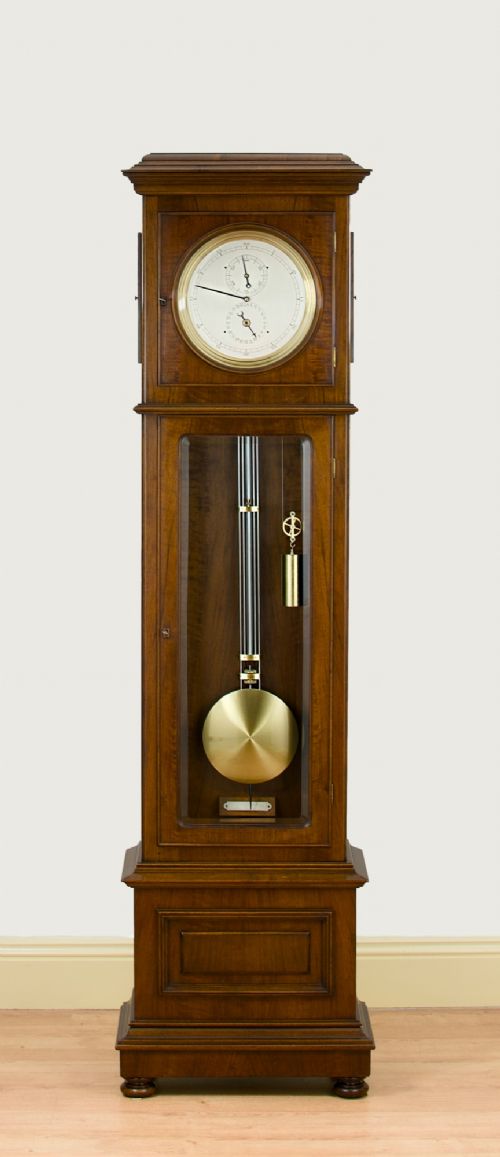
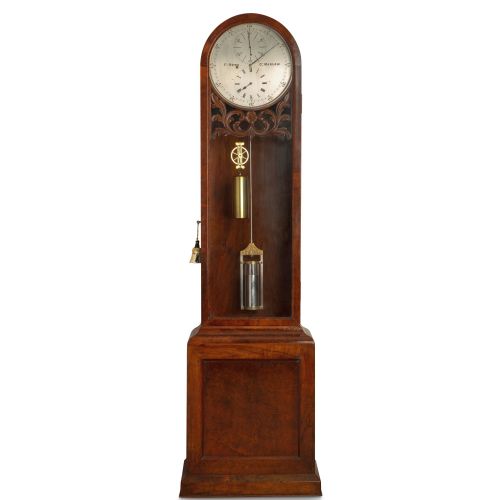
An antique precision regulator is primarily found as a tall longcase clock or occasionally as a wall clock designed to track time with extreme accuracy. These timekeepers span periods from the Georgian and Regency eras through the Victorian age, 19th Century, and into the 20th century with Edwardian and 1930s examples.
The form is dominated by longcase clocks, often referred to as grandfather clocks, alongside wall clocks and bracket clocks in the Vienna style or French Empire manner. Buyers most frequently encounter 19th-century longcase versions housed in mahogany, walnut, or ebonised wood.
Makers represented across these forms include regional British horologists such as William Chisholm of Aberdeen, Pearce and Sons of Leicester, Aitchison of Glasgow, Hampston Prince & Cattles of York, Frederick Rowe of Great Marlow, and Richard Rowell of Oxford, as well as continental workshops like Lenzkirch.
How they were made
Cases are constructed from timber veneers and solids, notably mahogany, flame mahogany, walnut, and ebonised wood, paired with brass movements and glazed viewing doors. Dials feature silvered metal or enamel finishes to ensure clear legibility of the time.
Movements incorporate specialised mechanics such as pinwheel escapements and month-duration drives to maintain steady, uninterrupted motion. These construction methods prioritise mechanical precision and structural integrity over ornate exterior decoration.
Antique Precision Regulator Retail Price Guide 2026
Typical asking prices for precision regulator among the pieces listed under this phrase on Sellingantiques today, from the lower quarter to the upper quarter. They describe what is for sale here now, not the wider market.
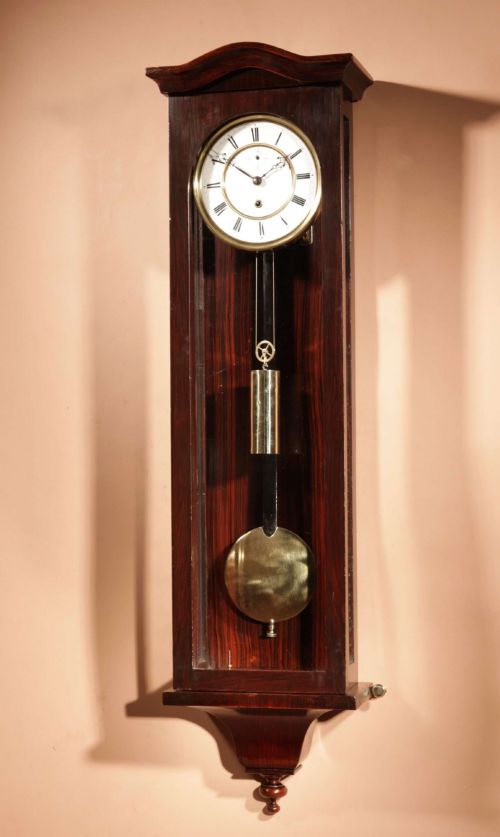
A Black Forest regulator wall clock brings ticking precision out of the forest and straight onto the parlour wall.
What varies in quality
Quality rests on the refinement of the movement and the integrity of the maker's workshop execution. Clocks bearing signed dials from established makers reflect higher standards of horological engineering than anonymous factory productions.
Cabinetwork differentiates standard examples from superior ones, seen in the selection of figured mahogany or walnut veneers and the crispness of architectural proportions in the longcase or wall-hung case.
William Chisholm Of Aberdeen·Pearce And Sons·Aitchison Of Glasgow·Hampston Prince & Cattles·Frederick Rowe Of Great Marlow·Richard Rowell Of Oxford·Valiant Paris
The Antique Precision Regulator Glossary
- Regulator
- A precision clock designed to serve as a standard for setting other timepieces. These mechanisms prioritise strict chronological accuracy.
- Longcase clock
- A tall pendulum clock enclosed in a wooden case standing upon the floor, frequently termed a grandfather clock in domestic contexts.
- Pinwheel escapement
- A specialised clock escapement using pins instead of traditional teeth on the escape wheel. This design reduces friction and improves timekeeping precision.
- Grande Sonnerie
- A complex striking mechanism that chimes both the hours and the quarters automatically on every quarter hour. It represents an advanced level of horological complication.
- Silvered metal
- A metallic dial surface treated with a silver compound to create a matte, reflective finish. This treatment enhances contrast against engraved numerals.
Antique Precision Regulator: Frequently Asked Questions
What is an antique precision regulator?
An antique precision regulator is a specialised clock engineered for extreme accuracy, functioning historically as a standard against which other timepieces were set.
These clocks appear primarily as tall longcase clocks or wall-hung Vienna regulators, utilising refined movements and clear dials to measure time precisely.
How do I identify a Vienna regulator?
A Vienna regulator typically presents as a wall clock featuring a long glazed wooden case that displays the swinging pendulum and weights. This style originates from 19th-century Austrian influence and emphasises the visible mechanics of the movement.
Cabinet work often utilises walnut or ebonised wood to frame the elongated glass door, allowing a clear view of the dial and pendulum rod.
What materials were used for these cases?
Cases are constructed predominantly from hardwoods such as mahogany, flame mahogany, and walnut. Ebonised wood is also utilised to create dark, uniform architectural surfaces.
Glass panels are fitted into doors to protect the dial and expose the pendulum, while brass and silvered metal comprise the internal movements and chapter rings.
Where were these regulators made?
Origin points span British regional workshops, with makers operating in locations such as Aberdeen, Glasgow, Leicester, York, Great Marlow, and Oxford. Continental examples also originate from French makers and German workshops like Lenzkirch.
Regional British longcase makers signed their silvered metal or enamel dials, linking specific instruments to documented provincial clockmakers.
How long do these clocks run?
Many standard mechanical movements require regular winding, though specific examples are constructed for extended operation, such as month-duration movements.
Month-duration regulators are engineered to run for thirty days on a single wind, reducing the frequency of intervention with the weights and pendulum.