




Enamel Dial Regulator Clock
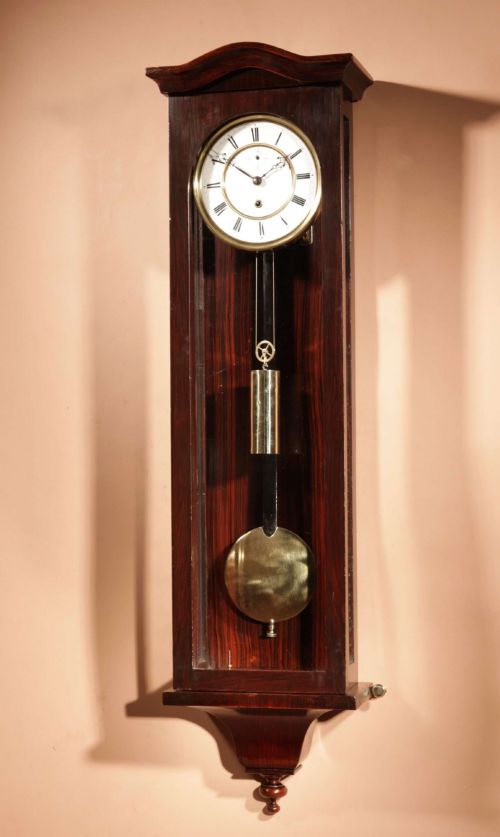
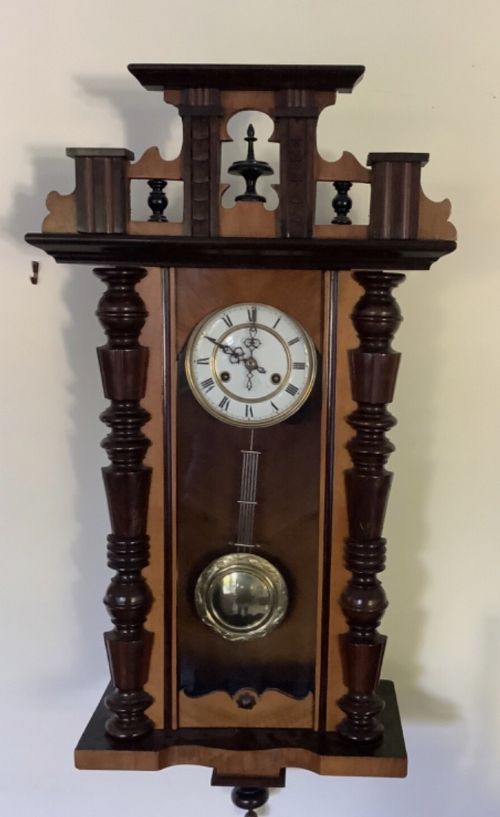
An enamel dial regulator clock delivers precise timekeeping packaged in sophisticated glass and wood cabinetry that commands attention in any room.
Enamel Dial Regulator Clock
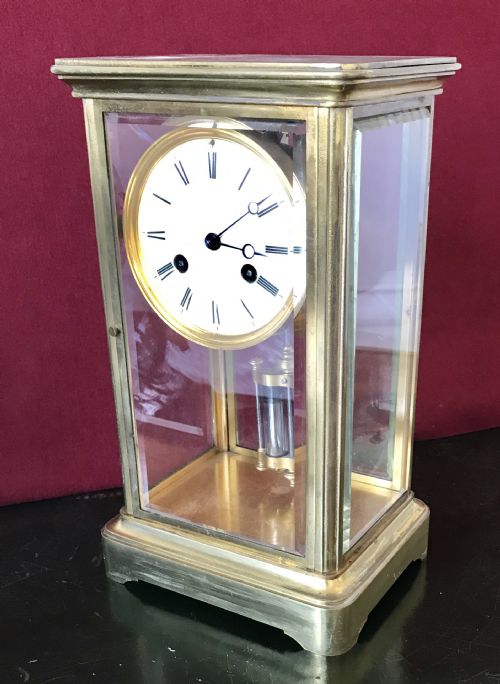
When you search for an enamel dial regulator clock, you encounter precision timepieces spanning the nineteenth century, including Georgian and Victorian eras, along with French Belle Epoque and Vienna styles. These objects function as wall clocks or mantel clocks, housed in timber or glass cases.
You are most likely to meet French four glass mantel clocks and crystal regulators featuring enamel dials, alongside German and Austrian Vienna regulators or Black Forest wall clocks. These pieces combine mechanical precision with decorative cabinetry in mahogany, walnut, ebonised wood, and gilt brass.
How they were made
Maker workshops constructed the housing using timber frames of mahogany, walnut, and ebonised wood, inset with glass panels or detailed with gilt brass and porcelain. Movements incorporated complex mechanisms such as pinwheel escapements, pendulums, and striking trains.
Dials were produced in white enamel, sometimes panelled or paired with moon-phase complications, providing a crisp contrast against the polished brass and rich woods of the case.
Enamel Dial Regulator Clock Retail Price Guide 2026
Typical asking prices for enamel dial regulator clock among the pieces listed under this phrase on Sellingantiques today, from the lower quarter to the upper quarter. They describe what is for sale here now, not the wider market.
Some miniature models squeezed heavy precision movements into tiny cases, proving that grand timekeeping does not require vast amounts of space.
What varies in quality
Distinctions in quality rest upon the sophistication of the movement, such as the inclusion of a pinwheel escapement or moon-phase dial, matched with the refinement of the brass and gilt mounts. Cases executed in solid mahogany or walnut with four glass panels demonstrate superior cabinet-making compared to simpler structures.
The crispness of the enamel dial lettering and the integration of maker signatures, such as Samuel Marti et Cie or Valiant Paris, elevate the standing of the piece within its period.
Samuel Marti et Cie·Valiant Paris
The Enamel Dial Regulator Clock Glossary
- Regulator
- A precision clock designed to keep exceptionally accurate time. These movements often feature a gridiron or compensated pendulum.
- Crystal regulator
- A mantel clock housed in a glazed brass frame with glass on all four sides. This design displays the movement and pendulum from multiple angles.
- Pinwheel escapement
- A specialised escapement mechanism utilising pins instead of traditional teeth on the escape wheel. It reduces friction to improve timekeeping accuracy.
- Moon-phase dial
- A dial mechanism displaying the lunar cycle alongside the time. It tracks the phases of the moon through a rotating disc.
- Two train
- A clock movement driven by two separate gear trains. One train powers the timekeeping while the second drives the striking mechanism.
Enamel Dial Regulator Clock: Frequently Asked Questions
What is a regulator clock?
A regulator clock is a precision timepiece originally utilised as a standard for setting other clocks. They typically feature clean dials and accurate movements.
In domestic settings, they evolved into decorative wall or mantel pieces while retaining their mechanical accuracy.
How do I wind the clock?
Winding involves using a matching key inserted into the winding holes on the enamel dial. You turn the key gently until resistance signals the mainspring is fully wound.
Care must be taken not to overwind the movement, as this can damage the internal springs.
Where should I place it?
These clocks require a stable, level surface such as a mantelpiece, bracket, or a secure wall fixing. Stability is essential for the pendulum to swing evenly.
Keep the clock away from direct sunlight, dampness, and extreme temperature fluctuations to protect the wood and enamel.
How do four glass clocks work?
Four glass clocks utilise brass frameworks fitted with glass panels on the front, back, and sides. This construction allows ambient light to illuminate the movement and pendulum from all directions.
The delicate gear trains and escapements remain fully visible during operation.