



Antique Wall Clock Barometer
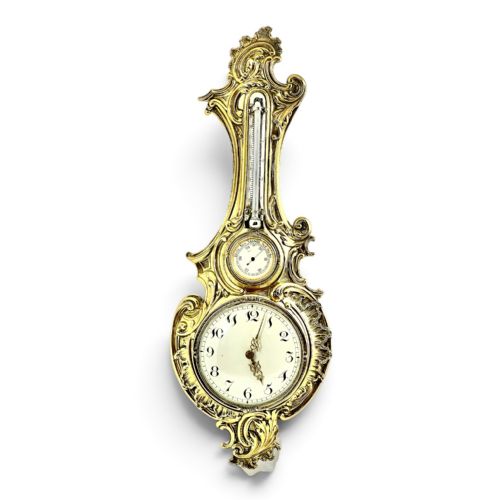
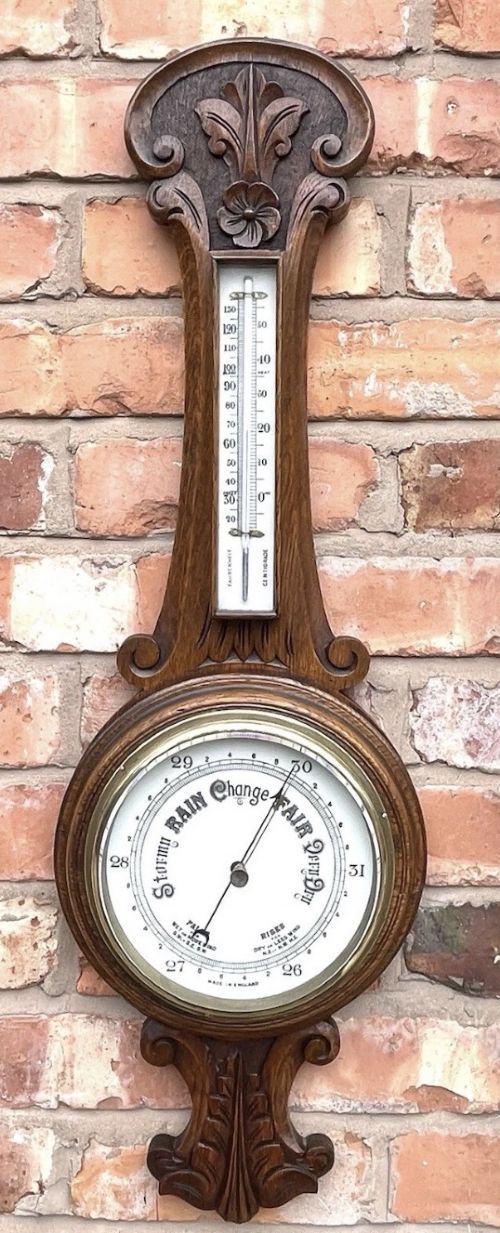
These antique wall clock barometers combine timekeeping and atmospheric pressure reading in one timber case, giving your hall both practical utility and period character.
Antique Wall Clock Barometer
An antique wall clock barometer brings together timekeeping, temperature measurement, and barometric pressure reading in a single wall-hung instrument. When you search for antique wall clock barometer, you encounter combined banjo shapes, drop-dial movements, and bulkhead instruments designed for domestic or maritime use.
The pieces appearing here span the nineteenth century and the Edwardian era, taking forms such as carved oak banjo cases, skeletonised aneroid dials, and silver gilt station instruments. Walnut, mahogany, and carved wood dominate the woodwork, paired with glass, brass, and enamel dials.
Makers ranged from provincial retailers to notable London firms, producing wall-mounted instruments that served as both scientific tools and principal furnishings in period homes.
How they were made
Cabinetmakers shaped dense hardwoods like walnut, mahogany, and oak into banjo outlines, drop-dial cases, and architectural frames, often finishing surfaces with deep hand-carving. These wooden housings protected delicate internal mechanisms while offering a substantial decorative presence on the wall.
Instrument makers fitted brass bezels, silvered or enamel dials, and glass covers over mechanical movements, aneroid capsules, and mercurial tubes. Combined instruments also incorporated thermometers mounted on the trunk to display temperature alongside time and pressure.
Antique Wall Clock Barometer Retail Price Guide 2026
Typical asking prices for wall clock barometer among the pieces listed under this phrase on Sellingantiques today, from the lower quarter to the upper quarter. They describe what is for sale here now, not the wider market.
Listed examples span the nineteenth century and the Edwardian era, utilising walnut, mahogany, oak, and brass.
What varies in quality
The ambition of the cabinetwork sets individual instruments apart, distinguishing deeply carved walnut or mahogany banjo cases from plain, utilitarian housings. Finer examples display crisp foliate carving, well-proportioned trunk panels, and high-grade movement construction signed by established makers.
Material selection and dial execution further divide the range, with silvered brass plates, delicate hand-engraved markings, and bevelled glass bezels indicating superior production standards compared to simpler ceramic or paper dials.
Hyde & Sons Sleaford·Ganthony of London·H Marks·Negretti & Zambra·Russell of Liverpool
The Antique Wall Clock Barometer Glossary
- Aneroid barometer
- An instrument that measures atmospheric pressure by the expansion and contraction of a flexible metal box, operating without liquid mercury. This mechanism allowed makers to build more compact and robust wall barometers.
- Banjo barometer
- A domestic wall barometer housed in a case shaped like a banjo, with a circular dial at the top and a long trunk below. This form commonly incorporated thermometers, hygrometers, and clock dials alongside the main pressure gauge.
- Fusee movement
- A clock mechanism driven by a cord wrapped around a cone-shaped pulley, ensuring even power delivery as the mainspring unwinds. This system improves timekeeping accuracy across the duration of the wind.
- Drop-dial wall clock
- A wall-mounted timepiece featuring a circular dial above a short wooden trunk or drop case. These clocks frequently incorporated barometric or thermometer instruments within the lower drop section.
- Bulkhead instrument
- A clock or barometer designed to be mounted directly onto the interior wall of a ship or cabin. They typically feature heavy brass bezels and secure screw-fastened mountings.
Antique Wall Clock Barometer: Frequently Asked Questions
How do I wind an antique wall clock barometer?
Most combined wall instruments feature a key-wound clock movement alongside the barometer mechanism. Insert the matching winding key into the dial aperture and turn it gently until you feel resistance.
Take care not to overwind the mainspring, as this can damage the internal gearing. The barometer and thermometer sections generally operate automatically without manual intervention.
Where should I hang a wall clock barometer?
Select an interior wall away from direct sunlight, radiators, and damp areas to protect the wooden case and internal brass components. Solid masonry walls or secure stud fixings provide the necessary support for heavier timber instruments.
Ensure the hanging bracket or screw engages securely with the wall structure, as these combined wooden cases carry significant weight.
How do I read an aneroid barometer?
Tap the glass lightly with your finger before taking a reading to release any friction in the mechanical linkages. The pointer will settle on the current barometric pressure shown in inches of mercury or millibars.
Set the movable brass indicator hand directly over the main pointer so you can observe whether pressure rises or falls over the following hours.
How do I tell Victorian pieces apart from Edwardian ones?
Victorian examples frequently display rich carved walnut or mahogany cases with heavy Victorian Rococo Revival or architectural detailing. The dials and bezels often reflect mid to late nineteenth-century manufacturing techniques.
Edwardian pieces tend to utilise carved oak cases with lighter proportions and simpler aesthetic lines, aligning with early twentieth-century domestic interiors.