
Antique Walking Stick Sword
An antique walking stick sword is a dual-purpose accessory disguising a concealed blade within a shaft, offering both discretion and protection to the nineteenth-century gentleman.
Antique Walking Stick Sword
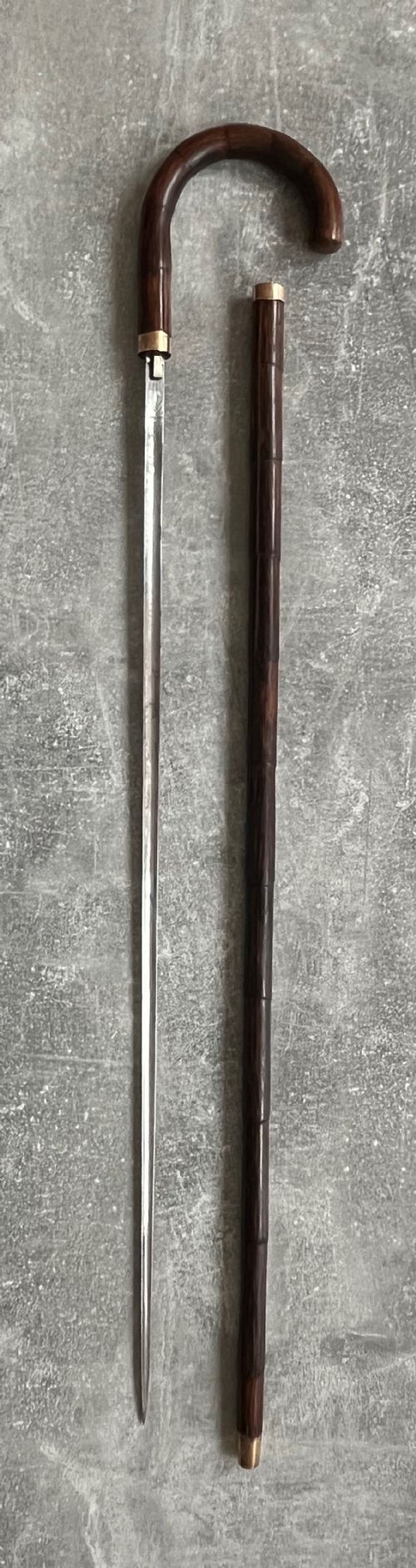
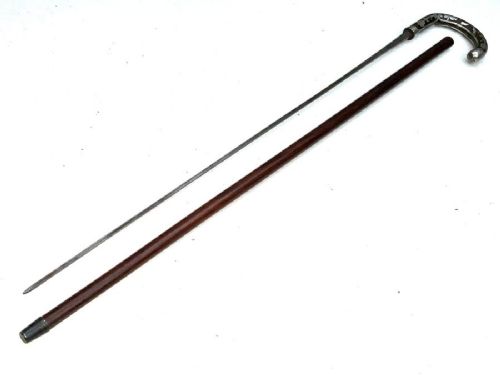
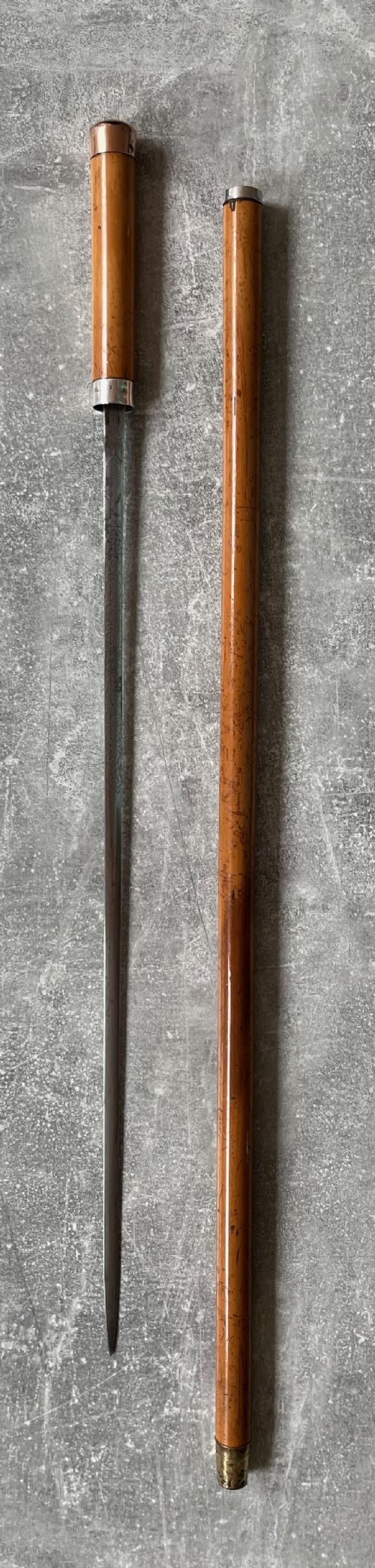
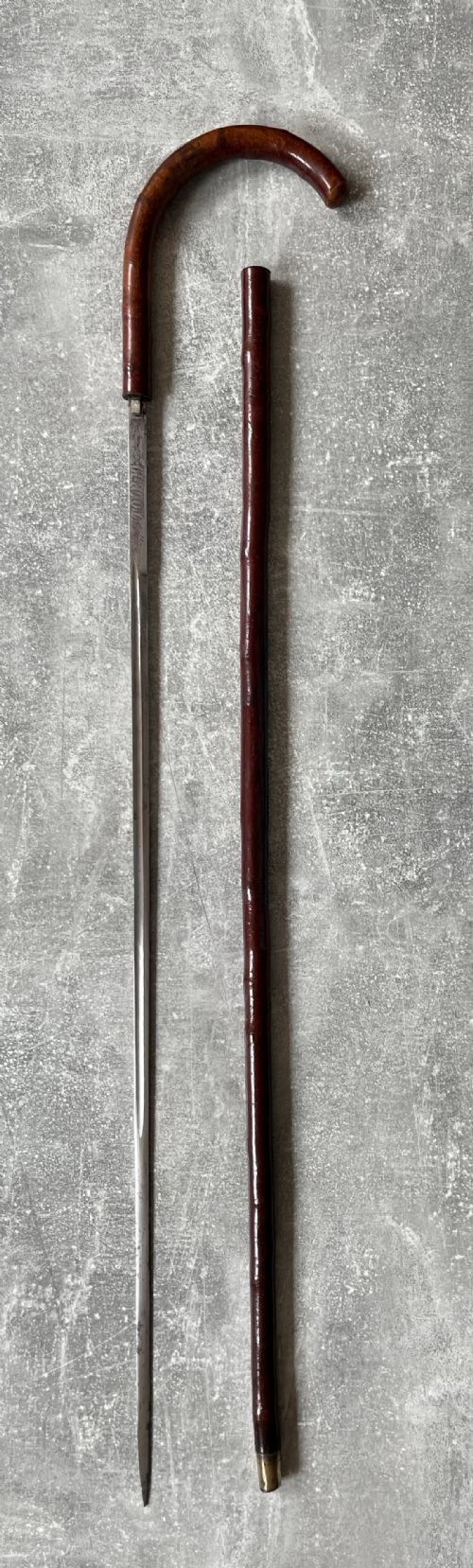
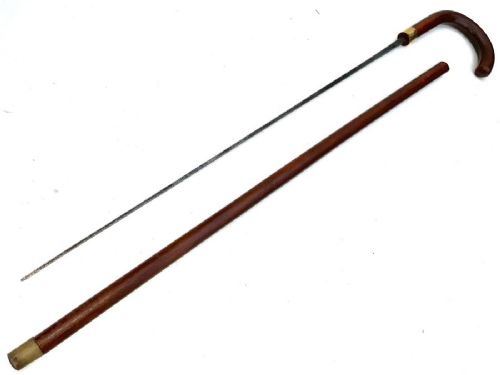
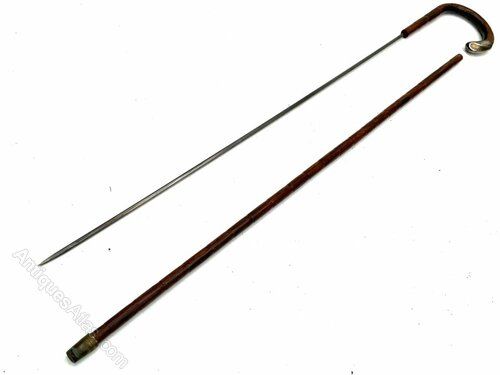
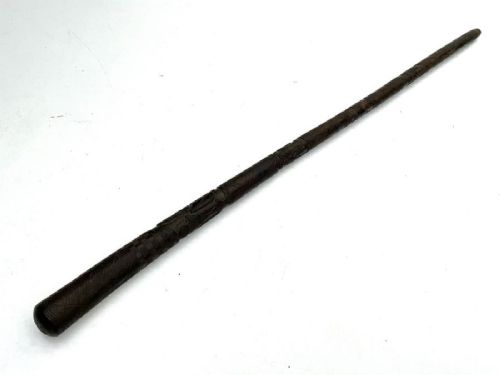
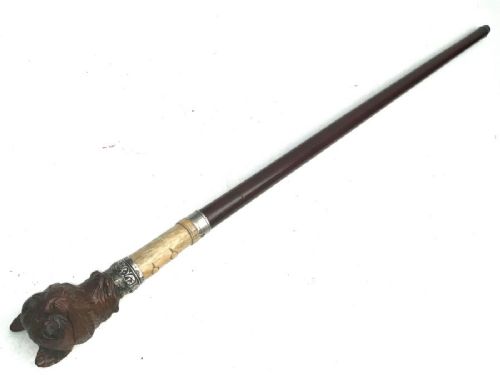
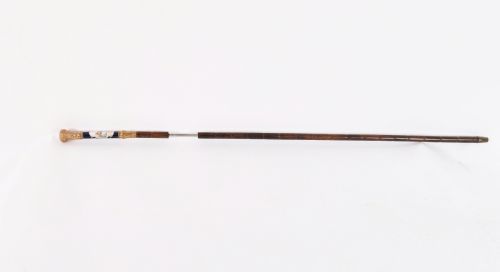
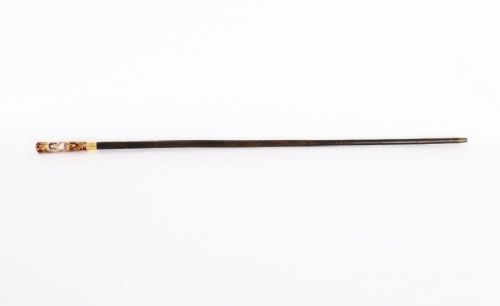
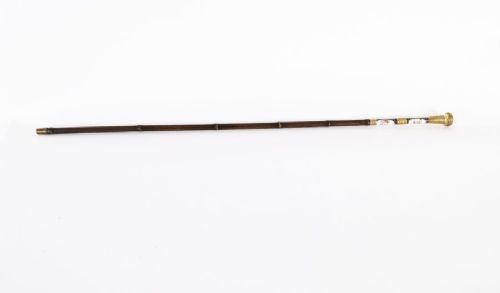
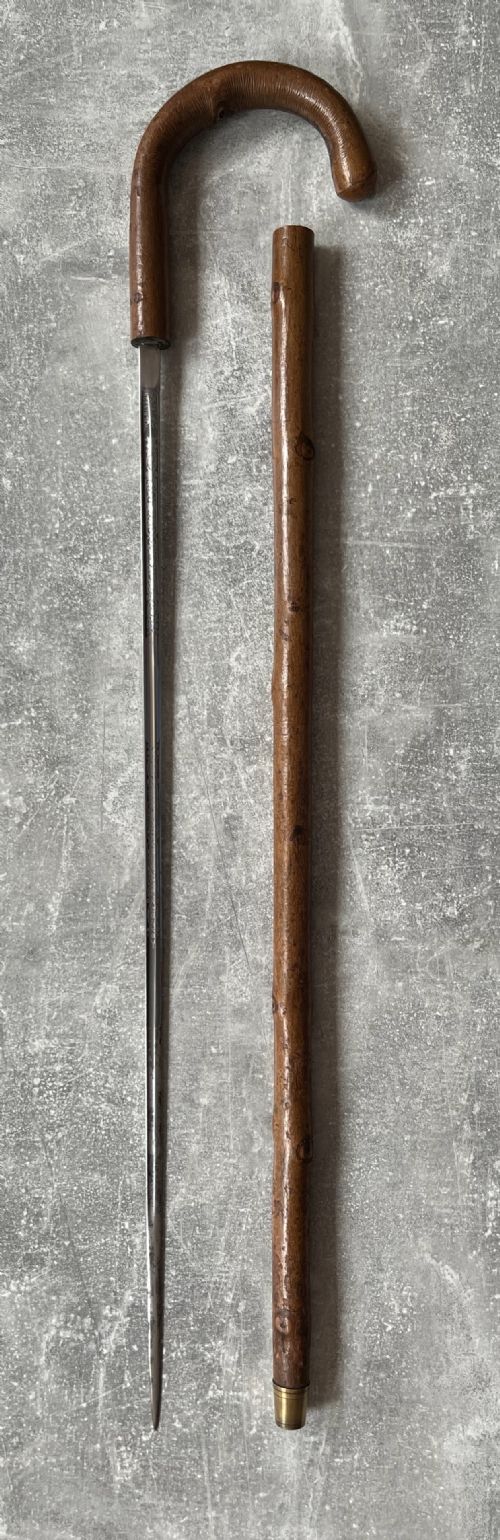
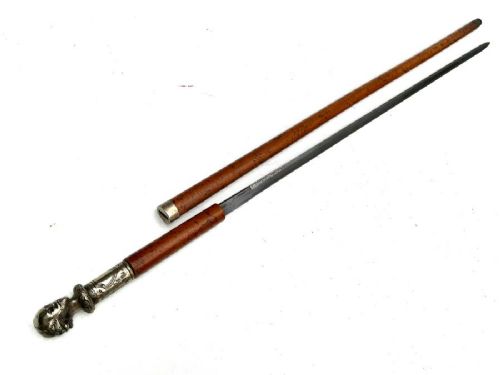
An antique walking stick sword combines a functional support cane with a concealed bladed weapon, often housed within a timber or bamboo shaft. Collectors encounter numerous Victorian and Edwardian examples alongside specimens from the broader nineteenth century.
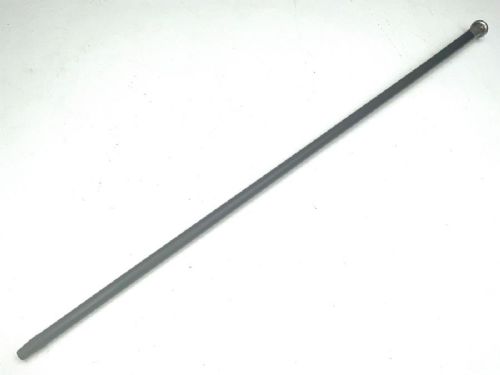
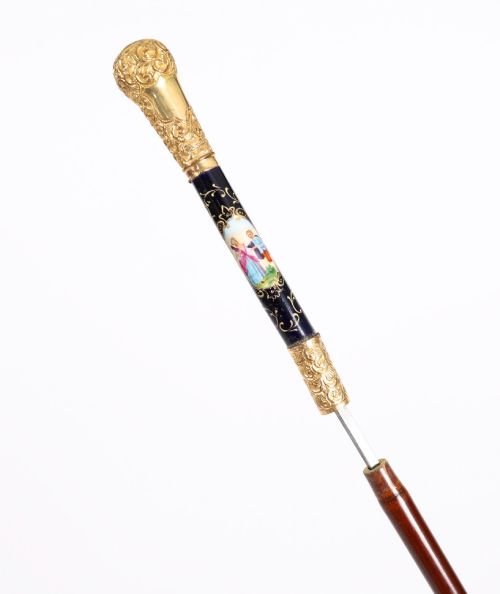
The common iterations on this page range from military officers' swagger sticks and masonic pieces to French porcelain-mounted items and rustic woods like hazel, partridge wood, and blackthorn. Each piece conceals its internal steel through a button release, screw mechanism, or simple friction fit.
Origin variations span from British and French workshops to Imperial German and Japanese traditional contexts, demonstrating how widely this hidden weapon was utilised across different social spheres.
Materials and construction
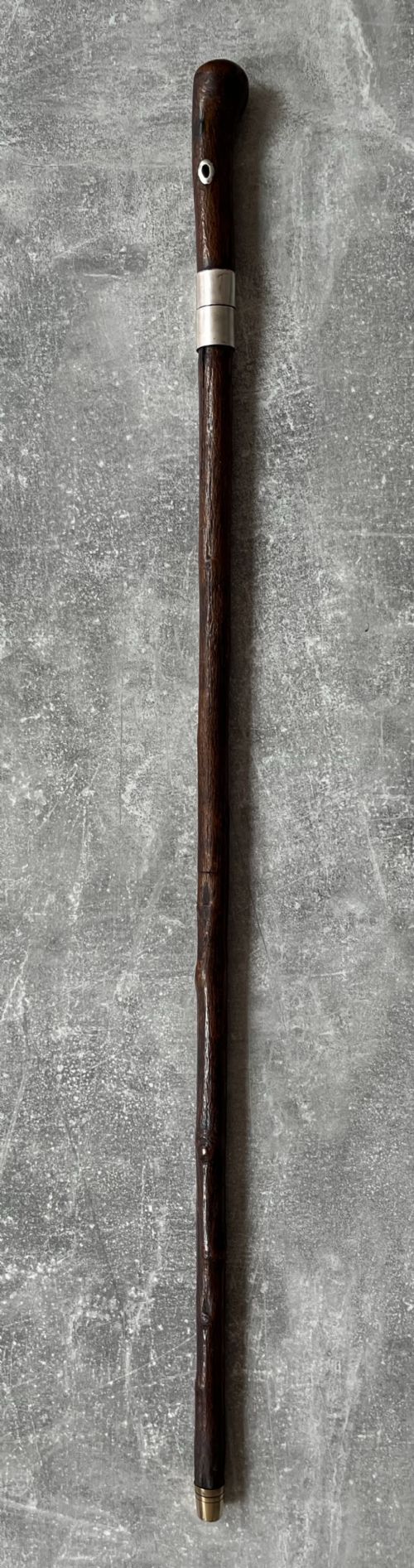
Makers utilised resilient natural materials for the outer shafts, employing malacca, bamboo, ebonised wood, and cherrywood, frequently accented with silver collars, brass mounts, and gold plate. Handles vary from porcelain Sevres segments and horn to root ends and crook shapes.
The internal blades typically comprise forged steel, with several specimens housing Toledo blades or custom-etched metalwork fitted snugly within the wooden housing.
The listings incorporate specimens from the Victorian and Edwardian eras, utilising malacca, bamboo, steel, silver, and porcelain.
Assessing quality in concealed blades
The distinction between standard utility items and superior examples lies in the precision of the join between handle and shaft, where top-tier pieces maintain a seamless line when closed. High-grade specimens incorporate branded steel blades, such as those by Wilkinson, paired with substantial silver or ormolu mounts.
Artistic execution on the handle also dictates worth, separating mass-produced wooden shafts from elaborately decorated French porcelain or detailed masonic and military pieces.
Brigg·Wilkinson
The Antique Walking Stick Sword Glossary
- Swagger stick
- A short cane carried by military officers, often housing a concealed blade or functioning as a symbol of authority.
- Toledo blade
- A steel blade originating from a Spanish city renowned for historic sword-making traditions.
- Malacca
- A sturdy rattan cane imported from Southeast Asia, prized for its mottled brown surface and structural resilience.
- Collar
- A metal band, frequently silver or brass, fitted around the shaft just below the handle for reinforcement.
- Button release
- A concealed mechanical catch pressed to unlatch the blade from the interior of the walking stick.
Antique Walking Stick Sword: Frequently Asked Questions
How do you open an antique walking stick sword?
Most specimens release the blade through a mechanical button catch or a simple screw-threaded collar mechanism that separates the handle from the shaft.
Once disengaged, the steel blade slides smoothly out from its wooden or bamboo housing.
Were these swords used for self-defence?
Gentlemen during the Victorian and Edwardian eras carried these items for personal protection while navigating poorly lit city streets.
The concealed nature of the blade provided a discreet deterrent against potential attackers.
How do you identify the date of a piece?
Datation relies on hallmarks stamped onto silver mounts, stylistic clues from military uniforms, and the specific materials popular in distinct periods.
Victorian and Edwardian examples often display characteristic manufacturing marks or retailer details near the collar.
What woods were commonly used for shafts?
Craftsmen selected flexible and dense timbers capable of housing a rigid steel channel without warping over time.
Frequently encountered woods include malacca, ebonised wood, cherrywood, hazel, and Irish blackthorn.