




Antique View of London
An antique view of london brings the river, bridges and historic streets into a room through watercolours, oils and early prints.
Antique View of London
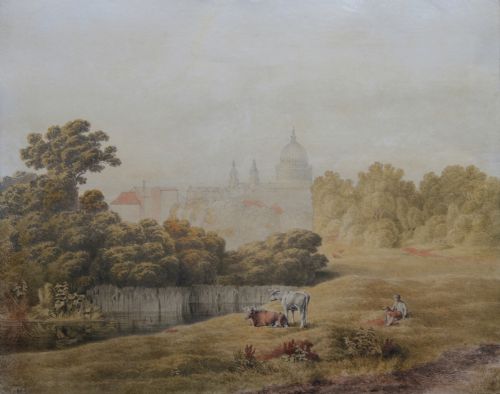
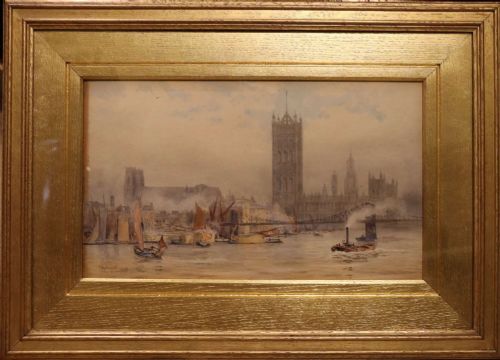
An antique view of london captures the capital through watercolours, oil paintings, engravings and framed prints from the eighteenth, nineteenth and early twentieth centuries. These works record the changing river Thames, iconic landmarks like St Paul's Cathedral and the Houses of Parliament, and historic city thoroughfares.
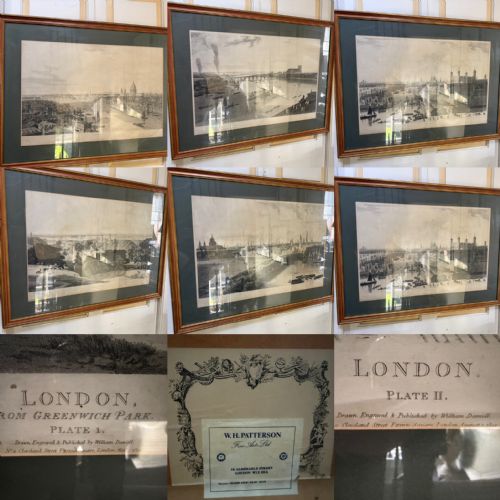
Buyers frequently encounter nineteenth-century works on paper, including detailed watercolours by named artists alongside framed printed views of the river. The selection also extends to decorative ceramic plates featuring topographical transfer-printed London scenes from the nineteenth century.
The periods represented stretch from Georgian depictions through Victorian cityscapes to Edwardian impressions. Each piece offers a window into the urban landscape as it appeared to contemporary artists and makers.
How these pieces were made
Watercolour paintings and ink works utilise fine paper supports, capturing tonal depth through layered washes and precise linework. Oil paintings employ canvas stretched over wooden frames, building rich textures across the urban landscape.
Printed views rely on early engraving and lithographic techniques to transfer detailed topographical scenes onto paper. Ceramic plates utilise transfer-printing methods on earthenware to permanently fix detailed monochromatic or coloured London motifs.
Depicted London subjects range from the Thames and St Paul's Cathedral to Kew Gardens and the Houses of Parliament.
What varies in quality
The fidelity of the architectural draughtsmanship and the artist's ability to capture atmospheric light separate accomplished watercolours and oils from simpler topographical records. Finer works demonstrate confident handling of perspective and naturalistic scale across complex urban scenes.
The crispness of the impression in prints and engravings dictates visual clarity, where worn plates yield blurred lines. Ceramic platters and plates depend on the sharpness of the transfer print and the uniform glaze of the earthenware body.
H. Medlycott·Benetfink & Co·Claes Jansz Visscher·David Small·Walter Duncan·Edward Fletcher·William A. Macdonald·Samuel Scott
The Antique View of London Glossary
- Watercolour
- A painting method where fine pigment is suspended in a water-based, translucent solution. It is applied to paper to achieve delicate washes of colour.
- Engraving
- A printmaking technique where an image is incised into a metal plate with a sharp tool. Ink is then pressed into the grooves to create a detailed paper impression.
- Transfer-printing
- A decorating method where an engraved metal design is pulled onto tissue paper and pressed onto ceramic ware. This allowed intricate topographical patterns to be applied before glazing.
Antique View of London: Frequently Asked Questions
How do I date an antique London engraving?
Examine the paper quality, printing technique and framing materials alongside any visible publisher publication lines.
Watermarks in the paper often provide a reliable manufacturing window when compared against historical papermaking records.
Where were these watercolours typically displayed?
Original watercolours of the capital hung in nineteenth-century domestic parlours and formal drawing rooms. They served as conversation pieces that reflected the owner's cultural interests and civic pride.
Framed behind glass with simple wooden or gilt mounts, they were protected from soot and coal smoke common in period homes.
What is the difference between an oil and a watercolour view?
Oil paintings on canvas offer greater textural depth and richer colour saturation, suited to dramatic atmospheric effects over the Thames. Watercolours rely on the reflective quality of white paper beneath translucent pigments for a lighter, more luminous finish.
Oils generally required heavier wooden frames, while watercolours needed careful glazing to prevent moisture damage to the paper.
How should I care for antique paper views?
Keep works on paper away from direct sunlight to prevent fading of watercolours and yellowing of the paper support. Maintain stable indoor humidity levels to avoid mould growth or cockling of the sheet within the mount.
Ensure framing utilises acid-free backing materials to protect the historic paper from chemical degradation over time.