

Antique Velvet Lounge Chairs
These antique velvet lounge chairs combine period frames with tactile piled textiles, offering a supportive seat for a traditional or eclectic interior.
Antique Velvet Lounge Chairs
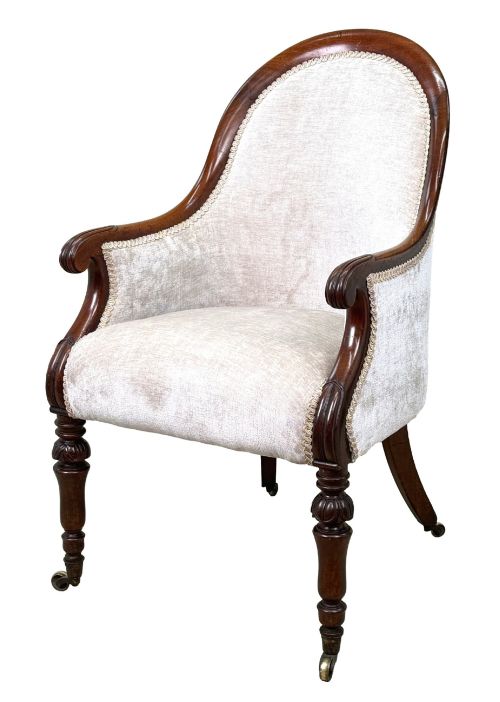
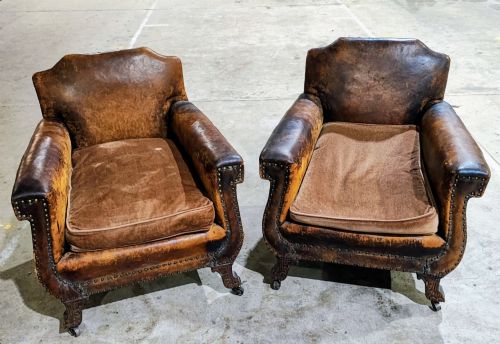
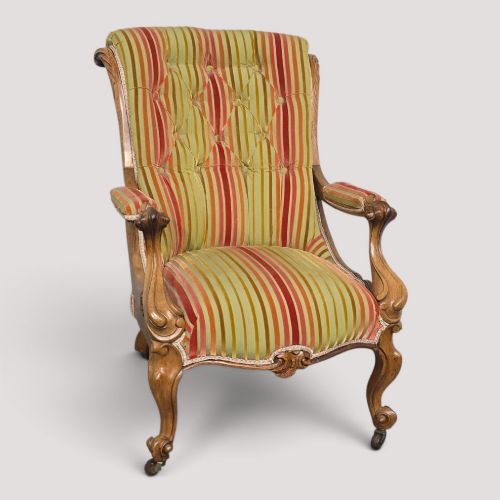
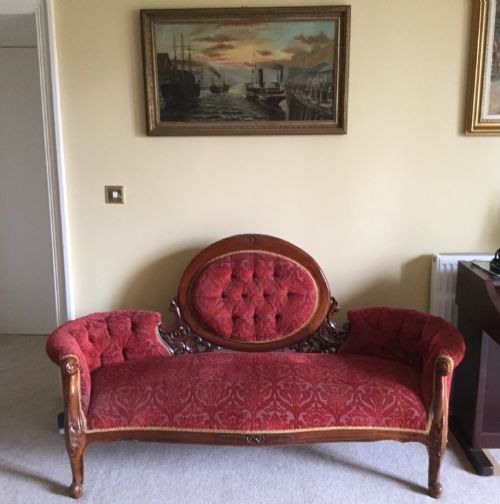
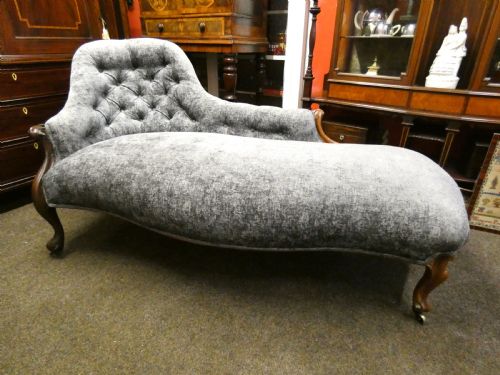
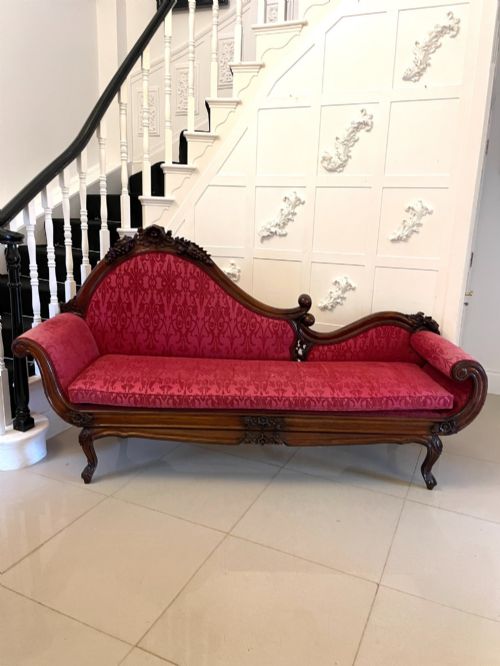
When you search for antique velvet lounge chairs, you encounter a selection spanning nineteenth-century Regency and Victorian forms through to Edwardian and Art Deco designs. The listings lean heavily towards Victorian and nineteenth-century armchairs, alongside chaise longues, daybeds, and occasional slipper or nursing chairs.
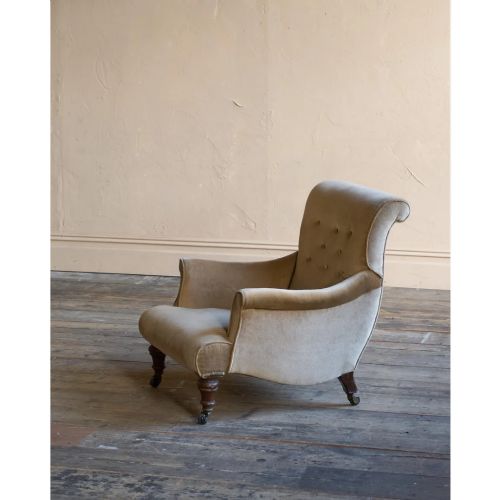
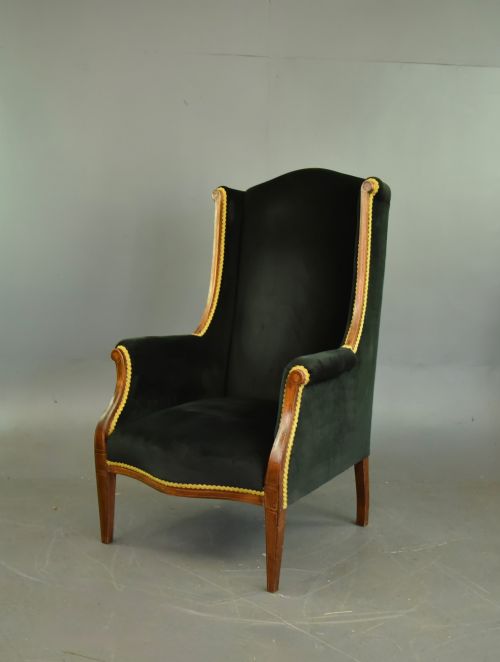
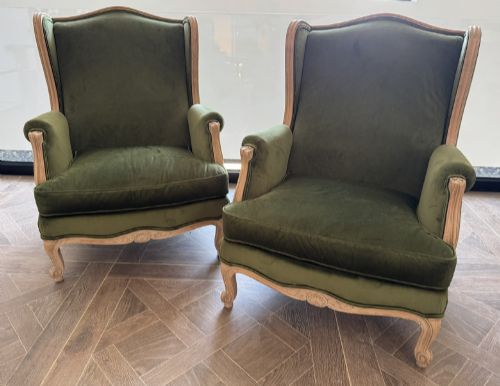
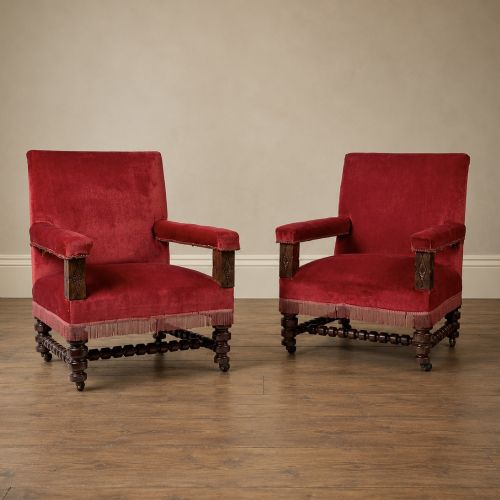
The assortment includes library armchairs, wingbacks, and bergère forms, often paired in matched sets or offered as single library and club seats. Walnut, mahogany, and rosewood frames underpin these upholstered seats, reflecting the prevailing cabinet-making woods of the nineteenth and early twentieth centuries.
How they were made
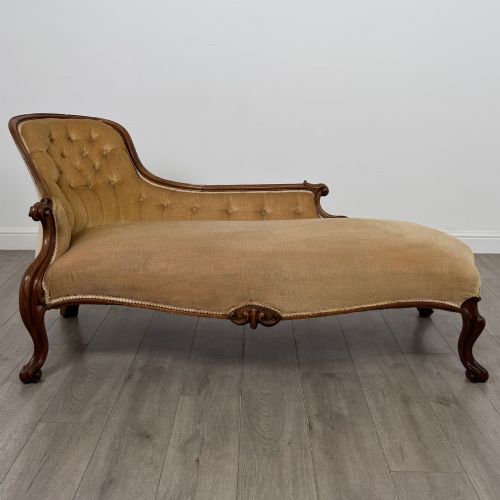
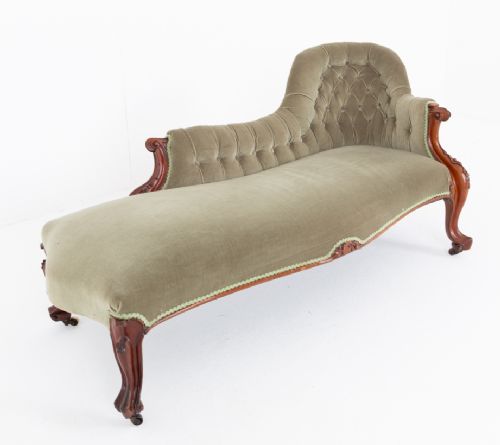
Makers constructed the structural frames of these lounge chairs from dense hardwoods such as mahogany, walnut, oak, and rosewood, frequently shaping the timber with carved cabriole legs, inlaid details, or turned supports. Joinery relied on traditional pinned or dowelled joints to ensure stability under heavy daily use.
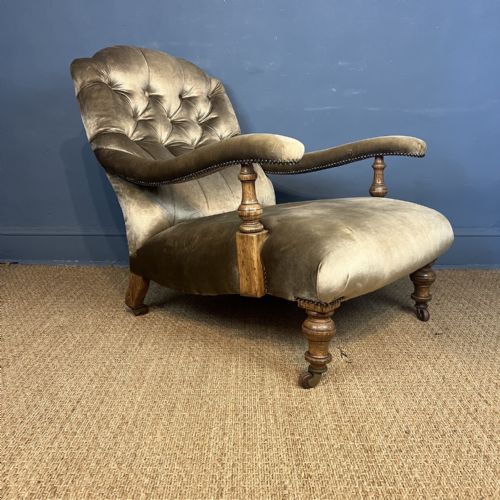
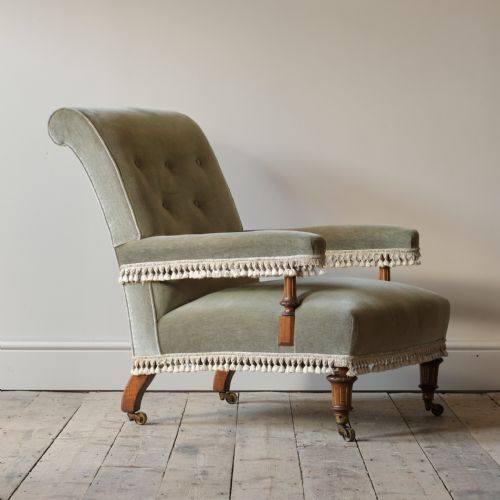
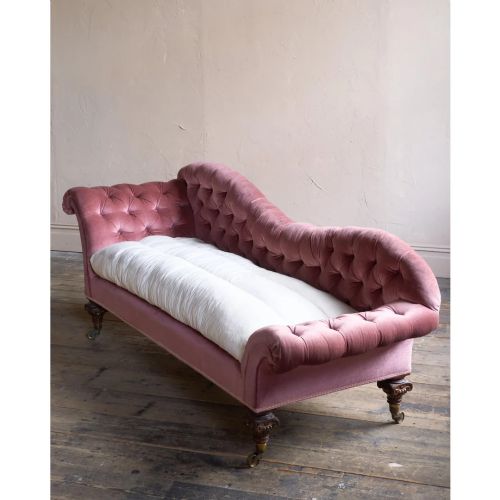
Upholstery techniques combined sprung seat bases with deep pile fabrics, brocades, and button-backed padding secured to sturdy internal webbing. Frame enrichment often extended to brass castors, painted finishes, or structural elements like ionic column legs and exposed carved arm supports.
Several chairs feature hidden brass castors designed to protect grand Victorian carpets from the crushing weight of solid mahogany frames.
What varies in quality
Quality reveals itself in the crispness of the timber carving and the architectural proportion of the frame, where substantial rosewood or carved mahogany denotes superior workshop origin. Finer pieces demonstrate careful symmetry in turned components and refined execution of details such as cabriole legs or inlaid woodwork.
The integrity of the underlying joinery and the execution of the upholstery restoration dictate the long-term character of each seat. Pieces carrying workshop attributions or robust hardwood framing stand apart from standard commercial production through heavier timber gauges and more confident shaping.
Gillows·Hampton and sons·Howard and sons
The Antique Velvet Lounge Chairs Glossary
- Chaise Longue
- An elongated upholstered chair designed for reclining, combining the characteristics of a chair and a daybed. Many Victorian examples feature scroll ends and carved wooden rails.
- Tub Armchair
- A rounded seat where the arms curve continuously into the backrest to form a single enclosing shell. These pieces often served in nineteenth-century libraries and studies.
- Wingback
- An armchair with high sides attached to the backrest, designed originally to shield the sitter from draughts. Victorian and Edwardian iterations frequently utilise deep buttoning and generous padding.
Antique Velvet Lounge Chairs: Frequently Asked Questions
How do I identify a Victorian lounge chair?
Victorian lounge chairs typically display heavy mahogany, walnut, or rosewood frames with dense upholstery, button-backing, and robust turnings. You will frequently find them supported on brass castors or featuring carved cabriole legs characteristic of mid to late nineteenth-century cabinet work.
Their proportions tend to be generous, prioritising deep-sprung comfort and substantial timber sections over the lighter, inlaid aesthetic of the subsequent Edwardian period.
Are these chairs suitable for daily use?
Most of these chairs were built using solid hardwoods like mahogany and walnut with durable joinery, making them structurally sound for regular seating. Many pieces have also undergone re-upholstering to renew the internal springs and webbing.
To ensure daily comfort, check that the sprung base remains supportive and that the timber frame shows no structural fatigue from age or historic woodworm.
How do I care for antique velvet upholstery?
Velvet requires gentle brushing with the pile to prevent crushing and regular light vacuuming using a soft brush attachment to lift surface dust. Avoid placing the fabric in direct sunlight to prevent the pile from fading over time.
Professional specialist cleaning is recommended for any deeper marks, as harsh household cleaning agents can permanently damage the piled fibres.