
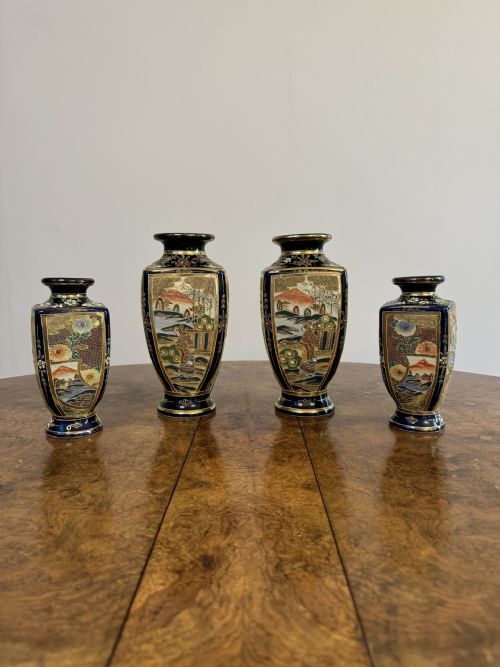
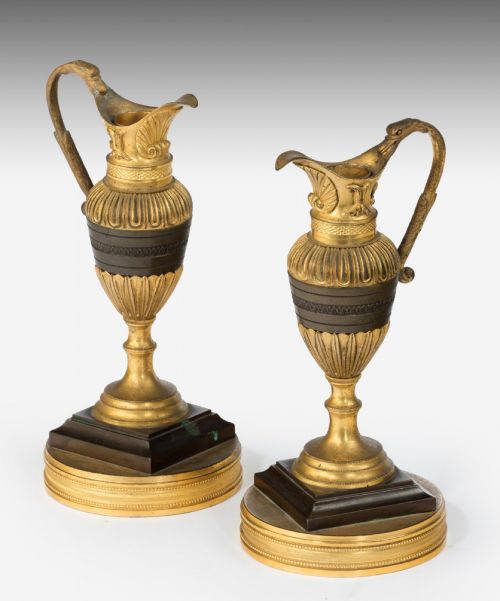
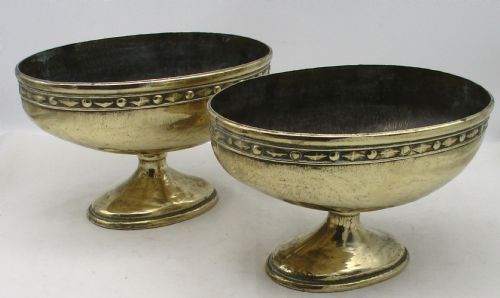
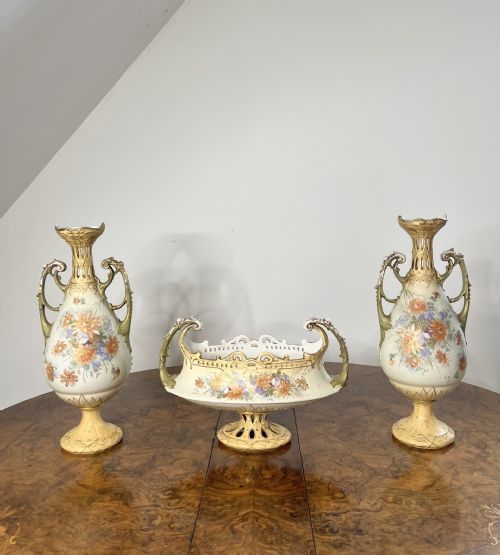
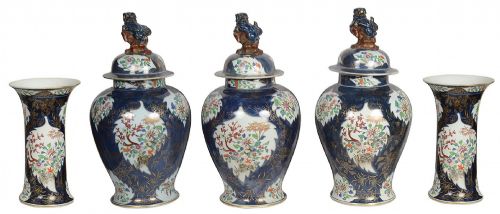


Antique Vase Garniture Set
An antique vase garniture set brings symmetry and striking presence to a room, anchoring a mantelpiece or sideboard with matching vessels.
Antique Vase Garniture Set
An antique vase garniture set comprises a matched grouping of decorative vessels, most commonly a central centrepiece accompanied by side vases or clock sets designed to be displayed together. When you search for an antique vase garniture set, you encounter matching trios and larger groupings created for balanced interior decoration.
The selections span the nineteenth century, including Victorian, Regency, and Meiji period examples, alongside continental porcelain and Japanese imports. Sets take the form of porcelain vases, bronze mounts, and glass trios designed for formal display.
Materials and construction
Makers shaped these sets from porcelain, bronze, glass, and brass, frequently combining materials within a single grouping. Ormolu mounts and gold leaf enrich porcelain bodies, while enamel decoration and hand-painted glazes add colour and detail.
Techniques range from Japanese Imari and Satsuma traditions to European porcelain manufacturing in Vienna, Sevres, and Paris. Bronze and ormolu elements are cast and chased, often paired with marble plinths or glass overlays.
Chinese Famille rose, Japanese Imari, and European factory wares demonstrate the wide global trade in decorative vase sets.
Variations in quality
Quality rests on the crispness of the casting in bronze and ormolu mounts, and the precision of hand-painted detail on porcelain surfaces. Superior sets maintain absolute consistency across every piece in the grouping, with matching colour palettes and harmonious proportions.
The hand of the decorator and the purity of the material distinguish standard production from exceptional works by notable manufactories. Preservation of original gilding and matched components across the entire set governs the overall standing of the garniture.
Flight Barr and Barr·Michel Decoux·Thomas Steel
The Antique Vase Garniture Set Glossary
- Garniture
- A matched set of ornamental vases, jars, or clocks designed to be displayed together as a decorative unit on a mantelpiece or furniture top.
- Ormolu
- Gilded bronze used for mounts, handles, and decorative accents on porcelain and marble objects during the eighteenth and nineteenth centuries.
- Imari
- A style of Japanese export porcelain decorated in underglaze blue, iron red, and gold, highly popular across European interiors.
- Satsuma
- A type of Japanese earthenware featuring a crackled ivory glaze decorated with enamels and gilt.
- Sevres
- The renowned French porcelain manufactory known for luxurious decorative wares and distinctive coloured grounds.
Antique Vase Garniture Set: Frequently Asked Questions
How were garniture sets arranged?
These sets were traditionally placed along a mantelpiece, with the tallest vessel or clock in the centre and matching side vases balanced to the left and right.
This deliberate symmetry created a focal point in formal reception rooms and parlours, framing mirrors or fireplaces.
What is a clock garniture?
A clock garniture combines a mantel clock with a matching pair of side vases or urns, creating a unified three-piece or five-piece display for a shelf or console.
The matching pieces share identical decorative motifs, materials, and colour schemes to tie the mantel arrangement together.
How do I care for antique porcelain?
Dust these pieces gently with a soft, dry brush and avoid using water or chemical cleaners that might damage delicate gilt work or hand-painted enamels.
Keep them out of direct sunlight to prevent the fading of pigments and gold leaf over time.
How are periods identified?
Periods are determined through a combination of manufacturing marks, material composition, stylistic influences such as Neoclassical or Rococo Revival, and construction methods.
Porcelain bodies, mounting techniques, and glaze characteristics offer clear clues to the decade and region of origin.