
Antique Vanity Jar
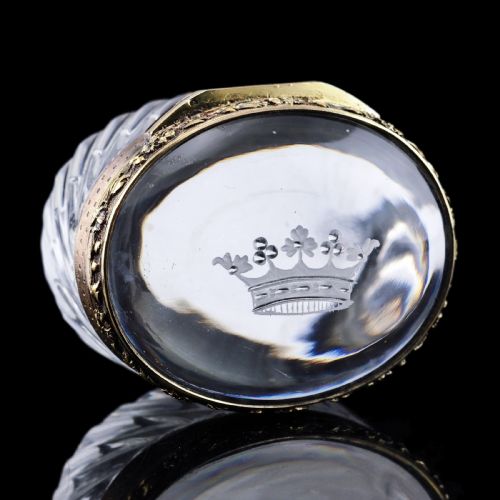
When choosing an antique vanity jar, you are acquiring a dressing table receptacle made to hold powders, creams or pins during the Victorian, Edwardian and Art Deco periods.
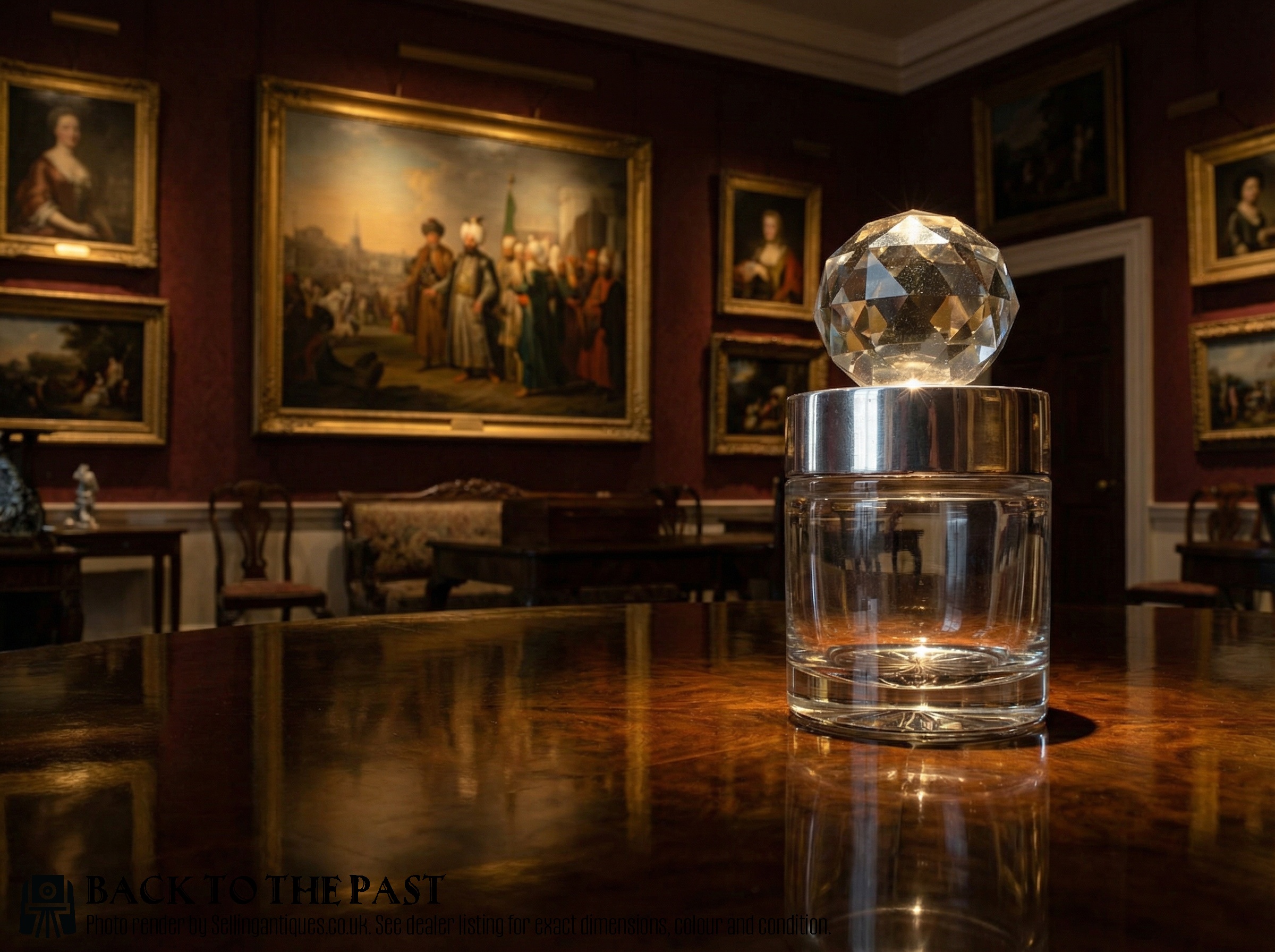
Antique Vanity Jar
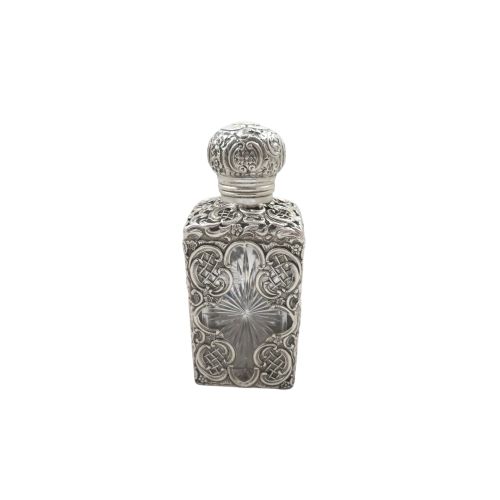
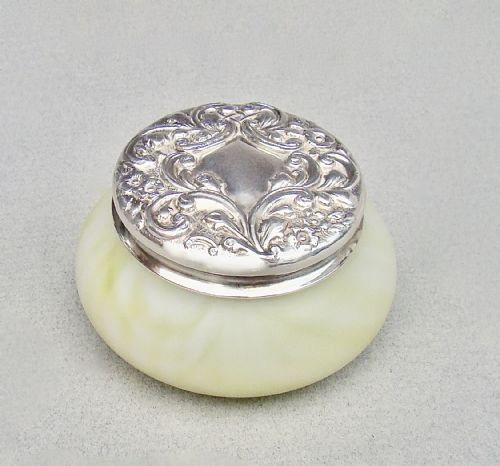
An antique vanity jar is a small vessel designed for the dressing table, encompassing forms such as powder boxes, trinket pots, rouge pots and hair tidies. These pieces served to organise cosmetics and small personal items in domestic dressing rooms.
The selections available span periods from the nineteenth century through the Georgian, Victorian, Edwardian, George V and Art Deco eras. Makers utilised glass, crystal and porcelain bodies fitted with metal lids to create these functional accessories.
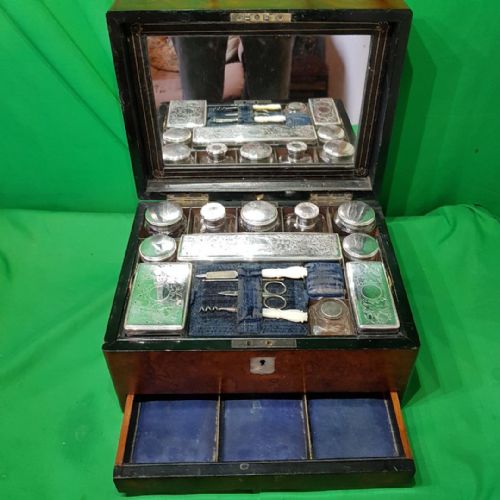
Examples frequently integrate metal mountings, with sterling silver lids being standard across English and continental workshops. Collectors encounter variations spanning plain glass cylinders to elaborately decorated receptacles with matching dressing case sets.
Materials and construction
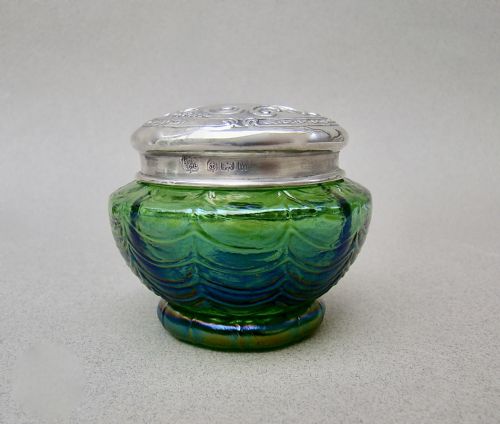
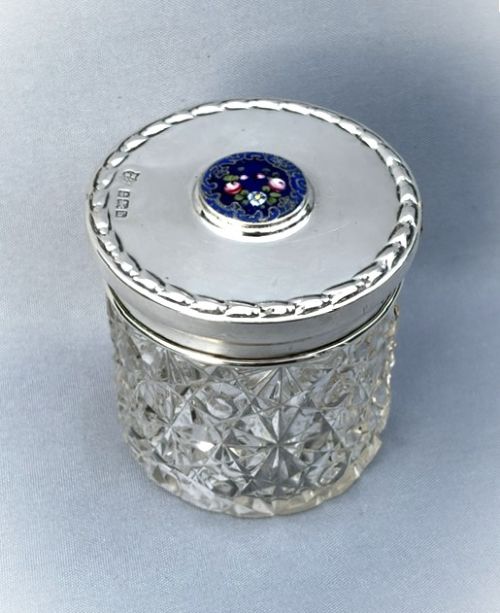
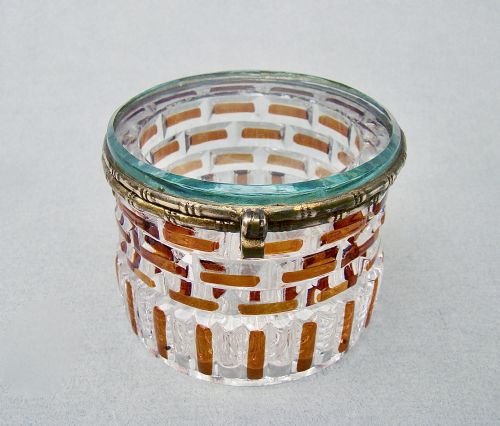
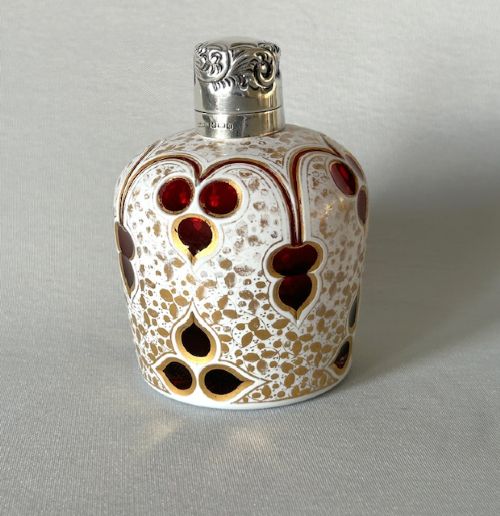
Glass bodies were formed through cutting, moulding or blowing, producing clear, satin, frosted or coloured vessels in cranberry, blue, green and amber shades. These glass containers were paired with fitted metal mounts, predominantly sterling silver, alongside brass and silver gilt elements.
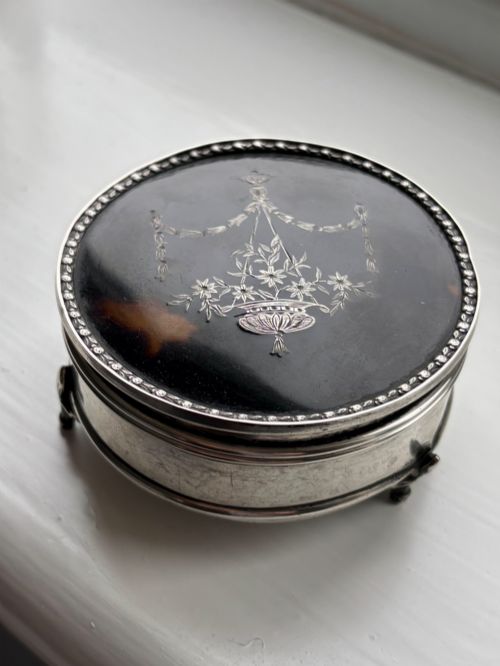
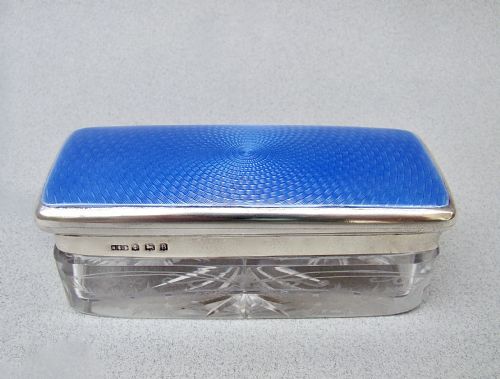
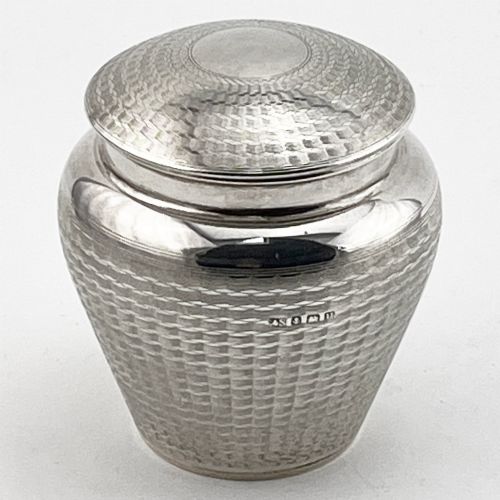
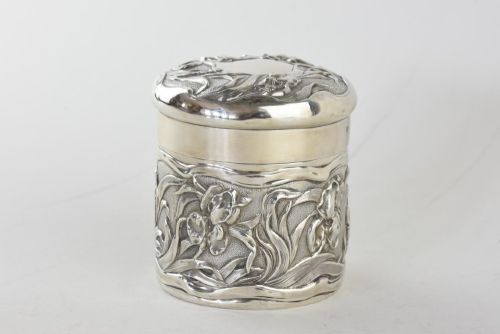
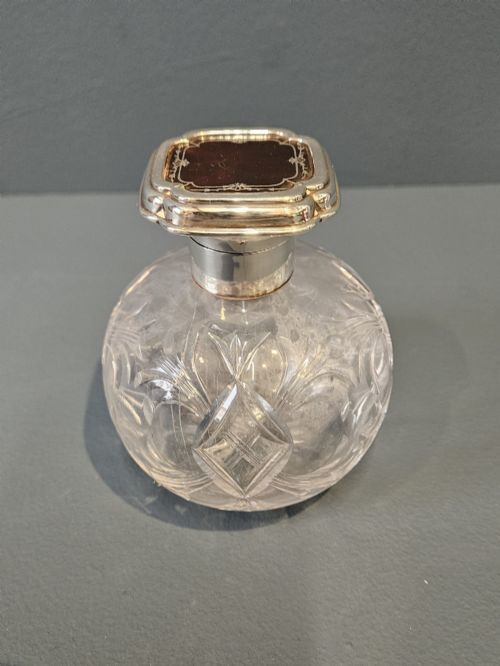
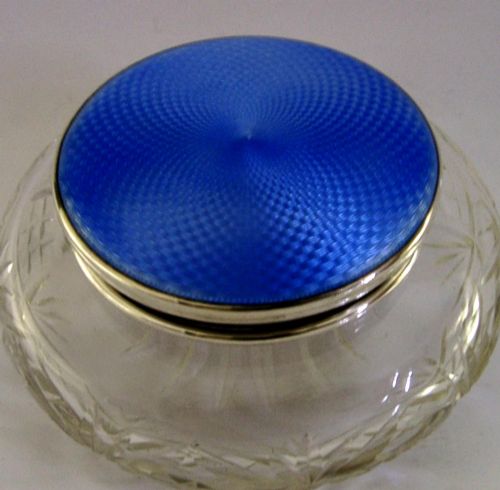
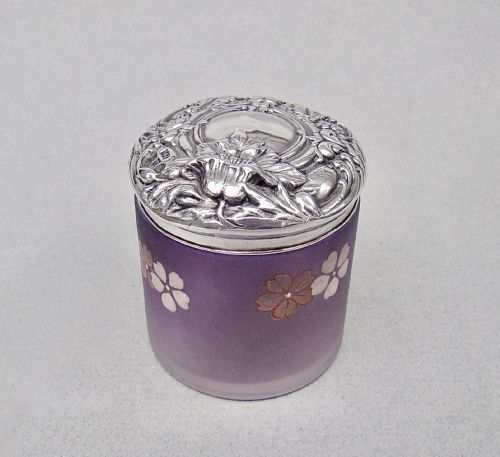
Lids and mounts often incorporated decorative techniques including guilloché enamel, repoussé work, tortoiseshell and pique inlay. Silversmiths stamped hallmarks onto the silver components, recording the assay office, city and year of manufacture.
Several Victorian pieces feature whimsical silver-plated or brass owl figures with glass eyes keeping watch over dressing table contents.
Quality factors in vanity jars
Quality rests in the weight and clarity of the glass or crystal body alongside the substance of the metal lid. Thick, deeply cut crystal and heavy gauge sterling silver represent superior manufacturing standards.
The execution of decorative details separates standard pieces from finer examples. Intricate hand-applied guilloché enamel, crisp repoussé work depicting figures or angels, and genuine tortoiseshell with inlay indicate higher craftsmanship.
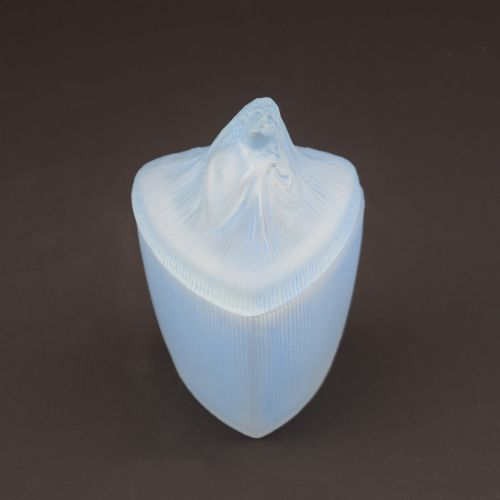
A. J. Pepper & Co·Ollivant & Botsford·Henry Clifford Davis·Goldsmiths and Silversmiths Company·A. Bromet & Co·Asprey & Co·Rene Lalique·Henry Perkins·Hasset & Harper·Mappin & Webb·Walker & Hall·Henri Lapeyre
The Antique Vanity Jar Glossary
- Guilloché enamel
- Enamel applied over a metal surface that has been machine-engraved with an intricate geometric pattern. This technique creates shimmering light effects beneath translucent coloured glass coatings.
- Repoussé
- A metalworking technique where the silversmith hammers metal from the reverse side to form a raised design on the front. This process yields ornamental motifs such as florals and scrolls on silver lids.
- Pique work
- The practice of inlaying tiny gold or silver pins into tortoiseshell or ivory to form delicate patterns. It appears frequently on Edwardian dressing table boxes.
- Kralik glass
- Art glass produced by the Bohemian Kralik factory, known for iridescent and organic forms. Pieces from this maker occasionally form the colourful bodies of lidded boxes.
- Hallmark
- A stamp or series of marks struck on precious metals indicating the standard of purity, the assay office, and the date letter. English pieces commonly display these stamps on the silver rims and lids.
Antique Vanity Jar: Frequently Asked Questions
What were antique vanity jars used for?
These vessels held powders, creams, rouge, hairpins and small jewellery on dressing tables. They kept dressing room surfaces tidy while adding decorative colour to the room.
Many were sold individually or as part of larger travelling cases and dressing sets used by Victorians and Edwardians.
How do I date a silver lidded jar?
English silver lids typically feature hallmarks stamped directly onto the metal surface. These marks include a date letter, a town mark for assay offices such as Birmingham or Chester, and a maker's mark.
Matching these letters against official assay tables reveals the exact year the metal mount was tested and registered.
What is guilloché enamel?
Guilloché is a decorative technique where metal is engine-turned with precise geometric patterns before translucent enamel is applied over the top. The underlying pattern shows through the coloured glass coating.
This method produced the vibrant blue, pink and green tops seen on Edwardian and Art Deco dressing table items.
Are glass bodies always crystal?
Glass bodies vary widely across the surviving examples. While many feature heavy cut crystal or clear glass, others utilise satin glass, frosted glass or coloured glass including cranberry, Bristol blue and amber.
Specific makers also contributed speciality glass, such as Bohemian varieties or Kralik productions.