


Antique Turquoise Pin
An antique turquoise pin brings a touch of vivid robin-egg blue colour to a lapel or collar, cherished for its bright historic charm.
Antique Turquoise Pin
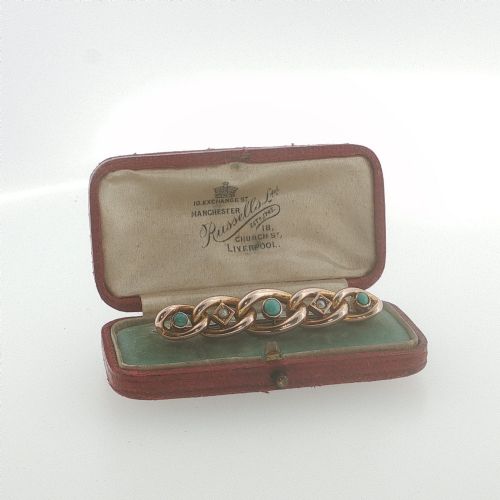
When you search for an antique turquoise pin, you are looking at small decorative fastenings created primarily during the Victorian and Edwardian eras. These pieces take various forms, including traditional brooches, stick pins, pendants, and occasionally matching jewellery sets.
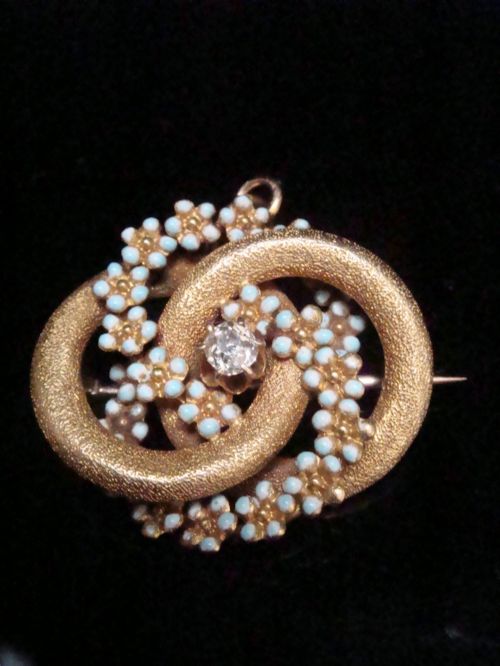
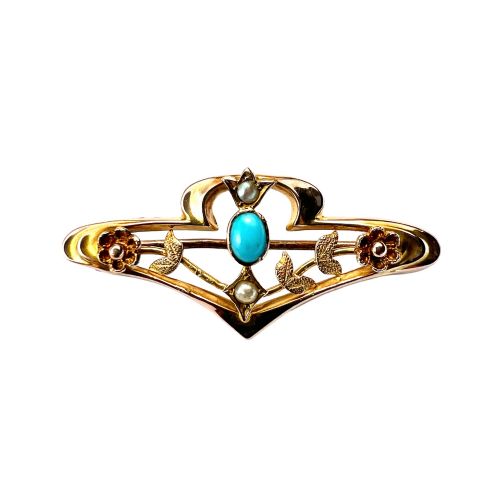
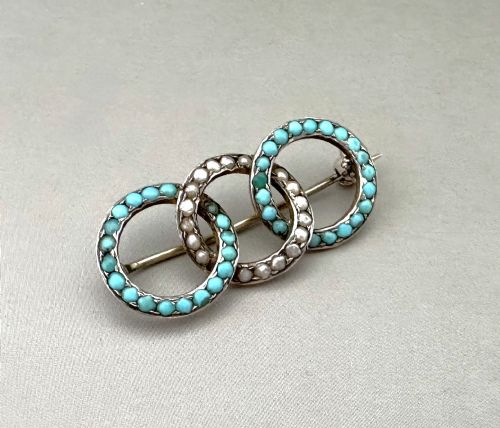
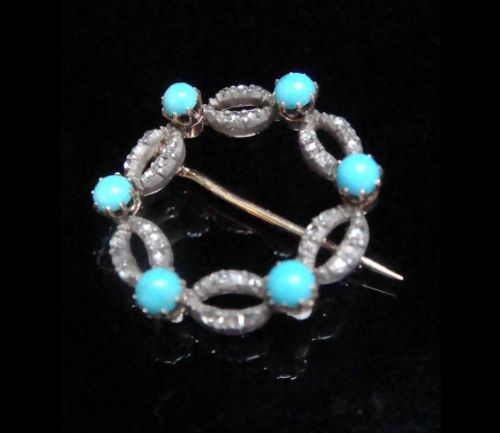
The most common versions met on this page are gold brooches featuring clusters of turquoise stones, often paired with seed pearls, diamonds, or enamel work. They range from simple heart and horseshoe motifs to more elaborate winged designs and floral arrangements.
Originating across the nineteenth and early twentieth centuries, these accessories served both practical and ornamental purposes in historical wardrobes. Today, collectors seek them out for their distinctive period craftsmanship and the varied shades of blue that natural turquoise displays.
How they were made
These items are constructed using precious metals such as 9ct gold, 15ct gold, 18ct gold, silver, and rolled gold. Goldsmiths shaped these metals into delicate frames, bows, crescents, and knots to hold the gemstones securely.
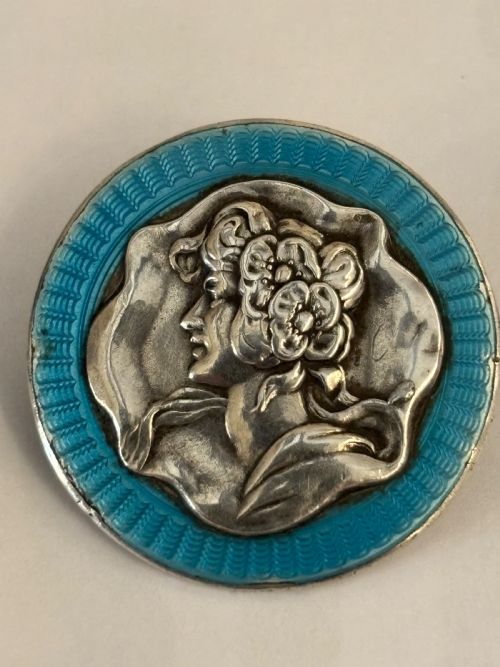
Turquoise stones are frequently combined with seed pearls, diamonds, and guilloche enamel to add texture and contrast. Setting techniques involve meticulous bezel or prong work suited to the small scale of these detailed ornaments.
Antique Turquoise Pin Retail Price Guide 2026
Typical asking prices for turquoise pin among the pieces listed under this phrase on Sellingantiques today, from the lower quarter to the upper quarter. They describe what is for sale here now, not the wider market.
A tiny turquoise horseshoe pinned to your lapel brings a pocketful of historic luck.
What varies in quality
The choice of base metal sets the baseline for the piece, with higher karat golds and platinum settings marking out finer examples. The presence of supplementary stones, particularly diamonds or well-matched natural pearls, elevates the sophistication of the design.
Artistry in the metalwork itself creates the distinction between standard production and superior craftsmanship. Intricate chasing, balanced composition in floral or insect motifs, and intact enamel work show the hand of a skilled maker.
The Antique Turquoise Pin Glossary
- Seed pearl
- A very small, naturally formed pearl often used in delicate clusters around a central turquoise stone. These tiny pearls add a soft luminous border to nineteenth-century designs.
- Guilloche enamel
- A decorative technique where a precise geometric pattern is engraved beneath a translucent layer of enamel. This method produces a rich depth of colour on silver and gold surfaces.
- Double collar brooch pin
- A specific fastening form featuring twin pins or chains intended to secure heavier collars or jabots. They combine structural utility with decorative gemstone placement.
Antique Turquoise Pin: Frequently Asked Questions
What is an antique turquoise pin?
An antique turquoise pin is a small decorative fastening, usually a brooch or stick pin, made during the Victorian or Edwardian periods. These pieces typically feature blue turquoise stones set in gold or silver.
They often incorporate supplementary materials like seed pearls or diamonds. Buyers use them to add historic character to modern clothing.
How do I date an antique turquoise pin?
Dating relies on the materials, hallmarks, and stylistic motifs present in the piece. Victorian examples often feature rich yellow gold and sentimental motifs like hearts and forget-me-knots.
Edwardian pieces tend to show lighter gold work, platinum touches, or delicate floral arrangements. The presence of specific gold karats like 15ct also helps pinpoint the manufacturing era.
How were these pins worn historically?
Historically, these items fastened collars, cravats, scarves, and lapels on period garments. Some versatile designs also functioned as pendants through hidden loops on the reverse.
Jewellery sets sometimes paired a brooch with a matching bracelet or chain. They served both a practical fastening role and a decorative social function.
How do I care for turquoise jewellery?
Turquoise is a softer, porous gemstone that requires gentle handling and protection from harsh chemicals, cosmetics, and prolonged water immersion. Cleaning should be done with a soft, dry cloth rather than liquid dips.
Storing pieces individually prevents scratching from harder gems like diamonds. Proper maintenance preserves the natural colour and polish of the stone.