
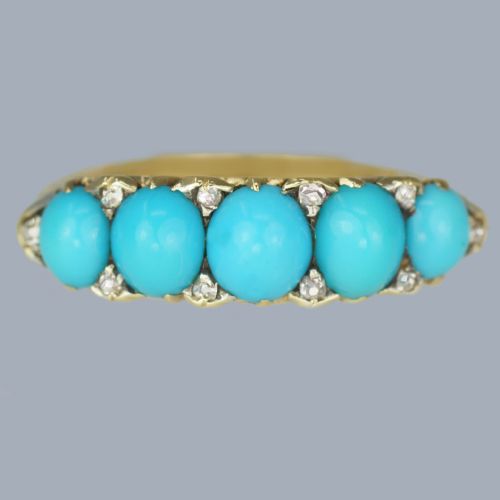


Antique Turquoise Band
An antique turquoise band is a vibrant piece of finger jewellery, and these varied rings bring lively colour and historic charm to any collection.
Antique Turquoise Band
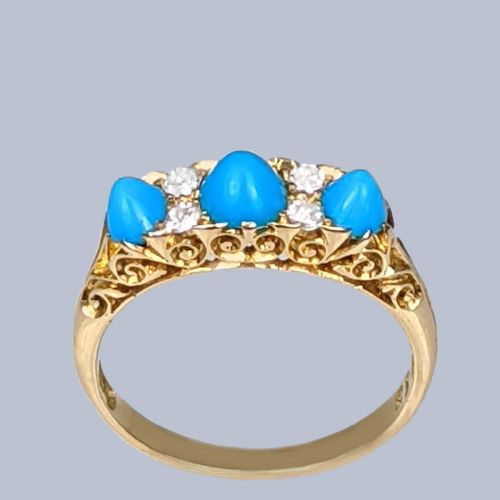
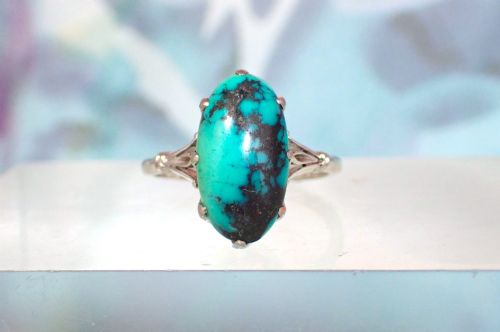
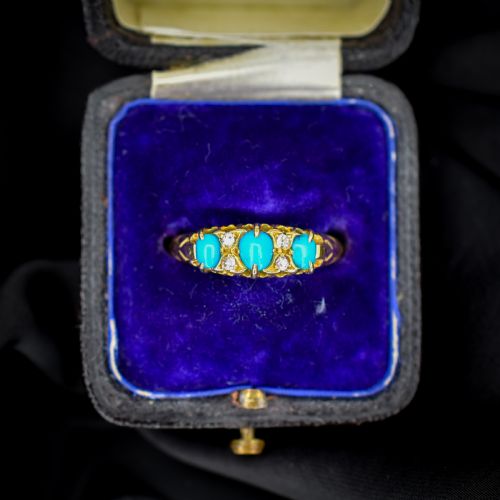
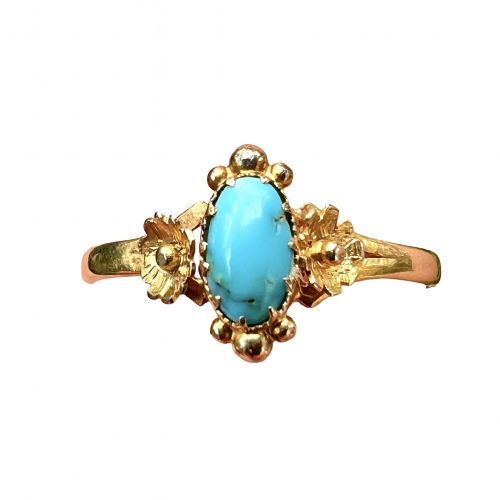
An antique turquoise band encompasses a range of historic finger rings set primarily with turquoise stones, appearing frequently in Victorian, Edwardian, and Art Deco designs. These pieces span simple rows, multi-row stackers, and buckle motifs.
Most examples on this page date from the late nineteenth and early twentieth centuries, showcasing periods such as the Victorian era and the Edwardian years. Collectors encounter these bands in configurations involving five stones, star clusters, and alternating gems.
Materials and construction
Jewellers constructed these bands using varying carats of gold, notably 18ct and 15ct yellow, white, and rose gold, alongside lower gold standards. They secured turquoise cabochons and natural stones within claw settings, flush mounts, and intricate scroll galleries.
Many rings incorporate secondary gems such as old cut diamonds, split pearls, and cultured pearls to frame the turquoise centrepieces. Engraved details, buckle shapes, and multi-row band structures complete the fabrication of these historic finger ornaments.
Some five-row harem stacking bands allow the wearer to interlock multiple turquoise rings into a single weighty finger ornament.
What separates the grades
The quality of an antique turquoise band rests upon the uniformity and natural hue of the turquoise stones, alongside the crispness of any accompanying diamond work. Stones with stable colour and minimal matrix variation command greater attention.
The weight and purity of the gold mount, from 15ct and 18ct alloys to rose and yellow shades, dictate the substantial feel of the ring. Additionally, the delicacy of hand-engraving and the structural integrity of complex multi-row designs distinguish standard examples from finer creations.
The Antique Turquoise Band Glossary
- Cabochon
- A gemstone shaped and polished with a smooth, rounded surface rather than faceted. This cut preserves the opaque, robin-egg blue character typical of turquoise.
- Trilogy ring
- A finger ring set with three principal stones in a row. In these pieces, turquoise frequently alternates with diamonds.
- Split pearl
- A small pearl cut in half and mounted flat-backed in jewellery settings. These gems commonly accompany turquoise in Victorian flower and star clusters.
- Buckle ring
- A band shaped to resemble a buckled belt, symbolising loyalty and remembrance in nineteenth-century jewellery. These motifs appear in solid gold and gemstone variations.
- Full eternity ring
- A band featuring an unbroken circle of gemstones set around the entire circumference of the hoop. They require precise stone matching and secure channel or claw work.
Antique Turquoise Band: Frequently Asked Questions
How do I clean an antique turquoise band?
Turquoise is a porous and relatively soft gemstone that absorbs moisture, oils, and chemicals easily. You should wipe the stone gently with a dry or slightly damp soft cloth and avoid chemical dips or ultrasonic cleaners.
Immersion in water can discolour the turquoise permanently or damage the integrity of the gold band and pearl elements. Store the ring separately to prevent harder diamonds from scratching the softer turquoise surface.
Can I wear an antique turquoise band daily?
Wearing these historic bands every day requires caution due to the delicate nature of turquoise and seed pearls. Rings with lower stone settings or robust 18ct gold bands handle regular wear better than high-profile scroll or multi-row stackers.
Consider removing the ring during manual tasks, gardening, or swimming to protect the soft stones from knocks and moisture. Regular checks by a jeweller ensure the claws holding the turquoise remain secure.
What is a Victorian buckle ring?
A Victorian buckle ring is a band fashioned to look like a belted strap, often incorporating engraved details and accent stones. In the nineteenth century, these motifs carried sentimental meanings of attachment, fidelity, and memory.
Jewellers frequently combined the gold buckle form with turquoise cabochons and pearls to create visually rich statement bands. They remain sought after today for their symbolic design and robust construction.
How do I date an antique turquoise ring?
Dating these rings involves examining the gold purity hallmarks, the cut of any accompanying diamonds, and the overall manufacturing style. Hallmarks indicating assay offices like Chester or Birmingham provide specific markers for the year of creation.
stylistic clues such as the scrollwork of an Edwardian piece or the robust floral motifs of Victorian Arts and Crafts help narrow the period. Old cut diamonds and lower gold standards like 15ct point firmly towards nineteenth-century production.