


Blue Turquoise Ring
These blue turquoise ring pieces bring vibrant colour and historic character to the hand, combining precious metals with striking natural stones.
Blue Turquoise Ring
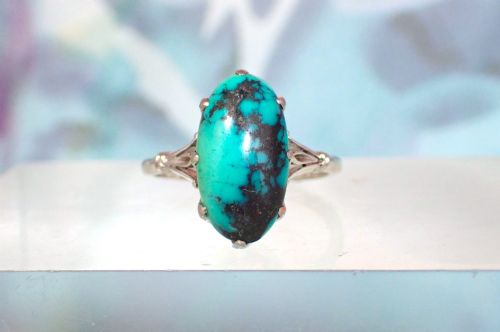
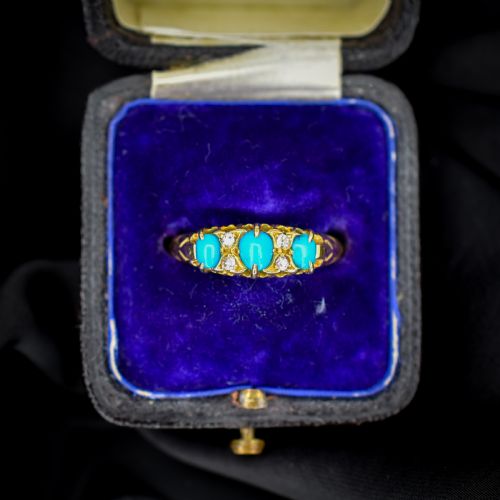
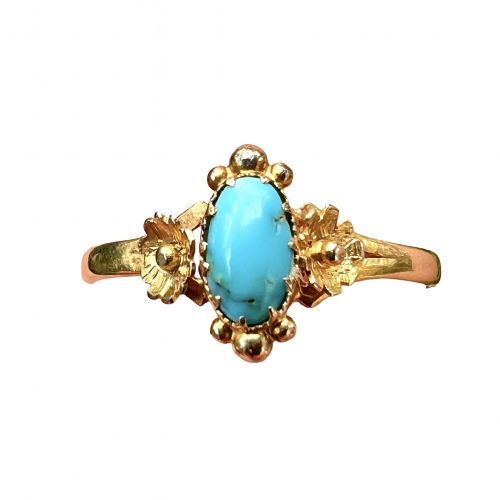
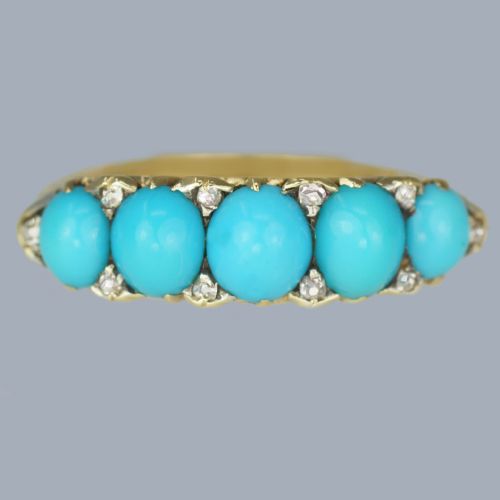
A blue turquoise ring brings together vibrant blue cabochons and precious metals across several historic periods. Buyers examining this page encounter pieces ranging from early Victorian work to later Edwardian and Art Deco designs.
The most common forms on this page include simple gold bands set with turquoise stones, alongside cluster and star motifs. Many incorporate diamonds or enamel to complement the central blue stones.
Originating predominantly from the Victorian era and the early decades of the twentieth century, these rings reflect the shifting aesthetic tastes of their respective periods. From Arts and Crafts flower designs to geometric Art Deco white gold settings, each piece demonstrates distinct period characteristics.
How they were made
Goldsmiths utilised 18ct yellow gold, 18ct white gold, 9ct yellow gold, and occasionally silver to form the structure of these rings. Turquoise cabochons were then hand-set alongside diamonds and blue enamel.
Makers shaped the precious metals into scroll boat mounts, star motifs, and cluster settings. Hand-painted miniature portraits and detailed wirework also appear in select Victorian pieces.
Listings feature Victorian, Edwardian, and Art Deco periods, utilising 18ct gold, 9ct gold, silver, diamonds, enamel, and turquoise.
What varies in quality
Quality rests upon the stone selection, the precision of the metalwork, and the overall state of preservation. Uniformity of the turquoise colour and secure flush or claw settings distinguish finer examples.
The complexity of the design, such as intricate diamond clusters or detailed enamel work, separates standard production from superior pieces.
Charles Horner
The Blue Turquoise Ring Glossary
- Cabochon
- A gemstone shaped and polished with a smooth convex surface rather than faceted. This style highlights the natural colour and texture of the turquoise.
- Cluster ring
- A ring featuring a central stone encircled by a group of smaller stones. Diamonds frequently surround turquoise in this arrangement.
- Arts and Crafts
- A design movement prioritising handcrafting and traditional motifs over mass production. Pieces from this period often display organic flower forms.
- Rose cut
- A diamond cut featuring a flat base and a domed top composed of triangular facets. This cut appears frequently in Victorian multi-stone rings.
Blue Turquoise Ring: Frequently Asked Questions
How do I date a turquoise ring?
Dating relies on hallmarks, metal types, and stylistic indicators such as stone settings and motifs. Victorian pieces often feature heavy yellow gold mounts, while Art Deco examples utilise white gold and geometric lines.
Examining the underside of the setting and any accompanying hallmarks provides further clues regarding the year of manufacture.
Are these rings suitable for daily wear?
Turquoise is a softer gemstone compared to diamond and requires careful handling during daily activities. Removing the ring before swimming, cleaning, or heavy manual work helps protect the stone.
Regular checks by a jeweller ensure the claws holding the turquoise and diamonds remain secure.
How should I clean antique turquoise?
Water and chemical cleaners can damage porous turquoise stones and degrade historic settings. A soft, dry cloth is best for removing surface dust from the metal and the stones.
Professional cleaning should be left to specialists familiar with antique jewellery construction.