



Turquoise and Diamond Ring
A turquoise and diamond ring brings together vivid blue stones and glittering diamonds, offering a vibrant colour contrast that has fascinated collectors for generations.
Turquoise and Diamond Ring
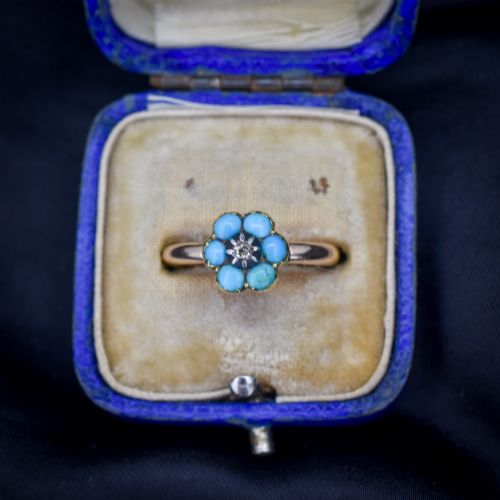
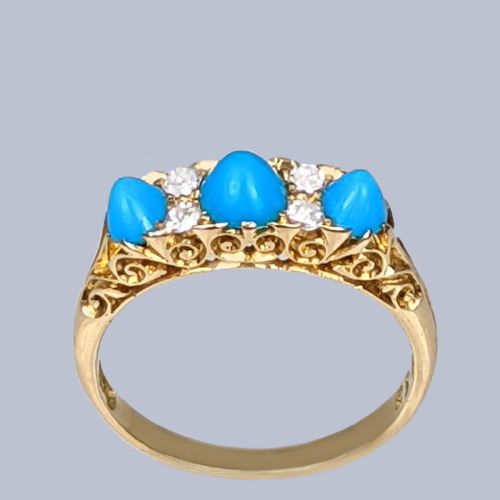
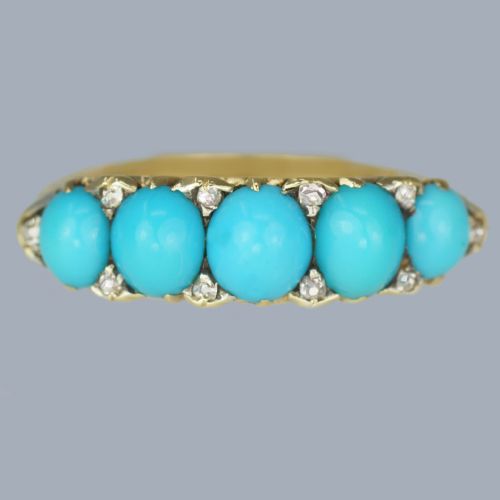
A turquoise and diamond ring combines bright turquoise cabochons with sparkling diamonds, creating striking visual pairings across several historic eras. Most examples on this page date from the Victorian period, featuring traditional cluster, five stone, and ornate scroll settings in warm yellow gold.
Makers of the late nineteenth and early twentieth centuries favoured these vibrant stones, often incorporating pearls or silver to enhance the contrast. The Victorian and Edwardian pieces show diverse forms, from classic multi-stone rows to delicate navette clusters and romantic heart bow designs.
Materials and Techniques
Goldsmiths constructed these rings primarily using yellow gold in 9ct, 15ct, and 18ct purities, frequently combining gold with silver settings for the diamond elements to brighten the stones. This traditional method of mounting diamonds in silver over gold typifies nineteenth-century work.
The gemstones include natural turquoise, shaped as smooth cabochons, alongside hand-cut diamonds like old cut, rose cut, and old mine variants. Makers often secured these stones within detailed scrollwork, boat settings, and cluster arrangements using manual claw and bezel techniques.
Turquoise and Diamond Ring Retail Price Guide 2026
Typical asking prices for turquoise and diamond ring among the pieces listed under this phrase on Sellingantiques today, from the lower quarter to the upper quarter. They describe what is for sale here now, not the wider market.
Materials recorded across the inventory include 9ct, 15ct, and 18ct yellow gold, alongside silver, turquoise, diamonds, pearls, and blue zircon.
Assessing Quality
Quality rests on the saturation and uniform finish of the turquoise cabochons, alongside the brilliance and cut of the accompanying diamonds. Superior examples feature stable, well-matched turquoise stones with minimal matrix interruption paired with bright, lively old cut diamonds.
The precision of the metalwork also distinguishes finer pieces, where delicate scroll settings, robust claw work, and intact engravings demonstrate skilled craftsmanship. Heavier gold weight and higher gold purities further elevate the standing of the piece.
The Turquoise and Diamond Ring Glossary
- Cabochon
- A gemstone shaped and polished with a smooth, convex surface rather than faceted. This style highlights the natural colour and texture of opaque stones like turquoise.
- Old Cut
- An early form of diamond cutting featuring a small table, high crown, and large culet. These stones catch candlelight differently than modern brilliant cuts.
- Rose Cut
- A diamond cut characterised by a flat base and a domed crown covered in triangular facets. It resembles an unopened rosebud.
- Navette
- A boat-shaped gemstone setting that tapers to points at both ends, also known as a marquise shape. This silhouette was popular for cluster rings.
- Trilogy
- A ring featuring three main stones set in a row, often interpreted to represent the past, present, and future.
Turquoise and Diamond Ring: Frequently Asked Questions
How do I care for a turquoise ring?
Turquoise is a relatively soft and porous gemstone that absorbs oils, cosmetics, and water easily. Clean the ring gently with a dry, soft cloth and avoid chemical dips or ultrasonic cleaners entirely.
Remove the ring when washing hands, swimming, or applying lotions to protect the colour and structural integrity of the turquoise. Store the piece separately from harder gemstones to prevent surface scratching.
Are these rings suitable for daily wear?
Many historical rings with turquoise require mindful wear because turquoise rates lower on the Mohs hardness scale than diamonds. Daily tasks involving impacts or water exposure can damage the soft stones.
Reserved for lighter wear or special occasions, these antique pieces survive best when treated with care. Regular checks by a jeweller ensure the claw settings remain secure.
What is an old cut diamond?
An old cut diamond is a hand-faceted stone shaped before modern machinery standardised cutting proportions. These diamonds possess a charming, chunky appearance with a distinctively large culet at the base.
Cut by eye, each old cut diamond is unique and optimized for warm indoor lighting conditions. Their gentle sparkle defines the character of Victorian and Edwardian jewellery.
How can I date my ring?
Dating relies on stylistic clues, metal types, and hallmarks stamped inside the band. Victorian pieces often use 15ct gold and silver-topped gold, while Edwardian designs favour lighter, intricate filigree.
Assay office marks and maker's stamps provide precise years when present. Comparing stone arrangements and setting styles against documented historical periods confirms the era.