


1890s Gold Ring
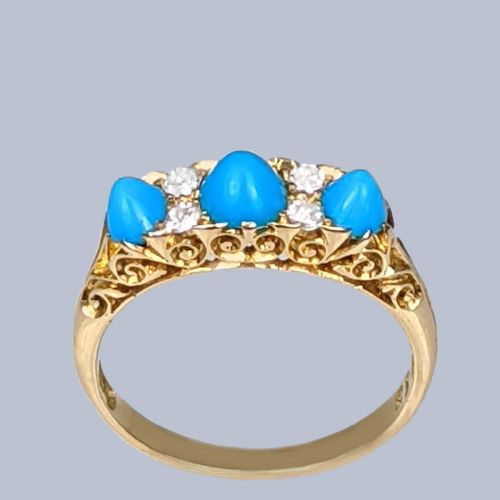
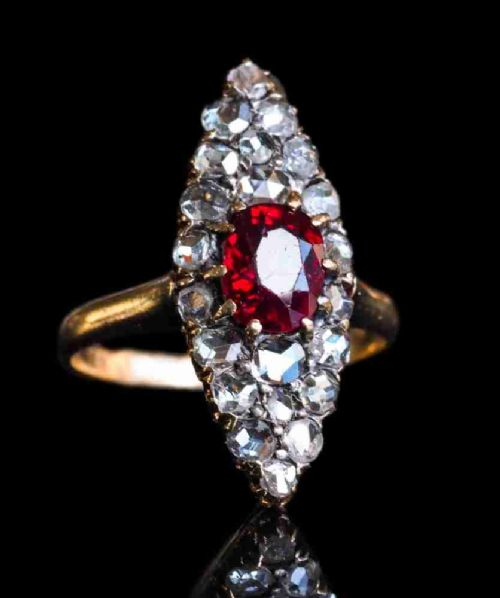
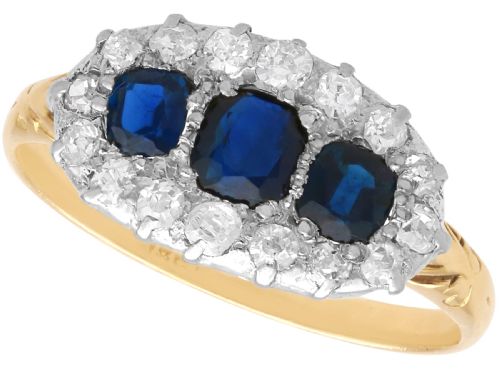
An 1890s gold ring brings genuine late Victorian character to the hand, combining warm yellow gold with diamonds, rubies, and sapphires.
1890s Gold Ring
An 1890s gold ring belongs to the late Victorian period, capturing the distinct aesthetic of the final decade of the nineteenth century. These pieces combine traditional craftsmanship with the refined gemstone arrangements typical of the era.
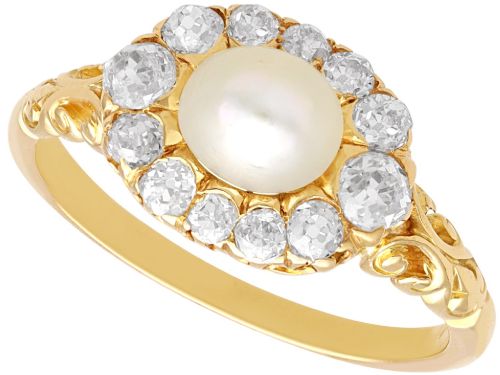
Common forms include multi-stone settings, navette designs, and boat rings incorporating rubies, sapphires, turquoises, and opals alongside old cut diamonds. Each example demonstrates the distinct structural approaches employed by jewellers during this specific timeframe.
How they were made
Maker practices of the period utilised 18ct yellow gold and 15ct gold to construct robust settings capable of securing precious stones. Metal was shaped into patterned bands, boat mounts, and elongated navette silhouettes.
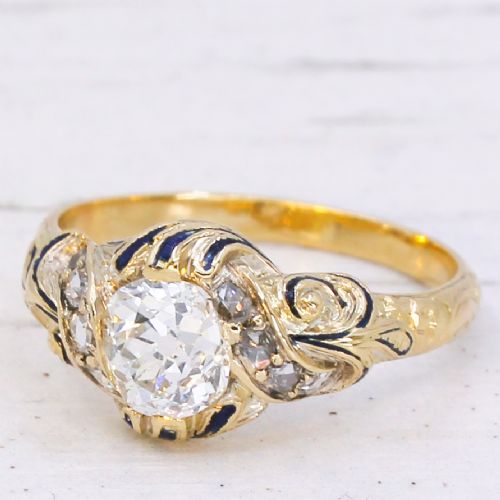
Gems such as old cut diamonds, rubies, and sapphires were hand-set into the gold framework. Additional decorative elements included enamel work and turquoise accents, integrated directly into the metal body.
Late Victorian makers frequently concealed symbolic meanings within gemstone combinations, allowing rings to whisper messages across the dinner table.
What varies in quality
The distinction between tiers rests upon the choice and matching of gemstones, such as Burmese rubies or clean old cut diamonds, alongside the crispness of the gold work. Heavier gauge 18ct gold and intricate band patterning generally indicate higher workshop standards.
Proportion and stone arrangement define the success of navette and boat ring designs. Pieces displaying harmonious stone sizing and secure setting techniques represent the finer output of the decade.
The 1890s Gold Ring Glossary
- Old cut diamond
- A diamond cut popular in the nineteenth century, characterised by a small table, high crown, and open culet. These stones possess a softer sparkle than modern brilliant cuts.
- Navette ring
- A ring featuring an elongated, boat-shaped silhouette that tapers to points at either end. This design maximises finger coverage and often accommodates multiple stones.
- Trilogy ring
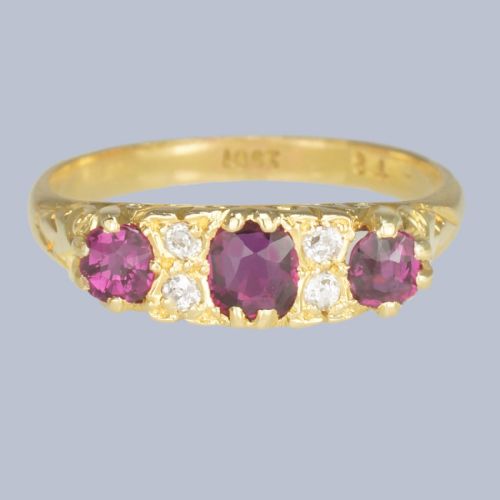
- A ring set with three primary gemstones, traditionally representing the past, present, and future. In nineteenth-century examples, these typically combine a central ruby, sapphire, or diamond with side diamonds.
- Boat ring
- A setting style where the stones are arranged in a gently curved, graduating row resembling the hull of a boat. It sits low to the finger for comfortable daily wear.
- 18ct gold
- An alloy consisting of seventy-five percent pure gold mixed with other metals to provide durability. This alloy was widely used for fine rings during the late Victorian era.
1890s Gold Ring: Frequently Asked Questions
How do I care for an 1890s gold ring?
Late Victorian jewellery requires gentle handling due to its age and delicate settings. Clean the gold and stones using warm soapy water and a soft brush, avoiding harsh chemical dips.
Remove the ring when performing manual tasks or applying cosmetics to protect softer gems like turquoise, opal, and pearls from abrasion or chemical damage.
Can I wear an 1890s gold ring every day?
Many people wear these antique pieces daily, provided they are checked periodically by a professional jeweller for loose stones or worn claws. Sturdier 18ct gold bands withstand regular use well.
For rings set with softer materials like opal or pearl, extra caution is necessary to prevent impact damage or scratching during active use.
What styles define nineteenth century rings?
The period encompasses distinctive configurations such as navette designs, multi-stone cluster rings, and symmetrical trilogy arrangements. Jewellers utilised yellow gold and rose gold to mount contrasting coloured gems.
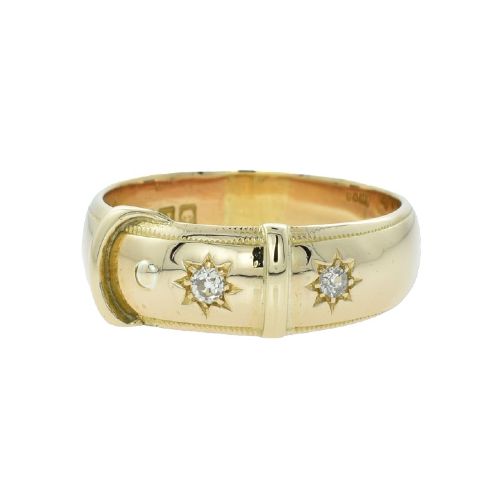
Buckle rings and patterned bands also appeared frequently, reflecting the symbolic and decorative motifs favoured by late Victorian society.
How can I tell if a ring is from the 1890s?
Dating relies on characteristic manufacturing techniques, gemstone cuts, and hallmarks present on the inner band. Old cut diamonds and specific alloy standards like 15ct or 18ct gold point directly to the nineteenth century.
Stylistic markers such as boat settings and navette outlines further narrow the timeline to the late Victorian period.