
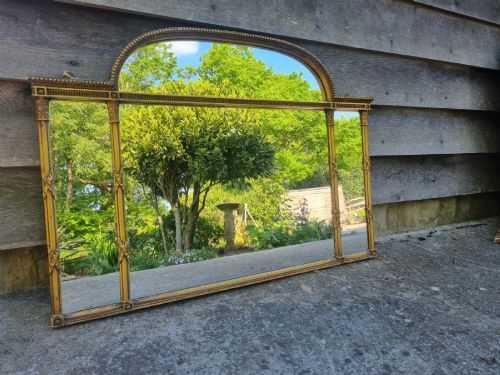


Antique Triptych Chimney Mirror
These antique triptych chimney mirrors bring architectural balance and deep nineteenth-century character to a room, offering multiple plates that open up wall space.

Antique Triptych Chimney Mirror
An antique triptych chimney mirror sits above a fireplace to reflect light and expand the feel of an interior. Buyers hunting for this phrase encounter substantial overmantel mirrors divided into three vertical or horizontal sections, often designed to match the proportions of period chimney breasts.
The pieces listed on this page span the nineteenth century, including Regency, Victorian, and specific stylistic variations like Victorian Gothic and Irish Rococo. Formats range from neat-sized giltwood frames with acanthus-decorated columns to large compartmental and landscape mirrors formed from walnut, mahogany, oak, and carved wood and gesso.
How they were made
Craftsmen shaped these frames using solid woods such as oak, mahogany, and walnut alongside applied composition and gesso for intricate ornament. Gilding was then applied to surfaces to catch the firelight, while other examples utilised white paint or ebonised wood to suit changing interior tastes.
The mirror glass itself was set into compartments divided by wooden mullions, columns, or detailed carvings such as Ho Ho birds and squirrels. Joinery traditions of the period ensured the heavy frames could support multiple glass plates safely above a hearth.
Some nineteenth-century makers hid whimsical carved details like squirrels and Ho Ho birds right among the acanthus leaves of their giltwood frames.
What varies in quality
Quality rests in the crispness of the carved wood and gesso decoration, where sharper acanthus leaves and finer mouldings distinguish superior pieces from softer, coarser castings. The handling of the giltwood and the integrity of the original frame construction also dictate the overall standard.
The division of the triptych plates and the proportion of the columns or fretted surrounds determine the visual harmony of the piece. Better examples maintain balanced proportions and retaining original surfaces without heavy restoration masking the nineteenth-century hand.
The Antique Triptych Chimney Mirror Glossary
- Triptych
- A mirror divided into three distinct panels or sections, often flanked by columns or pilasters. This tripartite division breaks up reflections and adds architectural weight to a chimney breast.
- Giltwood
- Timber, commonly pine or gesso-coated wood, covered with thin sheets of gold leaf. It provides a bright, reflective surface that warms under candlelight.
- Overmantel
- A large mirror designed specifically to hang on the wall directly above a fireplace mantelpiece. These pieces often feature landscape orientations to fill the broad space beneath the ceiling.
- Gesso
- A plaster-like mixture applied to wooden frames and carved or moulded into decorative reliefs before gilding. It allows for sharp, intricate ornamentation.
- Regency
- An English design period spanning the early nineteenth century defined by classical restraint, architectural columns, and gilt finishes. Pieces from this era often feature clean lines and refined ornamentation.
Antique Triptych Chimney Mirror: Frequently Asked Questions
How do I hang a heavy overmantel mirror?
These mirrors carry significant weight from their wood frames and multiple glass plates, requiring secure fixings directly into wall studs or masonry.
Professional installation using heavy-duty brackets ensures the piece remains safely supported above the heat and bustle of a fireplace.
Where should I place a chimney mirror?
Traditionally hung directly above the fireplace mantelpiece, an antique triptych mirror anchors the main wall of a reception room. Positioning it opposite a window maximises the natural light reflected back into the interior.
Lower placements close to the mantel create a traditional period arrangement, while slightly higher positioning alters the vertical proportions of the room.
How do I tell Regency from Victorian styles?
Regency frames tend to display classical architectural elements like acanthus-decorated columns and restrained gilt surfaces dating from the early nineteenth century. Victorian examples often introduce heavier proportions, darker woods like walnut or oak, and revival styles such as Gothic or fretted mahogany.
Examining the construction methods and the specific ornamentation helps distinguish the classical restraint of the Regency era from later nineteenth-century tastes.
Can these mirrors be cleaned safely?
Dusting the giltwood and carved gesso frames with a soft, dry brush prevents the buildup of grime without disturbing the historic surface. Glass plates benefit from gentle wiping with a cloth slightly dampened with water, avoiding harsh chemicals near the old wooden joins.
Careful maintenance preserves both the reflective mirror plates and the delicate composition ornament applied by nineteenth-century makers.