
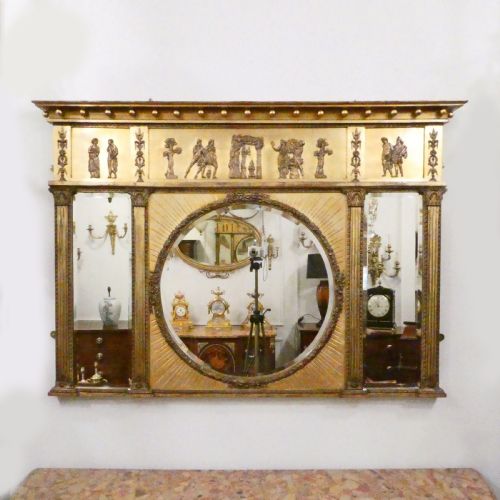


Classical Landscape Wall Mirror
These classical landscape wall mirrors bring architectural scale and quiet mythological scenes into a room.

Classical Landscape Wall Mirror
Classical landscape wall mirrors combine expansive reflective glass with painted panels or carved romantic subjects above the main plate. These pieces draw from Georgian, Regency, French Empire and Victorian traditions, spanning the nineteenth century.
Overmantel mirrors and pier mirrors form the primary shapes available here. Grand scale pieces and horizontal landscape formats dominate, often incorporating multi-plate arrangements or giltwood frames.
Materials and construction
Makers shaped these frames from timber such as walnut, birds eye maple and ebonised wood, applying gesso layers for intricate relief carving. Gilding with gold leaf or paint finishes completed the surface decoration.
Artists painted oil on canvas or utilised glass panels, such as eglomisé, to render mythological or pastoral scenes set above the mirror plate.
Anania and her chariot drive across one nineteenth-century glass panel, keeping watch over the mantelpiece.
Elements of quality
The refinement of the gesso mouldings and the depth of the hand carving separate standard pieces from ambitious workshops. Crisp detail in the acanthus leaves or classical motifs dictates visual weight.
The integration of the painted panel relative to the mirror glass determines the balance of the composition. Intact original gilding and clear mirror plates elevate the final presence.
The Classical Landscape Wall Mirror Glossary
- Trumeau
- A decorative wall mirror featuring an upper panel containing a painting or carving above the main glass plate. This form gained favour in French Empire and Regency interiors.
- Eglomisé
- A technique where gold or silver leaf is applied to the reverse of glass and etched before painting. This method produces a reflective, metallic background for pastoral scenes.
- Overmantel
- A large horizontal mirror designed specifically to hang above a fireplace mantelpiece. These pieces often utilise triple plates to reflect maximum light across a room.
- Gesso
- A plaster mixture applied to wood frames to create a smooth surface for subsequent carving and gilding. This compound allows for sharp relief work.
- Giltwood
- Timber coated with thin layers of gold leaf or powder. This finish catches candlelight and natural daylight within a nineteenth-century interior.
Classical Landscape Wall Mirror: Frequently Asked Questions
Where should I hang a landscape mirror?
These horizontal mirrors suit positions above a fireplace mantelpiece or along a principal drawing room wall. Their width helps anchor large wall spaces.
Ensure the wall construction supports the substantial weight of these gilded wooden frames and multi-plate glass configurations.
What is an eglomisé panel?
An eglomisé panel is a piece of glass decorated on the reverse side with precious metal leaf and pigment. This technique creates a distinctive, luminous border or upper scene.
Such panels appear frequently in Regency pier mirrors and trumeau designs above the main glass.
How do I date a nineteenth-century mirror?
Dating relies on combining the frame style, construction materials, and the characteristics of the glass plate. Regency and Georgian examples show specific neoclassical motifs.
Victorian and Edwardian pieces often adapt these earlier styles with broader proportions and triple plate layouts.
Why do some mirrors have three plates?
Triple plate mirrors distribute light more evenly across expansive nineteenth-century reception rooms. Dividing the glass also accommodated the limitations of glass-making technology.
These horizontal landscape formats balance the vertical proportions of tall mantelpieces.