


Three Paneled Overmantel Mirror
A three paneled overmantel mirror anchors a chimney breast with horizontal breadth, reflecting light across a room through its divided plates.

Three Paneled Overmantel Mirror
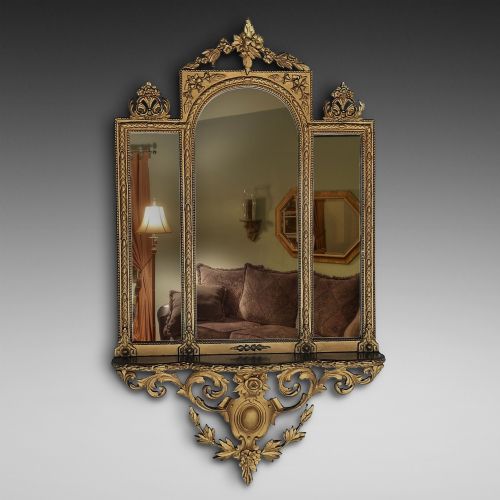
A three paneled overmantel mirror is designed specifically to sit above a fireplace mantel, offering a wide, tripartite reflective surface that visually expands the wall space. These architectural furnishings date across the nineteenth and early twentieth centuries, spanning periods from Regency to Victorian and Edwardian revivals.
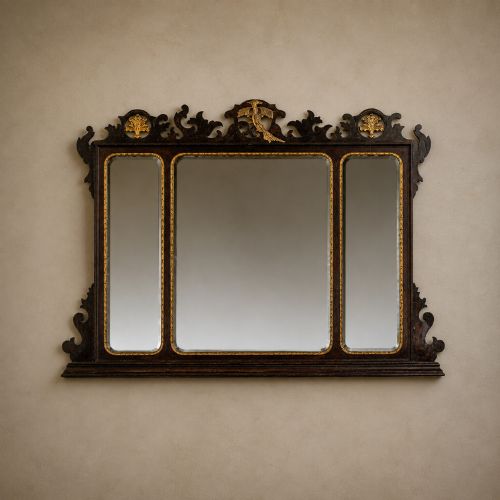
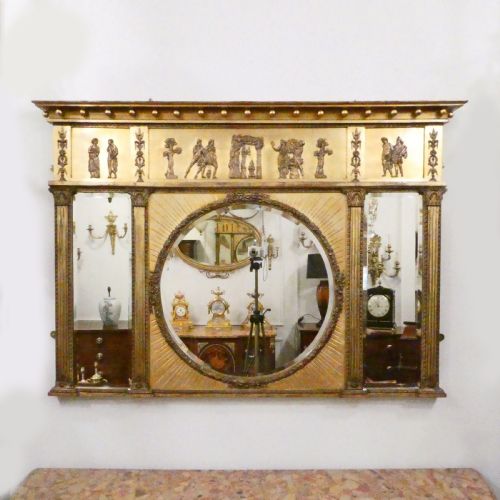
You will most frequently encounter giltwood and mahogany frames on this page, often featuring tripartite divisions separated by slender pilasters or moulded wooden margins. The formats range from restrained neoclassical proportions to elaborate Victorian rococo and Chippendale revivals complete with carved cresting.
The materials recorded in these listings demonstrate a clear preference for carved timbers such as mahogany, walnut, and oak alongside gilded gesso and composition ornament. Surviving examples reflect the shifting stylistic tastes of nineteenth century interiors, moving from clean Regency lines to exuberant Victorian carving and later revivalism.
Materials and construction methods
Makers constructed the structural carcasses of these large mirrors using dense hardwoods including mahogany, walnut, and oak, often providing a stable foundation for applied ornamentation. Gilding was applied using gold leaf over layers of gesso and composition, a fibrous material pressed into moulds to create crisp decorative details like acanthus leaves and scrolling motifs.
The characteristic triple plate glass was traditionally silvered using mercury or chemical solutions, held within rebates at the back of the frame and secured with wooden backing boards. Joinery techniques combined traditional mortise and tenon framing with delicate applied fretwork, ensuring the large horizontal span remained rigid under its own weight.
Listings feature periods from the Regency era through the Victorian age, incorporating styles such as Chippendale Revival and Gothic.
Judging quality and craftsmanship
Quality in a three paneled overmantel mirror reveals itself in the crispness of the carved or moulded ornamentation and the integrity of the original gilding. Finer pieces display hand-carved wooden details rather than heavy composition casts, with harmonious proportions that suit the tripartite division of the glass plates.
The depth and clarity of the mirror plates themselves contribute significantly to the distinction between standard and superior pieces. Original silvering showing natural foxing indicates age, while the structural tightness of the heavy wooden frame determines how well the mirror has endured decades above a heat source.
The Three Paneled Overmantel Mirror Glossary
- Overmantel mirror
- A large horizontal mirror specifically proportioned to hang on the wall directly above a fireplace mantelpiece. These pieces were traditionally designed to amplify firelight and daylight within principal reception rooms.
- Triptych
- A piece divided into three distinct sections or panels. In mirror design, this refers to a single frame housing three separate glass plates arranged horizontally.
- Giltwood
- Timber that has been coated with a thin layer of gold leaf or gold paint. It provides a luminous surface that catches and reflects ambient room light.
- Composition
- A moulded paste made from whiting, resin, glue, and oil pressed into decorative ornaments. It was widely used in the nineteenth century as a cost-effective alternative to hand carving.
- Gesso
- A plaster-like mixture applied to wood frames as a smooth base for subsequent gilding. Its thickness allows for sharp detailing when carved or stamped prior to leaf application.
- Acanthus
- A classical architectural ornament modelled after the lobed leaves of the acanthus plant. It frequently appears carved onto wooden frames or moulded in composition on nineteenth-century pieces.
Three Paneled Overmantel Mirror: Frequently Asked Questions
How do I hang a heavy overmantel mirror?
These mirrors carry considerable weight due to their large wooden frames and triple glass plates. They require secure fixing directly into masonry walls using heavy-duty brackets attached to the structural studs or brickwork.
Professional installation is strongly advised to ensure the weight is properly distributed, as standard picture hooks will fail under the load of a large nineteenth-century mirror.
What is the difference between Regency and Victorian overmantels?
Regency overmantel mirrors typically favour architectural restraint, clean rectangular proportions, and classical motifs such as reeded columns or ball-decorated cornices. Mahogany and neat gilt frames dominate this earlier aesthetic.
Victorian examples lean towards heavier ornamentation, incorporating rococo revival curves, elaborate crestings, and dark ebonised or walnut timbers. They are often larger in scale and reflect the Victorians' taste for decorative abundance.
Why are there three plates instead of one?
Early glass-making technology limited the maximum size of flawless flat mirror plates that could be safely produced without distortion. Dividing the horizontal span into three sections allowed makers to create wide overmantels before large plate glass became economically viable.
Even after technological advances permitted larger single sheets, the tripartite format remained popular for its balanced aesthetic rhythm and ability to visually anchor a wide fireplace.