







Antique Tripod Workbox
An antique tripod workbox is a handy Victorian or Regency sewing table with a fitted interior, ideal for keeping small needlework projects tidy.
Antique Tripod Workbox
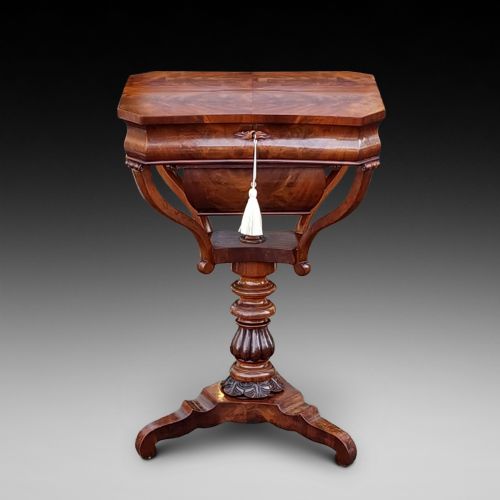
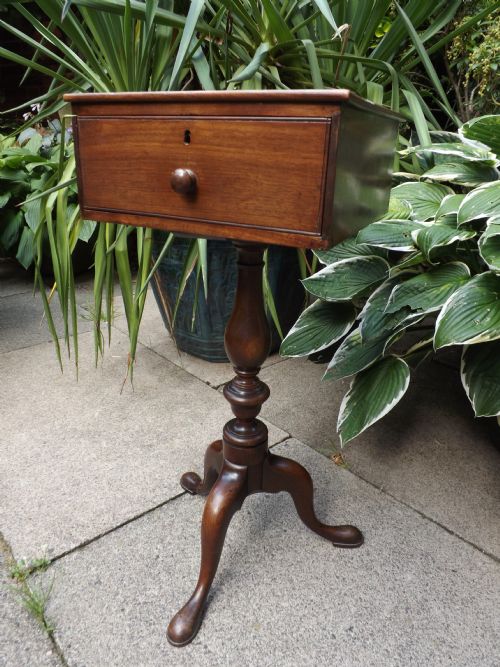
An antique tripod workbox is a piece of furniture designed for needlework and small domestic tasks, standing on a three-legged base. These tables typically feature a compartment or bag beneath the top to hold threads, fabrics, and sewing tools.
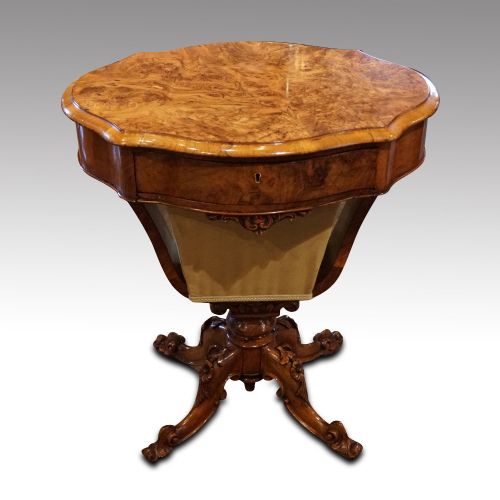
Most examples found here date from the Victorian and Regency periods, spanning the nineteenth century alongside an earlier George III format. Forms vary from trumpet-shaped bodies to pedestal tables and occasional side tables with lift tops.
Makers utilised various timbers, creating utilitarian sewing boxes as well as decorative occasional tables suitable for a parlour. The term encompasses needlework tables and cone-shaped boxes supported on carved or turned tripod stands.
How they were made
Cabinetmakers constructed these pieces using solid timbers and decorative veneers such as burr walnut, rosewood, pollard oak, and mahogany. Wood inlay and brass fittings frequently enhanced the exterior appearance of the workboxes.
The stands rely on sturdy tripod bases, sometimes featuring carved details or pedestal supports beneath the main body. Interiors often incorporated fitted compartments for specialised sewing implements and accessories.
Antique Tripod Workbox Retail Price Guide 2026
Typical asking prices for tripod workbox among the pieces listed under this phrase on Sellingantiques today, from the lower quarter to the upper quarter. They describe what is for sale here now, not the wider market.
What varies in quality
Quality rests upon the choice of timber and the intricacy of the cabinetwork, distinguishing standard utility items from finely figured burr walnut or rosewood pieces. Rich veneer selection and precise wood inlay elevate the visual appeal.
The stability and carving of the tripod base indicate the standard of production, alongside the complexity of the fitted interior compartments. Superior examples maintain intact internal fittings and balanced proportions.
The Antique Tripod Workbox Glossary
- Workbox
- A box or small chest for holding sewing materials. In this context, it refers to tables specifically built to house needlework equipment.
- Tripod base
- A three-legged support structure. This design provides stable footing for small pedestal tables on uneven floors.
- Trumpet workbox
- A sewing table with a body widening upwards like a trumpet. This popular Victorian form often conceals a fabric storage bag inside.
- Pollard oak
- Timber taken from pollarded oak trees, showing clustered knots and rich grain patterns. Cabinetmakers valued it for decorative veneering.
- Pedestal table
- A table supported by a single central pillar on a base. They save floor space while offering a stable surface.
Antique Tripod Workbox: Frequently Asked Questions
What is an antique tripod workbox?
An antique tripod workbox is a nineteenth-century sewing table featuring a lidded compartment raised on a three-legged stand. These pieces combined a practical storage space for needlework with the function of an occasional side table.
They served as useful furniture in parlours and drawing rooms where ladies engaged in embroidery and hand sewing. The raised box kept threads and needles out of sight when not in use.
How do I date an antique workbox?
Dating relies on timber choices, construction methods, and stylistic cues from periods such as Regency and Victorian. Mahogany and pollard oak often point towards earlier Regency pieces, while burr walnut trumpet forms typically indicate mid-Victorian manufacture.
Hardware, such as brass escutcheons and internal compartment layouts, also provides clues to the exact decade of production. Examining the secondary woods inside the carcass helps confirm the era.
What were workboxes used for?
These tables were designed primarily for storing sewing gear, lace-making supplies, and small crafting tools. The fitted interior compartments kept spools, thimbles, and pins organised during needlework sessions.
Beyond utility, they functioned as decorative occasional tables in sitting rooms. The flat top could hold a small lamp or a book when the sewing compartment remained closed.
How do I care for a walnut workbox?
Protect antique walnut and rosewood surfaces by keeping them away from direct sunlight and sudden temperature changes. Excessive heat can cause delicate veneers to lift or split over time.
Apply a light application of appropriate furniture wax occasionally to maintain the sheen of the timber. Avoid placing damp items or heavy objects directly onto the polished top.