

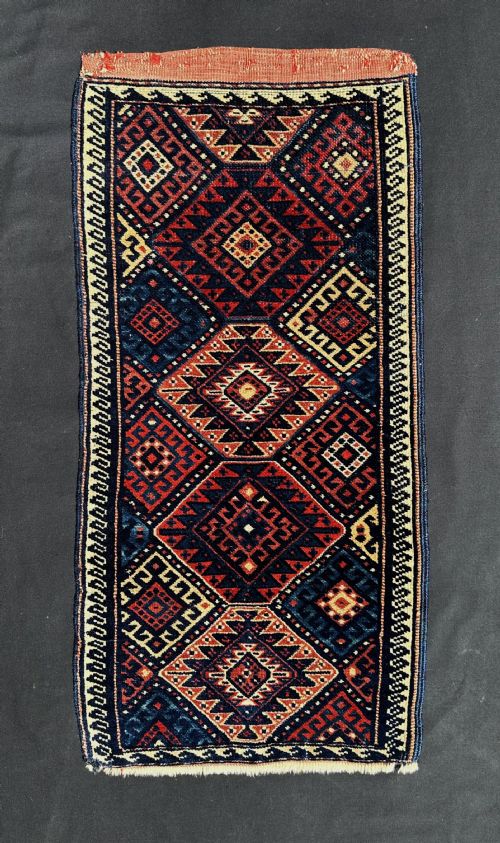
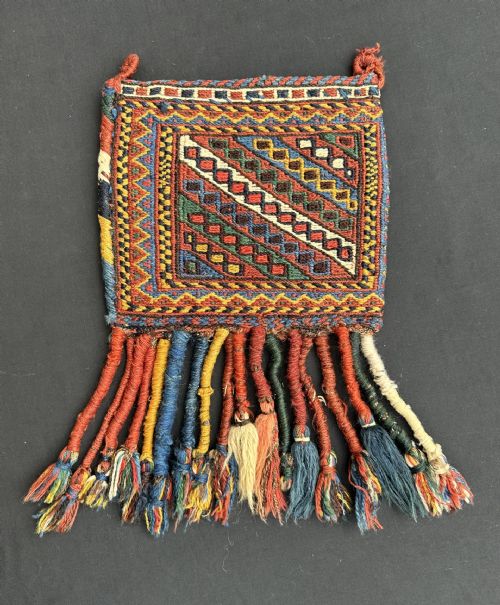


Antique Tribal Textile Fragment
An antique tribal textile fragment brings nomadic artistry into a modern interior through enduring wool, natural dyes and geometric symbols.
Antique Tribal Textile Fragment
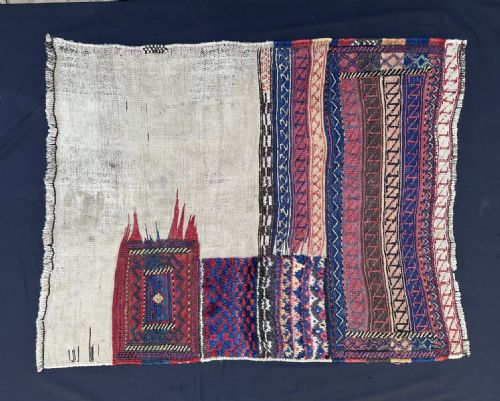
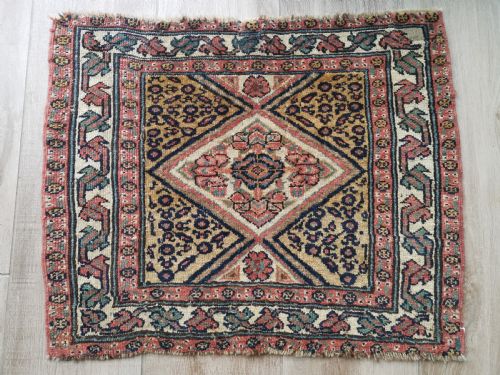
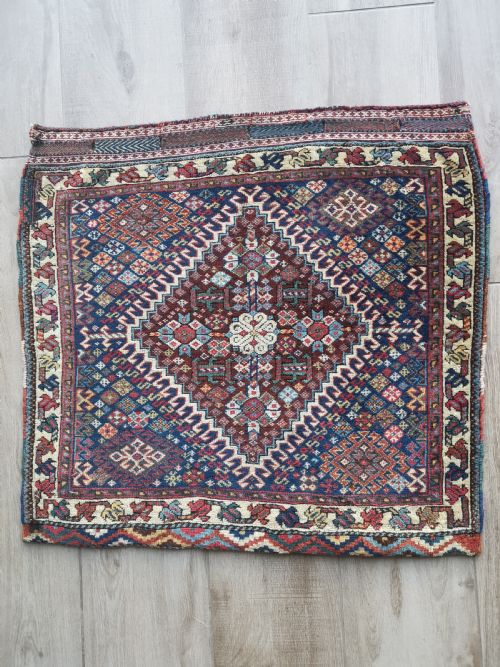
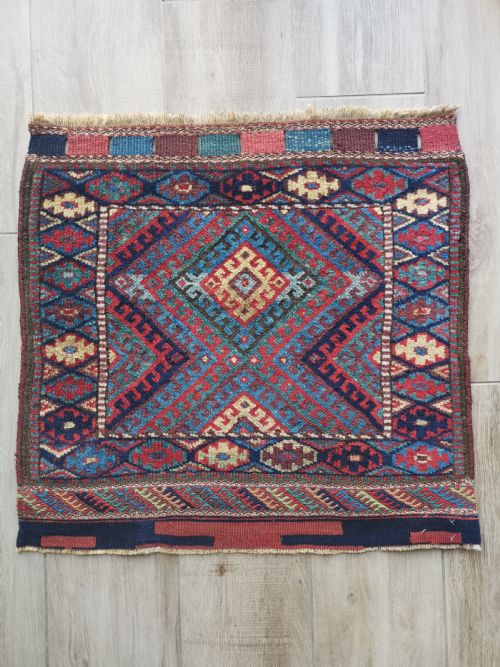
When you search for an antique tribal textile fragment, you encounter portable woven art created by nomadic and village weavers across Persia, Central Asia and the Caucasus. These works are surviving portions of larger functional household items such as torbas, chuvals, bagfaces, salt bags and tent bands. They preserve the intricate tribal motifs and dyeing traditions of groups including the Yomut, Tekke, Ersari, Afshar and Qashqai.
On this page, you will mostly meet fragments and bagfaces dating from the nineteenth and early twentieth centuries, spanning the 1850s to the 1910s. Many of these pieces were originally portions of dowry weaving or animal housings that have lost their complete form over decades of use. Their survival allows collectors to examine masterclasses in indigenous design on a manageable scale.
How they were made
The foundation of these textiles rests on hand-spun wool and cotton, worked by nomadic weavers who often prepared and dyed their own materials. Natural dyes provide the rich palettes, yielding deep madder reds, indigos and earthy yellows that mellow gracefully over time. Certain regions also incorporate silk or wooden elements to accent the pile and flatweave structures.
Weaving techniques vary from pile knots to flatwoven sumac and jajim structures, depending on whether the item served as a storage bag, tent band or floor covering. The density of the weave directly reflects the maker's skill and the intended function of the original item, whether a fine personal chanteh or a larger storage torba.
Some bagfaces began their lives holding camel salt before ending up framed on a collector's sitting room wall.
What varies in quality
Quality in these textiles depends heavily on the precision of the drawing, the saturation and depth of the natural dyes, and the fineness of the weave. Pieces with crisp, uncluttered guls or medallion layouts demonstrate superior control over traditional tribal geometry. The handle of the wool - how supple and dense the textile feels - also marks the distinction between standard utilitarian pieces and exceptional examples.
The integrity of the remaining design elements governs desirability when dealing with fragments. A remnant that preserves a balanced section of a primary border or a complete cluster of guls offers greater visual coherence. Furthermore, the complexity of the secondary motifs and the variety within the dye palette elevate an ordinary fragment into a compelling study piece.
The Antique Tribal Textile Fragment Glossary
- Gul
- A primary medallion motif used frequently in Turkmen and Central Asian tribal weaving. These repeating octagonal patterns often identify the specific tribe or clan that made the textile.
- Torba
- A small storage bag produced by Turkmen nomads for household use inside the yurt. Surviving faces show intricate primary guls and detailed elem skirts.
- Sumac
- A warp-wrapping flatweave technique that produces a durable fabric with a textured, embroidered appearance on the face. It is common on Caucasian and Persian animal trappings.
- Chuval
- A large tent storage bag used by nomadic groups for bedding and heavy household goods. Fragments typically preserve portions of the multi-gul field design.
- Balisht
- A pillow or pillow-bag face woven for domestic comfort within nomadic households. These smaller formats often display concentrated versions of tribal motifs.
- Jajim
- A flatwoven textile traditionally made in narrow strips and joined together to create blankets or decorative coverings. They often feature bright coloured stripes and geometric patterns.
Antique Tribal Textile Fragment: Frequently Asked Questions
What is a tribal textile fragment?
A tribal textile fragment is a surviving portion of a larger nomadic weaving, such as a storage bag, tent band or saddle cover. These pieces were often preserved when the original item became worn or damaged through heavy domestic use.
Collectors prize them because they retain the authentic natural dyes, wool quality and tribal iconography of the complete object on a more accessible scale.
How were these fragments used originally?
Nomadic groups utilised these woven pieces as functional items for storage, animal transport and interior decoration within tents. Bags held grain, salt, bedding or personal possessions, while bands secured the wooden framework of dwellings.
Over generations, intact items often separated into smaller sections, allowing individual panels and medallions to survive independently as decorative art.
How do I identify the tribe that made a piece?
Tribal attribution relies on specific design motifs, colour palettes and structural techniques native to particular regions and clans. Turkmen weavers often utilised distinct octagonal guls, whereas Afshar and Qashqai weavers favoured boteh motifs and distinct medallion layouts.
Comparing the border arrangements and secondary ornaments helps narrow down the probable geographic origin and nomadic group.
How should I display a textile fragment at home?
Many collectors mount these fragments onto neutral backing fabrics or frame them behind glass to protect the delicate antique fibres from environmental dust and tension. Proper mounting distributes the weight evenly across the textile rather than hanging it from a single point.
Keeping the piece away from direct sunlight preserves the fugitive natural dyes used by nineteenth-century nomadic weavers.