


Antique Tribal Silk Panel
An antique tribal silk panel brings rich Central Asian textile tradition into modern spaces through vibrant hand-stitched dowry embroideries and wall hangings.
Antique Tribal Silk Panel
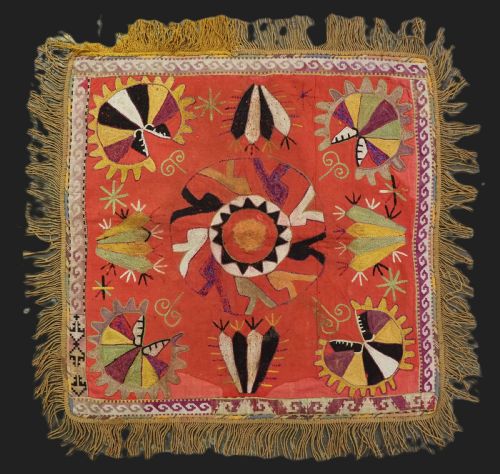
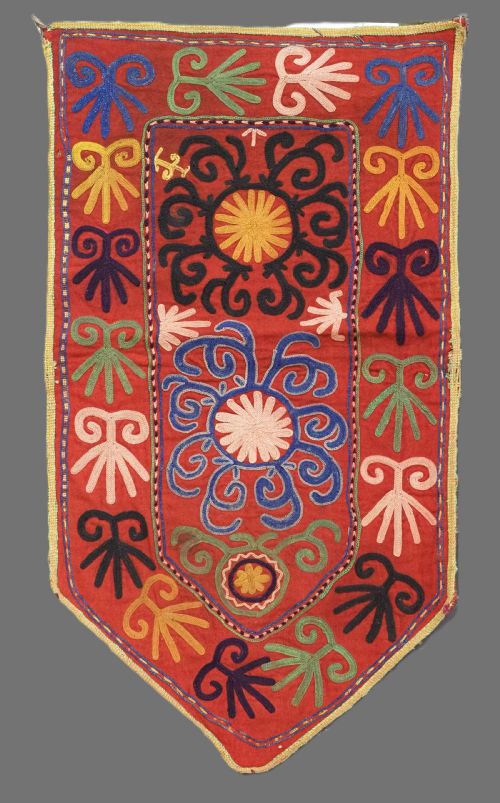
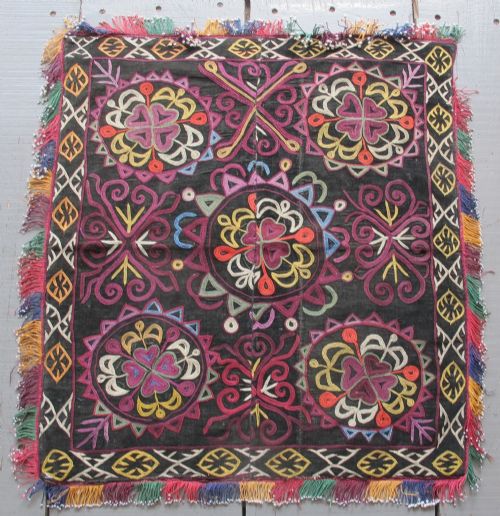
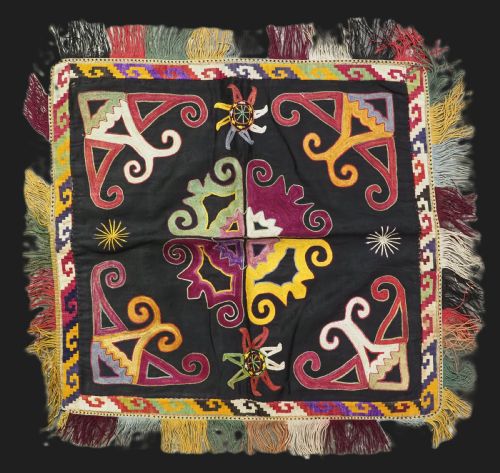
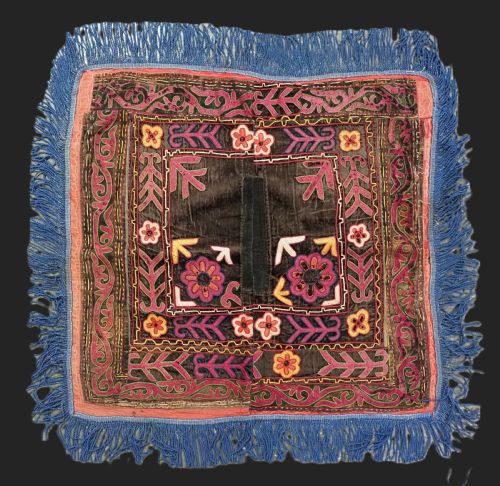
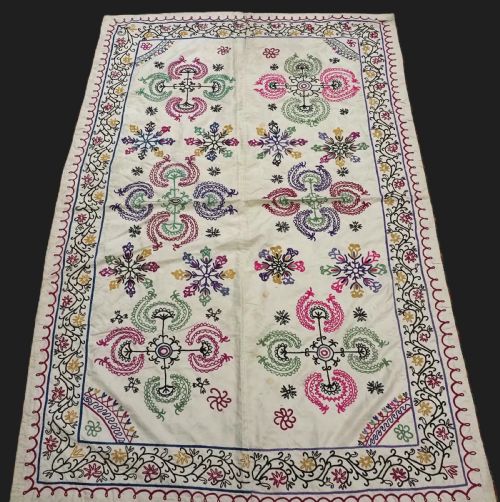
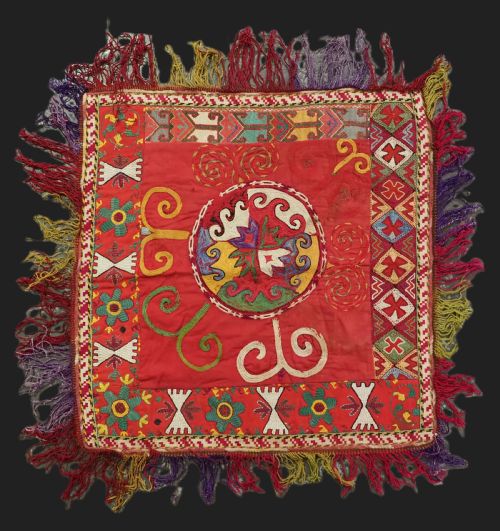
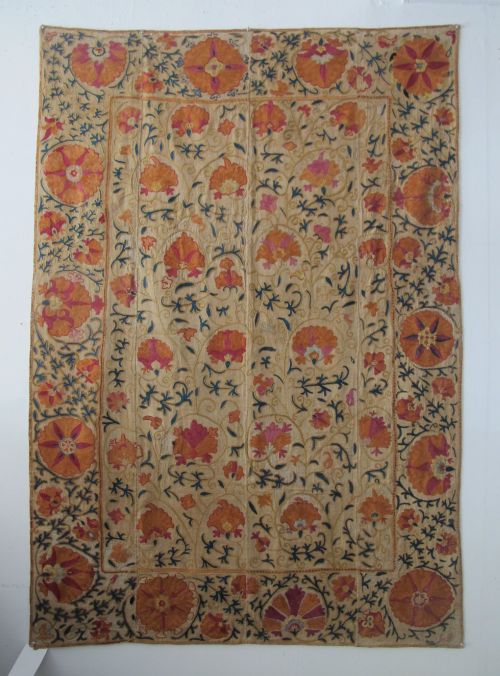
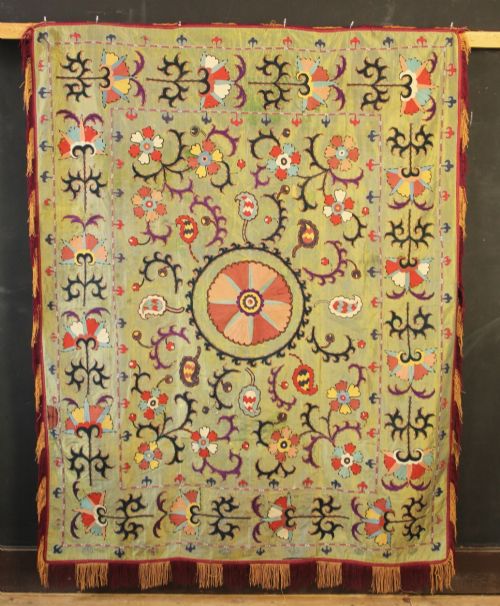
Visitors to this page most frequently encounter pieces like the Ilgich or Suzani, which serve as traditional decorative panels. Makers constructed these textiles using silk thread applied to various ground materials, producing dense geometric and floral compositions designed for domestic display or ceremonial use.
Dating across the inventory spans from the early nineteenth century through the 1930s. Regional variations include the bold, dynamic motifs of Lakai tribal work and the expansive floral fields characteristic of Tashkent and Samarkand Suzanis.
Evaluating the Hand
The standard of an antique tribal silk panel rests on the density of the needlework and the precision of the execution. Finer examples display tightly packed stitching that completely covers the foundation fabric, creating a rich, heavy textile with strong structural integrity.
Colour saturation and the complexity of the design layout distinguish higher tiers of work. Panels retaining vibrant natural dyes and balanced, intricate composition demonstrate superior technical mastery by the original maker.
Current listings feature textiles spanning the nineteenth and early twentieth centuries, constructed from silk, cotton, and wool grounds.
The Antique Tribal Silk Panel Glossary
- Suzani
- An embroidered tribal wall hanging originating from Central Asia, typically worked in silk on a cotton or linen ground. These large textiles were traditionally created by brides as part of their dowry.
- Ilgich
- A specific form of Central Asian embroidery used as a small wall hanging or domestic furnishing. They often display dynamic tribal motifs unique to groups such as the Lakai.
- Adras
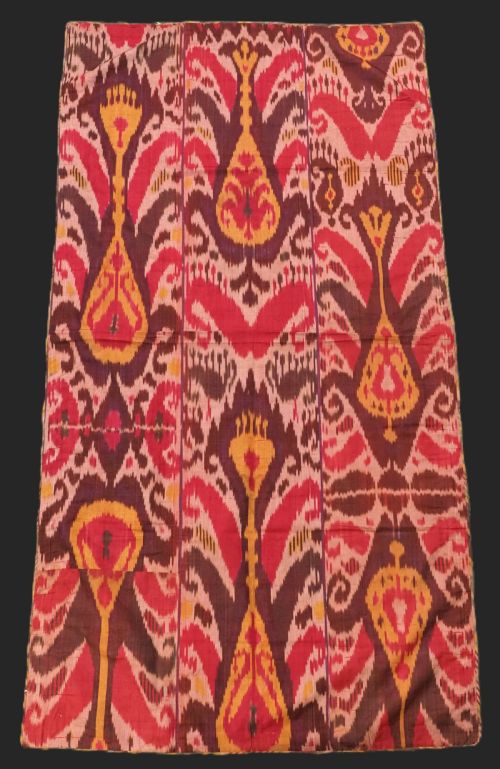
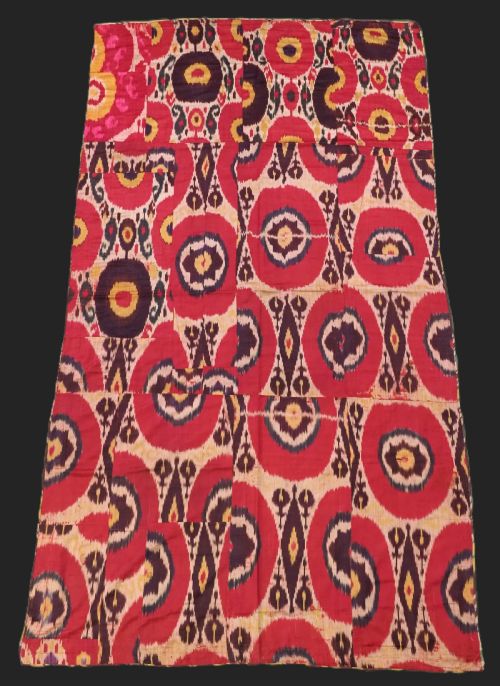
- A traditional semi-silk fabric woven with a silk warp and a cotton weft. This material provides a sturdy foundation for patterned panels and ikat designs.
- Tush Kyiz
- A large, elaborately embroidered wall hanging made in Kyrgyzstan by women to commemorate the marriage of a son or daughter. These pieces heavily feature symbolic flora and fauna.
- Chuval
- A large tent bag face produced by Turkmen tribes, featuring characteristic guls and woven with wool and silk elements. They were utilised for nomadic storage inside the yurt.
Antique Tribal Silk Panel: Frequently Asked Questions
How were these silk panels used?
Central Asian families utilised these textiles primarily as domestic wall hangings, dowry furnishings, and ceremonial tent decorations. Many pieces functioned as storage bag faces or protective covers within traditional nomadic dwellings.
Over time, these objects transitioned from functional tribal items into decorative wall art displayed within domestic interiors for their intricate visual storytelling.
How do I care for a textile?
Protect antique silk panels from direct sunlight to prevent natural dye fading and fibre degradation. Professional mounting behind conservation-grade glass or framing without direct contact safeguards the fragile threads.
Keep these textiles away from high humidity and dust accumulation by placing them in stable indoor environments. Gentle vacuuming through a protective mesh screen handles light maintenance.
How can I date an embroidery?
Dating relies on examining the ground fabric, dye types, and regional stylistic conventions recorded in the piece. Natural dyes and hand-spun cotton or wool foundations generally point toward nineteenth-century origins.
Chemical test indicators and shifts toward synthetic aniline dyes help distinguish earlier nineteenth-century work from later twentieth-century productions.
What defines Lakai tribal work?
Lakai embroidery stands out through energetic, abstract geometric motifs executed in vibrant floss silk. These pieces often lack the symmetrical floral order found in settled urban Suzanis, favouring spontaneous amulets and bold shapes.
Makers applied these dense stitches onto red wool or dark cotton grounds to create compact dowry items and horse covers.