
Antique Tribal Embroidery
Antique tribal embroidery brings vibrant Central Asian nomadic textiles, from suzanis to horse covers, into modern interiors.
Antique Tribal Embroidery
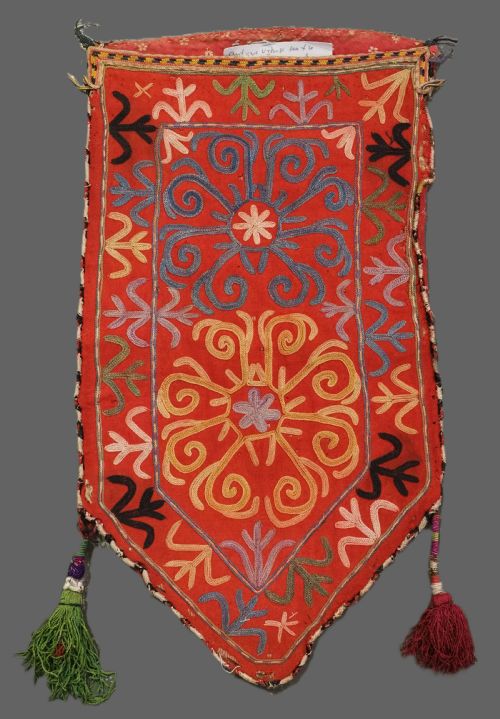
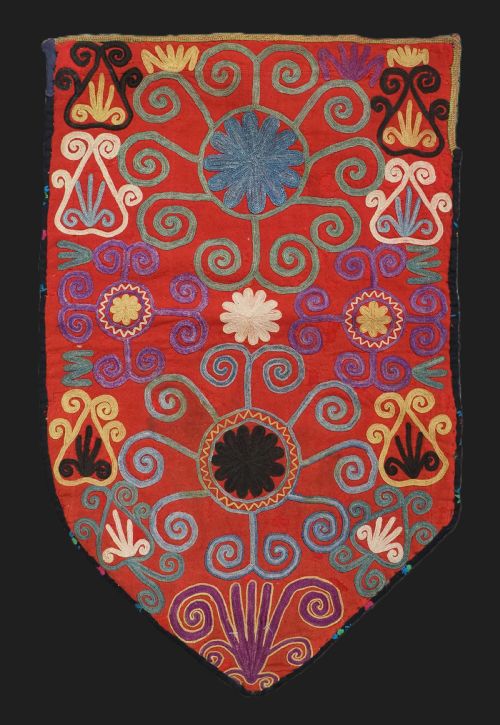
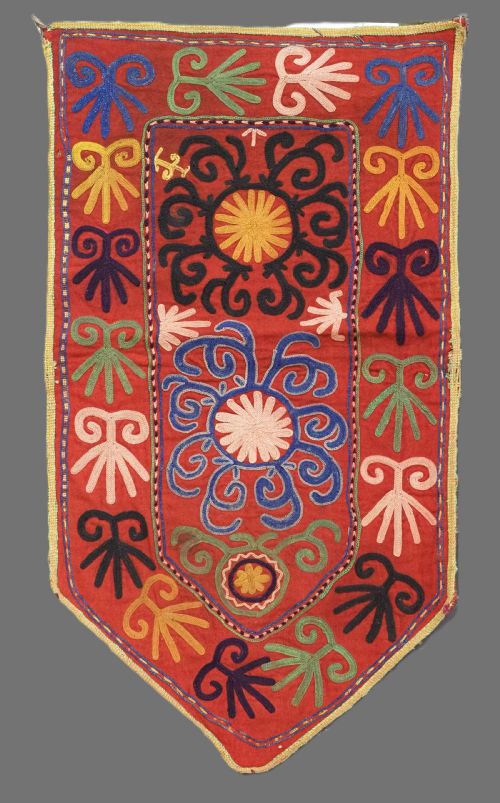
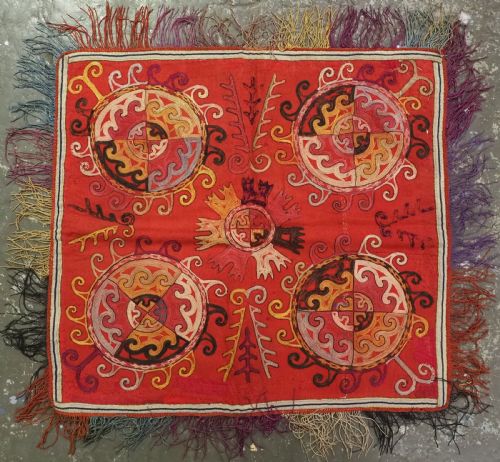
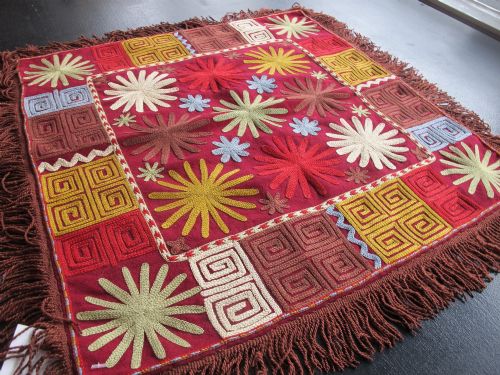
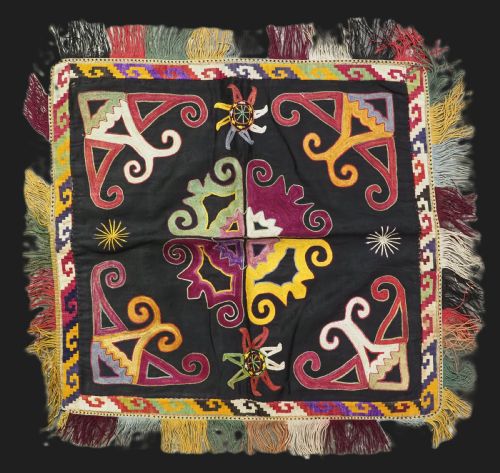
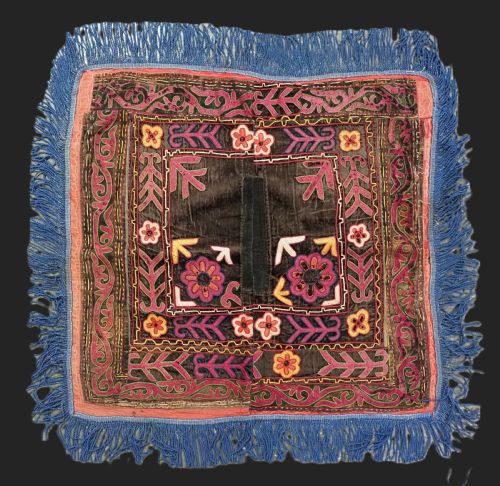
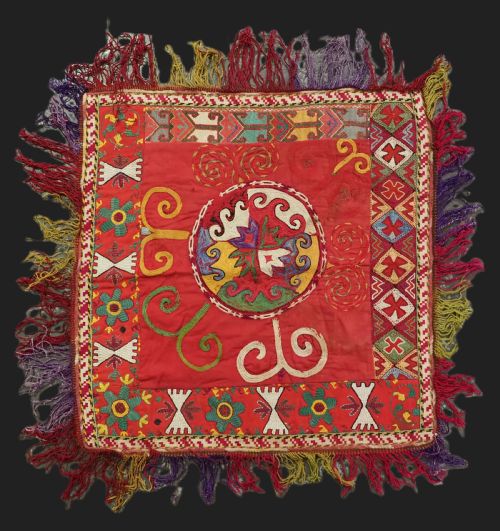
The most common pieces on this page are Lakai tribal ilgiches and uut kap bag covers produced for dowries, typically featuring bold geometric motifs on wool or cotton grounds. These items served functional and ceremonial roles within nomadic households before finding appreciation as textile art.
Dated examples span from the mid-nineteenth century through the nineteen-thirties, reflecting traditional regional designs passed down through generations of makers across Uzbekistan and surrounding territories.
Materials and construction techniques
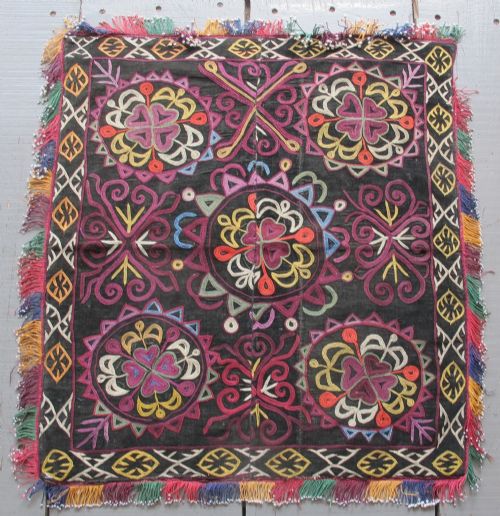
These textiles rely on natural fibres including cotton, wool, and silk, with artisans working silk thread onto cotton, wool, or felted wool grounds. Certain ceremonial pieces utilise a heavy wool or felt foundation embellished with applied fringe and glass beads.
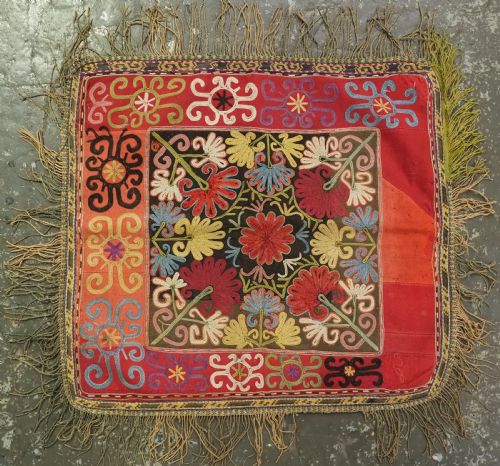
Stitchwork techniques vary by region and tribal group, combining fine needlework for detailed suzani panels with robust stitching on heavy felt horse blankets and saddle covers. Dyed backgrounds often feature red wool or deep-toned cotton, providing a striking contrast to the bright polychrome embroidery threads.
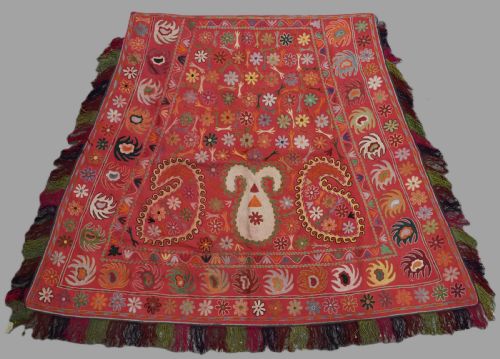
Nomadic embroiderers occasionally incorporated small glass beads into horse blankets to ward off the evil eye while travelling.
Elements of quality
Quality in these textiles depends on the density and precision of the needlework, the vibrancy and integrity of the natural dyes, and the overall harmony of the design composition. Pieces with fine silk thread execution and complex geometric or floral layouts demonstrate superior craftsmanship.
Condition and completeness also dictate distinction within the range, particularly for items retaining their original backing, applied borders, and intact fringes without major fibre degradation.
The Antique Tribal Embroidery Glossary
- Suzani
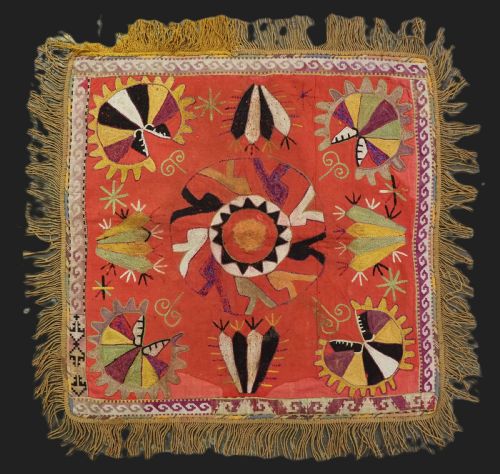
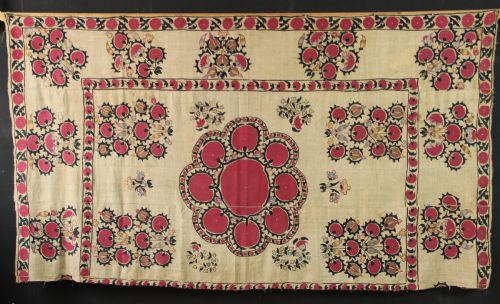
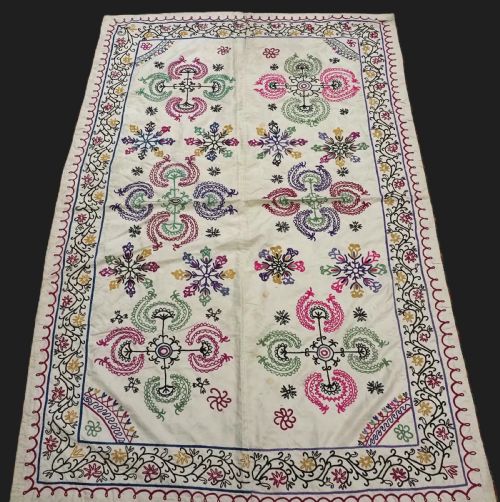
- An embroidered textile panel from Tajikistan, Uzbekistan, or other Central Asian regions, traditionally made as part of a bride's dowry. These large decorative hangings typically feature vibrant floral or medallion motifs stitched in silk on a cotton or linen ground.
- Ilgich
- A dowry embroidery piece used as a wall hanging or storage bag face by Central Asian tribal groups. They are particularly associated with Lakai embroiderers who utilised dynamic geometric patterns.
- Torba
- A small bag or storage sack used in nomadic tents, often featuring an embroidered face with silk highlights. Turkmen and Lakai tribes produced these functional objects with careful attention to decorative detail.
- Chyrpy
- A ladies ceremonial coat heavily embroidered in silk, worn by Turkmen women. These garments display intricate needlework across the upper back and sleeves.
- Uut Kap
- A specific type of storage bag associated with nomadic yurt interiors, often richly embroidered by Lakai artisans. These pieces formed an essential part of traditional domestic furnishings.
Antique Tribal Embroidery: Frequently Asked Questions
How do I care for antique embroidery?
Protect antique textiles from direct sunlight to prevent fading of natural silk and wool threads. Gentle vacuuming through a mesh screen can remove surface dust safely.
Mounting pieces correctly on padded supports distributes weight evenly if hung on a wall, avoiding strain on fragile historical foundations.
Where did suzanis originate?
Suzanis originated in Central Asia, primarily across regions of modern Uzbekistan and Tajikistan. Urban workshops and nomadic groups alike produced these large embroidered hangings for domestic use and dowries.
Different towns and tribes developed distinct palettes and botanical or geometric motifs that help identify their geographic origins.
What is a horse cover used for?
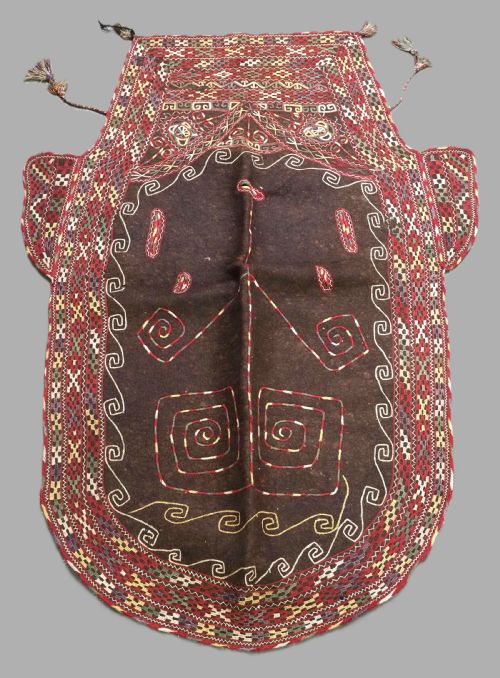
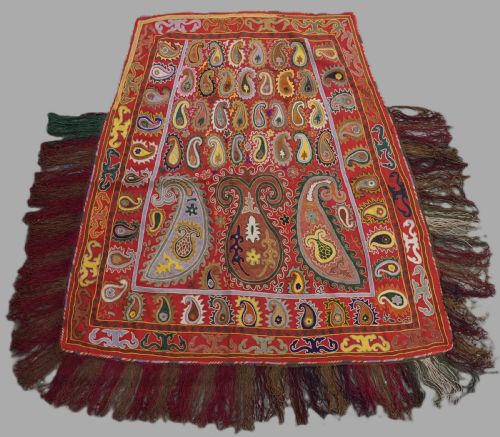
Nomadic groups used ceremonial horse covers and saddle rugs during festive processions, weddings, and tribal gatherings. These heavily embroidered felt and wool pieces displayed the status and artistry of the community.
Today, collectors treat these utilitarian ceremonial objects as wall art to showcase their unusual shapes and dense needlework.