


Antique Transfer Printed Dish
An antique transfer printed dish brings the crisp blue narratives of the Georgian and Victorian eras straight to the table.
Antique Transfer Printed Dish
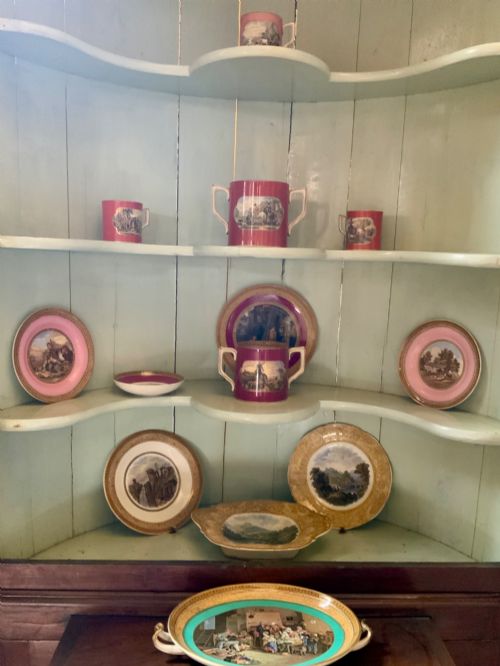
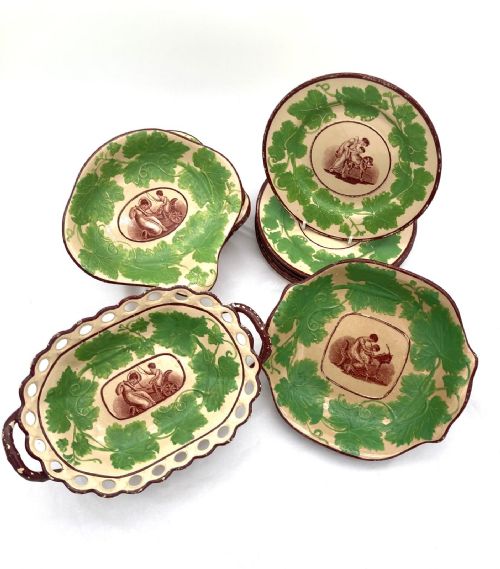
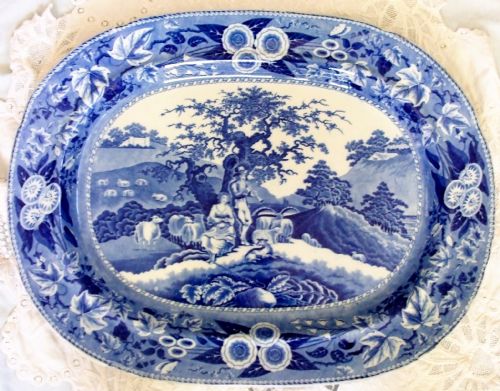
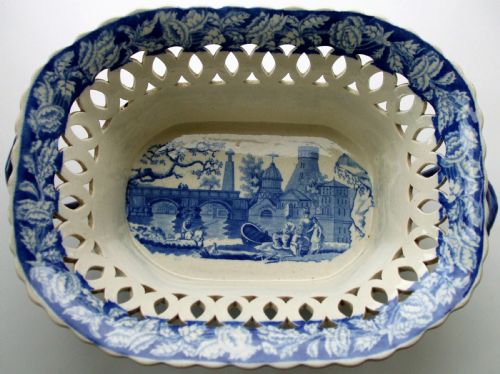
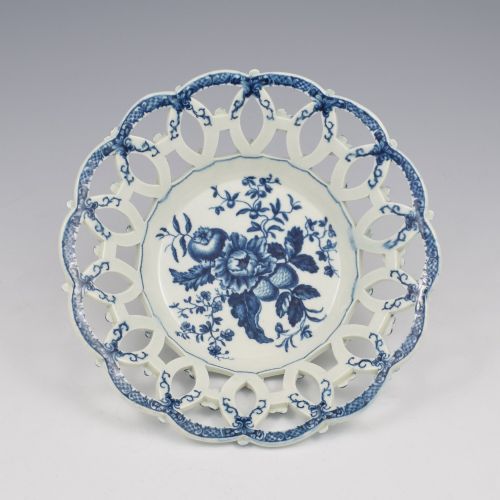
When you search for an antique transfer printed dish, you encounter earthenware, pearlware, and porcelain vessels created to serve meat, vegetables, and dessert. These ceramics span the eighteenth and nineteenth centuries, taking the form of large platters, chestnut baskets, tureens, and flat plates.
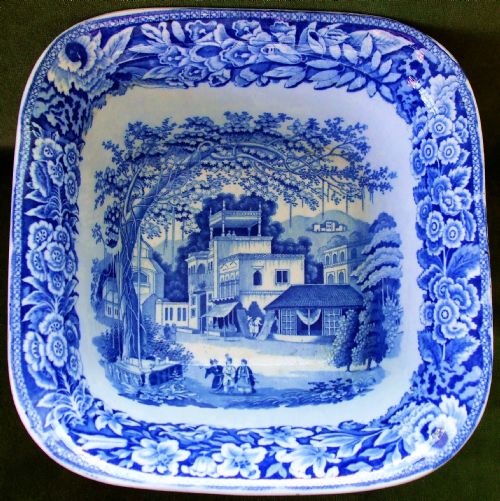
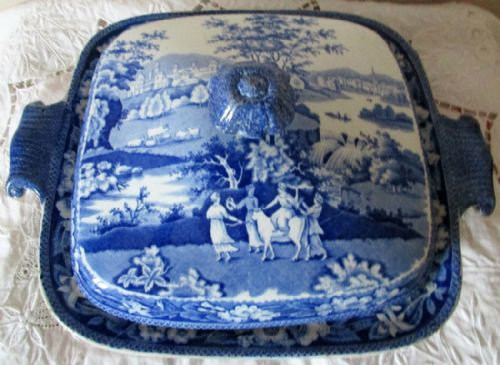
The dominant aesthetic relies on blue and white cobalt pigment applied via copperplate transfers. Pastoral scenes, classical ruins, and Chinoiserie motifs define the imagery recorded across Staffordshire potteries and English manufactories.
How they were made
Potters shaped earthenware, pearlware, or soft-paste porcelain before applying a transparent lead glaze to the ceramic body. Artisans then transferred engraved copperplate designs using cobalt pigment onto tissue paper, which they pressed onto the bisqueware before firing.
The firing process bonded the blue pigment beneath the glaze, creating a durable surface that resisted daily wear. Specialised items such as meat plates incorporated gravy wells, while lidded tureens and baskets required hand-modelled handles and pierced rims.
Listings feature eighteenth and nineteenth-century forms including pearlware, earthenware, and soft-paste porcelain across Georgian and Victorian periods.
What varies in quality
The clarity of the transfer print distinguishes standard production from superior output. Crisp lines without smudging indicate a careful application from a fresh copperplate, whereas blurred details reveal worn plates.
The elegance of the ceramic body and the depth of the cobalt pigment dictate overall refinement. Early pearlware bodies and well-balanced forms by named Staffordshire makers command greater appreciation than generic utilitarian earthenware.
J. & R. Clews·J. & R. Riley·Thomas Lakin·Brameld & Co.·Spode·Rogers·Ridgways·Mason·James Wallace & Co.
The Antique Transfer Printed Dish Glossary
- Pearlware
- A refined earthenware developed in the late eighteenth century featuring a subtle bluish glaze that pooled in crevices. This material served as the primary canvas for early nineteenth-century blue and white transfer printing.
- Cobalt Pigment
- A metallic oxide used to achieve the deep blue colour on pottery and porcelain. It withstands high kiln temperatures without losing intensity.
- Transfer Printing
- A technique where an engraved copperplate transfers an inked design onto paper, which is then pressed onto ceramics. This method allowed intricate pictorial scenes to be replicated rapidly.
- Soft-paste Porcelain
- A ceramic composition fired at lower temperatures than hard-paste porcelain, producing a warm body. Eighteenth-century English factories utilised this mixture for delicate tableware and baskets.
- Lead Glaze
- A liquid coating containing lead oxide applied to earthenware to create a glossy, waterproof surface upon firing. It accentuates the underlying ceramic texture and pigment.
Antique Transfer Printed Dish: Frequently Asked Questions
How do I identify the pattern?
Inspect the central pictorial scene and consult maker marks stamped or printed on the underside. Common nineteenth-century themes include topographical views, classical ruins, and pastoral narratives.
Many patterns carry descriptive titles or specific names associated with individual English potteries. Comparing the border design often reveals the exact maker when central marks are absent.
Can I use these dishes daily?
These historical ceramics require gentle hand washing to preserve the lead glaze and underlying earthenware body. Modern dishwashers and microwaves cause thermal shock and craze the delicate glaze.
Displaying them on plate racks or utilising them for dry presentation preserves the integrity of the antique material for future generations.
What is a gravy well?
A gravy well is a sunken channel or reservoir moulded into one end of a large meat platter. It collected juices running from roasted meats during carving.
This functional feature helps date nineteenth-century dining ceramics, as serving platters frequently incorporated these wells to keep the table clean.
How do I date a piece?
Dating relies on ceramic body composition, such as the shift from eighteenth-century soft-paste porcelain and pearlware to nineteenth-century refined earthenware. Maker marks, registry diamonds, and stylistic clues like Chinoiserie borders narrow the timeframe further.
The evolution from Georgian classical motifs to Victorian dense floral borders provides reliable chronological markers for these items.