


Blue Transfer Printed Ceramic
Blue transfer printed ceramic pieces bring detailed pictorial scenes to utilitarian earthenware and porcelain forms through durable cobalt decoration.
Blue Transfer Printed Ceramic
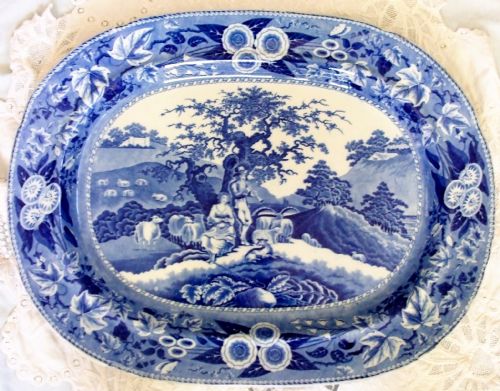
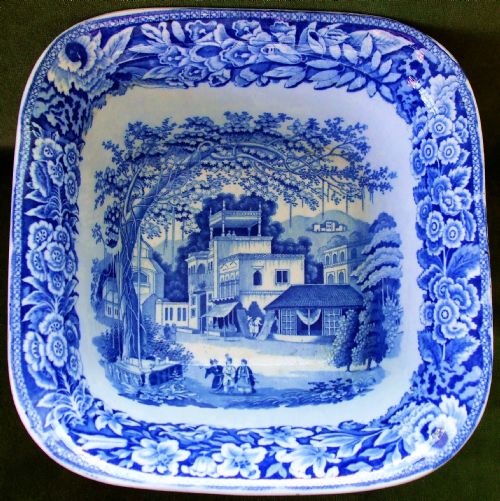
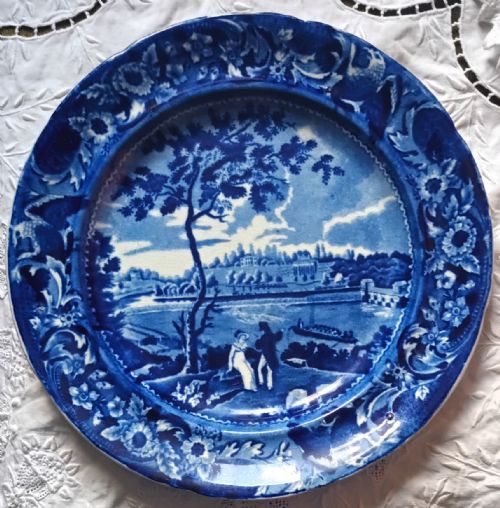
Collectors seeking blue transfer printed ceramic examples will encounter a wide array of domestic and decorative household items spanning several decades. The selection centres heavily upon nineteenth-century earthenware plates, platters, and serving dishes alongside robust jugs and tureens. These pieces frequently display detailed pastoral, topographical, or Chinoiserie motifs transferred onto the ceramic body.
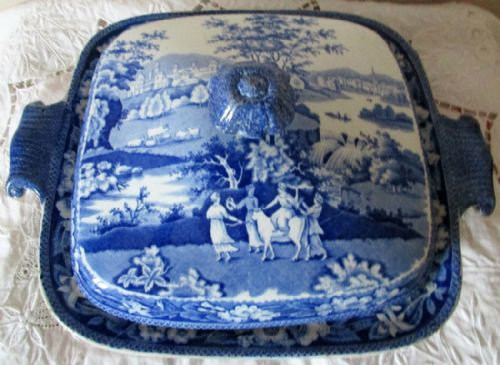
The objects originate primarily from English potteries working during the Georgian, Regency, and Victorian periods. Everyday dining items such as meat dishes, footbaths, and vegetable tureens dominate the available forms, reflecting the industrial scale of production in Staffordshire and surrounding manufacturing hubs. Alongside these large utility vessels, smaller items like custard sets and pickle dishes appear regularly.
Materials and production techniques
Potters formed these items using earthenware, pearlware, or soft-paste porcelain, applying a clear lead or fluid glaze over the fired body. The distinct decoration relied upon copper plate engraving, where cobalt pigment mixed with oil was transferred onto tissue paper and then impressed onto the ceramic surface before glazing and high-temperature firing.
This transfer printing technique allowed factories to apply intricate pictorial designs consistently across large production runs of plates, bowls, and hollowware. The interaction between the cobalt pigment and the fluid glaze produced deep blue tones that varied in clarity depending on the kiln temperature and the composition of the clay body.
A frog lurks inside a mug.
Factors determining quality
The artistic merit of the engraving and the crispness of the blue pigment impression dictate the visual success of any given piece. Strong examples display deep, uniform cobalt tones without blurring, smudging, or dry patches in the printed transfer.
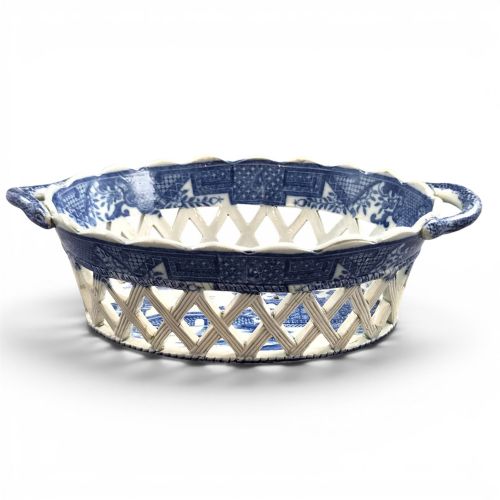
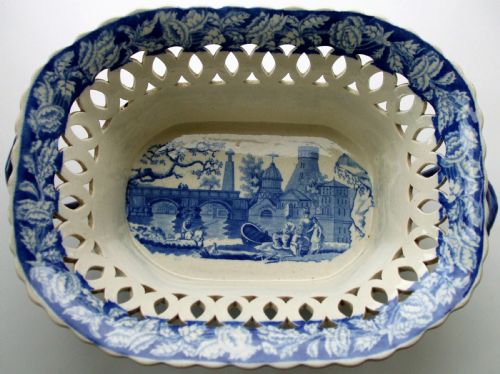
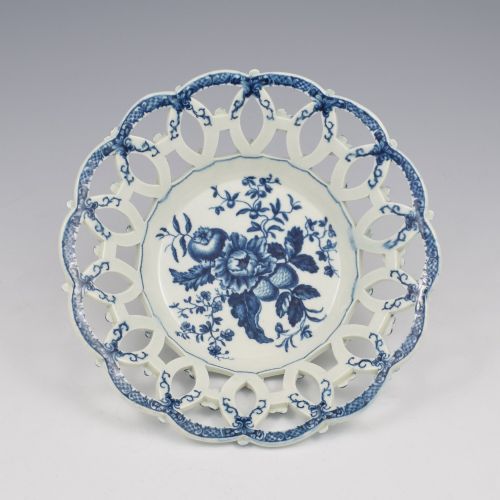
The complexity of the moulded form, particularly on reticulated chestnut baskets, handled jugs, and lidded tureens, separates standard utilitarian wares from ambitious cabinet pieces. Potteries employing skilled engravers and superior pearlware bodies achieved a finer surface finish and sharper pictorial depth.
Spode·J. and R. Clews·J. and R. Riley·Stubbs·Mintons·Copeland·Caughley·Heathcote·Thomas Lakin·Brameld and Co·Rogers·Ridgways·Mason
The Blue Transfer Printed Ceramic Glossary
- Transfer printing
- A method of decorating ceramics by engraving a design onto a copper plate, pulling an impression on tissue paper, and pressing it onto the unfired or biscuit ceramic body.
- Pearlware
- A refined earthenware developed by Josiah Wedgwood in the late eighteenth century, featuring a thin glaze with a faint bluish tint that made the underlying ceramic appear whiter.
- Cobalt glaze
- A metallic oxide pigment utilised under or within the glaze to achieve the characteristic deep blue coloration seen on nineteenth-century domestic wares.
- Reticulated
- Openwork or net-like ceramic decoration typically formed by piercing the clay wall of baskets, fruit dishes, and chestnut stands before firing.
- Tureen
- A deep covered serving vessel designed for holding soup, gravy, or vegetables at the dining table during the Georgian and Victorian eras.
Blue Transfer Printed Ceramic: Frequently Asked Questions
How do I date these ceramics?
Dating relies upon stylistic markers, factory marks stamped into the base, and the specific formulation of the ceramic body such as early pearlware versus later Victorian ironstone. Historical events depicted in the transfer prints also provide a reliable terminus post quem.
Changes in border patterns and the chemical composition of the blue pigment offer further clues to the decade of manufacture. Comparing the potting weight and glaze characteristics against documented factory outputs helps narrow the production window.
Were these pieces used for dining?
Most of these vessels served practical functions in Georgian and Victorian households for food preparation, serving, and formal dining. Large platters held joints of meat, while specialised pieces like footbaths and custard sets fulfilled specific domestic routines.
Substantial jugs held liquids for the table or kitchen, and deep tureens kept provisions warm during large meals. Their robust earthenware and porcelain construction ensured they could withstand daily household service.
How should I clean my transferware?
Gentle washing in warm water with mild soap preserves the historical glaze and prevents degradation of the underlying ceramic body. Avoid harsh abrasives, soaking for prolonged periods, or modern automatic dishwashers.
Careful handling protects fragile rims and handles on tureens and baskets from accidental chipping. Modern cleaning agents can react adversely with antique lead glazes over time.
What is Chinoiserie transfer printing?
Chinoiserie designs feature European interpretations of Chinese landscapes, architecture, and figures popularised during the eighteenth and nineteenth centuries. These imaginative scenes often incorporate pagodas, exotic birds, and figures crossing bridges.
Potteries applied these decorative motifs to plates, bowls, and tea wares to satisfy a widespread fascination with Eastern aesthetics. The style combined traditional British ceramic shapes with elaborate orientalist pictorial narratives.