




Antique Tramp Art
Antique tramp art objects are layered wooden folk pieces built with notched and chip-carved surfaces that bring tactile depth to a room.
Antique Tramp Art
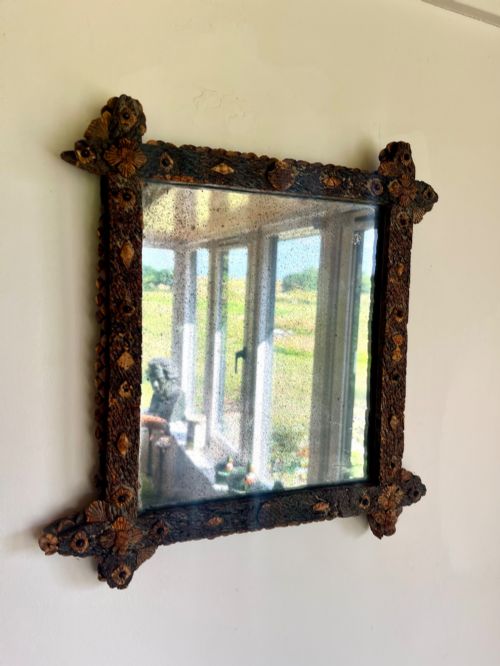
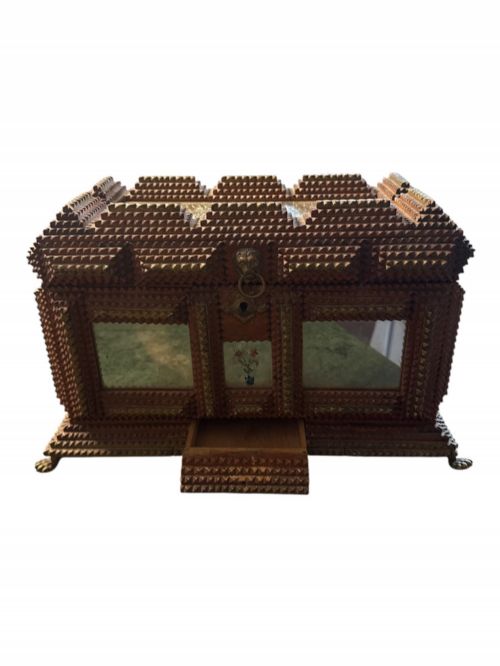
Antique tramp art encompasses decorative domestic items built through the meticulous layering of carved wooden elements. You will frequently encounter wall mirrors, picture frames, and small boxes on this page, originating across the nineteenth and twentieth centuries.
The aesthetic falls broadly under folk art traditions, spanning British, American, and continental European origins. Makers utilised discarded timber from cigar boxes and shipping crates, shaping scraps into elaborate geometric reliefs.
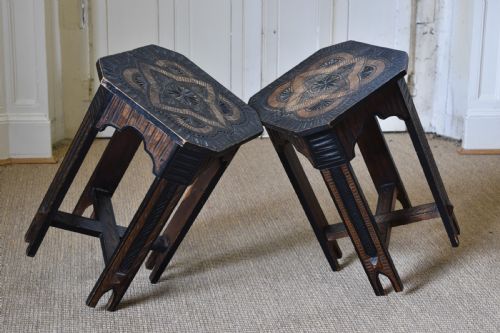
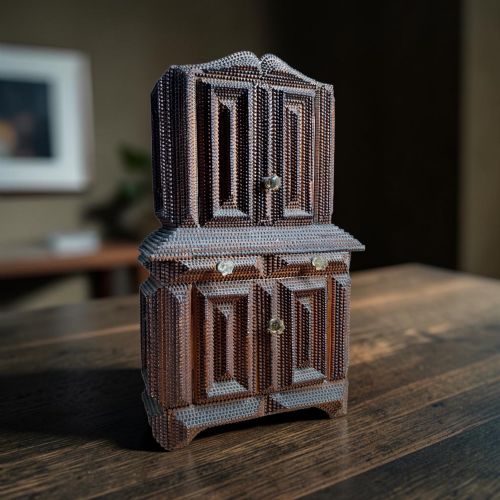
Beyond mirrors and boxes, the selection extends to side tables, cabinets, and architectural models. Each piece demonstrates a resourceful approach to carpentry that transforms humble materials into ornamental furnishings.
How They Were Made
Makers constructed these pieces primarily from wood, utilising pine, oak, and recycled box timbers alongside alternative substances such as cork and paper. Builders shaped the components using simple pocket knives or chisels rather than specialised joinery tools.
The defining technique relies on chip carving and notched layering, where small geometric chips of wood are removed sequentially to create stepped pyramids and serrated edges. Pieces were often finished with stained wood treatments or left with the natural grain exposed.
Some makers transformed mundane cigar box lids into soaring architectural models, proving that great patience requires nothing more than a pocket knife.
What Varies in Quality
Quality rests upon the precision of the chip carving and the intricacy of the geometric layering. Pieces that maintain structural integrity while displaying dense, uniform notches demonstrate a higher level of maker discipline.
Proportion and scale distinguish finer works from simpler items. The best examples balance dense surface texture with clean overall architectural form, whereas lesser pieces can appear crowded or crudely assembled.
The Antique Tramp Art Glossary
- Chip Carving
- A style of relief carving where small chips are removed from a wooden surface at shallow angles to form geometric patterns. It forms the primary decorative vocabulary for tramp art objects.
- Folk Art
- Artistic work created within a cultural tradition by self-taught individuals using accessible local materials. These items reflect utilitarian functions combined with vernacular decorative styles.
- Gothic Revival
- An architectural and design movement drawing inspiration from medieval forms, occasionally influencing the pointed arches and vertical proportions seen in nineteenth-century decorative woodwork.
- Arts and Crafts
- A design movement valuing handcraftsmanship and simple materials over industrial mass production. This ethos shares common ground with the resourceful construction methods found in tramp art.
Antique Tramp Art: Frequently Asked Questions
What is tramp art?
Tramp art is a form of folk art where makers built decorative objects by notching, chipping, and layering scraps of wood from cigar boxes and crates. These items emerged largely during the nineteenth and early twentieth centuries.
Craftsmen assembled wall mirrors, picture frames, and small cabinets using simple hand knives, creating distinctive stepped and geometric surface patterns.
How were these pieces used?
These items served functional roles in domestic interiors as mirrors, storage boxes, picture frames, and occasional small tables. Their ornamental surfaces brought warmth and texture to everyday household spaces.
Many objects, such as sweetheart boxes and wall boxes, held personal mementos and letters, functioning as cherished keepsakes within the home.
How do I date tramp art?
Dating relies on examining the underlying materials, construction methods, and any associated hardware like hinges or glass plates. Pieces often incorporate timber from specific eras, such as nineteenth-century packing crates.
Stylistic cues also help indicate age, with Victorian examples sometimes featuring darker stained finishes while later twentieth-century pieces display simpler geometric arrangements.
How do I care for wooden folk art?
Keep wooden folk art pieces away from direct sunlight and excessive humidity to prevent the dry timber from warping or cracking. Gentle dusting with a dry cloth helps preserve the complex carved surfaces without damaging the old finish.
Avoid using modern liquid polishes or harsh chemical cleaners, as these can accumulate within the intricate notches and alter the natural patina of the wood.