

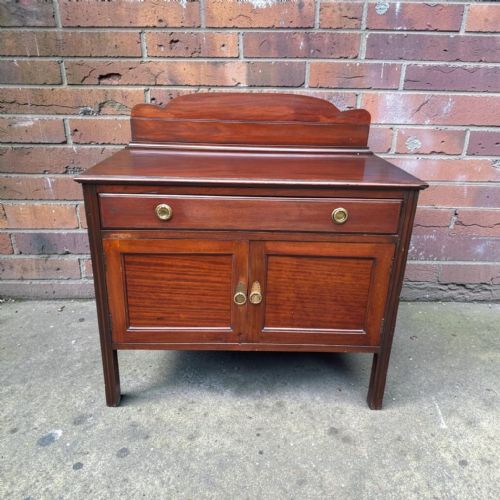
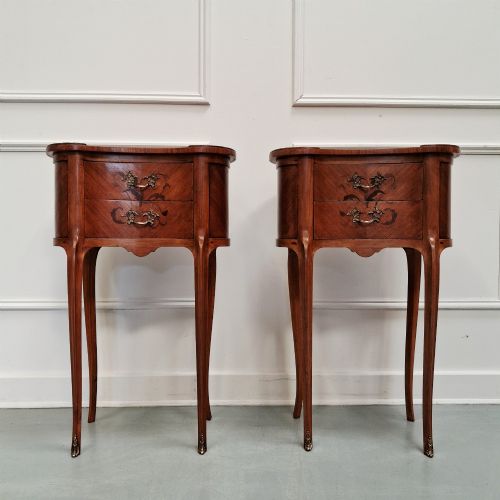
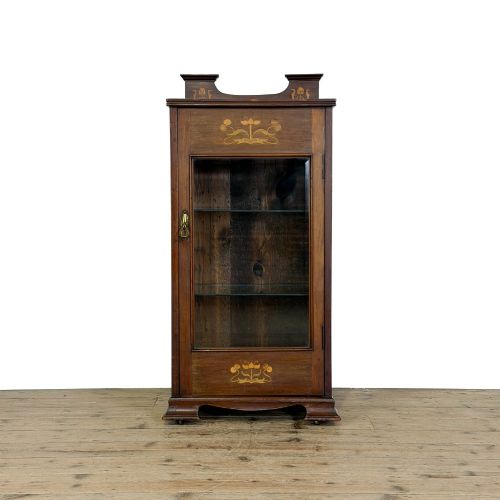

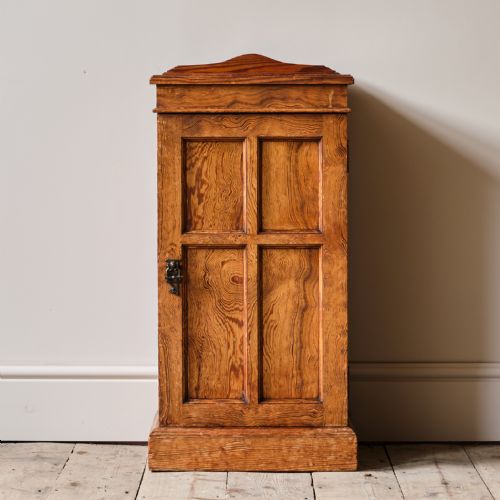

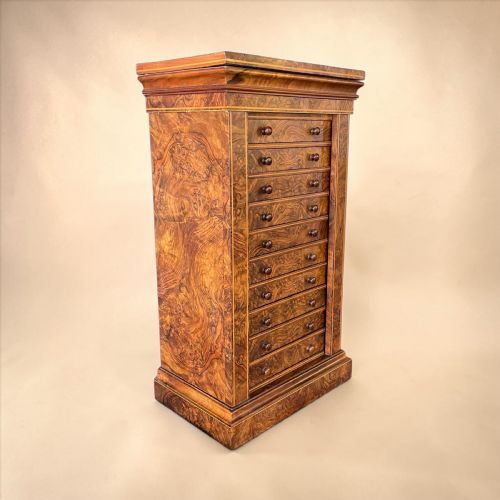
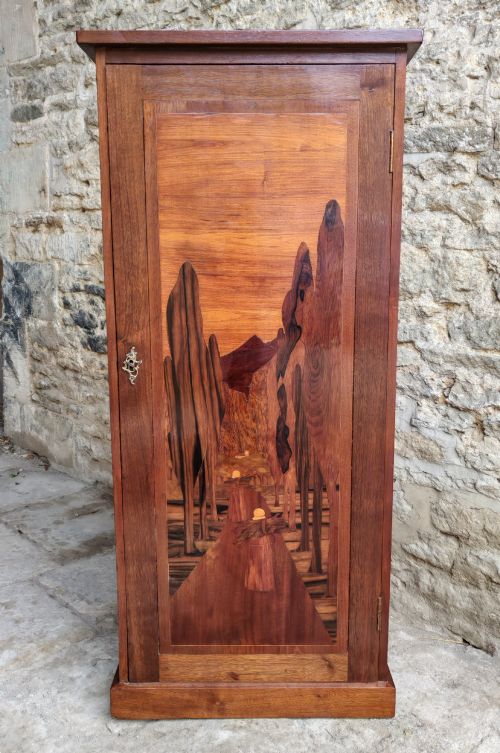


Antique Timber Side Cabinet
An antique timber side cabinet brings rich mahogany, oak, or rosewood grain into a room alongside practical storage for modern living.
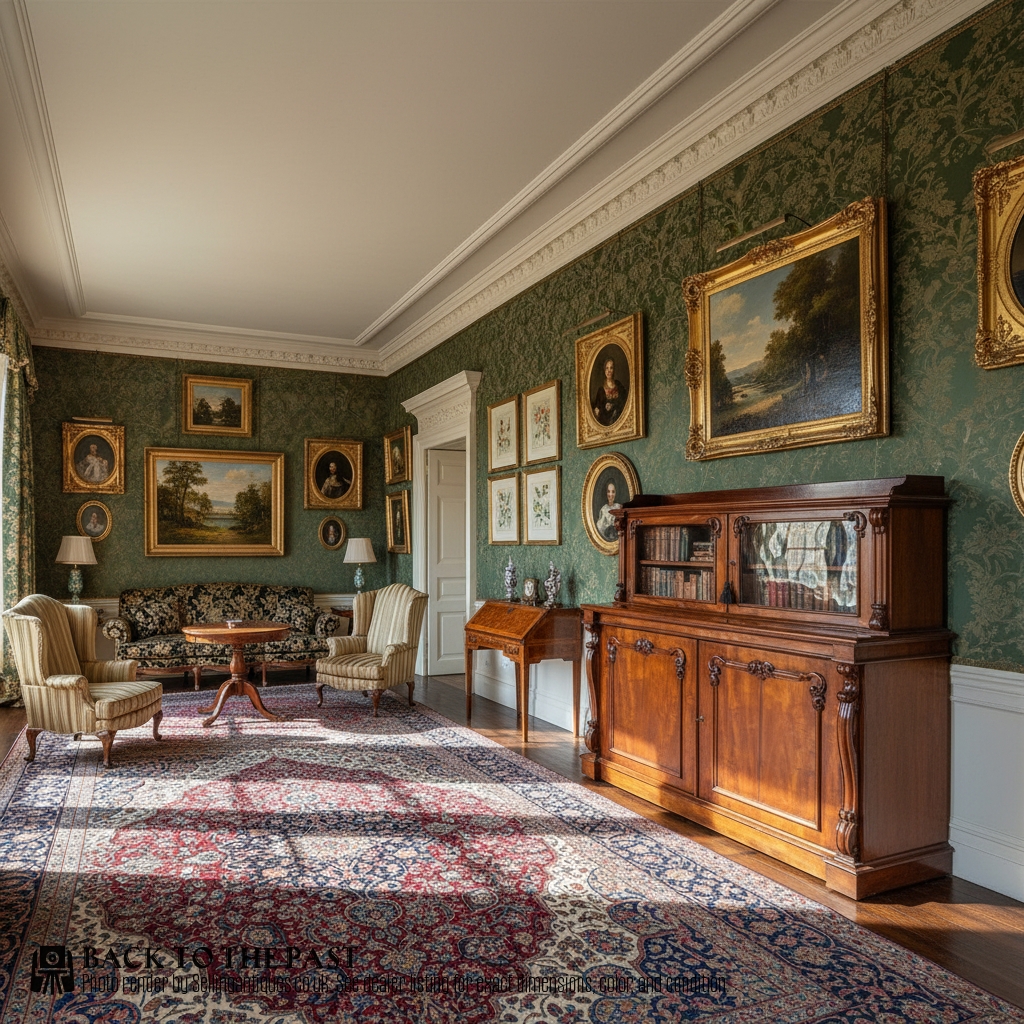
Antique Timber Side Cabinet
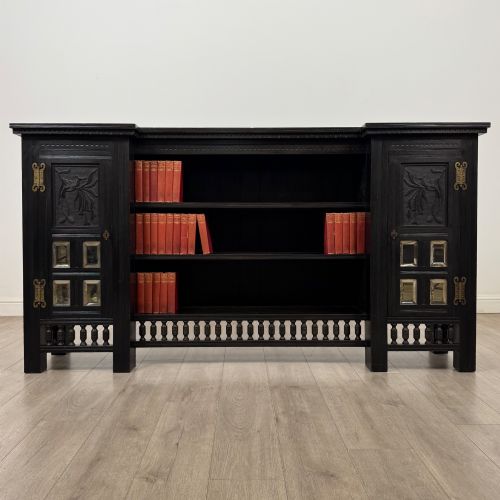
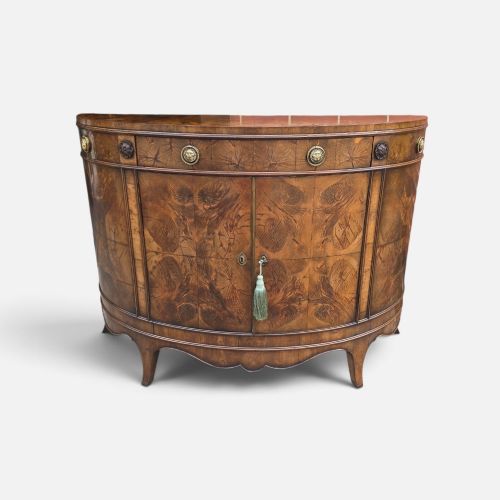
An antique timber side cabinet encompasses a diverse range of functional storage furniture originating from the eighteenth, nineteenth, and early twentieth centuries. These pieces appear in forms such as compact pot cupboards, tall Wellington chests, serpentine commodes, and grand Victorian bookcases with glazed or panelled doors.
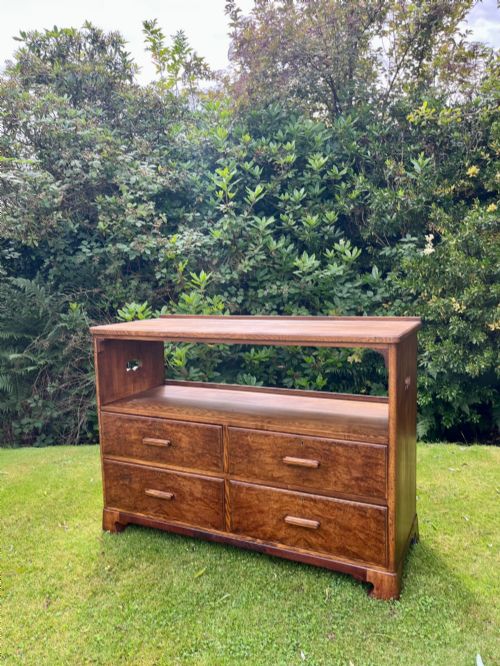
The selections on this page bridge multiple eras, from austere Georgian mahogany designs and exuberant Victorian rosewood pieces to refined Edwardian creations and characterful 1930s Cotswold School woodwork. Buyers frequently encounter nineteenth-century expressions that reflect the dominant revivalist movements of their day, including Gothic, Arts and Crafts, and Art Nouveau aesthetics.
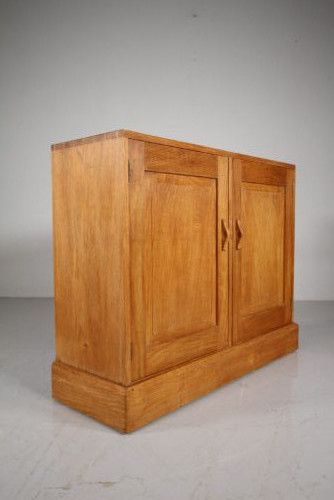
Makers utilised distinct regional timbers and exotic hardwoods, ranging from native English oak and elm to imported gonçalo alves, satinwood, and burr yew. Whether housing books in a study or serving as a display surface in a hallway, each cabinet displays the specific joinery and proportion characteristic of its period of origin.
Materials and Technique
Cabinet makers relied on solid hardwoods and figured veneers applied to stable secondary timbers, securing structural integrity through hand-cut dovetails and mortise and tenon joints. Surface enrichment frequently involved marquetry, intricate brass hardware, and mother-of-pearl inlay, executed by hand to accentuate the natural grain patterns of mahogany, rosewood, and oak.
Finishing techniques depended heavily on the prevailing style, ranging from French polish on formal Victorian pieces to wax finishes that preserved the tactile texture of vernacular oak and elm. Structural elements such as marble tops, glazed doors, and carved gallery details were integrated into the primary carcass to balance utility with decorative ambition.
Antique Timber Side Cabinet Retail Price Guide 2026
Typical asking prices for timber side cabinet among the pieces listed under this phrase on Sellingantiques today, from the lower quarter to the upper quarter. They describe what is for sale here now, not the wider market.
Some nineteenth-century bread safes featured pierced wooden panels to let the crusts breathe while keeping the mice entirely on the outside.
Distinctions in Execution
The calibre of a piece rests upon the selection of timber and the precision of its construction, particularly in the figuring of veneers and the tightness of dovetail joints. Master workshops employed symmetrical grain matching and subtle hand-carving that elevated simple storage into decorative art.
Proportion and original hardware heavily influence the distinction between standard utilitarian items and exceptional examples from prominent makers. Cabinets retaining uncompromised surfaces, original brasses, and integrated marble or inlaid tops represent the higher tier of surviving output.
Whytock and Reid·Gillows
The Antique Timber Side Cabinet Glossary
- Wellington chest
- A tall, narrow chest of drawers secured by a hinged locking stile on one side that fastens with a key. This form originated in the nineteenth century and typically contains seven distinct drawers.
- Demi-lune
- A half-moon shape used for the front profile of tables, commodes, and side cabinets. This curve requires specialist veneer work or curved framing to achieve successfully.
- Marquetry
- The art of applying pieces of veneer to a structure to form decorative patterns and pictures. Craftsmen cut various woods, shells, or metals to fit flush within the surface.
- Gonçalo alves
- A dense, highly figured tropical American hardwood characterised by dark brown streaks against a lighter reddish-brown background. Regency and Victorian cabinet makers favoured it for striking focal pieces.
- Cotswold School
- An influential twentieth-century design movement rooted in the Arts and Crafts philosophy. Practitioners emphasised honest construction, exposed joinery, and respect for native timbers such as oak and elm.
Antique Timber Side Cabinet: Frequently Asked Questions
What is an antique timber side cabinet used for?
These cabinets served historically for storing household provisions, linens, or tableware in dining rooms, halls, and parlours. Today, they function equally well as media consoles, bedside storage, or display surfaces in contemporary interiors.
Their compact footprints allow them to fit into hallways and tight alcoves while offering practical enclosed shelving and drawer space.
How do I date an antique cabinet?
Dating relies on examining the secondary timbers, construction methods, hardware, and stylistic markers visible across the piece. Hand-sawn drawer linings, machine-made screws, and specific veneer thicknesses offer clear clues to the decade of manufacture.
Comparing the decorative vocabulary - such as Gothic tracery or Art Nouveau whiplash lines - against established period styles narrows the timeline further.
How do I care for a wood cabinet?
Maintain timber furniture by keeping it away from direct sunlight and sudden temperature shifts that cause wood to warp or split. Dust regularly with a dry, soft cloth and apply a quality beeswax sparingly to nourish polished surfaces.
Avoid liquid cleaners or silicone polishes, which can penetrate historic finishes and degrade the underlying patina over time.
What distinguishes a Wellington chest?
A Wellington chest stands out through its tall, slender proportions and the signature locking bar hinged to one side of the drawer stack. This locking mechanism secured all drawers simultaneously with a single turn of a key.
Originally designed for secure storage of papers or linen, this form remains a distinctive nineteenth-century space-saving solution.