
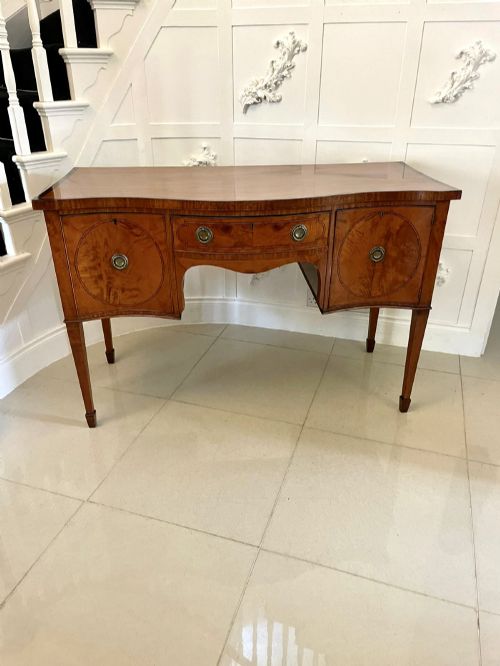
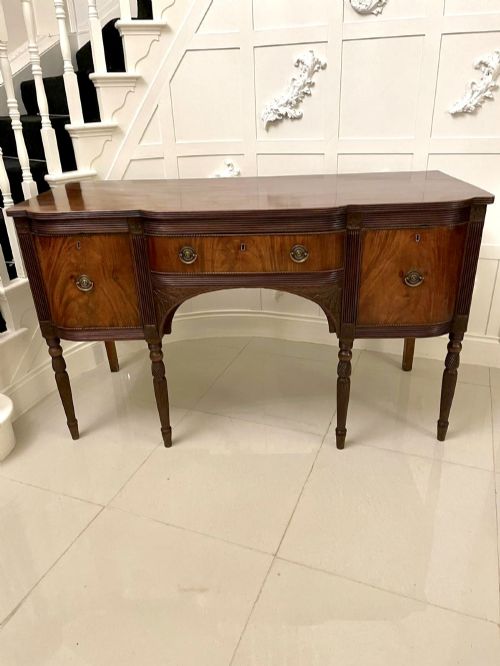
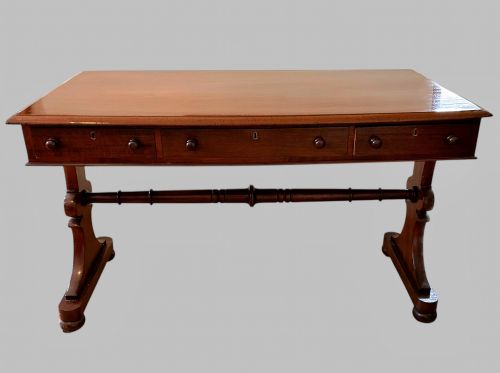
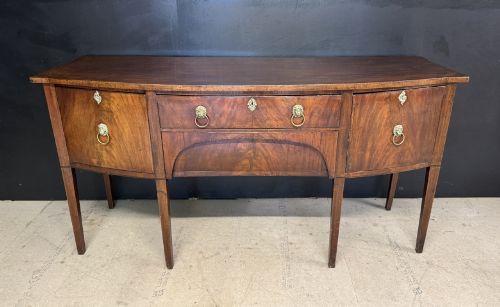



Antique Timber Server Table
An antique timber server table brings substantial presence and deep patination to a dining room or hallway.
Antique Timber Server Table
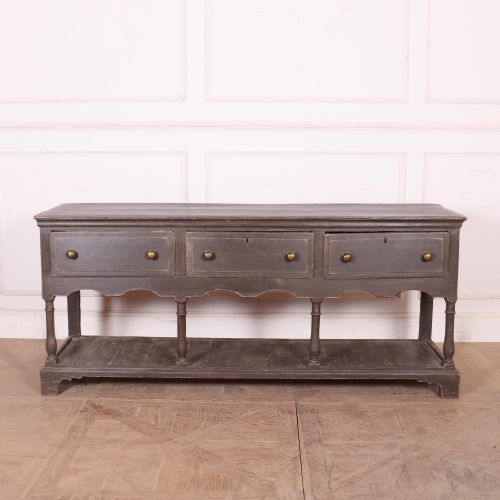
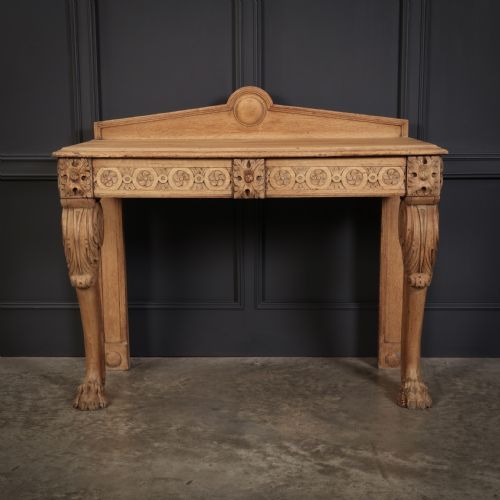
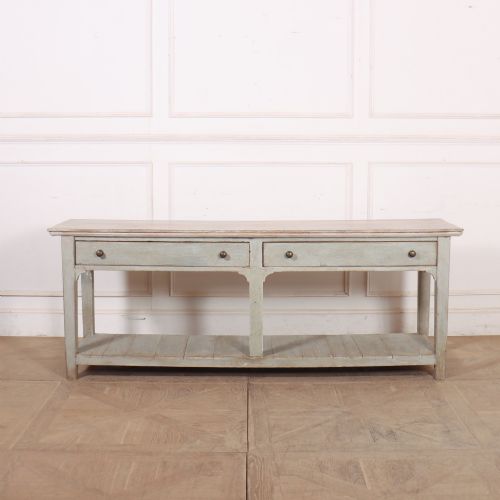
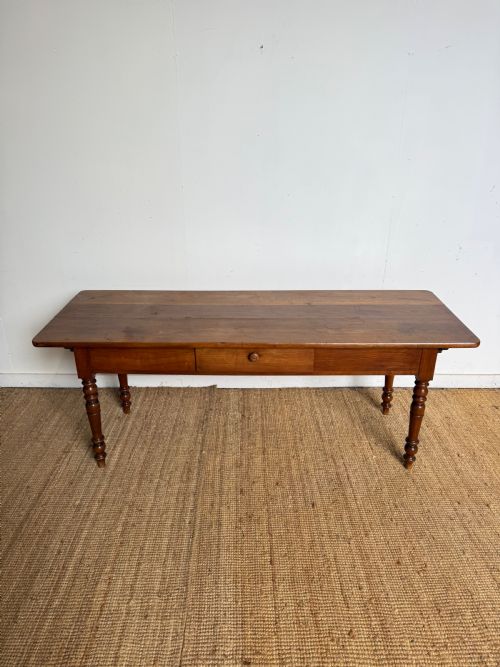
An antique timber server table encompasses robust forms designed for food service and storage, spanning sideboard designs, console tables, and potboard dresser bases.
Buyers browsing this selection encounter Georgian and Victorian specimens primarily, alongside English and French country house examples.
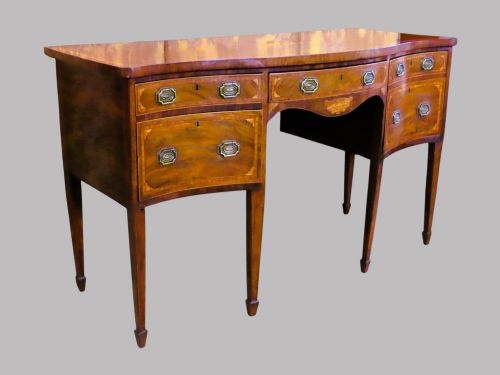
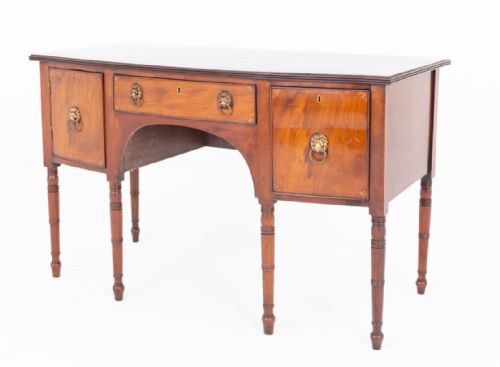
Mahogany dominates the formal aesthetic through breakfront and serpentine shapes, while pine, cherrywood, and fruitwood represent the vernacular tradition.
How they were made
Cabinet makers utilised dense hardwoods such as mahogany, walnut, and padauk for formal dining pieces, frequently applying flame mahogany veneer and boxwood stringing.
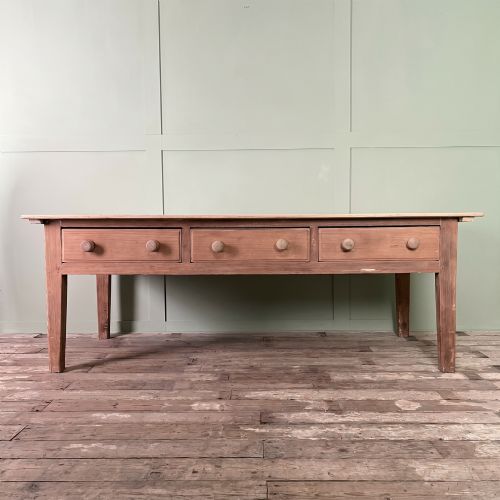
Vernacular pieces relied on native timbers including pine, sycamore, and oak, often finished with paint or left as scrubbed kitchen surfaces.
Construction involved traditional joinery techniques, paired with brass hardware and hand-carved decorative motifs in styles ranging from George III to Gothic Revival.
The listings include 18th Century and 19th Century pieces in mahogany, pine, oak, walnut, and painted timber.
What varies in quality
The degree of refinement in timber selection separates standard utility pieces from high-status furniture, particularly where figured mahogany or satinwood veneers are matched across serpentine fronts.
Hand-carved detailing and crisp inlay work demonstrate superior workshop execution, whereas provincial items rely on solid proportions and honest utilitarian construction.
The Woodworkers Ltd Kilkenny·Gillow
The Antique Timber Server Table Glossary
- Serpentine front
- A furniture front curving outward in the centre and inward at the sides, demanding considerable skill from the cabinet maker.
- Potboard dresser base
- A low wooden storage base featuring an open bottom shelf historically used for holding pots and kitchen utensils.
- Bowfront
- A convex, outward-curving front profile popular on Georgian and Victorian sideboards.
- Lowboy
- A small seventeenth or eighteenth-century side table with one or more rows of drawers, supported on four tall legs.
- Stringing
- A narrow inlay of contrasting timber used to outline drawers and edges on fine case furniture.
Antique Timber Server Table: Frequently Asked Questions
Where should I place a server table?
These pieces suit dining rooms for serving food and storing tableware, or hallways where a narrow console profile provides a surface for lamps and objects.
Their substantial depth means they require adequate clearance to avoid crowding a passage.
How do I clean an antique timber surface?
Dust regularly with a dry, soft lint-free cloth and apply appropriate beeswax periodically to nourish the aged wood without building up heavy residue.
Avoid chemical sprays and keep timber away from direct heat sources to prevent warping and cracking.
What is the difference between a sideboard and a server?
Servers generally offer a lighter, more open silhouette with fewer enclosed cupboards, whereas traditional sideboards often incorporate deep cellaret drawers and central cabinets.
Both serve the primary function of assisting with dining room hospitality and storage.
How do I identify a Georgian piece?
Georgian tables display classical proportions, often executed in figured mahogany with subtle bracket feet, cockbeaded drawer edges, and restrained brass drop handles.
Construction details on the interior drawers typically reveal hand-cut dovetailing characteristic of the eighteenth century.