
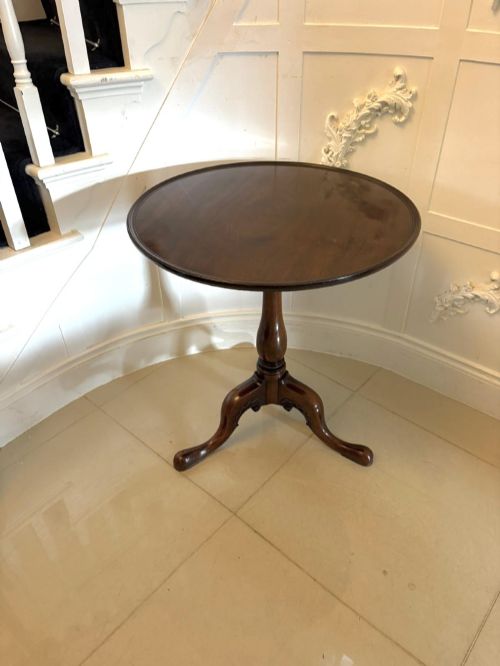
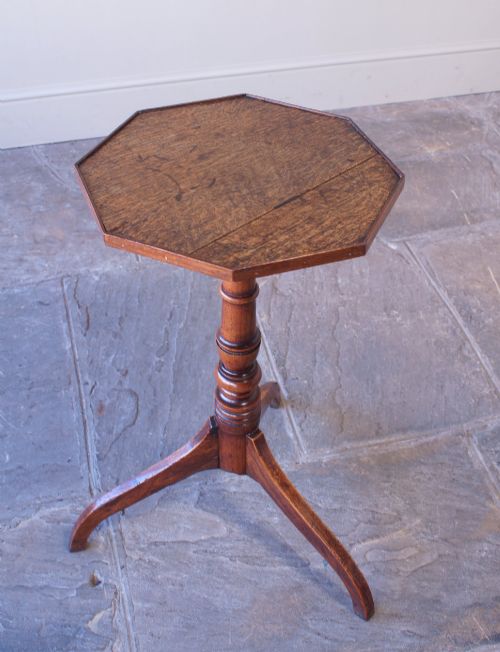
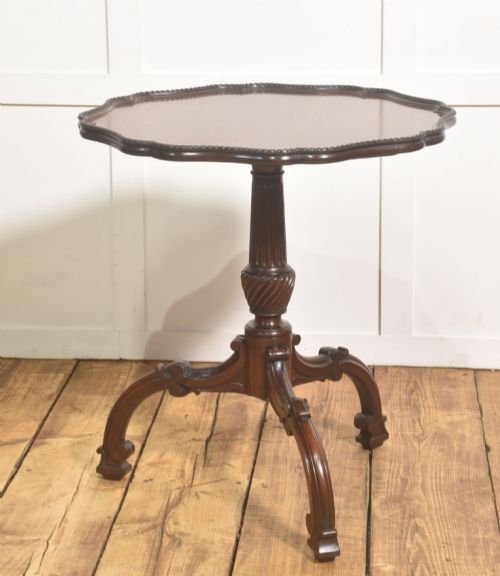
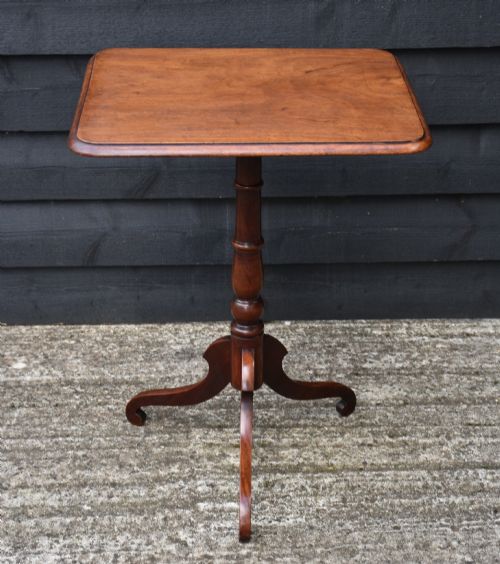

Antique Tilting Lamp Table
An antique tilting lamp table provides a steady surface for evening lighting while holding its position through clever tabletop mechanics.
Antique Tilting Lamp Table
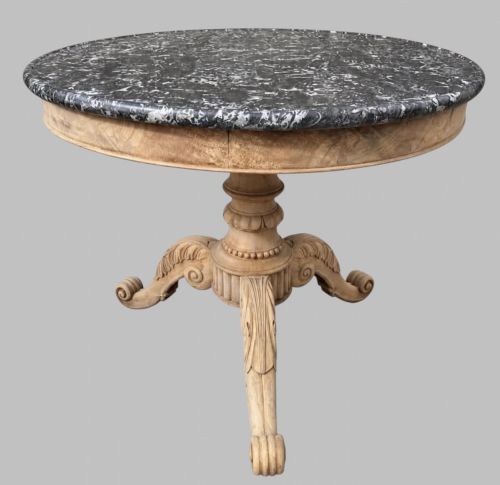
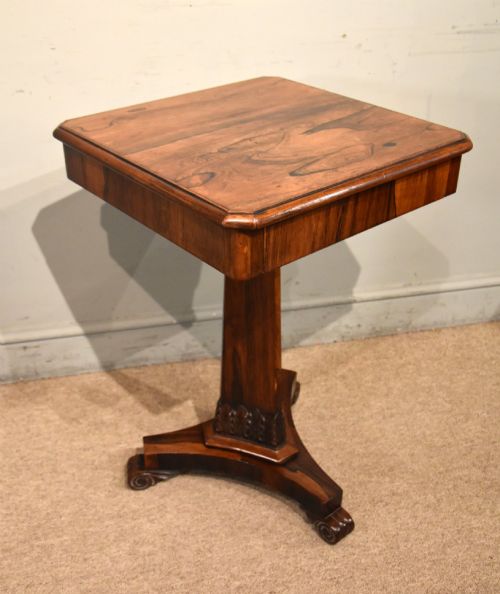
These pieces function primarily as portable surfaces for illumination, often configured as wine tables, side tables, or occasional tables within domestic spaces. The selection comprises examples originating from Georgian, Regency, and Victorian periods, alongside later revival pieces.
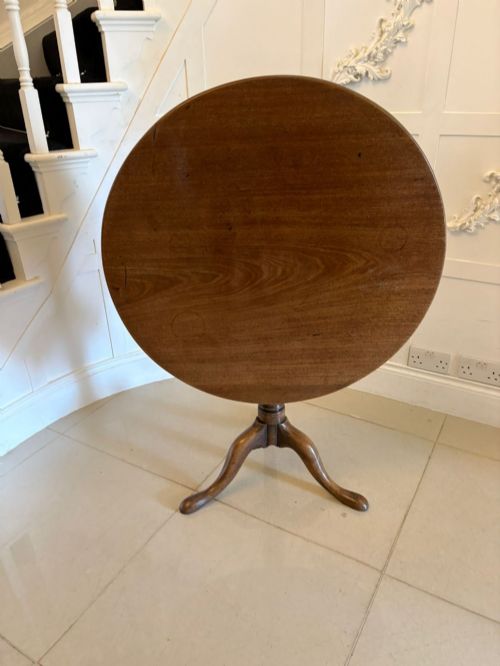
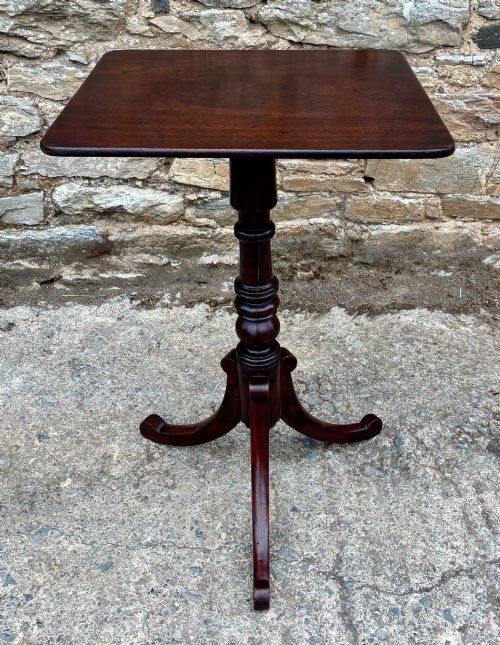
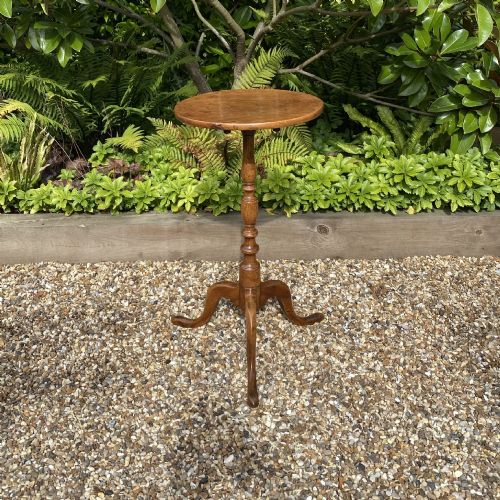
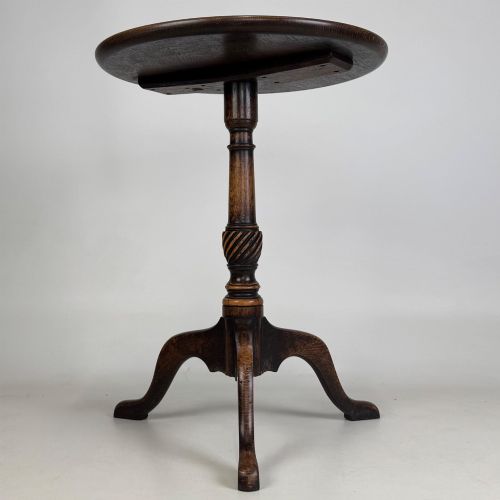
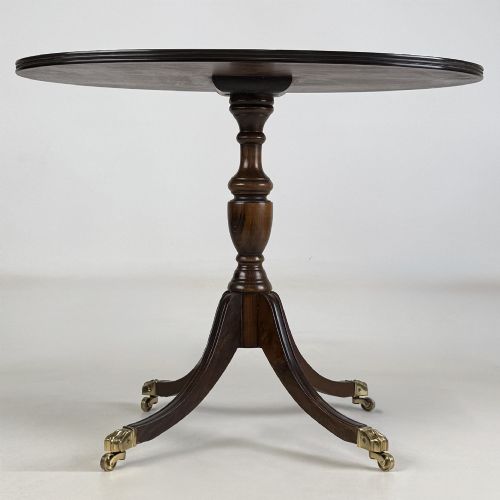
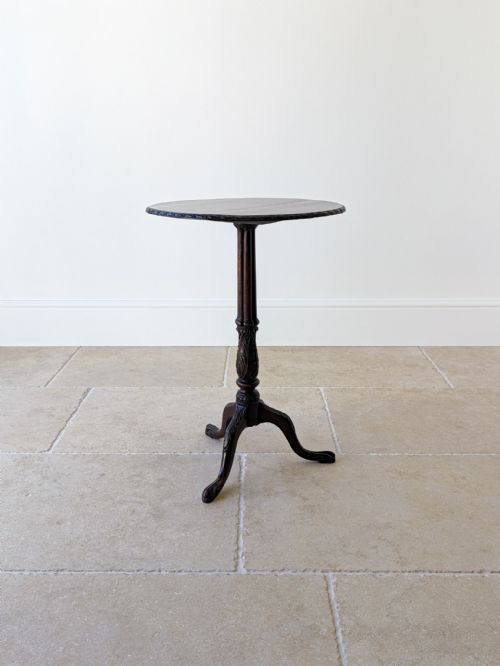
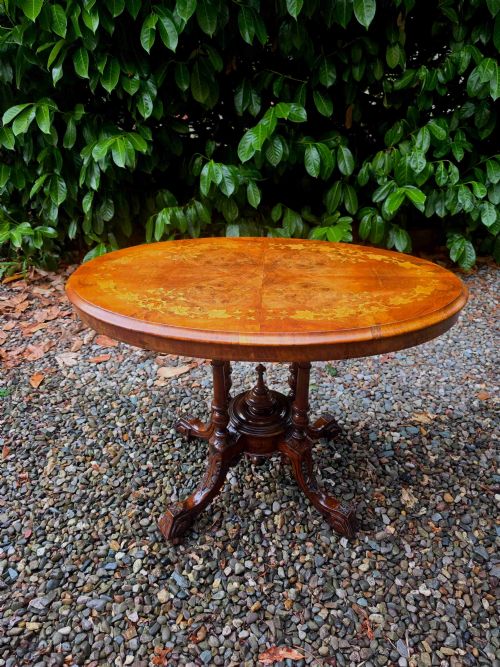
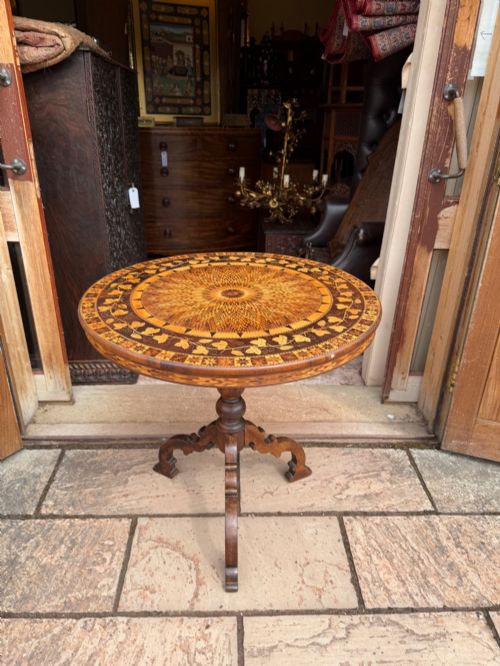
The most common formats on this page feature circular or oval tops supported by central pedestals and tripod legs. Many incorporate tilt-top or snap-top mechanisms that allow the surface to rotate vertically when not in active use.
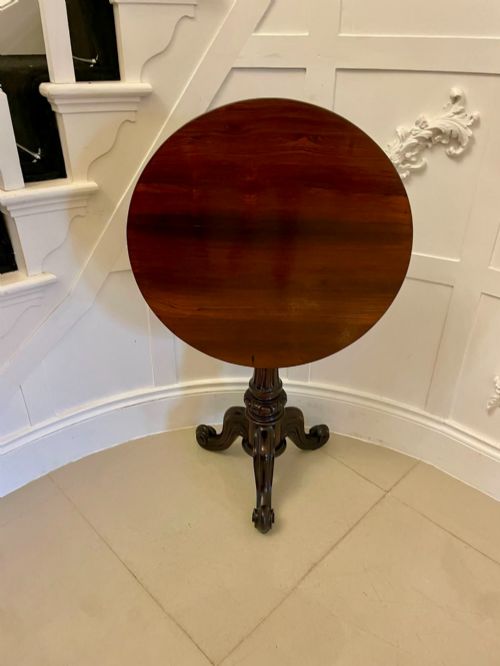
Makers utilised timber varieties suited to both rustic vernacular rooms and formal reception spaces. Forms span straightforward oak and mahogany tripod designs to highly figured burr walnut and rosewood specimens.
Materials and construction methods
Cabinetmakers constructed the primary surfaces and pillars using dense hardwoods such as mahogany, oak, and walnut, frequently enhancing decorative impact with burr walnut veneers, rosewood, or painted finishes. Brass components often appear in mechanism hinges and castor mounts.
Turning lathes shaped the central pedestals, whilst joiners secured the tripod legs using dovetail or tenon joints to withstand the pivot stress of the tilting mechanism. Tabletop edges frequently display shaped mouldings, dish tops, or delicate inlay work.
Some nineteenth-century examples include clever metamorphic designs that transform a standard side table into an adjustable stand.
Assessing quality and craftsmanship
Superior examples demonstrate meticulous selection of timber grain, particularly where figured mahogany or burr oak veneers provide a rich visual texture across the tabletop. Lesser pieces rely on plain, unfigured planks with minimal attention to grain alignment.
The engineering of the tilting mechanism determines daily utility, where higher quality pieces feature precisely fitted brass catches and stable block joints that eliminate unwanted wobble in the central column. Inferior execution results in loose pivots and uneven resting positions when the top returns to horizontal.
The Antique Tilting Lamp Table Glossary
- Tilt top
- A tabletop mounted on a pivot block that allows the surface to swing from horizontal to vertical. This mechanism enabled tables to be stored flat against walls when room was needed.
- Tripod base
- A three-legged support structure radiating from a central turned pedestal. This configuration ensures firm contact on uneven historical floors.
- Snap top
- A spring-loaded or catch-secured variation of the tilting mechanism that locks the surface securely into the horizontal position for use. It prevents the table tipping unexpectedly during service.
- Wine table
- A compact occasional table designed specifically to hold glassware and decanters beside seating. These often share identical proportions with lamp tables.
- Pedestal table
- Any table supported by a single central column rather than four corner legs. This design maximises legroom for individuals seated nearby.
Antique Tilting Lamp Table: Frequently Asked Questions
What is a tilting lamp table?
A tilting lamp table is a small occasional stand designed to support a portable light source, featuring a hinged top that rotates upright for storage.
Such furniture dates predominantly through the eighteenth and nineteenth centuries, serving domestic interiors where floor space required flexible arrangement.
How do tilt-top mechanisms work?
The tabletop secures to a wooden block that pivots on a horizontal pin passing through the top of the central column. A wooden catch or brass latch underneath locks the surface flat when needed.
Releasing the catch allows the entire surface to swing ninety degrees into a vertical plane, reducing the footprint of the furniture against a wall.
Where were these tables used?
Historical interiors utilised these versatile stands beside reading chairs, sofas, and dining seating to hold candles, oil lamps, or beverages. Their light construction allowed servants or residents to move them easily about the room.
Today they function effectively as bedside stands or beside living room seating where surface space is limited.
How do I date an antique table?
Dating relies upon examining timber species, joinery techniques, turning styles on the pedestal, and overall proportions. Georgian examples often display lighter mahogany frames with slender cabriole or peg-foot tripods, while Victorian iterations frequently incorporate heavier burr walnut veneers and bolder mouldings.
Tool marks left by hand saws or lathe chisels further clarify the period of manufacture.