


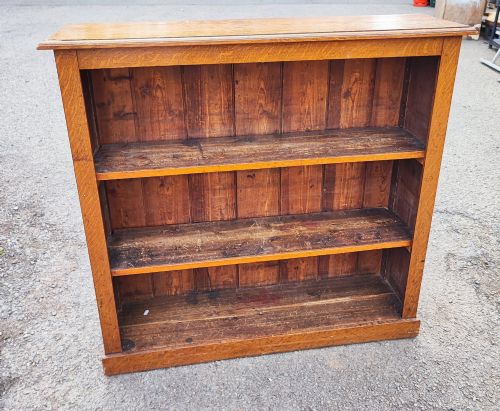
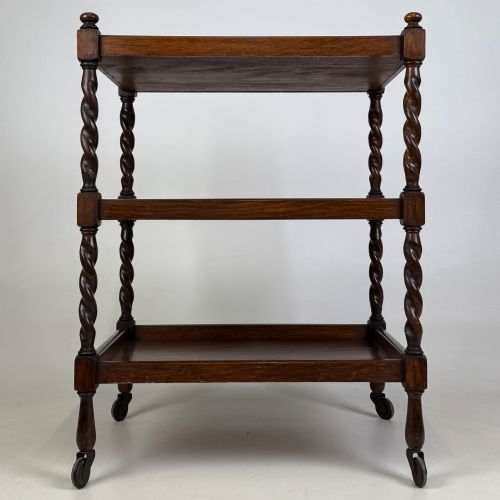
Antique Tiered Shelves
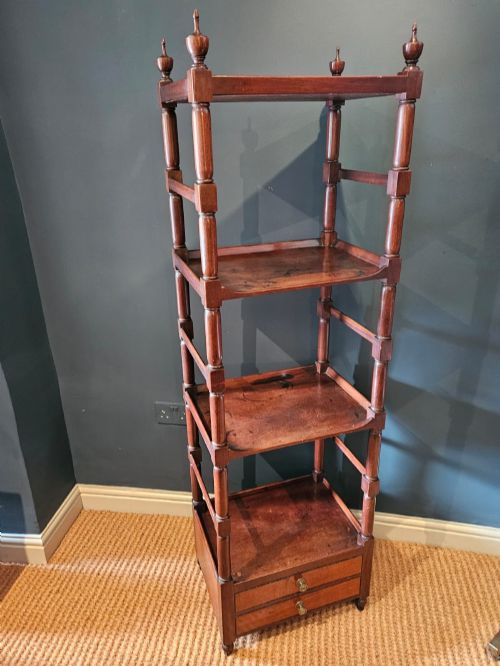
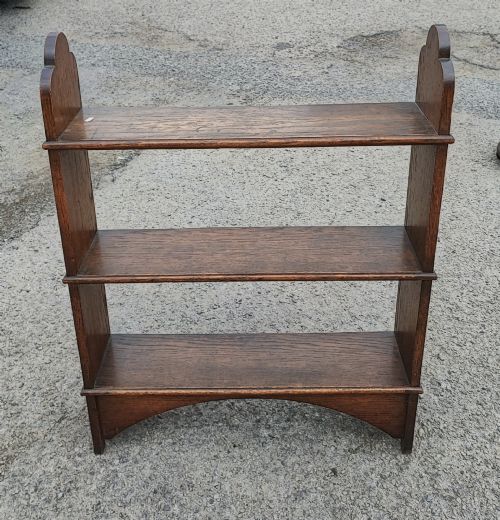
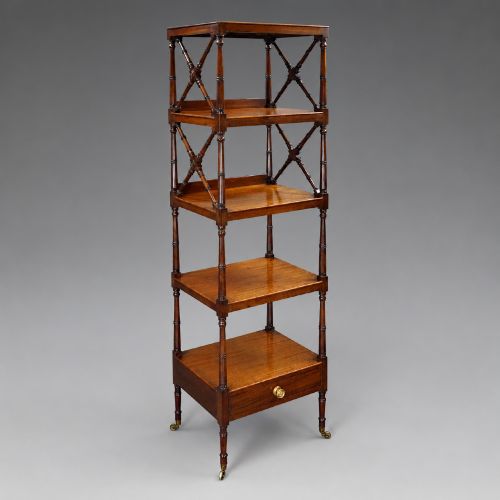
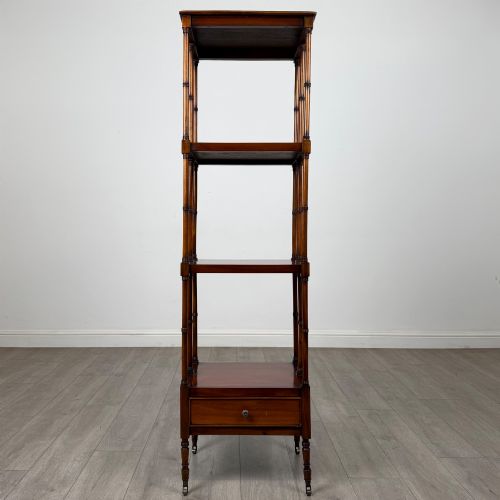
These antique tiered shelves bring vertical display and storage to a room through stacked wooden platforms supported by uprights.
Antique Tiered Shelves
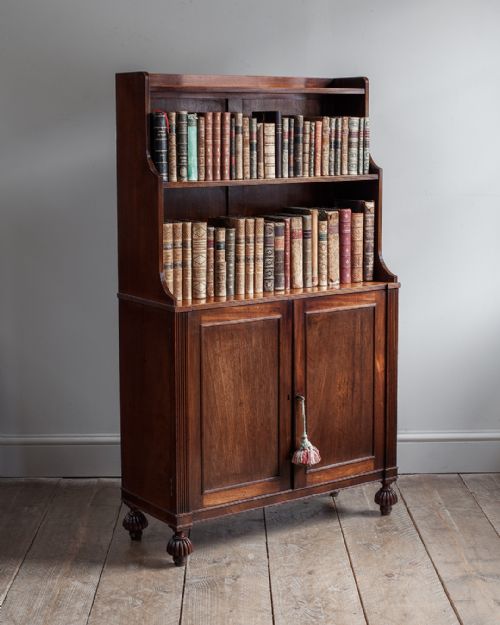
When you search for antique tiered shelves, you encounter pieces designed to hold books, ornaments, and small objects across multiple open levels. The selection spans distinct historical periods, including Georgian, Regency, Victorian, and Edwardian eras, alongside Arts and Crafts examples.
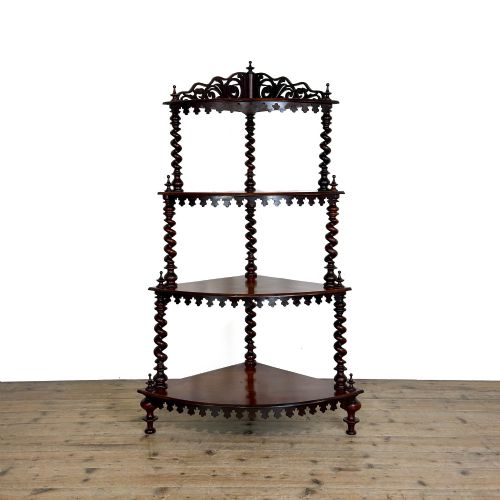
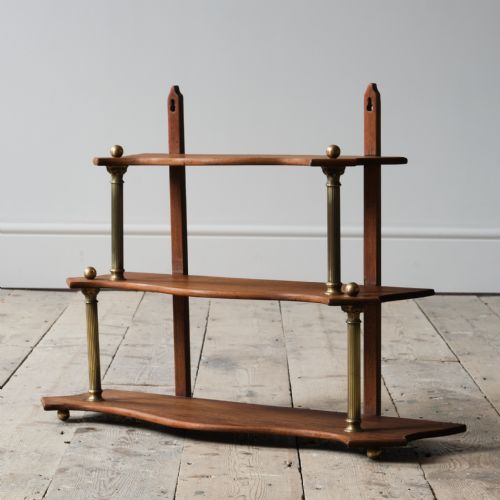
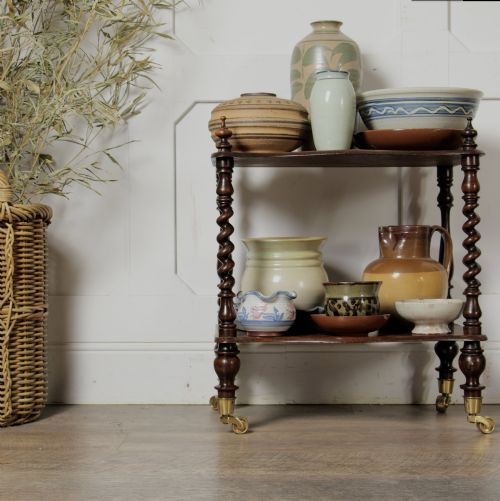
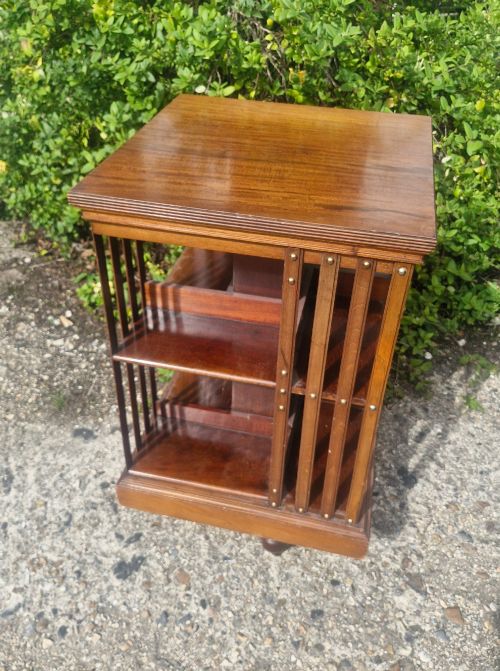
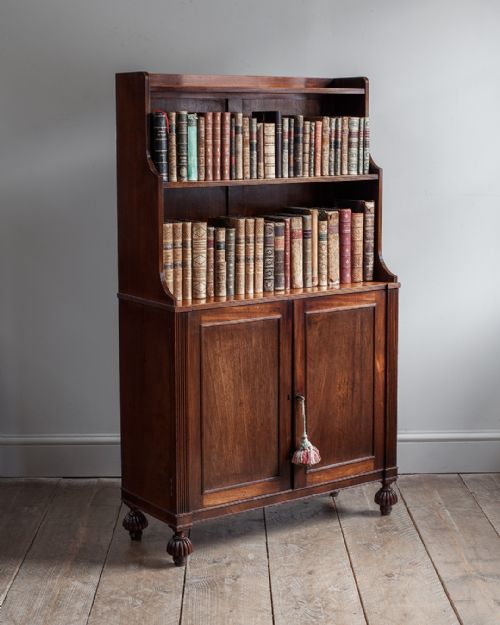
The most common forms appearing in this category include freestanding whatnots, waterfall bookcases, corner units, and wall-hanging shelves. These items served various household functions in sitting rooms and libraries, evolving from simple display stands to revolving bookcases and tea trolleys.
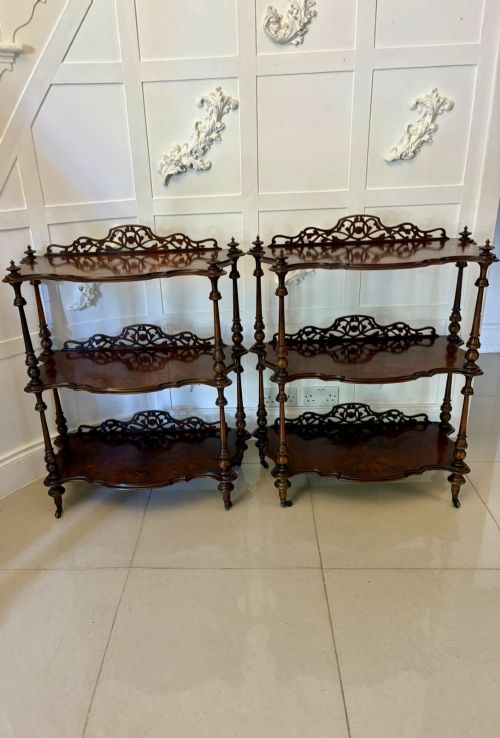
Origins range from formal English workshops to regional vernacular cabinetmakers, utilising woods appropriate to each era. Pieces often feature structural variations like barley twist supports, serpentine shaping, or brass detailing.
Materials and construction
Cabinetmakers built these tiered structures predominantly using hardwoods such as mahogany, oak, walnut, burr walnut, and rosewood, occasionally incorporating glass, iron, and brass fittings. Timber selection dictated the weight and finish of each tier, with dense grains chosen for durability and polished surfaces.
Joinery techniques relied on traditional framing methods, securing shelves to upright supports through pegged joints, dovetailing, or turned columns. Elements like barley twist turnings and ebonised finishes required specialist lathe work and surface preparation before final polishing.
Listings feature pieces spanning the Georgian, Regency, Victorian, and Edwardian periods, constructed in mahogany, oak, walnut, and rosewood.
Gradations of quality
Quality in these pieces depends on the selection of timber figures, such as matching burr walnut veneers or dense, straight-grained mahogany. Finer examples display careful attention to proportion, subtle carving, and integrated brass details rather than mass-produced uniformity.
The integrity of the structural joints and the crispness of turned supports differentiate superior pieces from simpler workshop items. Well-executed finishes enhance the natural grain without obscuring the timber's character.
Heals
The Antique Tiered Shelves Glossary
- Waterfall bookcase
- A set of open shelves where each tier steps back progressively from the one below it. This creates a cascading silhouette popular in Regency and later revival periods.
- Etagere
- A French term for a piece of furniture with a series of open shelves for displaying small objects. These often include delicate turned supports and fine timber veneers.
- Barley twist
- A type of turned wooden column resembling the spiral shape of barley sugar. It appears frequently on the upright supports of Victorian stands and trolleys.
- Burr walnut
- A highly decorative wood veneer obtained from the growth excrescences of walnut trees. It exhibits intricate, swirling grain patterns prized by cabinetmakers.
Antique Tiered Shelves: Frequently Asked Questions
What are antique tiered shelves used for?
These pieces function primarily as display furniture and open storage units for books, ceramics, and decorative objects. Their stacked design makes efficient use of vertical space in smaller rooms.
Historically, they sat in parlours and drawing rooms to exhibit prized possessions or hold daily reading material within easy reach.
How do I identify a Victorian whatnot?
Victorian examples often feature darker hardwoods like mahogany or burr walnut, frequently incorporating decorative elements such as barley twist columns. They tend to be heavier in construction than their Georgian predecessors.
Look for turned wooden finials, serpentine shaping, and multiple tiers designed to stand against a wall or fit into a corner.
Are waterfall bookcases stable?
Waterfall bookcases rely on a stepped profile where each shelf is narrower than the one beneath it, which naturally distributes weight toward the base. Most standalone versions are sufficiently stable for everyday book storage.
Wall-hanging variants require secure fixings to support the combined weight of the timber and the objects placed upon the shelves.
How do I care for polished wood shelves?
Maintain polished timber surfaces by dusting regularly with a soft, dry cloth to prevent grit accumulation. Avoid placing furniture in direct sunlight or near heat sources to protect the wood and veneer.
Apply traditional beeswax periodically to nourish the grain and preserve the original lustre without building up heavy chemical layers.