



Antique Tiered Dessert Stand
An antique tiered dessert stand provides graduated tiers for service, uniting walnut, mahogany and porcelain across Georgian, Regency and Victorian periods.
Antique Tiered Dessert Stand
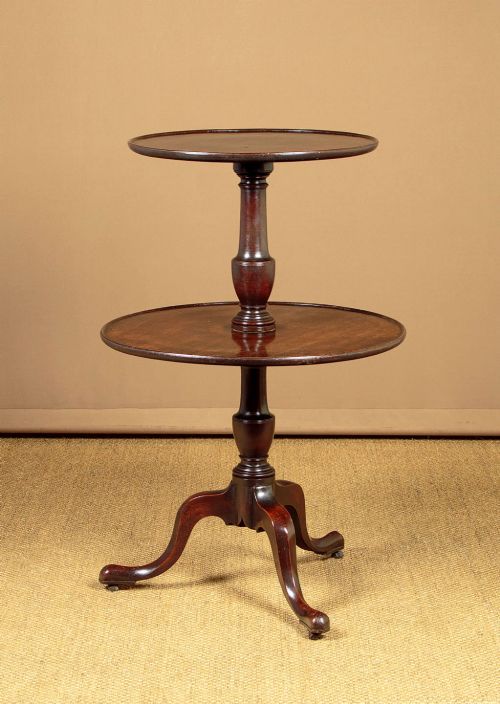
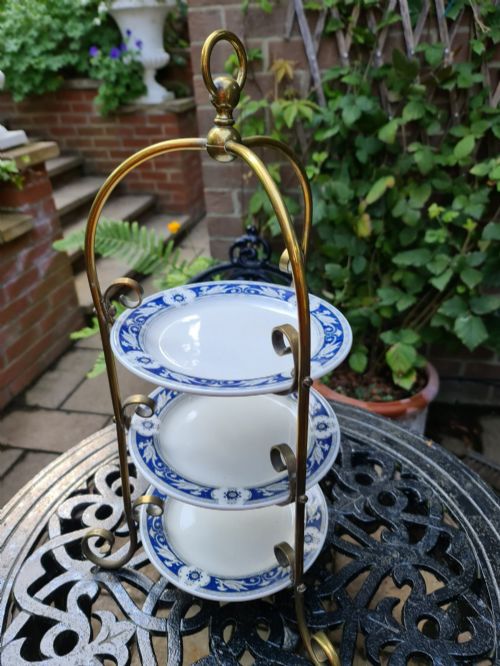
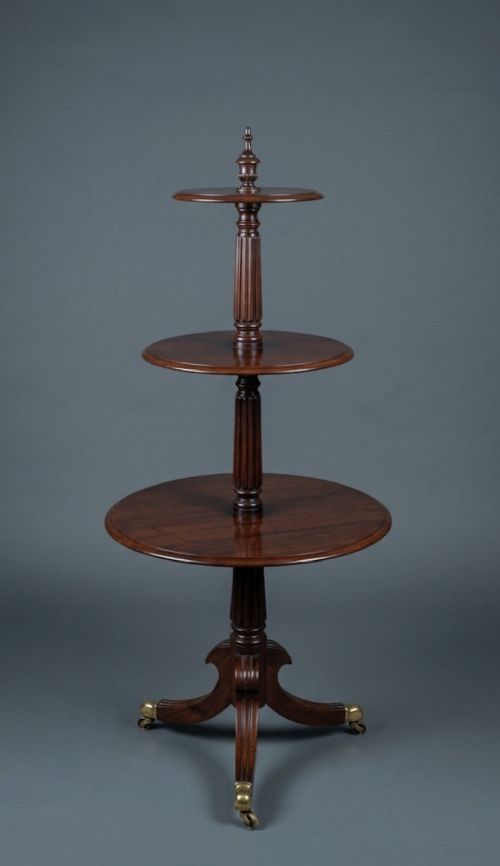
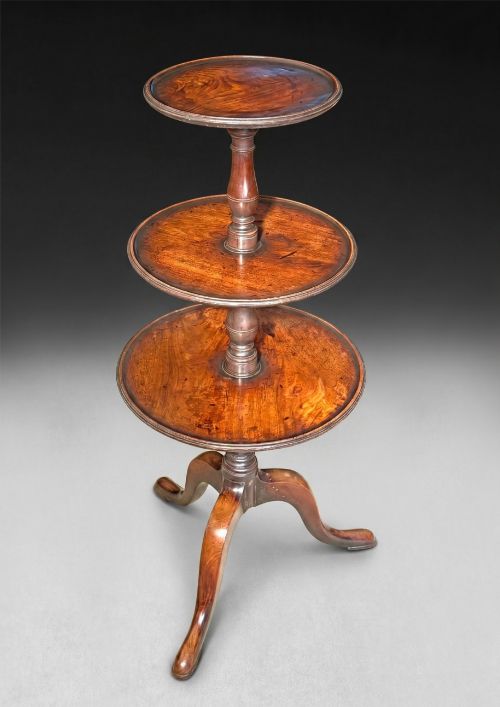
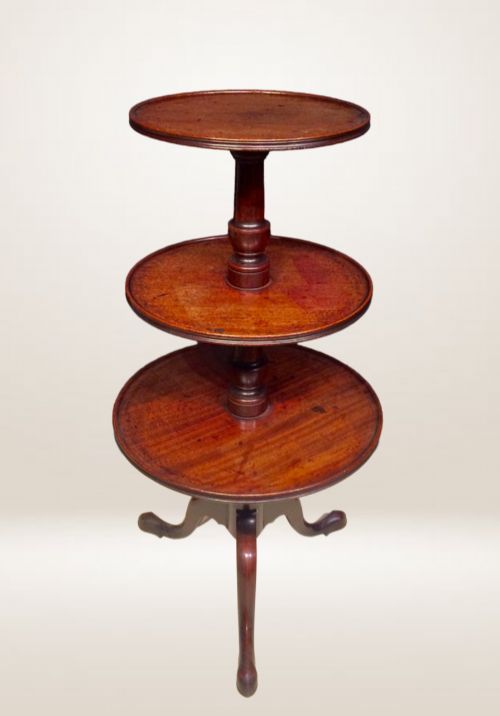
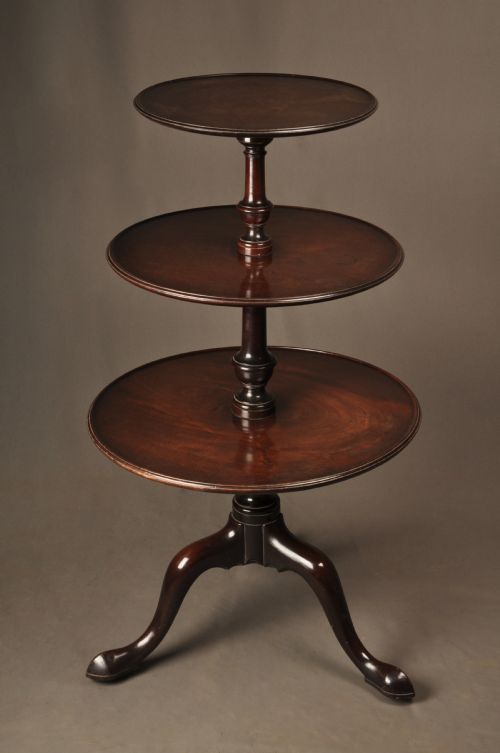
When you search for an antique tiered dessert stand, you encounter pieces primarily recorded as dumb waiters, cake stands, and occasional tables. These forms function to display and serve food across multiple levels without cluttering the main dining surface.
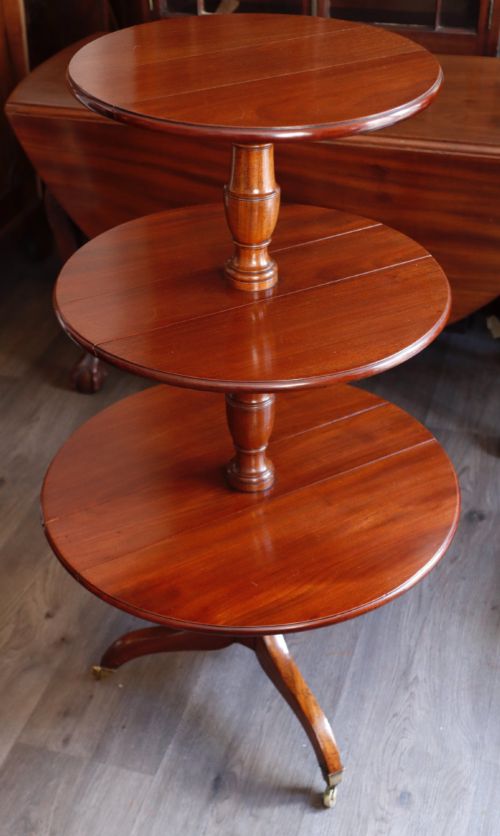
The pieces you meet most often on this page span the 18th century, Georgian, Regency, and Victorian periods. Mahogany remains the dominant timber, frequently shaped into circular rotating tiers or folding frames.
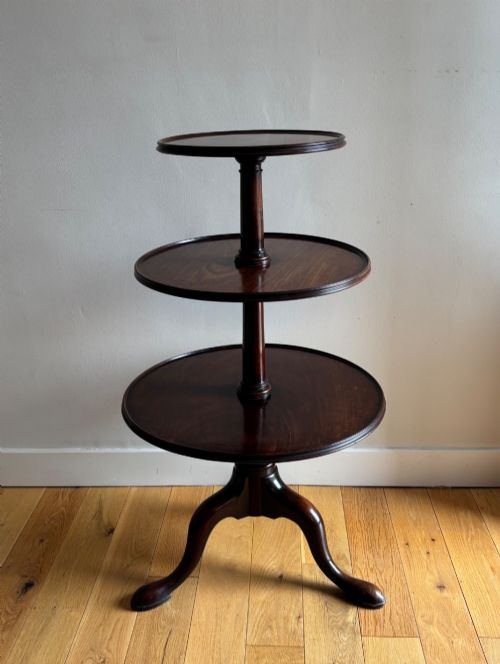
Makers utilised various formats, from two-tier walnut marquetry tables to three-tier revolving stands and delicate porcelain sweetmeat dishes. Each variation serves the fundamental purpose of elevating sweet courses and desserts for guests.
What varies in quality
The standard of timber selection and cabinet work dictates the tier stability and rotation smoothness. Superior examples display finely figured mahogany grains and precise turning on the central pillar.
Porcelain stands derive their standing from the crispness of moulded detail and the hand-painted execution of the enamel decoration. Overall proportions and the clever integration of folding mechanisms distinguish master construction from standard production.
Listings feature mahogany, walnut, rosewood, brass, and soft-paste porcelain across the Georgian, Regency, and Victorian periods.
Worcester Porcelain·Meissen
The Antique Tiered Dessert Stand Glossary
- Soft-paste porcelain
- An artificial porcelain composition fired at lower temperatures than hard paste. It produces a warm, creamy body common in 18th-century English ceramic wares.
- Marquetry
- The art of applying decorative pieces of veneer to a structure to form geometric or pictorial designs. Walnut examples often showcase this detailed surface work.
- Galleried
- Having a raised decorative border or railing around the edge of a shelf. This feature kept dessert plates and glasses secure while the tiers revolved.
Antique Tiered Dessert Stand: Frequently Asked Questions
How were dumb waiters used at the table?
These tiered stands held extra courses, desserts, and wine bottles within reach of diners. Servants could step away, allowing guests to help themselves from the rotating shelves.
This arrangement facilitated more intimate dining experiences in large 18th and 19th-century homes by reducing the need for constant staff attendance during meals.
How do I identify a Georgian tiered stand?
Georgian stands rely heavily on solid mahogany timber, featuring tripod spider legs and turned central columns with graduated circular trays. Look for construction methods appropriate to the late 18th century, such as pegged joints and hand-turned pillars.
Many examples from this era incorporate revolving mechanisms that turn smoothly on a brass spindle without modern mechanical assistance.
Can I use an antique dessert stand today?
These pieces integrate easily into modern interiors as display surfaces for plants, books, or afternoon tea presentations. Their sturdy timber and ceramic construction remains fully functional for light serving duties.
Placing them out of direct sunlight and away from heat sources protects the antique polishes and delicate porcelain glazes during daily use.