
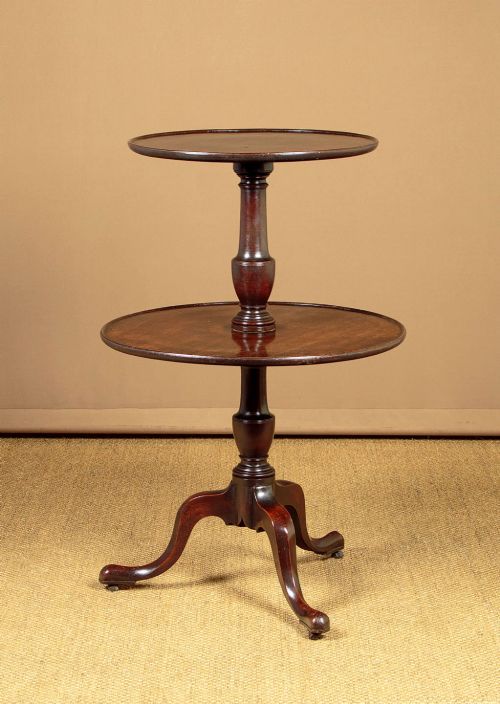
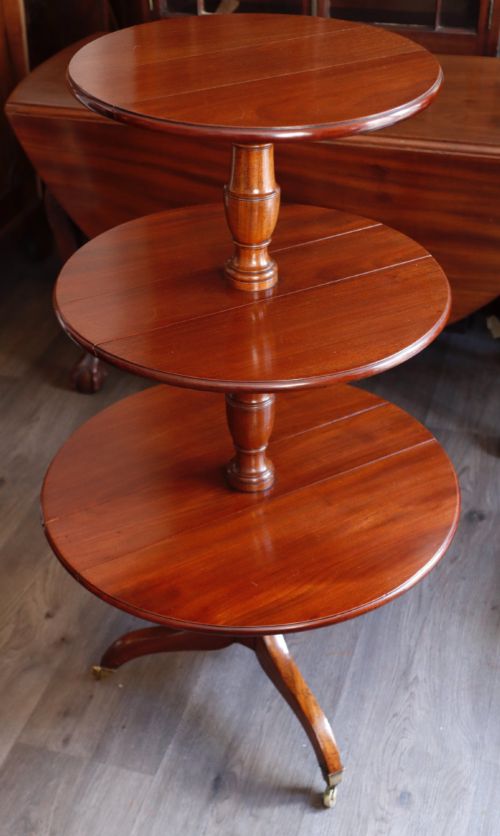
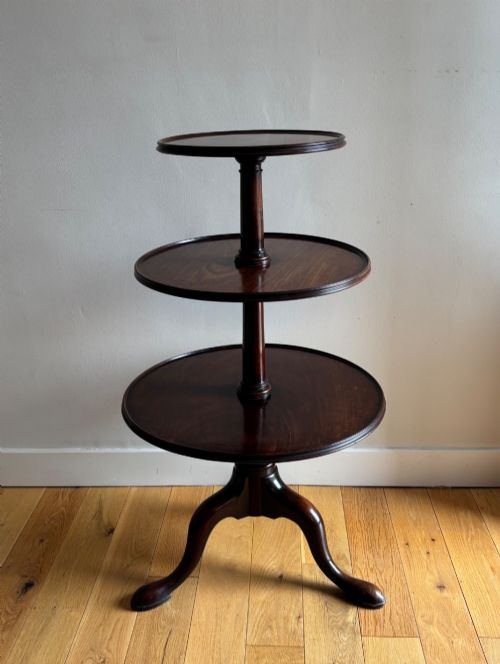
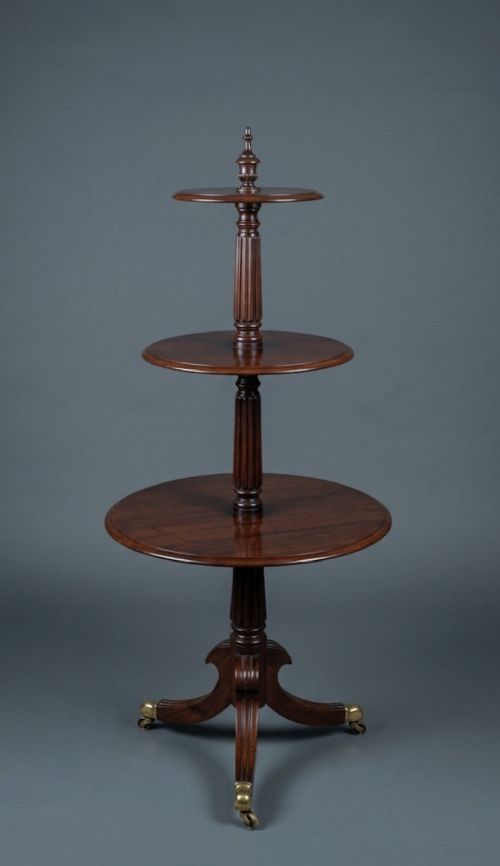




Mahogany Tiered Dessert Table
A mahogany tiered dessert table serves as a practical multi-level stand for dining rooms, offering graduated shelves for food and presentation.
Mahogany Tiered Dessert Table
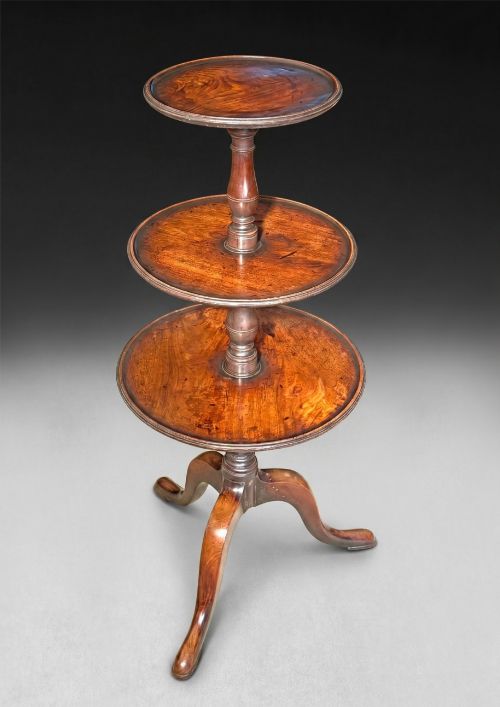
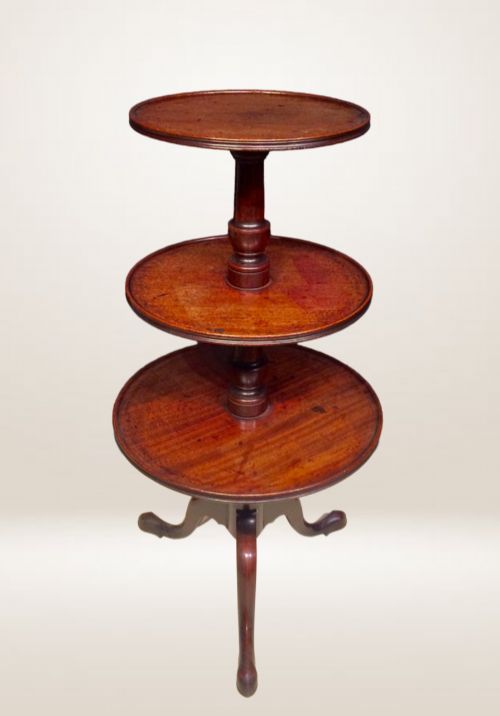
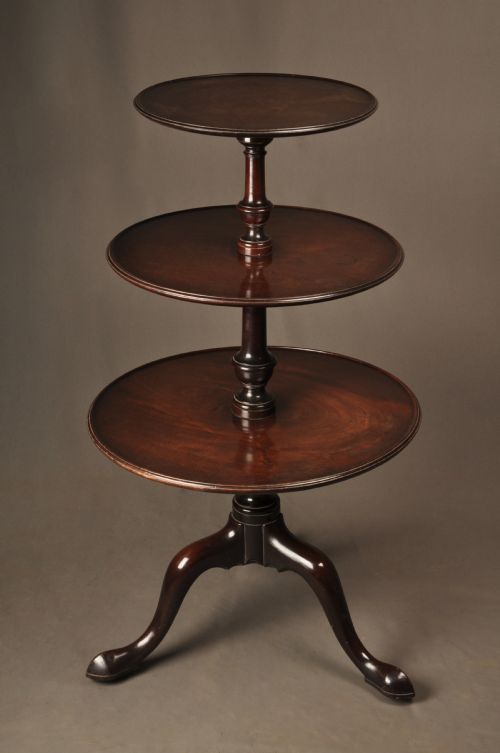
A mahogany tiered dessert table functions as a traditional serving piece, frequently known as a dumb waiter, designed to hold dishes across multiple circular tiers. These items appear primarily from the Georgian, Regency, and Victorian periods, reflecting shifting interior dining habits over successive centuries.
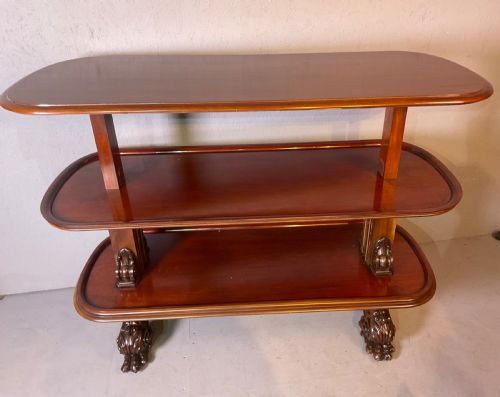
Buyers encounter examples ranging from two-tier folding stands to large three-tier revolving tables supported on central pillar pedestals. The selection spans George II through to Victorian eras, with George III pieces forming a significant portion of the available stock.
The objects operate as occasional tables, serving tables, and butler buffet stands rather than fixed dining furniture. Their multi-level format allows hosts to present desserts or side dishes without crowding the main dining surface.
Materials and construction methods
Makers utilised solid mahogany and mahogany veneers for the tiered shelves and central columns, often selecting dense timber with rich grain patterns. Brass components, including castors and pivoting hardware, frequently support the bases and revolving mechanisms.
Turned wooden columns and tripod legs provide stability for the heavy graduated tiers, while occasional examples incorporate rosewood highlights and subtle inlay work. Folding and metamorphic mechanisms rely on precise joinery to allow tiers to drop or tilt when not in use.
Early dining companions that held your pudding when the servants went to bed.
Distinctions in quality and execution
The refinement of the turning on the central pillar and the proportions of the graduated tiers separate standard items from superior pieces. Finely cast brass original castors and smooth revolving actions indicate high workshop standards during the Georgian and Regency periods.
The depth of colour and figuring in the mahogany timber strongly influence the character of each stand. Pieces retaining patinated original surfaces and tight, stable joinery demonstrate superior preservation over time.
Gillows
The Mahogany Tiered Dessert Table Glossary
- Dumb waiter
- A multi-tiered freestanding serving stand used during meals to hold food and tableware without domestic staff present.
- Metamorphic
- Describing furniture designed to fold, swivel, or transform into an alternative configuration for storage or varied use.
- Castor
- A small wheel mounted on the base of table legs to permit smooth movement across floors.
- Tripod base
- A three-legged support structure commonly found beneath the central pillars of circular tables.
- Galleried
- Featuring a raised decorative rim around the edge of a shelf or tabletop to prevent items from sliding off.
Mahogany Tiered Dessert Table: Frequently Asked Questions
What is a mahogany tiered dessert table?
A mahogany tiered dessert table is a multi-level serving stand featuring graduated circular shelves supported by a central pillar. These pieces were historically used in dining rooms to hold courses and desserts.
Today, buyers use them as decorative occasional tables or functional serving surfaces in traditional interiors.
How were dumb waiters used historically?
These tables allowed diners to help themselves to food and drinks without servants present in the room during private meals. The revolving or tiered design maximised table space for side dishes and desserts.
Some variants featured folding tiers or compartments for bottles and glasses during evening service.
How do I tell Georgian pieces apart from Victorian ones?
Georgian examples often display restrained lines, tripod bases with pad or spade feet, and elegant turned mahogany columns. They date from the eighteenth and early nineteenth centuries.
Victorian models tend to be heavier, sometimes incorporating metamorphic actions, larger proportions, or more robust carved details on original castors.
Are these tables sturdy enough for daily use?
Most pieces possess solid mahogany construction and sturdy pillar supports designed to bear the weight of serving dishes. However, revolving mechanisms and folding hinges require gentle handling to preserve original joinery.
Placing them in low-traffic areas helps protect the antique timber and delicate brass castors from accidental knocks.