
Antique Tiered Bookcase
An antique tiered bookcase provides open shelving in graduated layers, bringing practical display space and architectural rhythm to a room.
Materials and construction methods
Cabinetmakers relied heavily on timbers such as mahogany, oak, walnut, and rosewood, often selecting solid stock for structural uprights and veneered surfaces for tier tops. Inlaid satinwood, brass fittings, and ormolu mounts appear on finer Victorian and Edwardian examples to accent the graduating shelves.
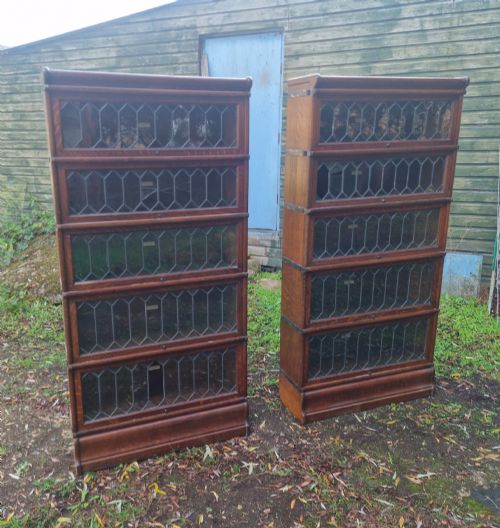
Joinery techniques varied by period, ranging from traditional dovetailed framing on Georgian and Regency pieces to specialised mechanical pivots found in Edwardian revolving designs. Open shelves utilise fixed or adjustable supports, while stacking barrister formats employ glazed sectional frames that lift and slide.
Distinctions in craftsmanship
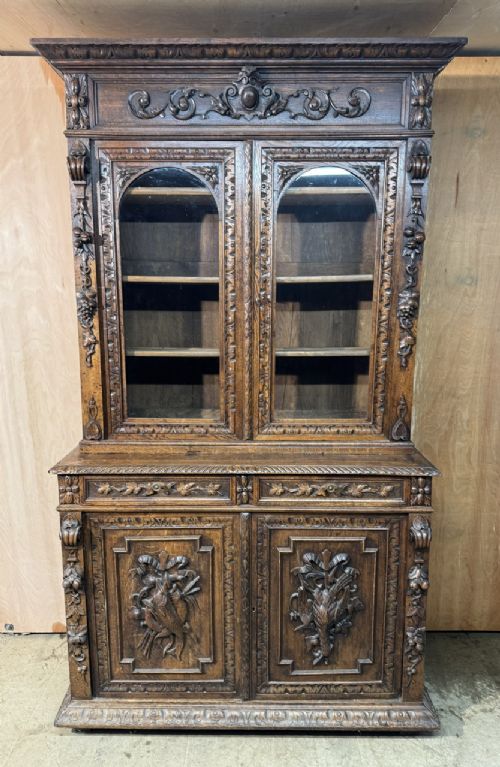
Quality rests in the selection of timber grain, the precision of inlay or marquetry, and the structural integrity of the tier supports. Pieces featuring burr walnut veneers, finely turned barley twist columns, or substantial brass gallery rails indicate superior workshop origin.
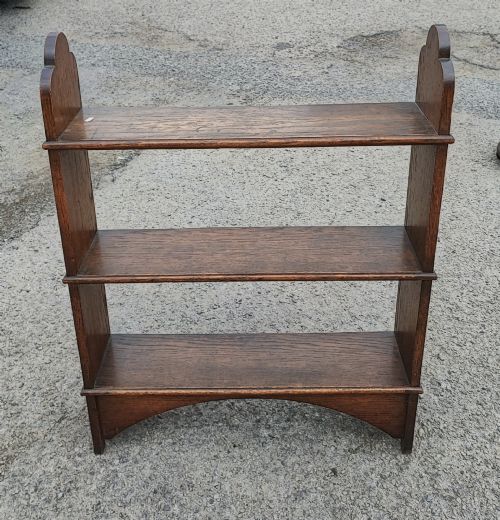
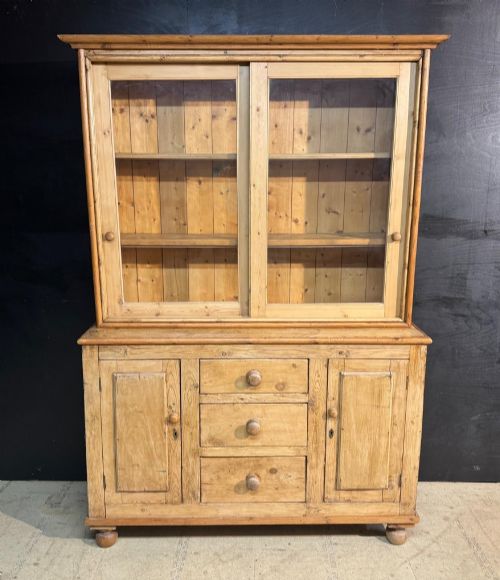
Simpler pine or oak utility bookshelves sit at the other end of the range, prioritizing utilitarian storage over decorative cabinetwork. The smoothness of the revolving mechanism or the clean action of stacking barrister sections further separates standard production from exceptional examples.
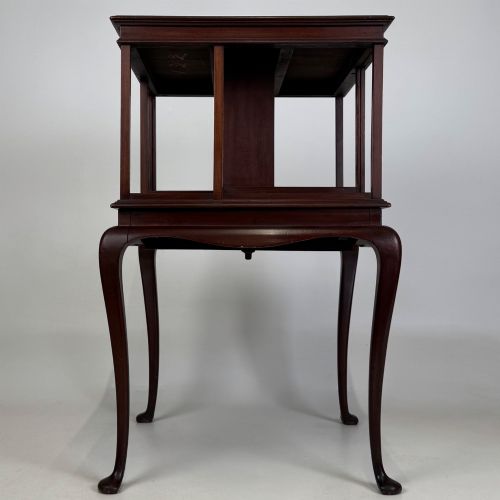
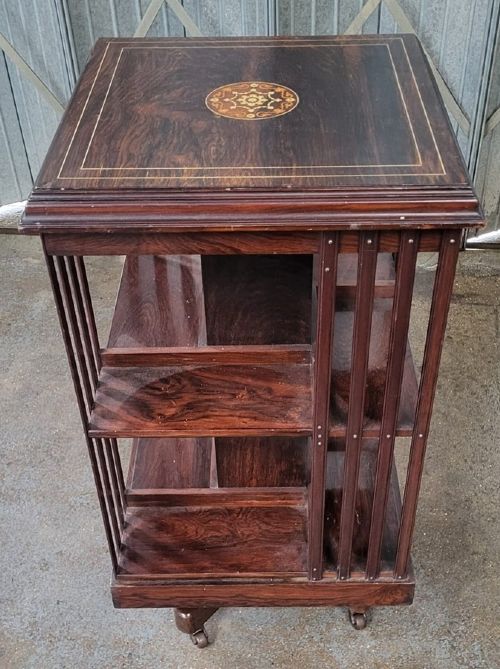
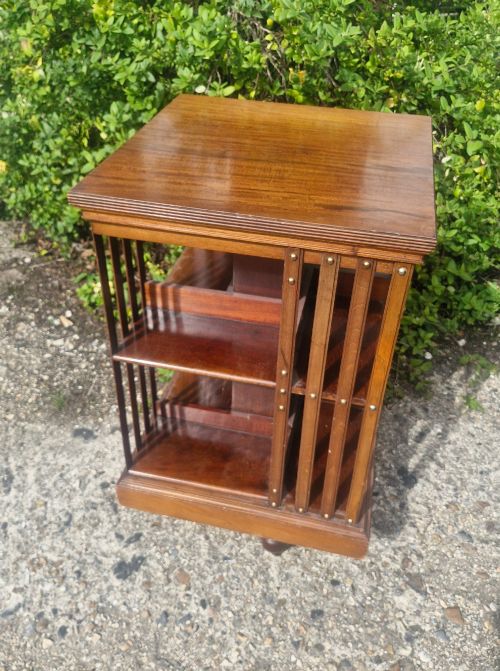
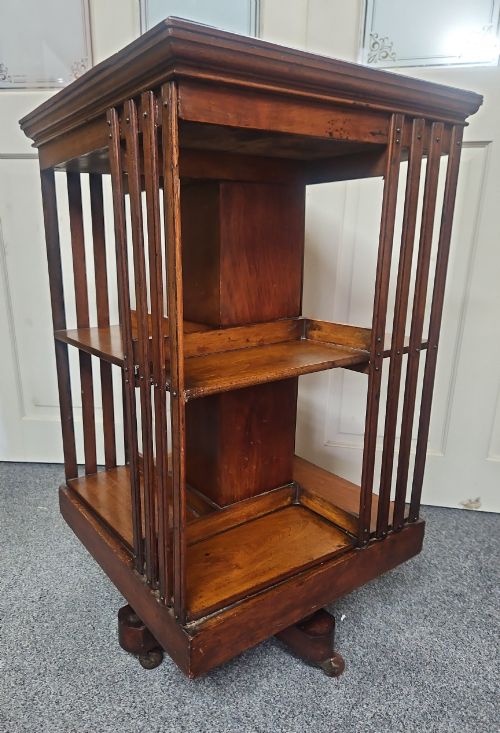
Spinning an Edwardian revolving bookcase remains an irresistible urge for anyone entering a room with a book in hand.
Heals·Globe Wernicke
The Antique Tiered Bookcase Glossary
- Whatnot
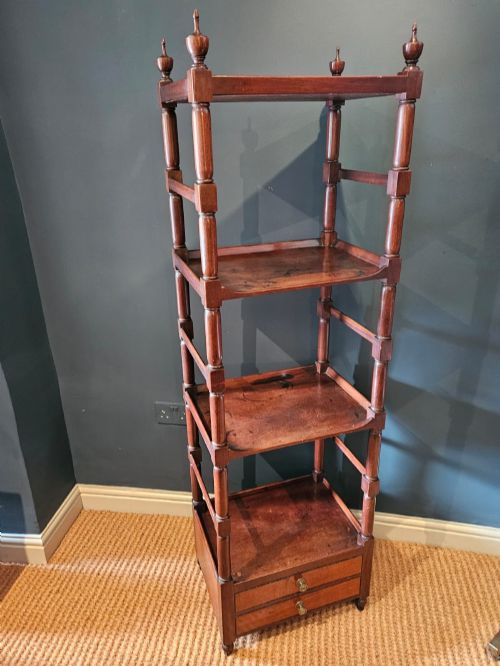
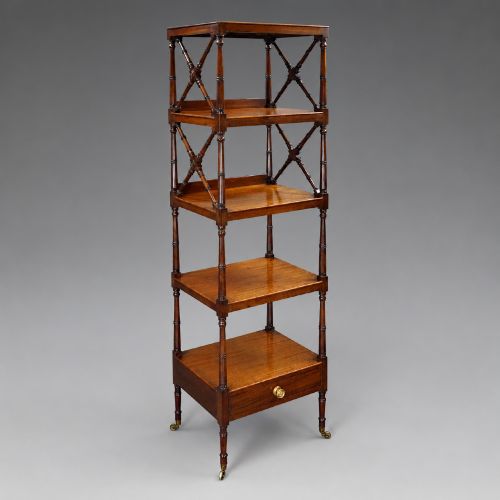
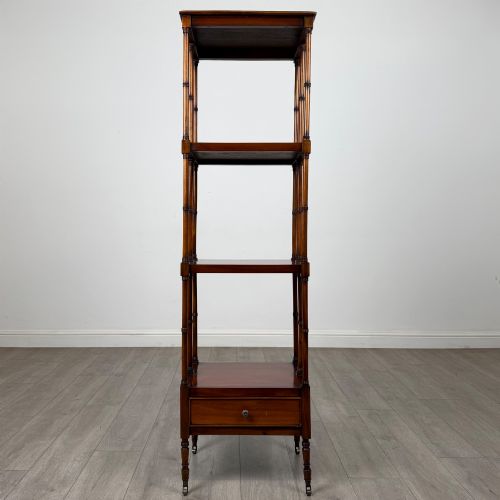
- A movable set of open shelves, typically with three or four tiers, used for displaying ornaments or holding books. These pieces date predominantly from the Georgian and Victorian eras.
- Waterfall bookcase
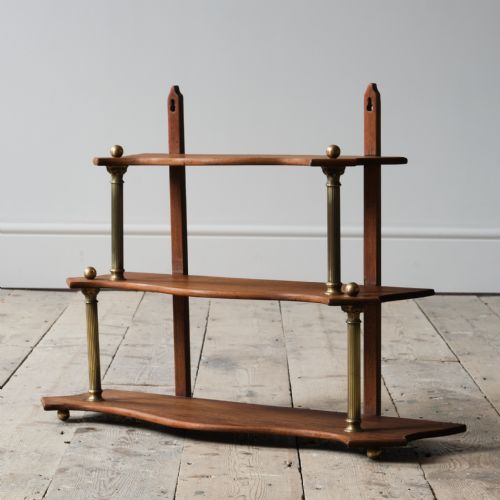
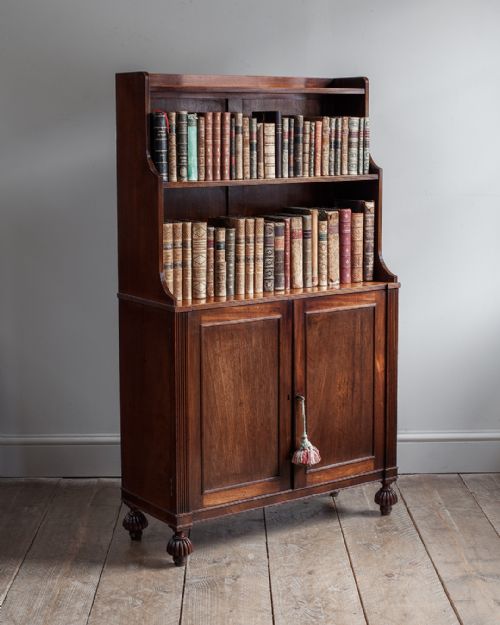
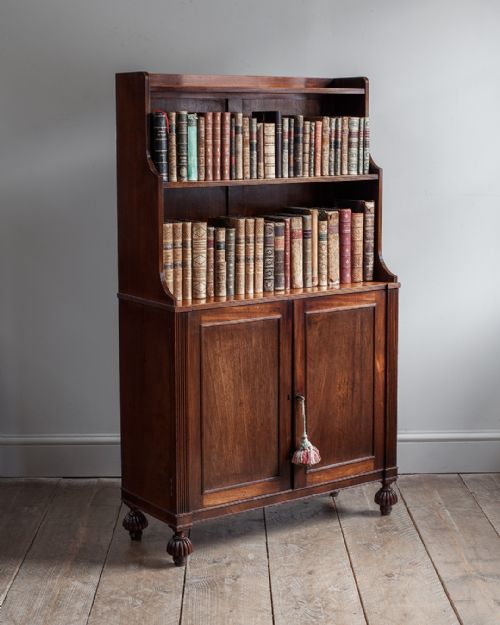
- A tiered shelving unit where each successive shelf steps back from the one below, creating a cascading profile. They appear frequently in Regency and later nineteenth-century forms.
- Revolving bookcase
- A compact table-top or floor-standing bookcase mounted on a hidden pivot mechanism allowing it to spin freely. Edwardian examples in mahogany and oak are particularly common.
- Barrister bookcase
- A modular bookcase featuring stacked glazed sections with lifting mechanisms. These practical cabinets often utilise oak or mahogany construction.
- Marquetry
- Decorative veneer work formed by fitting together contrasting pieces of wood, brass, or shell to create pictorial patterns. Victorian cabinets frequently employ this technique on top surfaces.
Antique Tiered Bookcase: Frequently Asked Questions
What is a tiered bookcase?
A tiered bookcase is a multi-level storage unit featuring open shelves that typically decrease in depth or width from bottom to top. These pieces range from stationary wall shelves and whatnots to revolving floor-standing models.
They were designed to display books and ornaments while occupying minimal floor space in domestic rooms.
Where were these bookcases used?
These bookcases suited studies, drawing rooms, and libraries where books required organised, accessible storage. Revolving versions often sat beside armchairs or desks for quick reference.
Larger stacking and open formats stood against walls or within hallways to house expanding family libraries.
What is a stacking barrister bookcase?
A stacking barrister bookcase consists of modular wooden sections with glass-paned doors that lift and slide into the cabinet above. This design protected valuable law or literature volumes from dust.
Brands such as Globe Wernicke popularized this modular format during the late nineteenth and early twentieth centuries.