


Antique Thoroughbred Portrait
An antique thoroughbred portrait captures the noble physique and racing legacy of celebrated horses through traditional oil paint on canvas.
Antique Thoroughbred Portrait
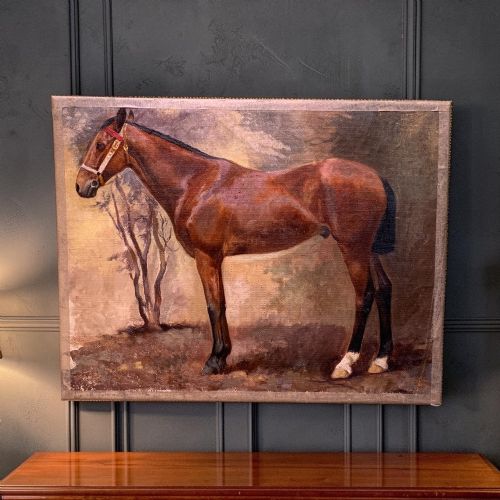
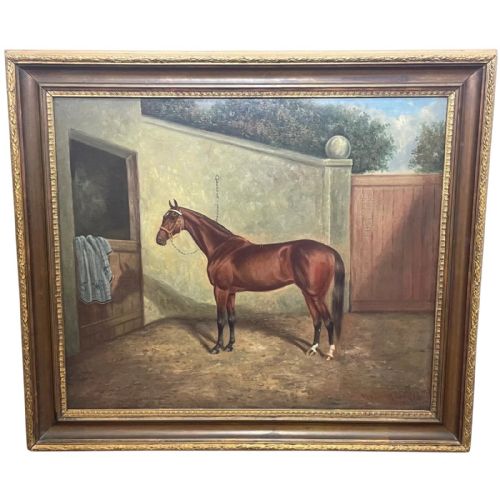
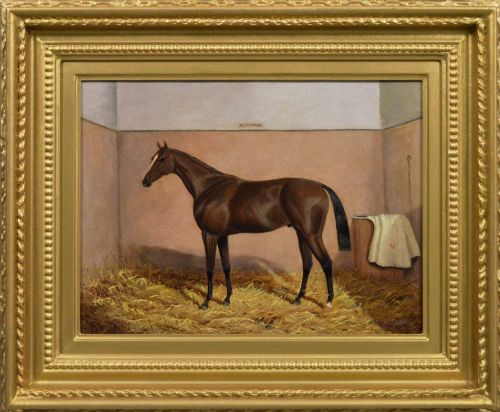
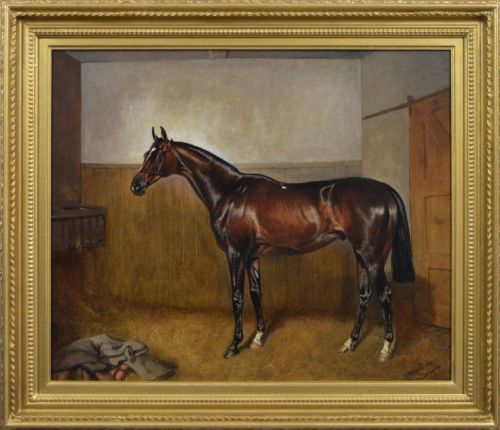
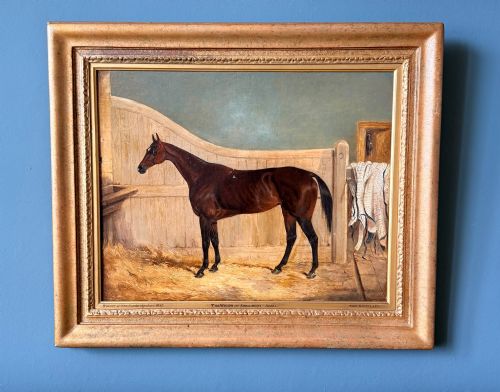
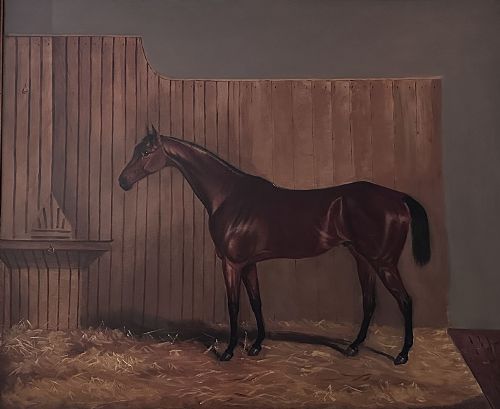
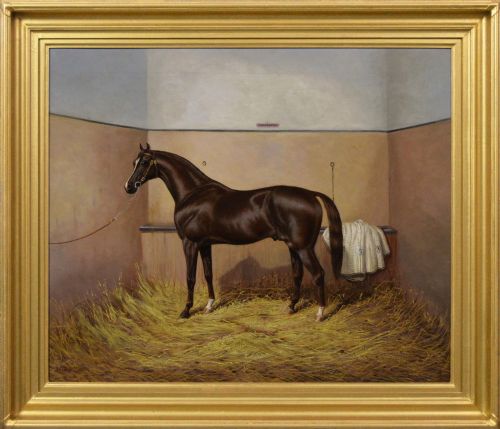
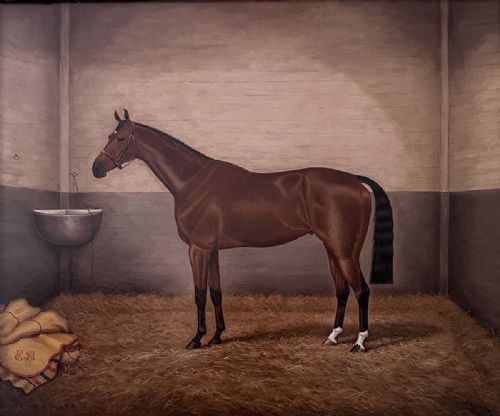
An antique thoroughbred portrait depicts famous racehorses, winners, and stable scenes executed primarily in oil paint on canvas. These works span the nineteenth century through the early twentieth century, encompassing Victorian and Edwardian periods.
Buyers encounter distinct depictions ranging from solitary studies of bay horses to detailed trackside scenes featuring notable jockeys and historic owners. The visual record preserves celebrated winners such as Spion Kop, Flying Fox, and Persimmon alongside named sporting figures.
How they were made
Artists applied oil paint to stretched canvas, building up rich layers of pigment to render the musculature, coat sheen, and distinct markings of each thoroughbred. Wooden frames, often finished with gold leaf or giltwood, enclose these canvases.
Framed photographic prints also appear from the later decades, offering a different medium for preserving famous racehorses of the era.
Listings span the nineteenth century and early twentieth century, featuring oil paintings on canvas alongside framed photographic prints.
What varies in quality
The skill of the painter dictates the fidelity of the equine anatomy, the luminosity of the oil paint, and the atmospheric depth of the stable or track background. Masterful brushwork captures the tension and character of the horse far more effectively than rigid, formulaic depictions.
The integrity of the original canvas, the preservation of the oil paint layers, and the authenticity of the accompanying giltwood or wood frame influence the overall standing of the piece.
Frederick Albert Clark·Albert Clark·John Alfred Wheeler·Thomas Walker Bretland·Edward Lloyd of Ellesmere·Samuel Spode·Alfred Wheeler·Walter Herbert Wheeler·Frank Giggs
The Antique Thoroughbred Portrait Glossary
- Canvas
- A heavy woven fabric used as a surface for oil painting. It is typically stretched over a wooden frame before pigment is applied.
- Giltwood
- Wood carved and covered with a thin layer of gold leaf or gold paint. This material forms the ornate frames frequently found around nineteenth-century sporting art.
- Sporting Art
- A genre of painting focused on equestrian subjects, racing, and field sports. Works in this tradition emphasise accurate representation of animals and sporting events.
- Jockey Up
- A phrase used in racing contexts indicating that the rider is mounted upon the horse. It often appears in titles denoting race-day portraits.
Antique Thoroughbred Portrait: Frequently Asked Questions
What is an antique thoroughbred portrait?
An antique thoroughbred portrait is an oil painting on canvas that depicts a specific racehorse, often commemorating a famous winner, a historic race, or a notable stable.
These artworks emerged strongly during the Victorian and Edwardian eras, reflecting the high cultural and financial importance of horse racing in British society.
How can I tell the period?
You can determine the period by examining the painting style, the canvas preparation, the framing materials, and any inscriptions naming the horse, jockey, or race.
Nineteenth-century works often show heavier varnish and deeper Academic realism, while early twentieth-century pieces lean towards Edwardian sporting interpretations.
Who painted these portraits?
Specialist equine and sporting artists painted these portraits, frequently receiving commissions from racehorse owners, trainers, and prominent racing patrons.
Many artists spent significant time at training yards and racecourses to observe the exact conformation of champion horses.
How do I live with one?
Hang your thoroughbred portrait away from direct sunlight and fluctuating humidity to protect the delicate oil paint and canvas from cracking or fading.
Pairing the painting with traditional wooden or giltwood framing helps preserve the historic character of the artwork within a modern interior.