
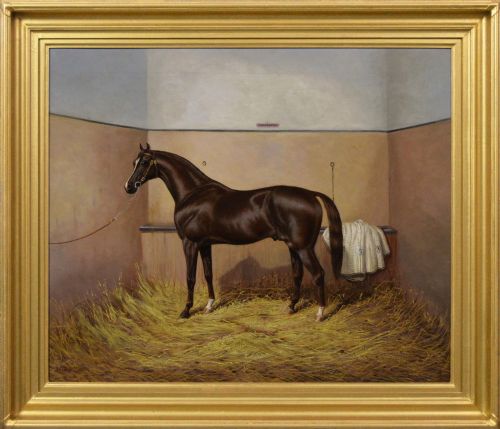


19th Century Racehorse Art
These pieces of 19th century racehorse art capture elite equine athletes and historic turf victories through period oil paintings and engravings.
19th Century Racehorse Art
Buyers examining 19th century racehorse art encounter focused equine portraits and historic racing scenes created during the Victorian era. These works document famous turf winners, notable jockeys, and specific race meetings through traditional mediums.
The selections available here predominantly feature oil paintings on canvas and antique prints, spanning specific dates from the mid-Victorian decades up to 1900. Pieces often record celebrated individual horses alongside their riders, trainers, or specific course events.
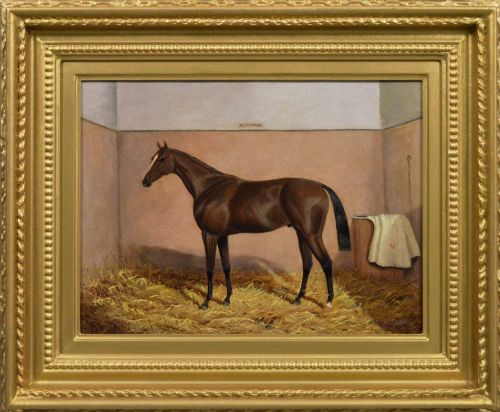
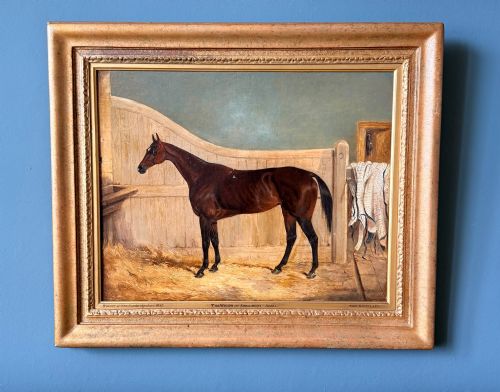
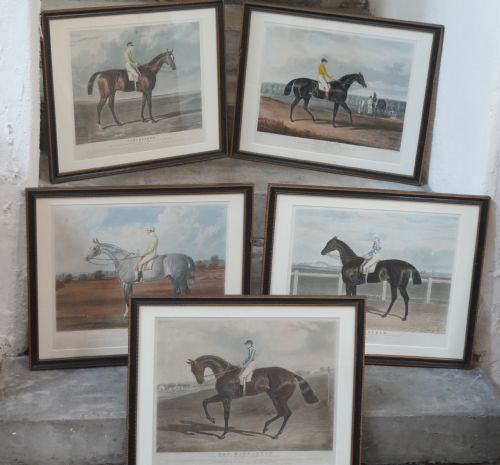
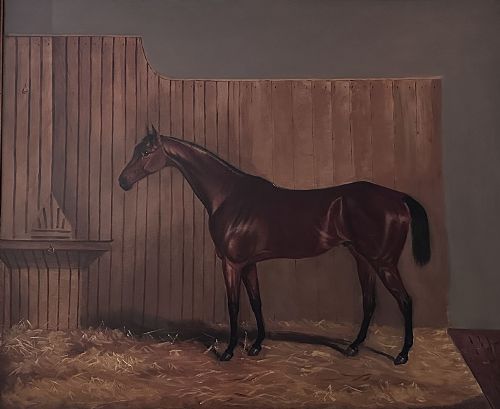
Artworks range from detailed oil portraits of named champions like Flying Fox and Melton to framed sets of nineteenth-century racing engravings and aquatints. Each piece serves as a visual record of Victorian sporting culture and equine conformation.
How they were made
Painters utilised oil paint applied to canvas surfaces, sometimes set within period wood and giltwood frames accented with gold leaf. This combination provided the depth and durability required for detailed equestrian portraiture.
Printmakers employed paper and specialised printing techniques to produce antique prints, engravings, and aquatints. These works captured fine linework and tonal gradations to depict galloping racehorses and jockeys accurately.
Several Victorian pieces proudly immortalise jockeys with names as grand as Mornington Cannon.
What varies in quality
The distinction between standard works and superior examples rests upon the precision of equine anatomy and the specific documentation of the subject. Master painters rendered muscle structure, light reflection on coats, and jockey posture with exceptional anatomical accuracy.
Provenance and historical context further elevate certain pieces, particularly those identifying celebrated race winners, specific tracks like Kempton Park, or recorded jockeys such as Fred Archer and Mornington Cannon. The preservation state of the original canvas, paper, and frame also influences the standing of each artwork.
Albert Clark·Thomas Walker Bretland·Samuel Spode·John Parker Davis
The 19th Century Racehorse Art Glossary
- Aquatint
- An intaglio printmaking technique that produces tonal effects resembling watercolours. It allows printmakers to achieve subtle shades of grey and colour in nineteenth-century racing prints.
- Giltwood
- Wood carved and covered with a thin layer of gold leaf or gold paint. This material forms the ornate frames frequently found on Victorian oil paintings.
- Engraving
- A printmaking method where an artist cuts a design into a hard plate with a sharp tool. The resulting lines hold ink to create detailed racing scenes on paper.
- Canvas
- A heavy woven fabric used as a surface for oil painting. It provides a durable and textured base for nineteenth-century equine portraits.
19th Century Racehorse Art: Frequently Asked Questions
What subjects appear in nineteenth-century racing art?
These works depict famous racehorses, named winners, jockeys, and starting moments at various tracks. Portraits often record specific champions alongside their owners and riders.
Subjects also include historical racing prints and multi-plate sets documenting major turf events of the Victorian era.
How do oil paintings differ from racing engravings?
Oil paintings utilise oil paint on canvas to create unique, textured portraits with rich colour depth. They frequently feature named horses and specific commissioning details.
Engravings are printed on paper using inked plates, allowing for multiple impressions of galloping scenes and racing sets intended for wider distribution.
Which materials frame these antique artworks?
Many nineteenth-century oil paintings retain original wood and giltwood frames, often enhanced with gold leaf. These surrounds complement the traditional style of Victorian sporting art.
Works on paper are typically protected behind glass within period frames suited to nineteenth-century domestic interiors.
How are specific racehorses identified in these pieces?
Inscribed titles on canvases or prints frequently name the winning horse, the jockey up, and the associated race meeting or cup. Documentation often records the owner and the specific year of the victory.
Artists' signatures and contemporary records further verify the identity of the equine subjects and the historical context of the race.