


Antique Thoroughbred Painting
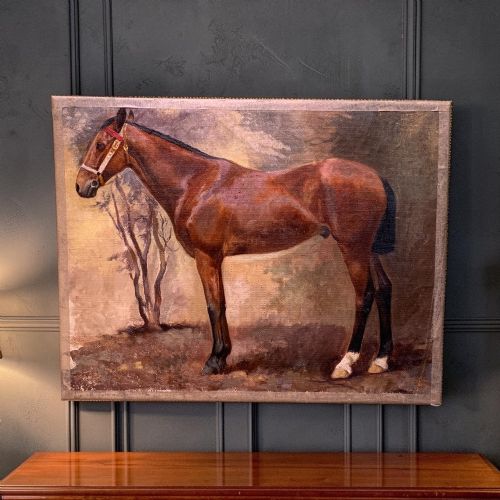
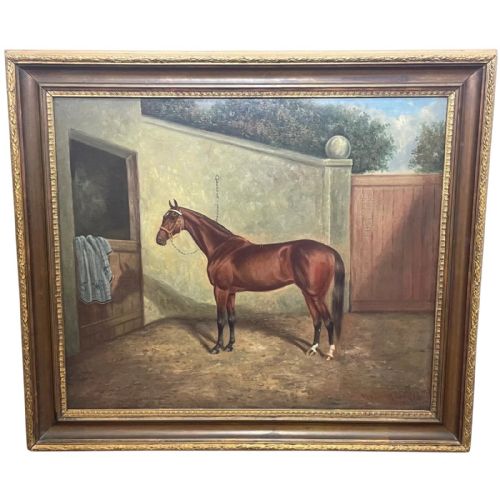
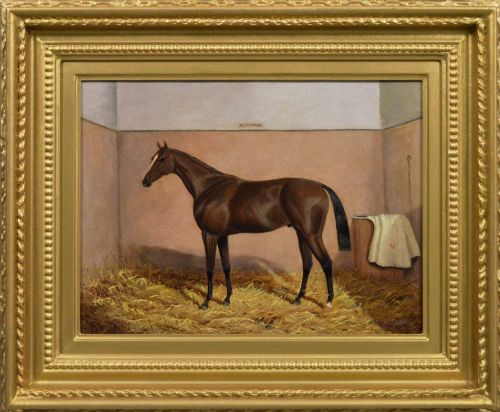
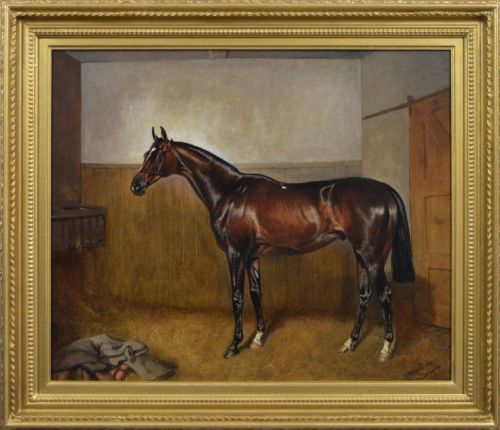
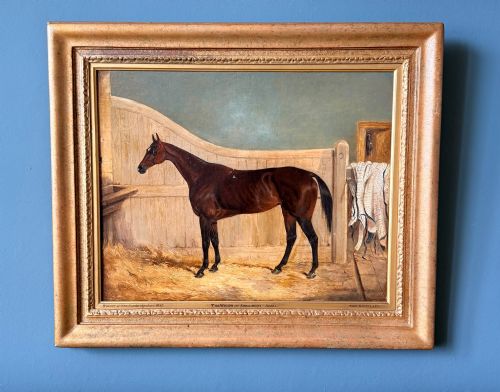
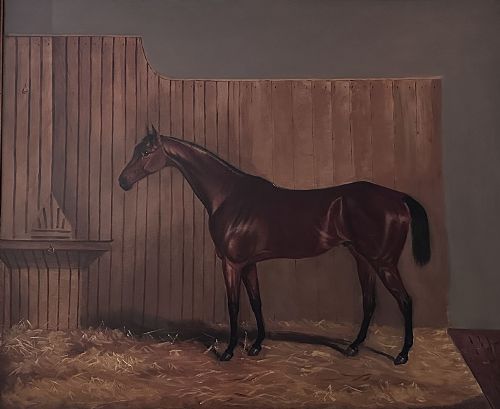
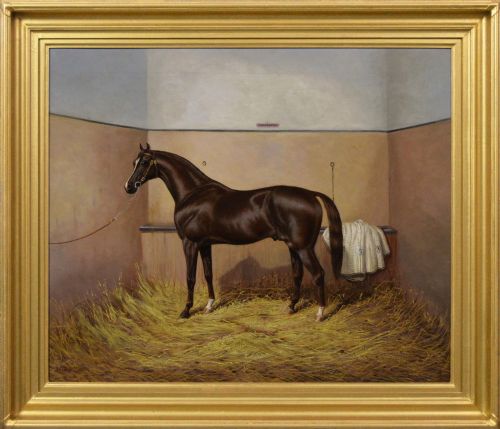
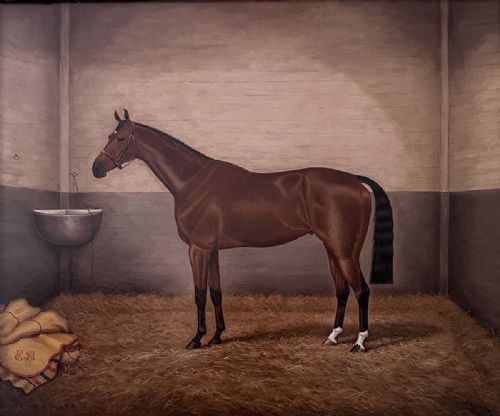
These antique thoroughbred painting works capture celebrated racehorses and stable portraits in oil on canvas.
Antique Thoroughbred Painting
An antique thoroughbred painting portrays famous racehorses, winners, and stable subjects executed in oil paint on canvas, spanning the nineteenth and early twentieth centuries.
The selections on this page encompass Victorian sporting art, Edwardian equestrian pieces, and British realism works depicting named winners like Spion Kop, Flying Fox, and Persimmon.
Buyers will encounter works ranging from mid nineteenth century studies by Thomas Walker Bretland to early twentieth century pieces by artists such as Albert Clark and Walter Herbert Wheeler.
How they were made
Artists applied oil paint onto canvas supports, mounted in wooden frames often finished with giltwood and gold leaf.
Canvases display layered brushwork to render equine anatomy, stable interiors, and jockey silks with precise detail.
King Edward VII owned the royal thoroughbred Persimmon, featured here alongside jockey Jack Watts.
What varies in quality
Quality rests upon the precision of equine anatomy and the distinct identification of specific racehorses, jockeys, and historical winning events.
Works attributed to documented sporting artists and notable portraitists demonstrate superior handling of light, horse conformation, and provenance.
Frederick Albert Clark·Albert Clark·John Alfred Wheeler·Thomas Walker Bretland·Edward Lloyd of Ellesmere·Samuel Spode·Alfred Wheeler·Walter Herbert Wheeler·Frank Giggs
The Antique Thoroughbred Painting Glossary
- Oil on Canvas
- A painting medium where pigments bound in drying oil are applied to stretched fabric. This was the primary method for creating durable sporting portraits throughout the nineteenth and twentieth centuries.
- Giltwood
- Wood that has been coated with a thin layer of gold leaf or metallic gilt. Many Victorian and Edwardian frames utilise this finish to complement equestrian artwork.
- Victorian Sporting Art
- A genre of painting dedicated to horses, racing, and field sports produced during the reign of Queen Victoria. These works record famous race winners, owners, and jockeys.
- Equestrian Portrait
- A representation focusing specifically on a horse, often shown in profile or within a stable setting. In these paintings, the identity of the animal is usually the primary subject of the canvas.
Antique Thoroughbred Painting: Frequently Asked Questions
What periods do these paintings date from?
The works span the nineteenth century through the Edwardian era and early twentieth century. Painters recorded notable racehorses and winners across these decades.
Most pieces align with Victorian sporting art and Edwardian equestrian styles.
How do I identify the horse in the painting?
Many canvases include inscriptions on the surface or stretcher identifying the horse, race, owner, or jockey. Famous subjects like Persimmon, Flying Fox, and Spion Kop are often named directly.
Historical records and racing archives help connect the subject to specific nineteenth and twentieth century turf events.
Where should I hang an equestrian oil painting?
These works suit traditional reception rooms, studies, and hallways where wooden furniture and framed art complement the canvas. Direct sunlight should be avoided to protect the oil paint and canvas.
Stable portraits and racing scenes pair well with period interiors and classic frames.
Who are some of the artists represented?
The selection includes works by painters specialising in equine subjects, such as Thomas Walker Bretland, Albert Clark, and John Alfred Wheeler. Other pieces come from artists like Samuel Spode and Walter Herbert Wheeler.
These painters documented notable racehorses, jockeys, and owners of the period.