


Antique Thonet Hat Stand
An antique thonet hat stand brings structural lightness and practical hallway utility to any interior through the graceful curves of steamed wood.
Antique Thonet Hat Stand
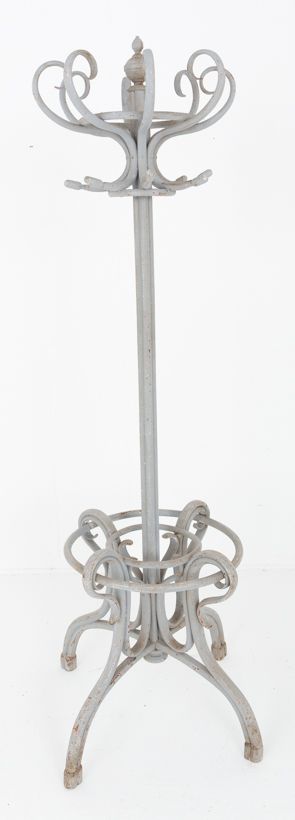
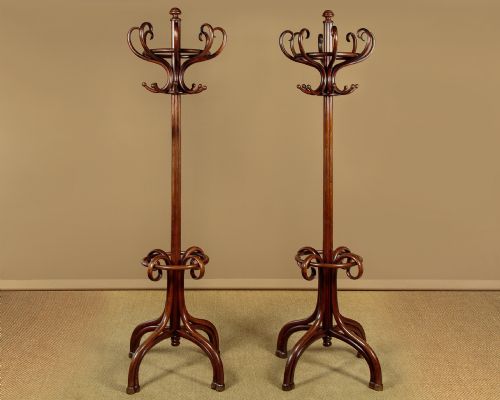
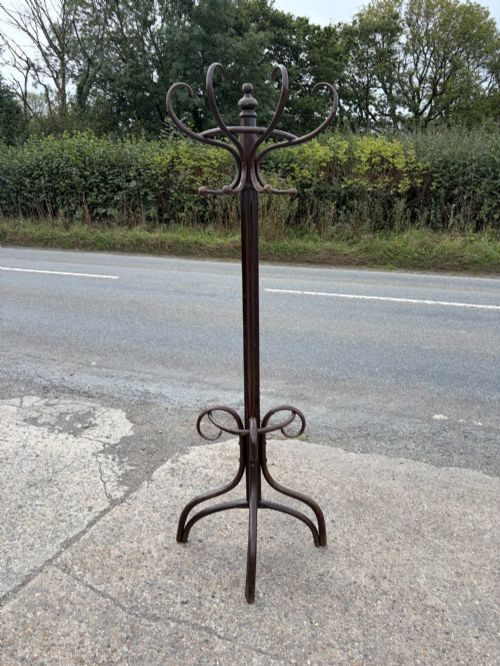
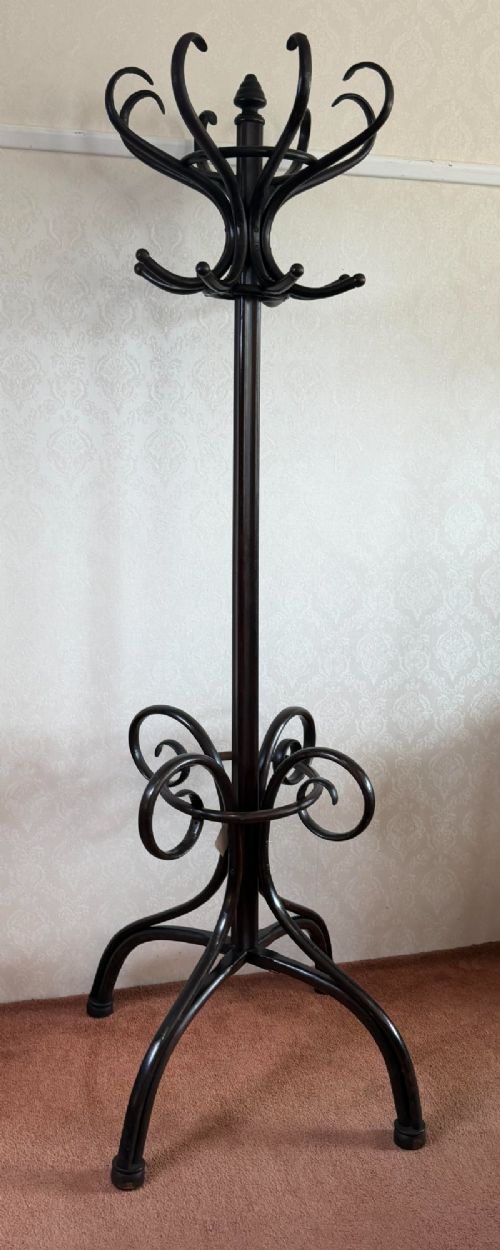
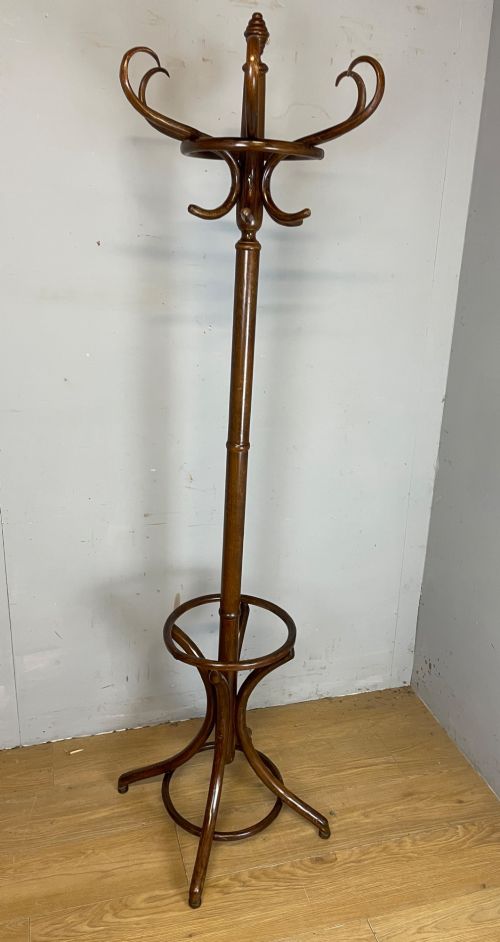
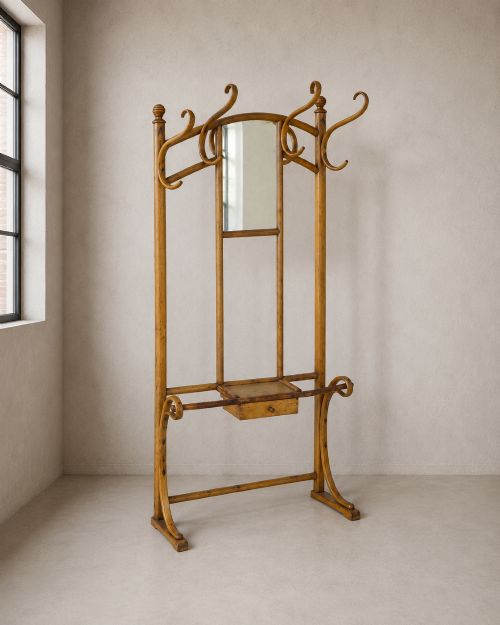
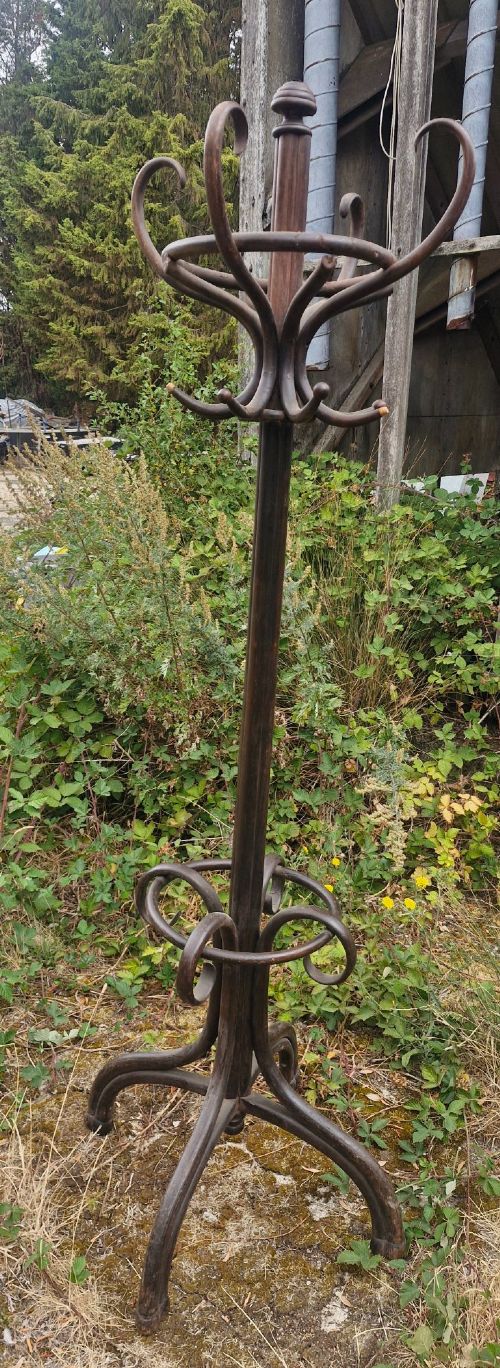
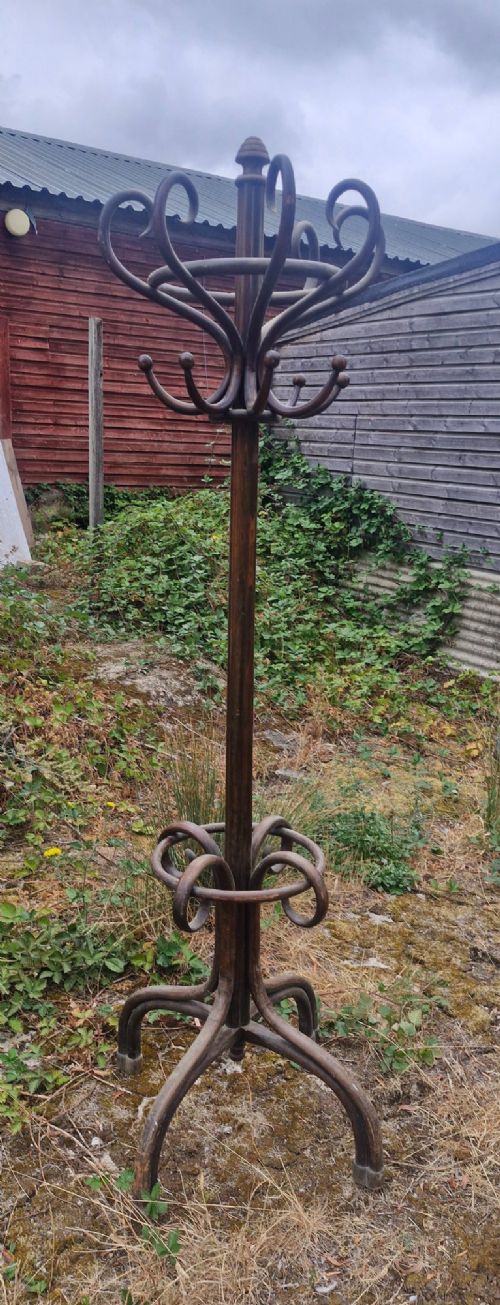
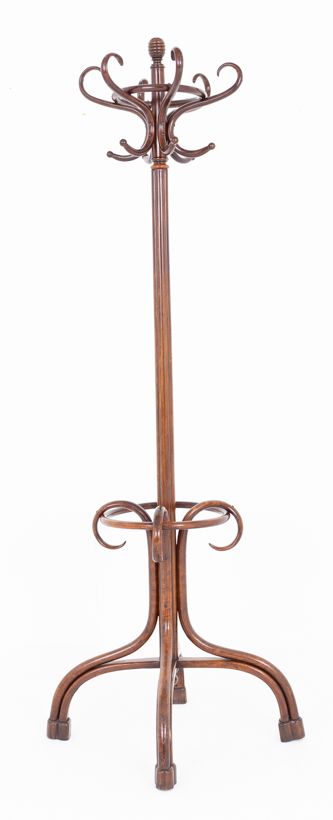
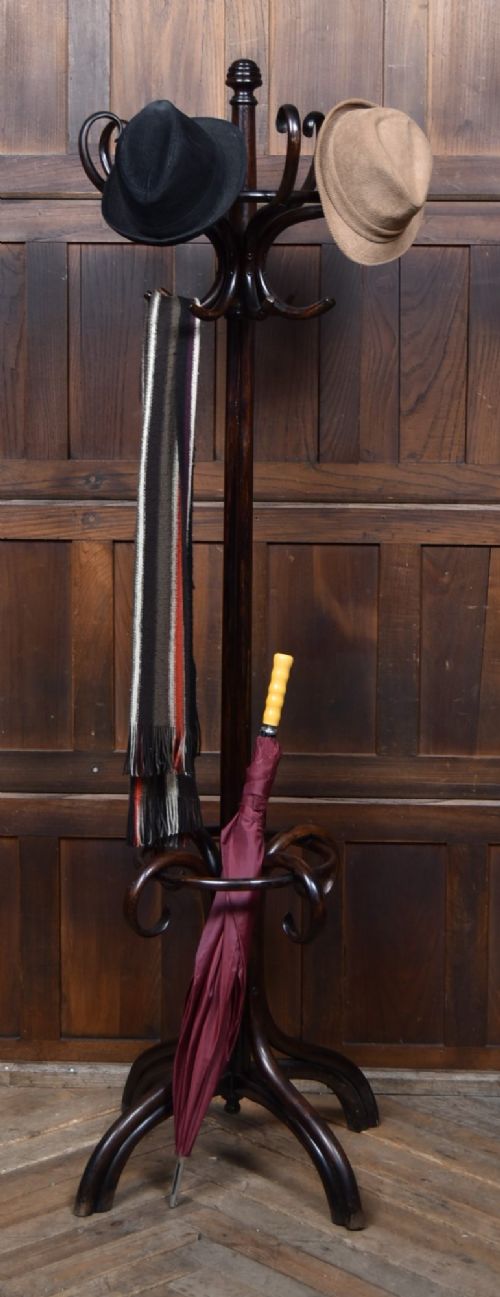
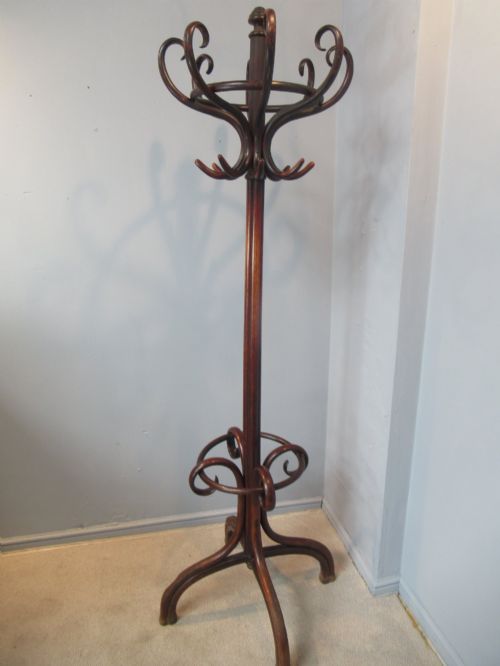
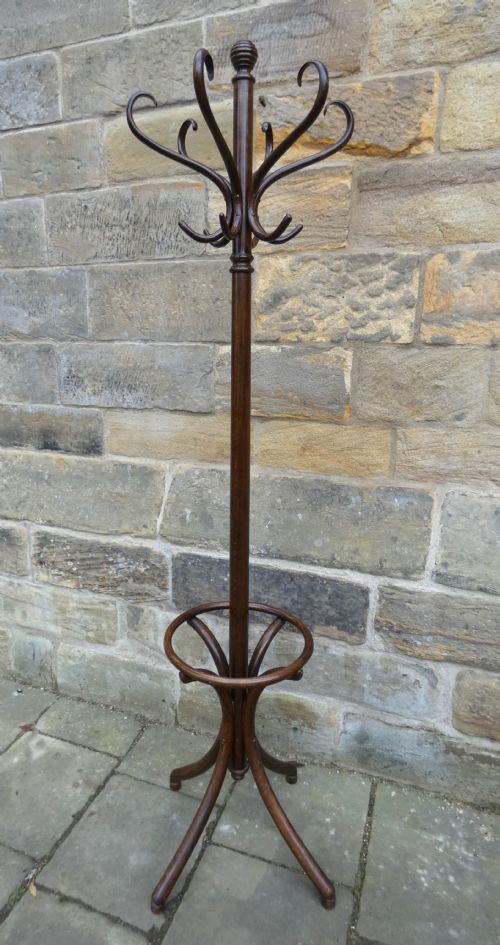
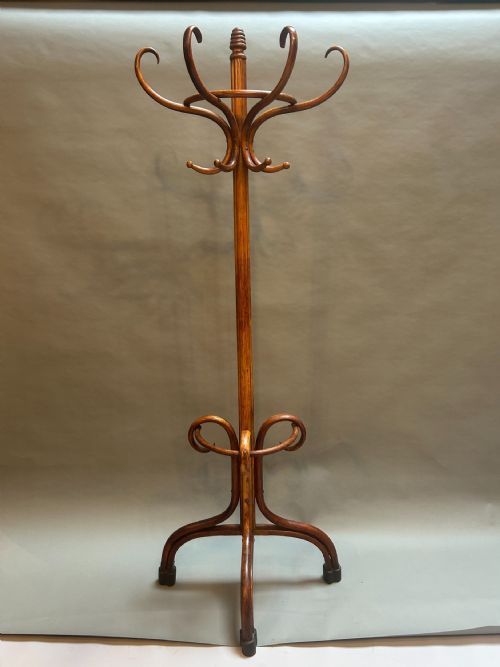
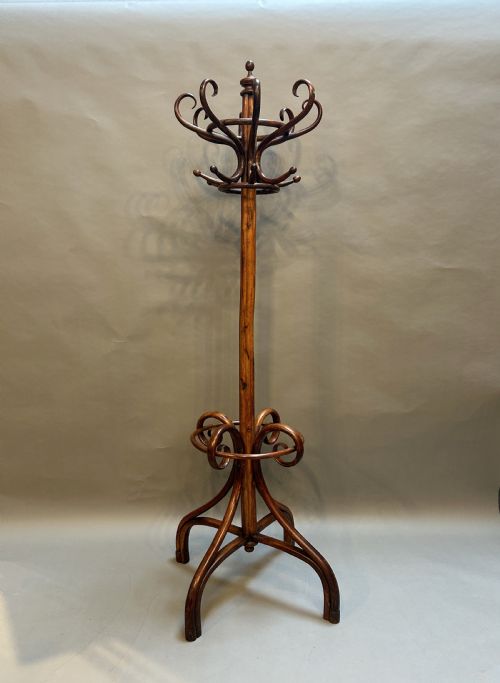
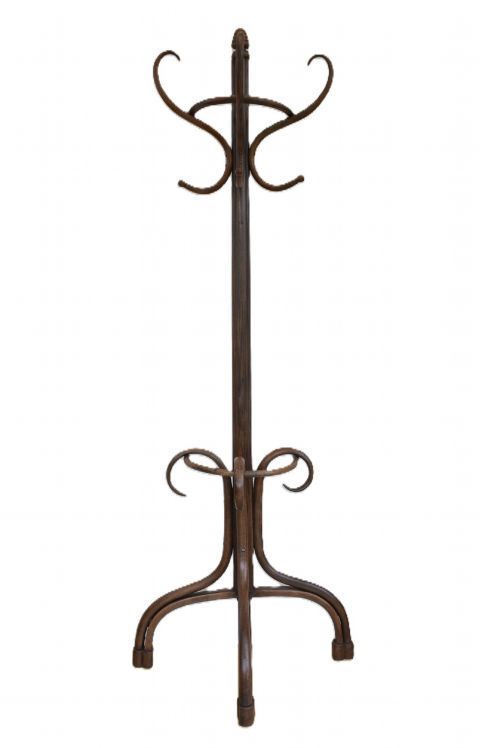
An antique thonet hat stand is a vertical piece of hallway furniture designed to hold garments, headwear, and walking sticks. The pieces seen on this page date from the nineteenth century, the Edwardian era, and the early twentieth century.
Most examples take the form of tall, freestanding poles with upper branching hooks and lower ring bases for umbrellas and sticks. Variants include half-round designs, wall-standing configurations, and revolving formats.
The dominant material origin and style is Austrian bentwood, produced through industrial steaming techniques that shaped solid timber into fluid curves. Pieces manifest in Victorian and Art Nouveau aesthetic traditions.
How they were made
Makers utilised solid beech and beechwood, exposing the timber to steam until it achieved enough pliability to bend into continuous arches and loops. Iron and brass hardware often secured the intersecting wooden components together.
Surfaces were finished with wood stain, paint, or clear coatings to highlight the natural grain of the steamed beechwood. Some iterations incorporate glass elements or honey-coloured tones into the overall design.
Antique Thonet Hat Stand Retail Price Guide 2026
Typical asking prices for thonet hat stand among the pieces listed under this phrase on Sellingantiques today, from the lower quarter to the upper quarter. They describe what is for sale here now, not the wider market.
Materials recorded across the inventory include steamed beechwood, glass, paint, and traditional wood stain.
What varies in quality
Distinctions in quality rest upon the complexity of the bentwood framework and the structural integrity of the upper revolving sections or double top configurations. Heavier, larger frames demonstrate superior stability.
The precision of the steaming and curving process dictates how cleanly the loops and hooks integrate into the central pole without tension fractures.
Thonet·Fischel
The Antique Thonet Hat Stand Glossary
- Bentwood
- Wood shaped by exposure to steam and pressure into curved forms. This technique defined the output of major Central European workshops during the nineteenth and early twentieth centuries.
- Demi Lune
- A half-round furniture shape designed to sit flush against a hallway wall. These variants save floor space while maintaining full hanging capacity.
- Beech
- A hard, dense timber selected for its response to steam bending. It forms the primary structural material for these stands.
- Hallstand
- A piece of furniture placed in an entrance area for coats, hats, and umbrellas. It combines upright hanging space with stability at the base.
- Revolving
- A design feature allowing the upper hat and coat section to turn on a central axis. This mechanism provides access to garments from multiple angles.
Antique Thonet Hat Stand: Frequently Asked Questions
How do I place a hall stand in a small hallway?
Selecting a half-round or wall-standing design allows the piece to fit flush against an entryway partition. These configurations minimise floor obstruction while keeping coats accessible.
Positioning the stand near the primary entrance ensures practical daily use for hats and coats. The slender wooden silhouette maintains an open feel in confined spaces.
How do I distinguish between periods?
Victorian and nineteenth-century examples often display darker wood stains and heavier ornamentation. Edwardian and 1910s pieces lean towards simpler lines and honey-coloured finishes.
Makers' stamps or labels, where present, help confirm the production era. Structural details like revolving tops align more commonly with early twentieth-century manufacturing.
How should I care for steamed beechwood?
Maintaining stable indoor humidity prevents the steamed timber from drying out or splitting. Gentle dusting with a dry cloth protects the original wood stain and paint finishes.
Avoiding placement near direct heat sources preserves the structural integrity of the curved joints. Regular checks of any metal fastening hardware ensure the upright pole remains secure.