
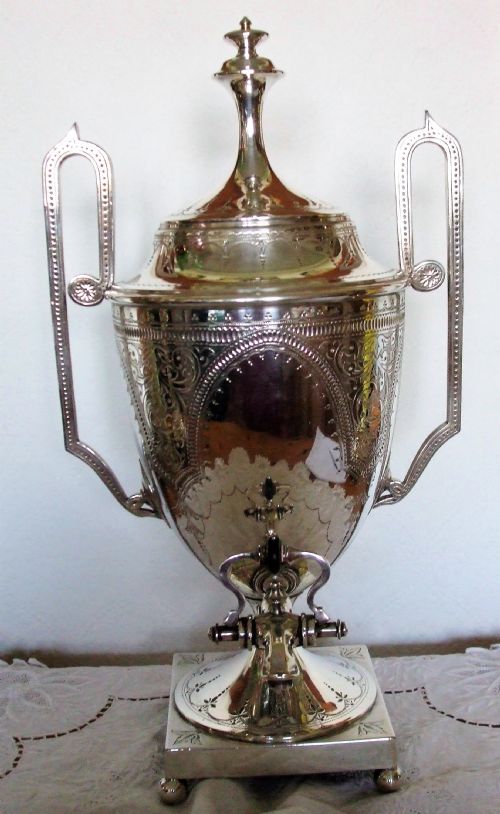
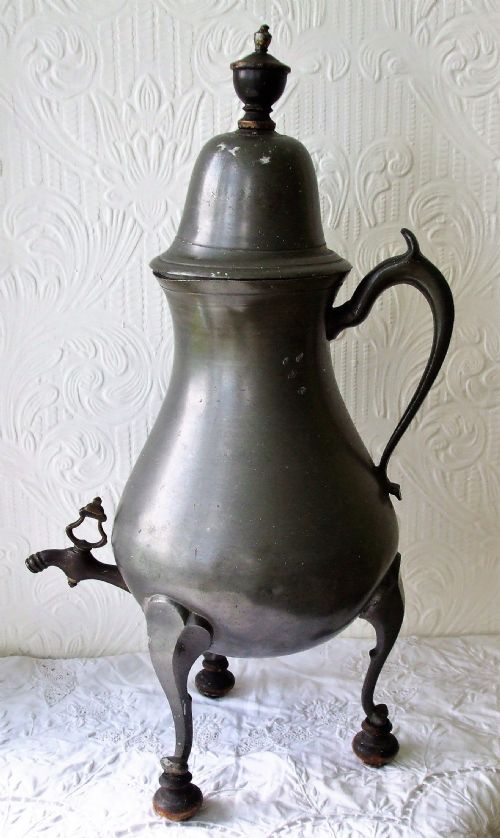
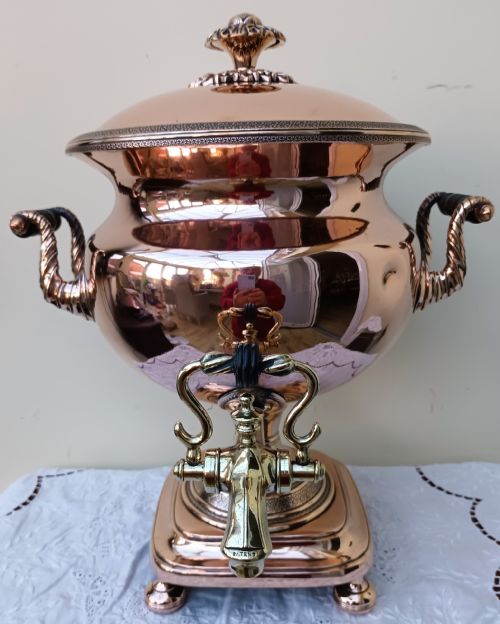
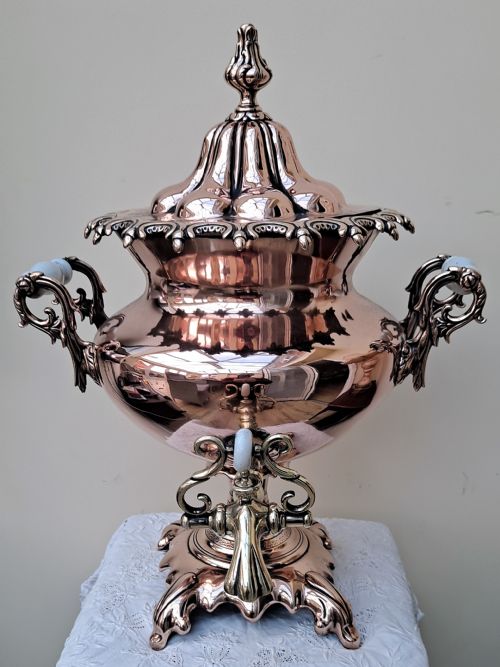


Antique Tea Urn Dispenser
An antique tea urn dispenser stands ready to bring historic warmth and heavy metal presence to a room.
Antique Tea Urn Dispenser
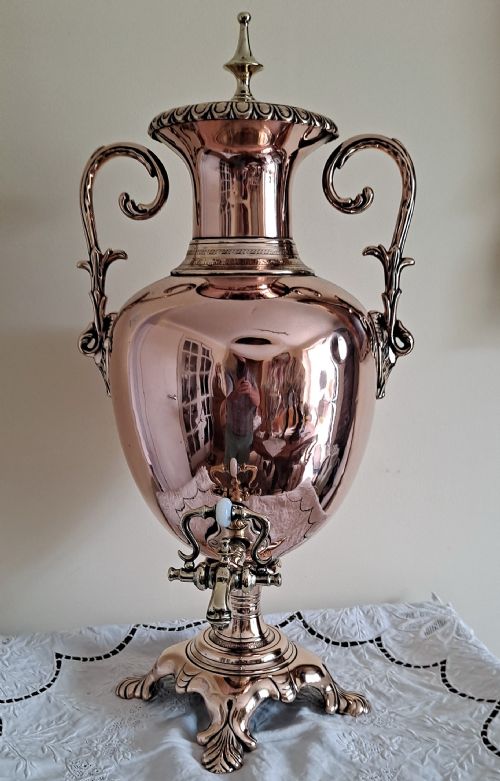
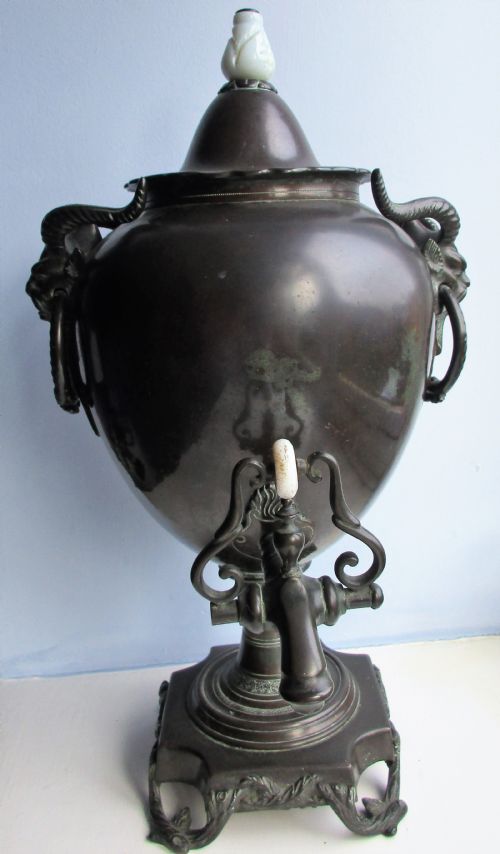
An antique tea urn dispenser serves as a large vessel designed for heating and pouring water, tea, or coffee at the formal table. These grand pieces include tea urns, samovars, coffee urns, and water urns created to anchor domestic hospitality.
The versions met most frequently on this page span the Georgian, Regency, and Victorian periods, often taking the form of copper or silver-plated samovars fitted with working taps. Makers from these eras constructed vessels that balance monumental scale with domestic utility.
Earlier Georgian examples often show neoclassical influences, while later Victorian pieces lean into heavy copper and brass construction or japanned Pontypool ware. Each object reflects the social ritual of hot beverage service from past centuries.
Materials and Construction
Metals dominate these pieces, with heavy copper, brass, bronze, and bell metal forming the primary bodies of the vessels. Silversmiths and metalworkers also utilised silver plate over copper or Sheffield plate to achieve a brilliant formal finish.
Makers incorporated functional elements such as bone handles, wooden insulators, and secure metal taps to manage the heat of the contained water. Surface treatments range from polished bright metal to dark japanned finishes on Pontypool ware.
Listings on this site include pieces spanning from the 18th century through the Edwardian era, featuring works in copper, brass, pewter, and silver plate.
Distinctions in Quality
The highest quality pieces retain their original internal heating chambers, spigots, and bone or wooden handle fittings rather than replacement parts. Superior examples display crisp chasing, balanced proportions, and substantial weight in the metal walls.
Execution of decorative details, such as classical handles, pedestals, and spouts, separates standard production from exceptional workshop output. The presence of identifiable maker marks from notable firms adds documented provenance to the physical weight of the metal.
Walker And Hall·Benetfink And Co
The Antique Tea Urn Dispenser Glossary
- Samovar
- A heated metal container traditionally used to heat and boil water for tea. These vessels typically feature an internal central tube for hot charcoal or a heating block.
- Japanned
- A style of European decorative finishing that emulates Japanese lacquer work. This technique creates a dark, glossy, hardened surface found on Pontypool ware.
- Sheffield Plate
- An early composite material made by fusing a thin layer of silver to a thicker copper base. This method produced durable wares with the rich appearance of solid silver.
- Bell Metal
- A hard alloy used for casting metalware, consisting primarily of copper and tin. This dense material provides durability and resonant acoustic qualities.
Antique Tea Urn Dispenser: Frequently Asked Questions
How do I use an antique tea urn?
These historical vessels are generally collected as decorative display objects rather than for daily beverage preparation. Many retain functional taps, but modern users typically keep them dry to preserve the antique metal and interior surfaces.
Placing an urn on a sideboard or table allows the rich copper, brass, or silver-plated surfaces to act as a dramatic focal point in a dining room or study.
What is the difference between an urn and a samovar?
A samovar specifically includes an internal heating mechanism, such as a vertical metal tube for hot coals or metal inserts, to keep water boiling. General tea urns and water urns often rely on external heat sources or serve simply as large dispensers for already heated water.
In daily antique terminology, the terms frequently overlap, as many domestic water vessels adopted the shape and tap arrangement of the traditional samovar.
How do I date a copper tea urn?
Dating relies on stylistic clues, construction methods, and any stamped maker marks or retailer signatures found on the base or rim. Georgian and Regency examples often feature neoclassical silhouettes, whereas Victorian pieces tend toward heavier proportions and more elaborate surface treatments.
Examining the assembly of the handles, the attachment of the tap, and the type of metal plating provides further evidence of the period of manufacture.
Can I polish antique silver-plated urns?
Silver-plated urns benefit from very gentle cleaning with specialised silver cloth to remove tarnish without wearing away the thin historic plating. Heavy abrasive polishes will damage the surface and expose the underlying copper base.
Copper and brass versions can be left with their natural aged patina or lightly maintained depending on whether a bright metallic finish or a darkened historical surface is preferred.