



Antique Tea Chest Table
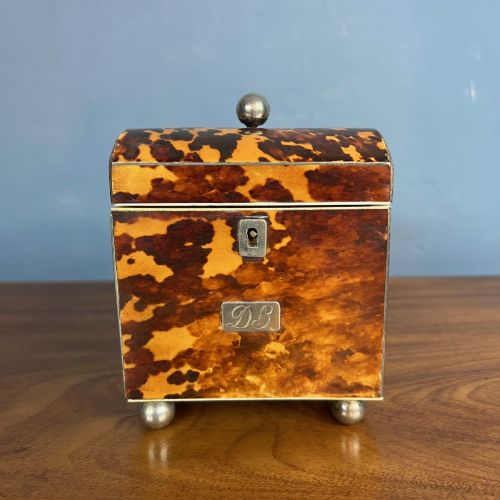
An antique tea chest table is a dedicated stand designed to hold loose leaf tea, combining the function of a caddy with that of a small occasional table.
Antique Tea Chest Table
When you search for an antique tea chest table, you encounter pieces primarily known in trade as teapoys or tea poys, alongside related side tables and caddies. These items originate predominantly from the Georgian, Regency, William IV, and Victorian periods, spanning the eighteenth and nineteenth centuries.
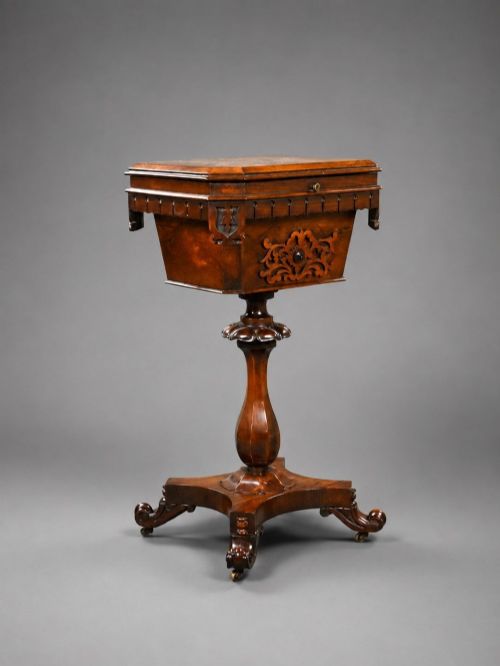
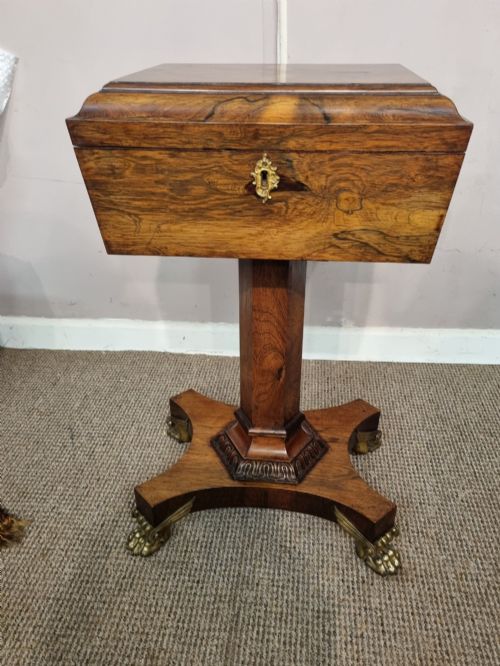
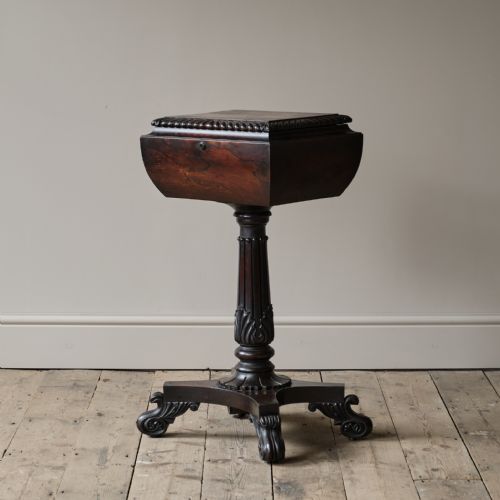
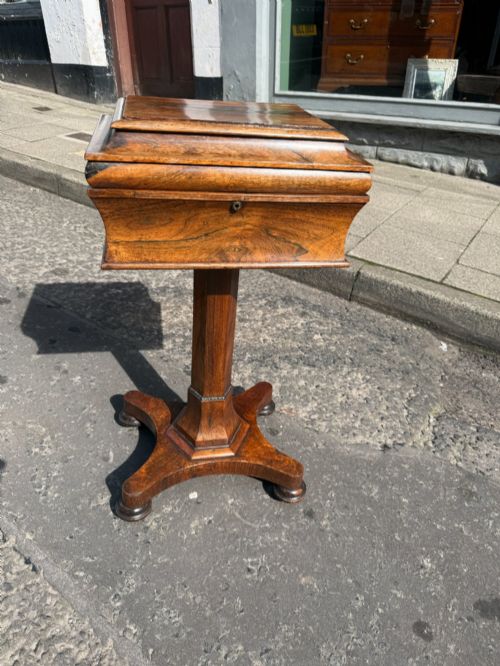
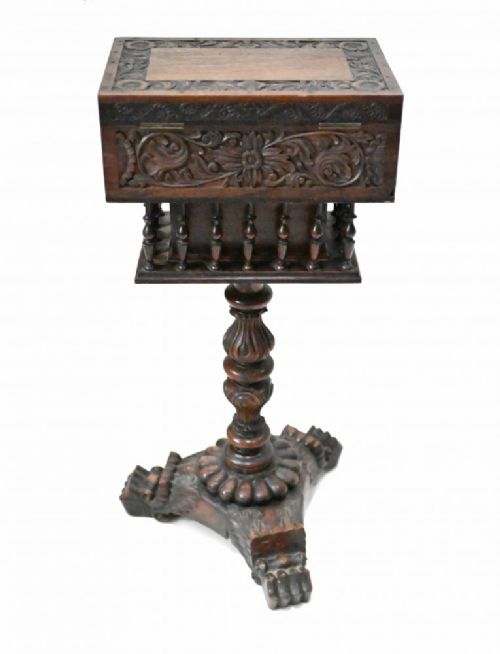
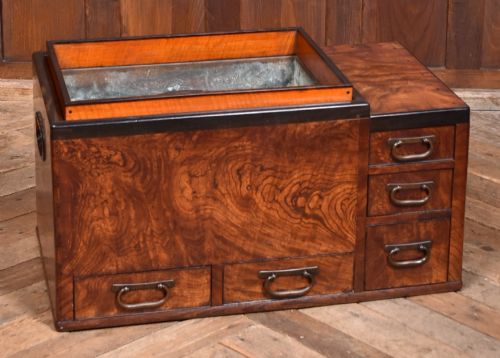
The version you are most likely to meet on this page is the rosewood or mahogany teapoy standing on a central pillar with carved feet, often featuring a fitted interior for canisters. Alongside standard English forms, the selection includes Anglo-Indian colonial carved furniture and Japanese hibachi vessels.
These pieces served as social centrepieces in wealthier drawing rooms, where the mistress of the house would mix and prepare the expensive dry tea leaves away from the servants. Their evolution moved from tabletop caddies on stands to substantial pedestal pieces that doubled as work boxes.

What varies in quality
The distinction between ordinary and exceptional pieces lies in the choice of timber veneer and the crispness of the secondary carving on the pillar and feet. Workshops operating at the highest level used solid, heavily figured woods and retained their original fitted interior compartments.
Maker attribution elevates certain examples, particularly where stamped signatures or documented stylistic traits link the piece to prominent cabinet makers of the Georgian and Regency eras. The survival of internal crystal mixing bowls and working locks further separates standard examples from superior survivals.
Antique Tea Chest Table Retail Price Guide 2026
Typical asking prices for tea chest table among the pieces listed under this phrase on Sellingantiques today, from the lower quarter to the upper quarter. They describe what is for sale here now, not the wider market.
The documented forms range from English pedestal teapoys and silver caddies to traditional Japanese hibachi vessels and campaign chests.
Gillows·Strahan
The Antique Tea Chest Table Glossary
- Teapoy
- A small table or stand designed specifically to hold tea caddies, originating from Anglo-Indian usage of the term derived from the Hindi word for three feet. They often incorporate internal compartments for canisters and a glass mixing bowl.
- Sarcophagus
- A box shape featuring a domed lid and tapering sides, frequently utilised for the main body of Regency teapoys. This architectural form lent a monumental appearance to domestic tea storage.
- Hibachi
- A traditional Japanese heating device or brazier used domestically, occasionally adapted or categorized alongside low tables in trade selections. These vessels typically employ metal linings and durable woods like keyaki.
- Padouk
- A heavy, dense tropical timber with a distinct reddish hue, favoured in Anglo-Indian colonial furniture production. It permitted intricate, deep relief carving that held sharp detail.
Antique Tea Chest Table: Frequently Asked Questions
What is a teapoy?
A teapoy is a specialised stand or small table designed to hold tea caddies and mixing bowls in the nineteenth-century parlour.
These pieces allowed hosts to prepare tea securely in the drawing room without relying on domestic servants during polite gatherings.
How were tea chest tables used?
They functioned as secure storage for expensive loose leaf teas, which were kept under lock and key to prevent household theft.
The hinged lid opened to reveal compartments for black and green teas, alongside a central glass bowl used for blending the leaves.
How do I date a tea chest table?
Dating relies upon observing the prevailing architectural styles, timber choices, and structural joinery visible across the piece. Regency examples frequently feature brass inlay and sarcophagus bodies, whereas Victorian pieces often display heavier proportions and darker walnut finishes.
Where should I place a teapoy at home?
These compact pieces adapt easily as side tables beside armchairs or sofas in a living room or study.
The internal compartments also make them useful for storing small modern accessories while retaining their historical character.