
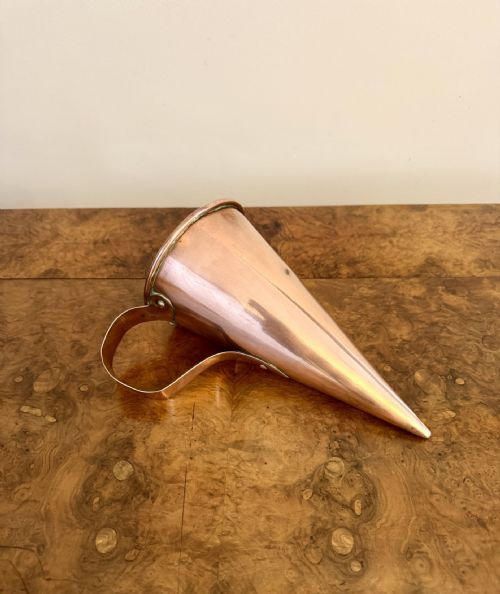
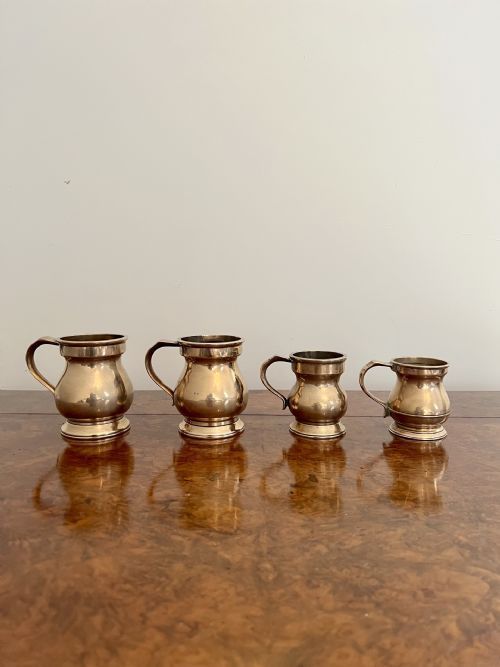

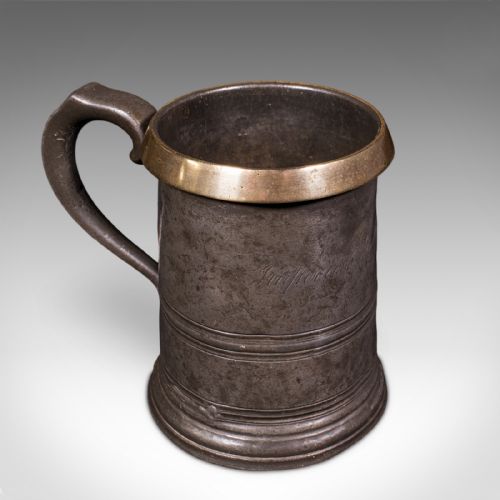


Antique Tavern Measure
An antique tavern measure brings the heavy weight of pub history and old metalwork straight onto a shelf.
Antique Tavern Measure
An antique tavern measure is a vessel designed to hold and dispense ale, spirits or wine in public houses, taking forms from small gill jugs to large gallon flagons. These pieces span the eighteenth and nineteenth centuries, covering Georgian and Victorian eras across England, Ireland, Scotland, and the Channel Islands.
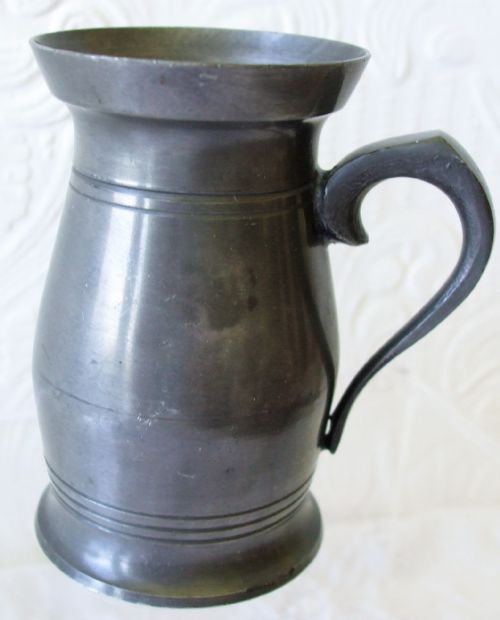
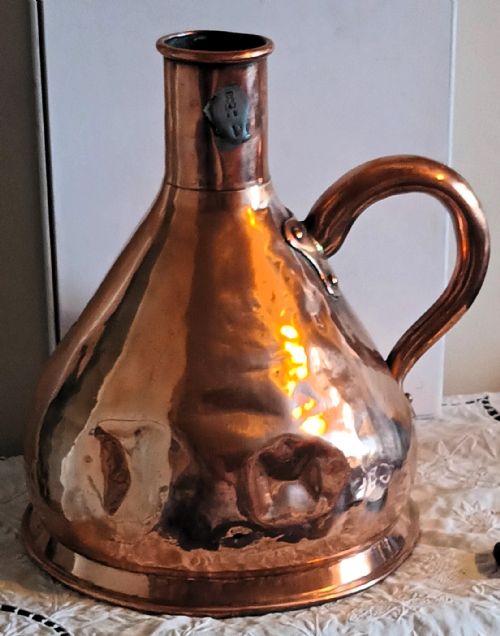
The buyer meets pewter and copper most frequently on this page, appearing as single jugs or graduated sets. Forms range from bell-shaped tankards and haystack measures to flat-lid flagons and tall Scottish tappit hens.
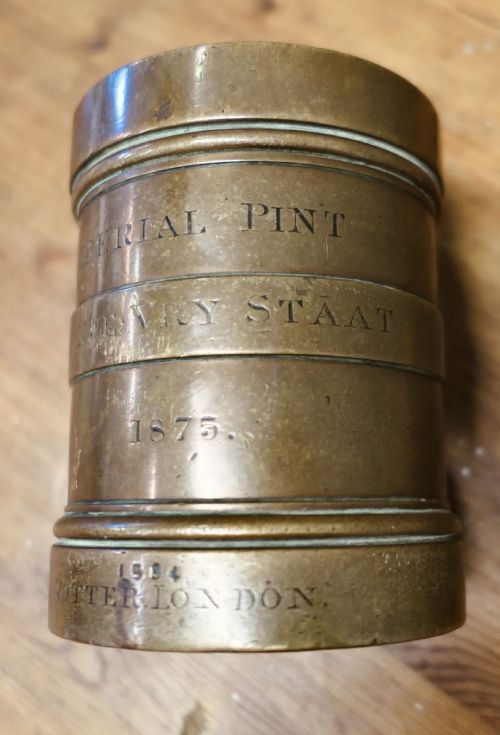
Regional variations emerge clearly in the styles, such as Irish haystack measures or Channel Islands vessels stamped with local capacities. Many pieces bear touchmarks, verification stamps like the VR crown, or pub names that anchor them firmly to their working past.
The markers of distinction
Quality rests upon crispness of form, original surface condition, and the legibility of maker marks or capacity stamps. Pieces that retain unpolished patinas and clear touchmarks from known makers carry greater historical substance than heavily cleaned examples.
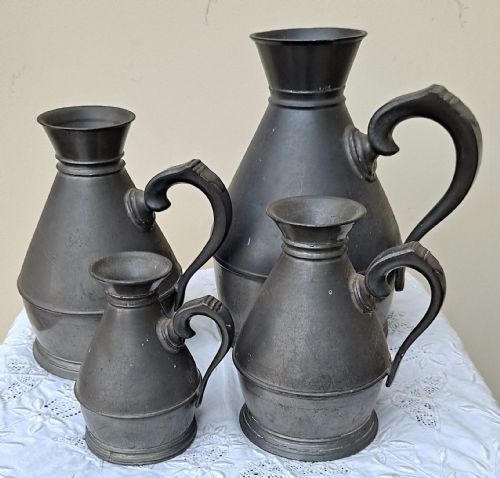
Completeness defines sets, where a graduated row of four or seven matching jugs survives intact without replacement pieces. The thickness of the cast metal and the balance of applied handles also separate utilitarian workshop output from finer documented commissions.
Listings feature copper and pewter most frequently, alongside brass, bronze, and lead across Georgian and Victorian periods.
Potter of London·J. Bower·Frederic Sanders·Thomas Phillips I·Loftus of Oxford Street London·John De St Croix
The Antique Tavern Measure Glossary
- Tappit hen
- A traditional Scottish pewter measure with a lid and a knob on top, often holding a Scots pint. It represents one of the heavier forms found in early tavern metalware.
- Haystack measure
- A distinctive Irish or English jug with a bulging body resembling a stacked haystack. These pieces frequently appear in graduated sets of multiple sizes.
- Touchmark
- An official stamp impressed by a metalworker or guild onto pewter to show the maker's identity. These marks help historians trace the workshop and date of a vessel.
- Flagons
- Large metal pouring vessels with lids and handles, used to carry liquids from casks to tables. They appear in both flat-lid Georgian styles and taller Victorian formats.
Antique Tavern Measure: Frequently Asked Questions
What are antique tavern measures?
They are historic metal vessels used in public houses to measure and serve ale, spirits, and wine. Smiths fashioned them from pewter, copper, and brass to meet strict legal standards for serving alcohol.
Surviving examples range from small individual gill and pint jugs to massive two-gallon flagons and complete graduated sets.
How were these measures used?
Landlords used them behind the bar to transfer liquids from storage casks into drinking vessels for patrons. They served as working tools that required sturdy construction and accurate volume capacities.
Many bear verification stamps and pub names, showing they stayed in active commercial service for generations before becoming decorative objects.
How do I date an antique measure?
Dating relies on stylistic shifts in body shapes, handle designs, and lid types across the Georgian and Victorian periods. Earlier eighteenth-century pieces often feature flat lids and heavier cast pewter bodies.
Maker touchmarks and royal verification ciphers like the VR stamp provide narrower date ranges by linking the vessel to recorded craftsmen and reigning monarchs.
How do I clean copper and pewter?
Collectors generally preserve the dark patinas and aged surfaces rather than polishing them to a bright metallic shine. Gentle dusting and occasional soft waxing protect the metal from further corrosion.
Harsh metal polishes strip away historical wear and erase faint touchmarks, diminishing the character and age of the piece.
Are marked pieces more desirable?
Measures bearing clear maker touchmarks or tavern inscriptions carry stronger historical attribution. Stamps showing regional capacities or royal verification add layers of documentary interest.
Unmarked vessels remain common, but legible workshop signatures help confirm origins and periods with greater certainty.