



Antique Tavern Bench
These heavy timber seats are built for use, and an antique tavern bench brings years of public house history straight into a domestic room.
Antique Tavern Bench
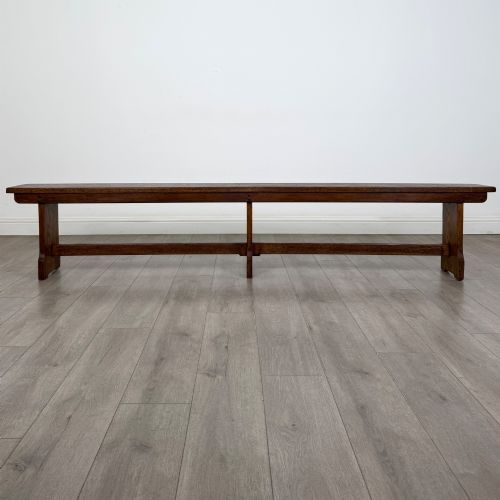
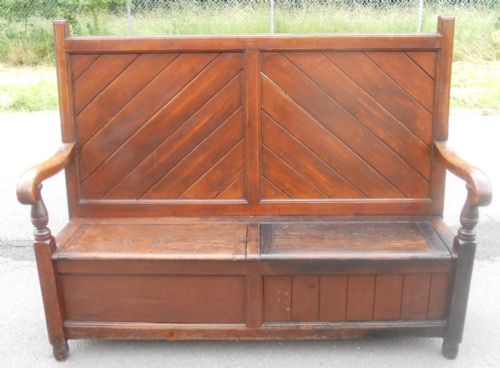
An antique tavern bench is a sturdy timber form designed originally for public houses, inns, and firesides. These seating pieces appear frequently in pine, oak, and elm, often taking the form of high-backed settles or long trestle benches.
The versions most commonly met on this page span the eighteenth and nineteenth centuries, including Georgian and Victorian examples. Many pieces display regional vernacular traits from English, Welsh, and French traditions, ranging from simple rustic farmhouse designs to box-panelled settles.
Buyers often encounter long formats built to accommodate multiple sitters, as well as high backs intended to shield patrons from draughts. The forms combine practical utility with robust construction, reflecting their origins in busy commercial and domestic interiors.
Materials and construction
Makers relied on durable domestic timbers such as oak, pine, and elm to withstand heavy daily use. Oak provided structural strength for framing, whilst pine and elm frequently formed larger panels, seats, and long boards.
Joinery methods prioritized solidity, utilising pegged joints, trestle supports, and panelled construction rather than delicate fixings. Many surfaces retain historic paint finishes or developed deep patination over centuries of wear.
Some tall settles double as impromptu windbreaks, proving that eighteenth-century pub design anticipated indoor weather control.
Assessing quality and character
Quality in these seats rests upon the integrity of the timber and the depth of surface patination accumulated through generations of use. Examples with original painted finishes or untouched timber surfaces stand apart from those stripped or overly restored.
Proportion and scale also dictate distinction, particularly in longer refectory formats and high-backed settles. The balance between utilitarian strength and regional design subtleties marks the finer examples in this tradition.
The Antique Tavern Bench Glossary
- Settle
- A wooden bench with a high back, solid arms, and often a storage box beneath the seat. This form protected sitters from cold draughts in communal rooms.
- Vernacular
- Architectural and furniture styles created by local makers using regional materials and traditional methods rather than formal academic designs.
- Trestle
- A structural support consisting of a horizontal beam balanced on two vertical legs or frames. This system provides stable support for long benches and tables.
- Patina
- The surface sheen and coloration developed by wood and paint over decades of handling, light exposure, and polishing.
- Box Panelled
- Construction utilising flat wooden panels fitted within a grooved frame. This technique adds structural rigidity to the backrests of heavier settles.
Antique Tavern Bench: Frequently Asked Questions
Where were these benches originally used?
These benches served patrons in public houses, alehouses, and inns across Britain and France. Their sturdy builds suited commercial spaces that saw constant daily traffic.
Over time, many migrated from public rooms into farmhouse kitchens and hallways where long seating proved equally practical.
How do I care for historic timber surfaces?
Historic wood benefits from regular dusting with a soft cloth and occasional treatment with suitable natural waxes. Keeping these pieces away from direct heat sources prevents the timber from splitting.
Original painted finishes require particular care to preserve the remaining pigment and prevent flaking.
Are high back settles comfortable?
High backs were engineered to block cold draughts in unheated rooms rather than for lounging. Pairing them with a simple squab cushion makes daily sitting much more comfortable.
The upright posture encourages an attentive seating position suitable for dining or hallway use.
How do I distinguish eighteenth and nineteenth century pieces?
Eighteenth century examples often display hand-carved details, pegged joinery, and deeper patination characteristic of earlier vernacular workshop methods. Nineteenth century versions tend towards simpler production techniques while maintaining robust timber frames.
Examining the underside, tool marks, and fastener types helps clarify the period of manufacture.