
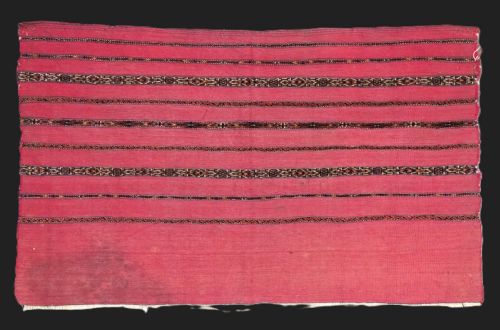


Antique Tapestry Weave Carpet
An antique tapestry weave carpet brings rich texture and geometric or floral motifs to a room, drawing on traditions from European chateaux to tribal tents.
Antique Tapestry Weave Carpet
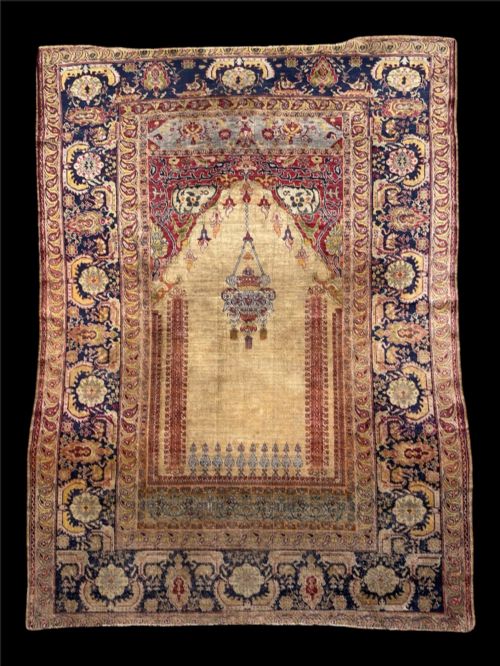
When searching for an antique tapestry weave carpet, buyers encounter a diverse range of flatwoven and pile textiles spanning the nineteenth and early twentieth centuries. These pieces originate from varied weaving traditions, including Bessarabian kilims, Turkmen tribal weavings, and French Aubusson carpets.
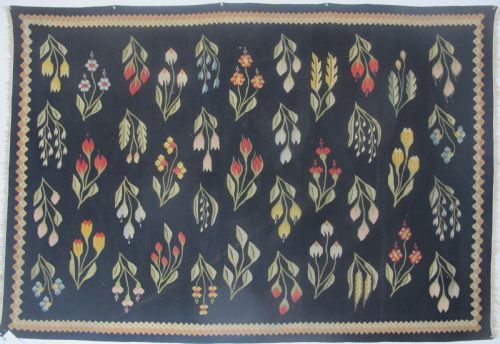
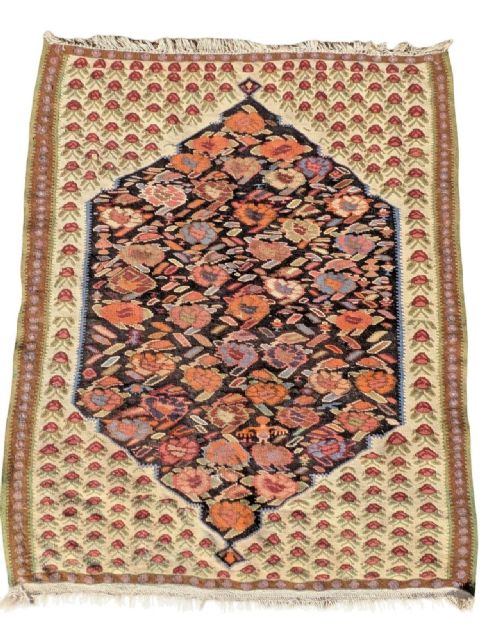
The selections on this page lean heavily towards regional flatweaves, notably Pirot and Sarkoy kilims alongside Caucasian and Anatolian examples. Buyers frequently find utility in these lighter formats as area rugs or wall hangings, bringing distinct regional patterns into contemporary interiors.
Materials and construction
The makers relied primarily on wool, cotton, and silk, employing natural dyes to achieve durable colour across the finished surfaces. These organic colourants weathered decades of use while retaining their underlying warmth.
Weavers utilised slit-tapestry techniques and banded flatweave constructions, sometimes joining multiple narrow strips together to form larger formats. This meticulous hand-knotting and flatweaving resulted in robust textiles capable of enduring generations of daily wear.
The listings span from the mid-nineteenth century through the 1930s, incorporating wool, cotton, silk, and natural dyes.
Evaluating the standard
Quality rests heavily on the tightness of the weave and the precision of the graphic design, distinguishing finer workshops from simpler utility pieces. Dense structural integrity ensures the textile maintains its form over time.
The preservation of natural dyes and the subtlety of the colour palette also separate superior examples from standard ones. Tonal depth and clarity in motifs indicate disciplined craftsmanship during the weaving process.
The Antique Tapestry Weave Carpet Glossary
- Kilim
- A flatwoven carpet or rug produced without a pile, common throughout Turkey, the Caucasus, and Eastern Europe. These versatile textiles serve as floor coverings or decorative wall hangings.
- Chuval
- A large storage bag face produced by Turkmen tribes, traditionally used for household storage inside a yurt. They feature distinctive tribal guls and geometric medallions.
- Sofreh
- A spread or cloth woven for eating or food preparation purposes, often associated with nomadic and village traditions. They display minimalist or functional banded patterns.
- Aubusson
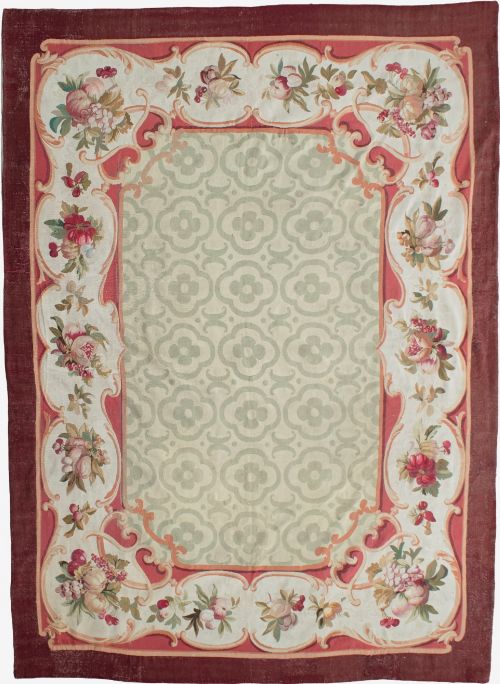
- A style of French tapestry-weave carpet originating from the town of Aubusson, typically featuring classical floral and architectural motifs. These grand pieces reflect European chateau aesthetics.
- Gul
- A medallion or repeating primary motif used in Turkmen and Central Asian carpet design. Each tribal group utilises specific variations to denote heritage.
Antique Tapestry Weave Carpet: Frequently Asked Questions
How do I clean an old carpet?
Gentle surface brushing and professional specialist cleaning preserve the natural wool fibres and organic dyes without causing structural damage.
Avoid immersion washing or harsh chemical treatments, as these methods weaken the weave and cause colour bleeding across the textile.
Where should I place a flatweave?
These textiles suit low-traffic areas like bedrooms, studies, or hallways where heavy furniture will not obscure the intricate graphic patterns.
Using a quality underlay prevents slipping and cushions the thin flatwoven structure against hard flooring surfaces.
Are these pieces reversible?
Most traditional flatweaves display similar patterns and colours on both sides because the weft yarns interlace completely across the warp.
Flipping the textile periodically distributes wear evenly across the surface and protects the fibres from uneven fading in direct sunlight.
What defines a tribal design?
Tribal designs rely on geometric motifs, stylised animals, and symbolic medallions passed down through generations within specific nomadic groups.
These patterns often communicate regional identity and family heritage rather than following formal academic design rules.