
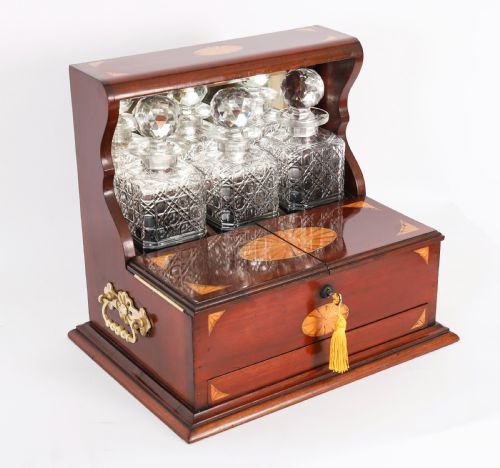


Antique Tantalus Cabinet
An antique tantalus cabinet locks away spirits to keep guests at bay, combining clever mechanism with fine joinery.
Antique Tantalus Cabinet
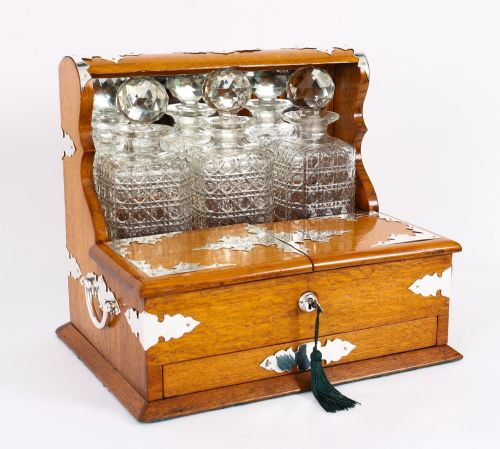
An antique tantalus cabinet secures decanters behind a locking bar, a clever Victorian invention designed to prevent uninvited refills from staff or guests. When you search for an antique tantalus cabinet, you find drinks furniture that ranges from simple single-bottle holders to elaborate games compendiums.
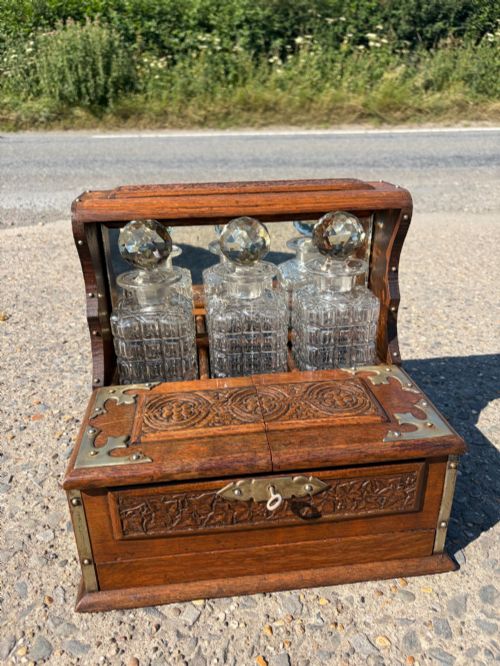
The versions most common on this page date from the Victorian and Edwardian periods, often housing three cut crystal decanters. These pieces frequently double as dry bars, humidors, or games boxes with fitted compartments for cards and chips.
Makers housed these drinking vessels in robust cases shaped as decanter boxes, drinks cabinets, and liquor coves. The overarching purpose remains social display combined with secure storage for fine spirits.
Materials and construction
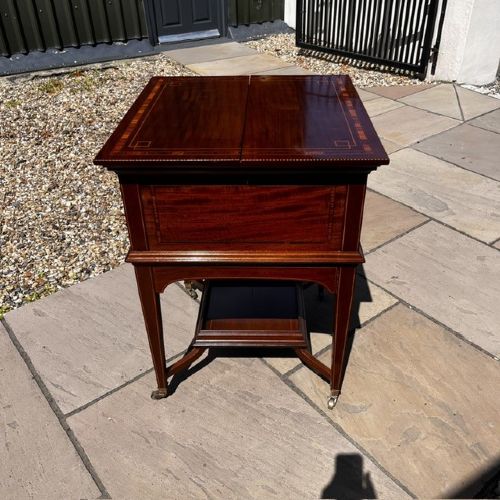
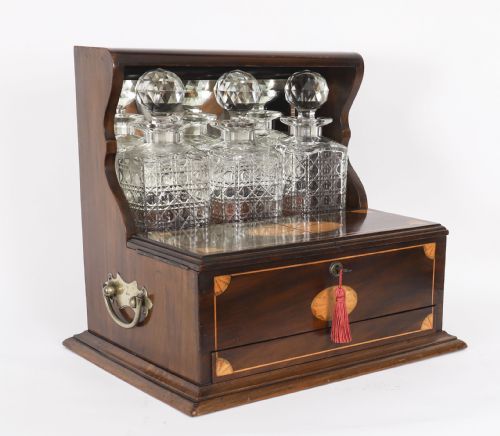
Cabinetmakers built these pieces using solid and veneered timbers including oak, blonde oak, pollard oak, mahogany, walnut, and coromandel, often embellished with satinwood inlay or brass mounts. These woods provided the structural integrity required to hold heavy glass decanters and internal mechanisms.
The bottles themselves are typically formed from cut crystal or cut glass, paired with silver-plated locking mechanisms and occasionally mirror glass backs. Joinery incorporates marquetry stringing and brass banding to secure the corners and edges of the wooden housings.
Victorian hosts used these locking stands to frustrate thirsty but unscrupulous house guests.
Quality variations
Quality rests in the choice of cabinet timber and the complexity of the internal fittings, such as integrated games compendiums or humidor compartments. Higher grade examples feature decorative veneers like coromandel or elaborate satinwood inlay alongside substantial brass mounts.
The refinement of the locking mechanism and the matching quality of the cut crystal decanters separate superior specimens from simpler single-bottle oak cases. Cabinetwork with marquetry stringing and well-fitted dry bar interiors represents the more ambitious end of production.
The Antique Tantalus Cabinet Glossary
- Tantalus
- A locking device that holds decanters by their necks to prevent access without a key. Named after the mythological Greek figure who was condemned to stand in pool of water beneath fruit he could not reach.
- Compendium
- A fitted box containing multiple items for games or social use, frequently combined with a tantalus in nineteenth-century drinks cabinets.
- Cave a liqueur
- A French liquor cabinet, often containing matched decanters and small glasses within a portable wooden case.
- Marquetry
- Decorative woodwork where pieces of veneer are fitted into a ground to form floral or geometric patterns. It adds visual texture to the exterior surfaces of cabinet furniture.
Antique Tantalus Cabinet: Frequently Asked Questions
How does a tantalus lock work?
A metal bar drops across the stoppers of the decanters, held in place by a mechanical lock secured with a key. Turning the key releases the sliding bar upwards so the bottles can be lifted free.
Without the key, the stoppers remain trapped beneath the metal restraint, preventing anyone from pouring a drink.
What is a games compendium cabinet?
A games compendium cabinet incorporates fitted compartments for playing cards, counters, and dice alongside the drinks decanters. These multi-purpose pieces were designed for drawing rooms and gentlemen's clubs.
They combine social recreation with hospitality in a single lockable wooden case.
How do I date an oak tantalus?
Dating relies on the style of the cabinetwork, the wood finishes, and the era's hardware preferences. Victorian pieces often display heavy brass mounting or Gothic Revival influences.
Edwardian examples tend toward lighter mahogany and satinwood inlay, while earlier nineteenth-century variants utilise pollard oak or coromandel.
Can I use replacement decanters?
Replacement decanters are difficult to fit because original tantalus frames are engineered precisely to match the body and neck dimensions of the specific crystal bottles. Even slight variations in glass-blowing can prevent the locking bar from dropping correctly.
Matching replacement cut crystal decanters requires careful measurement of the collar height and body width.