





Antique Tambour Bedside Cabinet
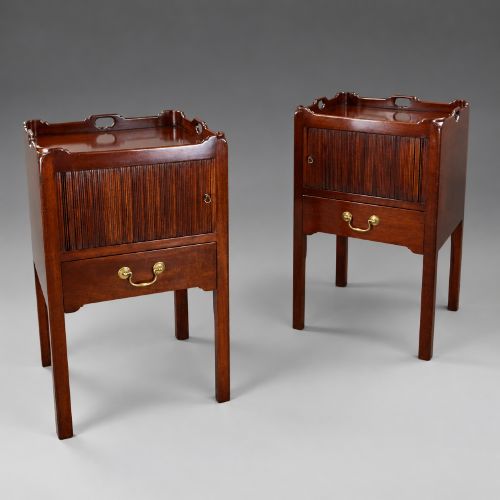
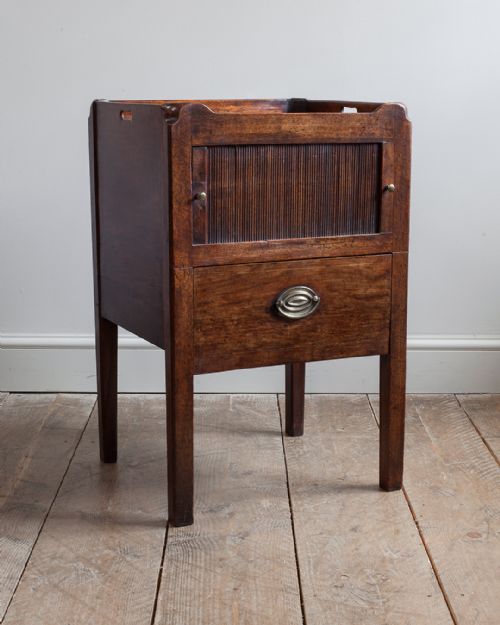
An antique tambour bedside cabinet conceals storage behind flexible wooden slats, offering compact elegance for a traditional bedroom.
Antique Tambour Bedside Cabinet
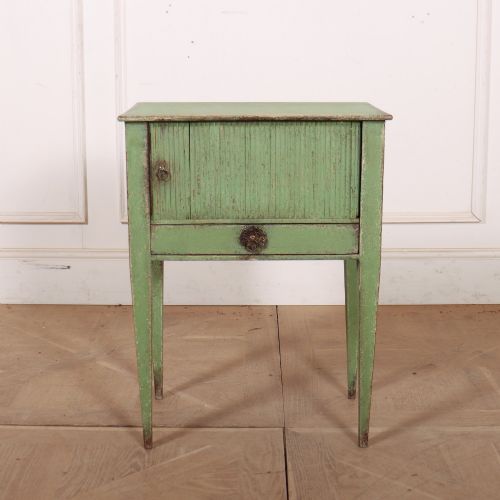
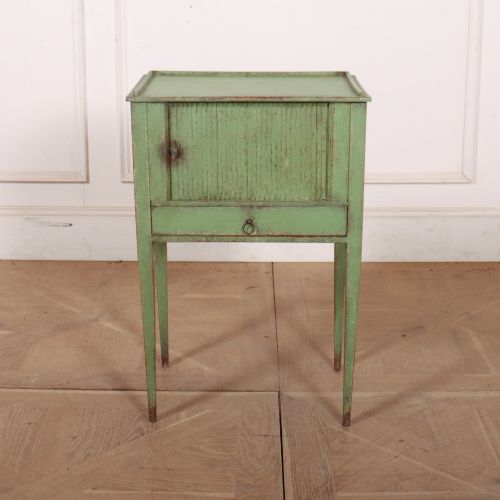
The antique tambour bedside cabinet spans Georgian, Regency and nineteenth-century eras, appearing alongside related nightstands, commodes and pot cupboards. These pieces arrive in various regional expressions, from English George III designs to Dutch provincial and French nineteenth-century examples.
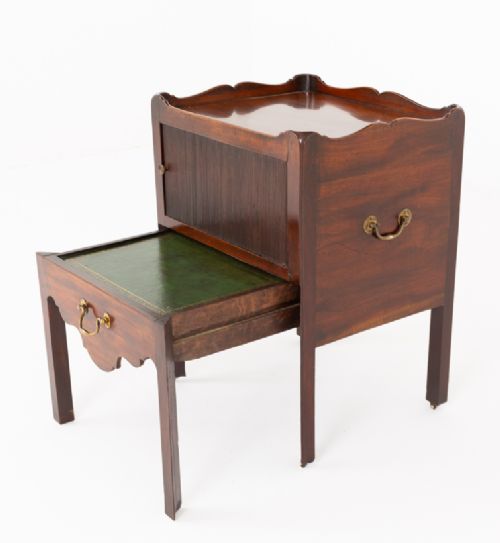
Most pieces seen here adopt traditional compact proportions designed to sit beside a bed. The defining characteristic is the flexible tambour shutter, which slides horizontally to reveal the interior compartment without requiring swinging clearance.
Materials and construction methods
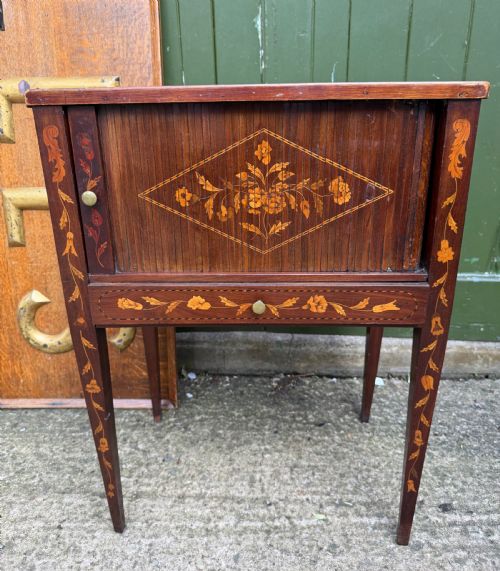
Makers relied heavily on mahogany as the primary timber, occasionally utilising walnut, satinwood and softwood. Decorative detailing frequently incorporates boxwood inlay, marquetry motifs and contrasting veneers.
Fine examples integrate functional surfaces such as marble tops or shaped tray tops above the tambour enclosure. Brass fittings and hardware complete the construction of these refined storage items.
Judging the quality of construction
Quality rests upon the smooth operation of the tambour mechanism and the precision of the individual wooden slats. Superior examples exhibit tight joinery that allows the sliding shutter to move effortlessly along its track.
Material selection and decorative enrichment further separate standard items from finer pieces. Thoughtful integration of boxwood inlay, marquetry, tray tops or marble surfaces distinguishes the work of skilled cabinet makers.
Gillows
The Antique Tambour Bedside Cabinet Glossary
- Tambour
- A flexible sliding shutter formed from narrow vertical strips of wood glued to a fabric backing. This allows the door to curve around corners and slide into the cabinet frame.
- Commode
- A decorative low cabinet or chest of drawers. In the context of bedside furniture, the term often describes enclosed nightstands with cupboard doors.
- Tray top
- A raised rim surrounding the upper surface of a bedside table or commode. This design prevents small items from rolling off the edge.
- Marquetry
- Decorative woodwork where pieces of veneer are fitted into a ground material to form patterns. Floral and geometric designs appear frequently on continental pieces.
- Pot cupboard
- A small bedside cabinet originally designed to house a chamber pot. Many survive as general bedside storage units.
Antique Tambour Bedside Cabinet: Frequently Asked Questions
What is a tambour door?
A tambour door consists of narrow wooden slats attached to a flexible backing fabric. This allows the panel to bend along a curved track.
Cabinet makers used this technique to conceal storage compartments in tight spaces where swinging doors would be impractical.
How do I use one in a modern bedroom?
These compact cabinets function well as traditional bedside tables for holding lamps and books. The enclosed lower section hides clutter while keeping personal items within reach.
Their varied timbers, such as mahogany and walnut, complement both antique and contemporary interior schemes.
How do I distinguish Georgian from later styles?
Georgian pieces typically date from the eighteenth and early nineteenth centuries, featuring solid mahogany construction and restrained proportions. Later nineteenth-century versions often incorporate continental influences or French styling.
Examining the secondary timbers and construction methods helps determine the precise period of manufacture.